Category: Daily Dispatch

  • Rubbra’s Resurgam Hope After Disaster

    Rubbra’s Resurgam Hope After Disaster

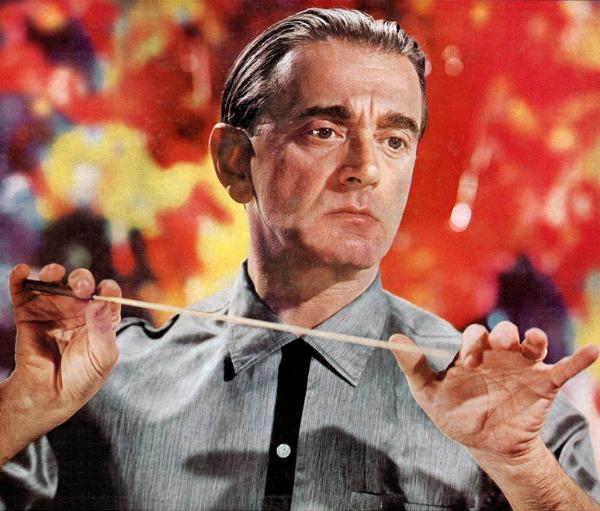
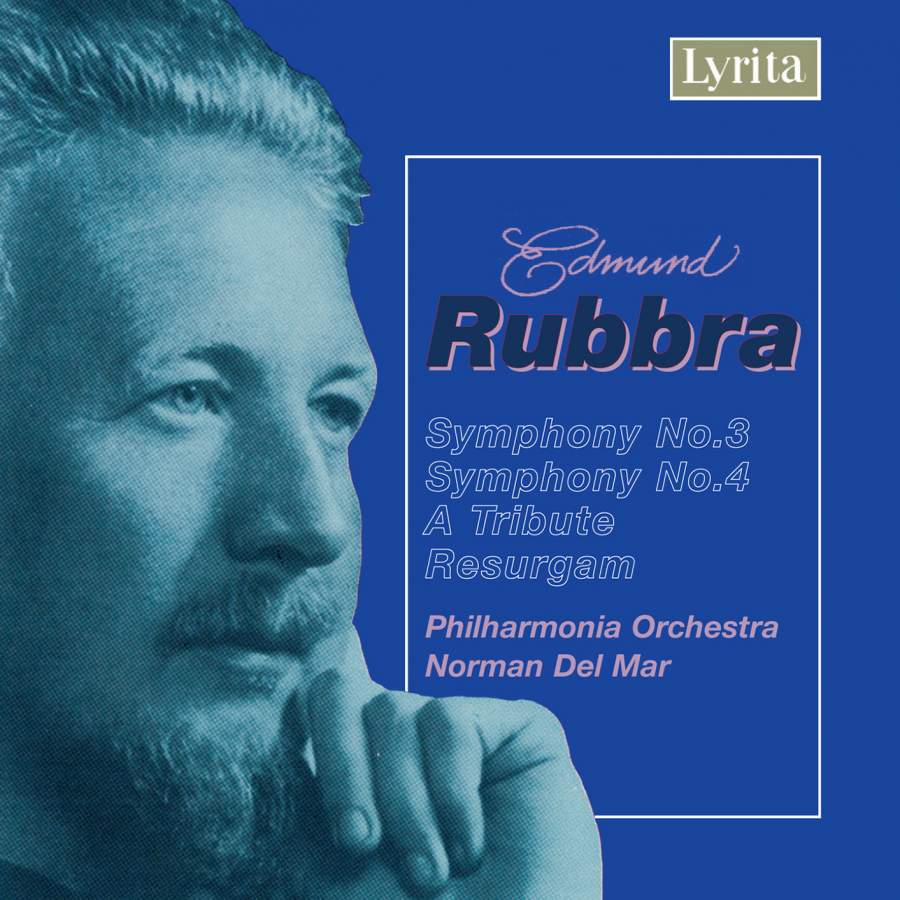
    For Easter, and in the wake of the burning of Notre Dame, there’s a certain reassurance to be found in this expression of hope and renewal by the English composer Edmund Rubbra.

    In March of 1941, Nazi bombers laid waste to much of the city of Plymouth, including the Church of St. Andrew. Only its tower remained, perhaps reflective of its motto, “Turis fortissima est nomen Jehova” (“The name of the Lord is a tower of strength”).

    While the ruins of the church yet smoldered, a headmistress nailed a makeshift sign to the door of the north entrance. It contained but a single word: “Resurgam” – “I shall rise again.” The message, since carved in granite, has become a permanent part of the church.

    In 1975, the Plymouth Symphony Orchestra commissioned Rubbra to compose a work for its centenary. Rubbra responded with this concert overture.

    The restoration of St. Andrew’s was completed in 1957.

    You’ll find much to do with Notre Dame and the significance and state of its Grand Organ on “A Tempo,” tonight at 7:00 EDT, on WWFM – The Classical Network and wwfm.org.

  • Easter Witches A Spooky European Tradition

    Easter Witches A Spooky European Tradition

    It’s almost Easter. Time for… witches?

    Ah, Europe. You can always be counted on to make the most unlikely holidays spooky.

    In Sweden and parts of Finland, people love their painted eggs as much as anyone. But they also dress their kids up as witches and send them door to door in search of treats. You have to admit, it’s a lot more interesting than our anodyne peeps and hyacinths that always seem to be trying just a little too hard with their annoying pastel hues. I’m just coming out of winter, dammit! I need me some witches.

    In the collective mind of Northern Europe, the dark time between Christ’s betrayal on Maundy Thursday and the radiant hope of His resurrection on Easter is the optimal strike zone for witchery. Just as ants start to find their way into American homes in spring, witches begin to swarm on Nordic rooftops and create mischief for Scandinavian villagers. As preventative measures, devout Christians hide their gardening tools – especially brooms and rakes – and paint crosses on their chests.

    I think it’s fairly well-known by now that a number of Easter traditions have their origins in a shadowy pre-Christian past. The Church shrewdly co-opted these for its own festivals and teachings. So the fertility symbols of eggs and hare, central to the pagan celebration of spring and the goddess Eostre, are now enshrined in chocolate and sold to us by Cadbury.

    Witches, condemned by the Church since the Middle Ages, are a little harder to market in a young country like the U.S., with its proud Puritan heritage, but to the Northern European the ideas of women riding around on brooms or traveling in the company of black cats are a matter of course. In fact, the prototype can be found in Freyja, the Norse fertility goddess. Wagnerians know her well as Freia, the spouse of Wotan, or Odin.

    I won’t go into the details of what kind of debauchery these witches would get up to if they kidnapped you and took you back to their boss. Suffice it to say, the reverent lit fires of evergreens to smoke them out of their chimneys and fed large bonfires against them on Holy Saturday.

    Fear and hysteria led to plenty of very real and gruesome deaths of those suspected of witchery. But after a few centuries that all began to die down and everyone decided that witches weren’t so bad after all. In fact, they were rather quaint. Perhaps as a reaction against the Industrial Age, society grew nostalgic for the rural folk superstitions of yore, and the Easter Witch was embraced by mummers as a now-welcome guest at feasts and parades. All at once, it was considered lucky to have a witch on your roof on Maundy Thursday. The witch was even given a companion in the flower-loving Easter Troll.

    Hey, I like to think of myself as pretty live and let live. Of more concern to me is that the Easter Witch is also said to be very fond of coffee. Benevolent or not, any witch who tries to get between me and my coffee is going be met by a brand of flaming evergreen.

    Wishing you all a Glad Påsk!


    Four images of the Easter Witch. Note the prevalence of coffee!

  • Biblical Epics Adapted from Novels on Picture Perfect

    Biblical Epics Adapted from Novels on Picture Perfect

    This week on “Picture Perfect” it’s the second installment in a mini-festival of very big films, as we present another hour of Biblical epics, though this time with a twist. Rather than go directly to the Gospels, these are all films adapted from bestselling historical novels.

    Lloyd C. Douglas’ “The Robe” was given the Hollywood treatment in 1953. Richard Burton plays Marcellus, the Roman tribune who oversees the crucifixion and wins Christ’s robe in a game of dice. Victor Mature (last week’s Samson) is his well-oiled slave, Demetrius, and Jean Simmons, his childhood sweetheart, now betrothed to Caligula (a scene-stealing Jay Robinson).

    “The Robe” holds the distinction of being the first film released in CinemaScope. Allegedly, it is also the only Biblical epic ever to yield a sequel (“Demetrius and the Gladiators”). The score, by Alfred Newman, has always been popular.

    Thomas B. Costain’s “The Silver Chalice” was brought to the big screen in 1954. The film introduced Paul Newman in the lead, as a lowborn artisan commissioned to fashion a decorative casing for the cup from which Christ drank at the Last Supper (i.e. the Holy Grail).

    The film is interesting in that it features quasi-abstract sets by stage designer Rolfe Gerard and a stunning score by Franz Waxman, which incorporates the “Dresden Amen,” also used in Wagner’s “Parsifal.” However, Newman was mortified by his performance and famously took out an ad in Variety, essentially to apologize.

    “Barabbas” is worlds away from the usual Hollywood epic. Based on the Nobel Prize-winning novel of Pär Lagerkvist, the film is a ruminative slog through the guilt-ridden psyche of the title character, played by Anthony Quinn. Barabbas is the thief who is pardoned to make way for the crucifixion of Christ. He spends the rest of his life searching for meaning in a meaningless world.

    In a quixotic attempt at verisimilitude, director Richard Fleischer shot the crucifixion scene during an actual solar eclipse. Mario Nascimbene (who composed the music for last week’s “Solomon and Sheba”) wrote the score.

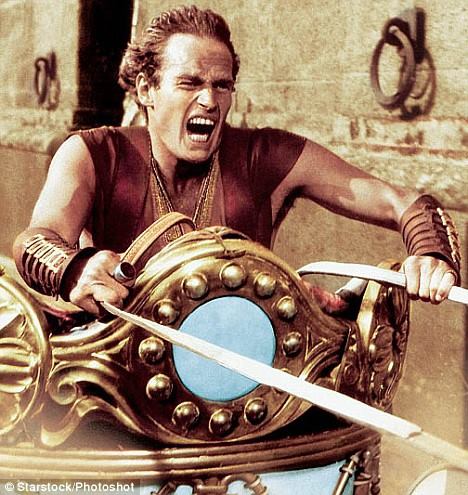
    Finally, we’ll wrap things up with music from one of the all-time Oscar champs, “Ben-Hur,” from 1959. Based on the 1880 novel of General Lew Wallace, “Ben-Hur” was honored with 11 Academy Awards, including those for Best Picture, Best Director (William Wyler) and Best Actor (Charlton Heston).

    The highlight of the film, of course, is the amazing chariot race, but there is a grandeur to the whole which makes it difficult to look away. Miklós Rózsa wrote the magnificent score, arguably the best of any film of its kind.

    The “Ben-Hur” Oscar record has been tied twice – in 1998, by “Titanic,” and in 2004, by “The Lord of the Rings: The Return of the King” – but this is before computer generated imagery, folks. They just don’t make ‘em like this anymore.

    The New Testament is all-new, by way of adaptations from historical novels, this Friday evening at 6:00 EDT, on WWFM – The Classical Network and wwfm.org.
  • Leopold Stokowski Birthday Wagner Parsifal

    Leopold Stokowski Birthday Wagner Parsifal

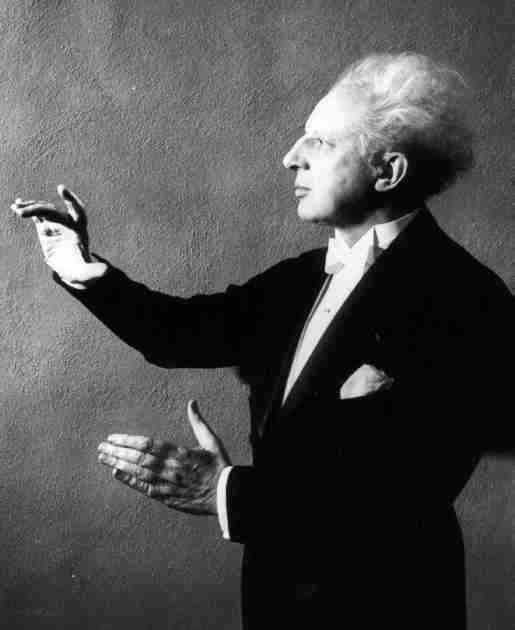
    LEOPOLD!

    Raise a stein to Stoky on his birthday, and then join me tomorrow for a transcendent recording of the “Good Friday Spell” and “Act III Synthesis” from Wagner’s “Parsifal.” It will be a Good Friday make-good, sometime between 4 and 6 p.m. EDT, on WWFM – The Classical Network and wwfm.org.
    Happy birthday, Leopold Stokowski!

  • Miklós Rózsa Ben-Hur Composer Birthday

    Miklós Rózsa Ben-Hur Composer Birthday

    “Who the hell wants foxtrots? I want serious music!”

    So says Miklós Rózsa, in this 30-minute documentary.

    Enjoy it, and then join me this Friday evening at 6:00 EDT, as I present Rózsa’s magnum opus, “Ben-Hur,” among my featured selections, on “Picture Perfect” – music for the movies – on WWFM – The Classical Network and wwfm.org.
    Happy birthday, Miklós Rózsa!

Tag Cloud

Aaron Copland (93) Beethoven (95) Composer (114) Film Music (137) Film Score (143) Film Scores (255) Halloween (94) John Williams (195) KWAX (229) Leonard Bernstein (103) Marlboro Music Festival (125) Movie Music (152) Mozart (88) Opera (208) Philadelphia Orchestra (89) Picture Perfect (174) Princeton Symphony Orchestra (108) Radio (88) Ross Amico (244) Roy's Tie-Dye Sci-Fi Corner (290) The Classical Network (101) The Lost Chord (268) Vaughan Williams (103) WPRB (396) WWFM (881)

DON’T MISS A BEAT

Receive a weekly digest every Sunday at noon by signing up here


RECENT POSTS