I was watching on a television at the college this afternoon as the spire fell from atop Notre Dame Cathedral. It made me sick to my stomach. This is a loss that extends beyond any religious connotations (which in this case are enormous). The historical and cultural significance of Notre Dame is unquantifiable. Notre Dame IS Paris. No doubt “Our Lady” will rise again, but 13th century is 13th century. Such a tragedy.
I will do what I can to honor this magnificent landmark tomorrow afternoon, following the Noontime Concert, from approximately 1 to 4 p.m. EDT, on WWFM – The Classical Network and wwfm.org.
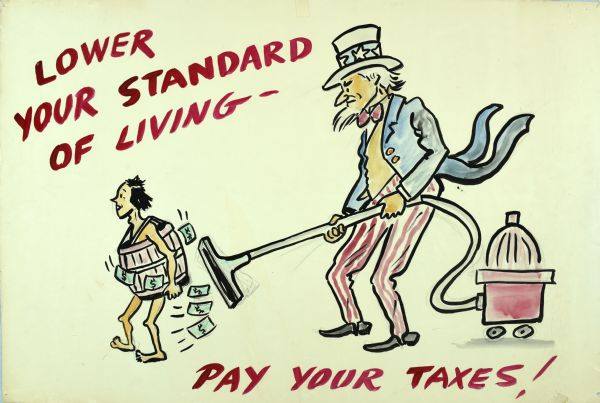
April 15th. Hopefully you aren’t feeling too overtaxed.
Whether you are daydreaming about a fat return or speculating about which ledge you should leap from, I hope you’ll join me this afternoon on The Classical Network for music about found and lost money, precious metals, careless spending, currency and coins, treasures sought, penury, and good old fashioned tax protest.
Lady Godiva rode naked through the streets of Coventry in protest of exorbitant taxation. On the other side of the coin, when told that her subjects had no bread, Marie-Antoinette is alleged to have responded, “Let them eat cake!” Both will be represented musically, in works by Vítězslav Novák and Franz Joseph Haydn.
We’ll seek treasure with Franz Schreker. We’ll look with sardonic befuddlement upon “The Age of Gold” with Dmitri Shostakovich. Antonio Salieri will show us what it is like to be rich for a day. Beethoven will rage over a lost penny. Franz Lehár will shower us with gold and silver. And we’ll gaze with envy upon Kurt Atterberg’s “Dollar” Symphony.
Of course, there will be music from “The Threepenny Opera,” by Kurt Weill. We’ll also hear Weill sing “Very, Very, Very,” from “One Touch of Venus,” which begins, “One way to be very wealthy is to be very, very, very rich…” You can’t argue with that.
Feeling a little depleted? Great music is always a sound investment, from 4 to 7 p.m. EDT, on WWFM – The Classical Network and wwfm.org.
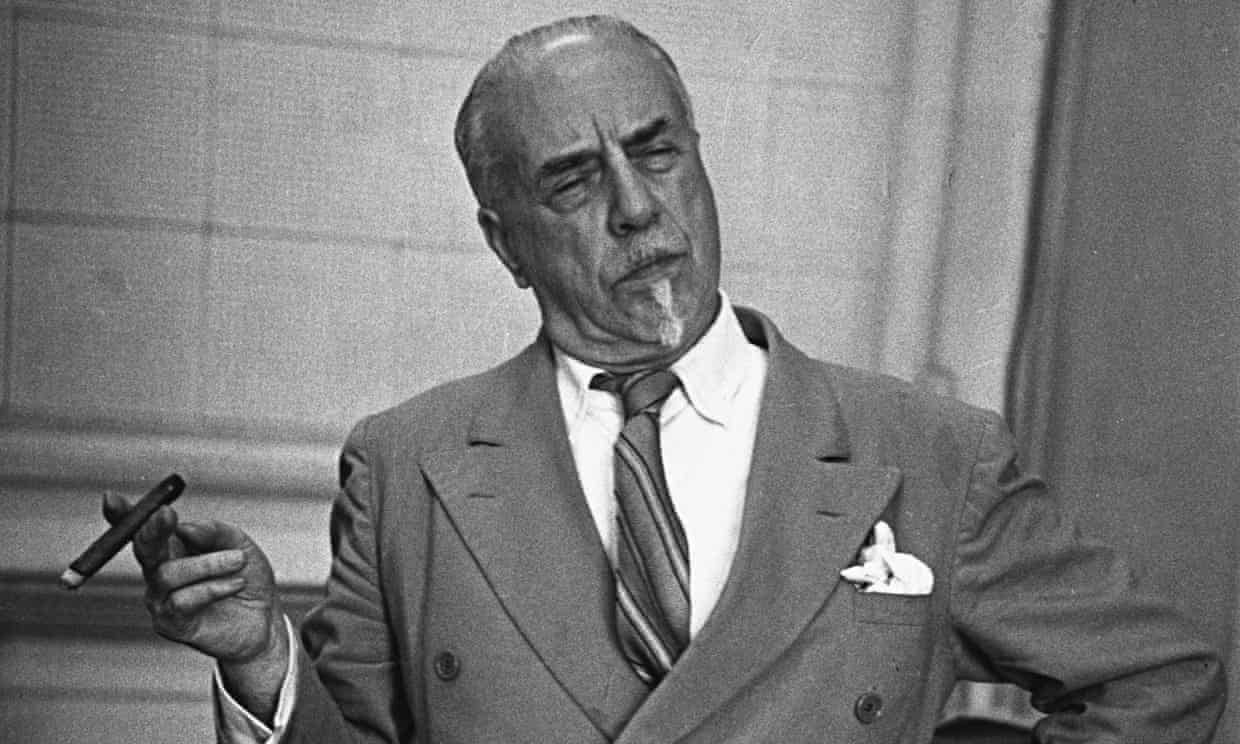
Sir Thomas Beecham was championing Handel before it was cool.
At a time when most people’s knowledge of the composer’s large-scale vocal works began and ended with “Messiah,” Beecham was dipping into the operas and polishing up the oratorios for the delectation of a new age. He defended these curations and modifications, stating that “without some effort along these lines, the greater portion of [Handel’s] magnificent output will remain unplayed, possibly to the satisfaction of drowsy armchair purists, but hardly to the advantage of the keenly alive and enquiring concertgoer.”
Experience the vitality of Beecham’s beautiful Handel realizations this week on “The Lost Chord.” That’s “Handeling Beecham,” this Sunday night at 10:00 EDT, on WWFM – The Classical Network and wwfm.org.
Sir Thomas Beecham developed an early love for Handel, at a time when very few of his contemporaries knew more than a handful of the composer’s works. Certainly the operas and oratorios – with the exception of “Messiah,” which had grown more and more bloated through years of Victorian adoration – were exceedingly scarce. Beecham despaired of this, since there was so much brilliant music, he knew, embedded within these sleeping giants.
He responded by not only reviving a number of the oratorios, in heavily reworked, though for the most part musically sensitive editions, he also arranged choice Handelian morsels into original ballet and concert suites. In doing so, he introduced audiences to much worthy music, which had previously been known only to scholars and specialists.
This Sunday night on “The Lost Chord,” we’ll listen to Beecham’s at times eccentric, though generally delightful recordings. Alongside the trademark charm of the conductor’s approach comes a thrilling virtuosity in some of the faster music, nowhere better demonstrated than in a 1932 recording of something Beecham called “The Origin of Design,” a suite de ballet distilled from the operas “Ariodante” “Terpsichore,” “Il pastor fido,” “Giulio Cesare,” and “Rinaldo.”
In approaching those oratorios he ventured to present whole (or something like it), Beecham was not only NOT above tinkering with the orchestration, he would toss out entire sections and rearrange mercilessly, all with the aim of cooking up a digestible evening of music which the general public might otherwise just as happily left in the freezer. At its most gauche, Beecham’s method could result in something like his last recording of Handel’s “Messiah,” which he set down in 1959. The re-orchestration was commissioned from Sir Eugene Goossens and features ample cymbal crashes and other eccentricities, which seem somehow to actual sap some of the excitement out of the original music.
Beecham defended his padded “Messiah,” not only pointing to the composer’s documented delight in great demonstrations of sound, but also stating his fear that without some effort along the lines he’d undertaken, the greater portion of Handel’s output would remain unplayed – in his words, “possibly to the satisfaction of armchair purists, but hardly to the advantage of the keenly alive and enquiring concertgoer.”
Despite taking great liberties, Beecham’s recording of Handel’s “Solomon,” set down in 1955-1956, is, in a word, gorgeous. It’s nowhere near what Handel conceived – there’s a huge chunk taken out of the middle, with some of the displaced numbers given refuge in wholly unrelated parts of the oratorio; Solomon, a role generally undertaken these days by a countertenor is assigned to a baritone; the cymbal crashes that disfigure Beecham’s “Messiah” turn up here, as well, but somehow, if one allows oneself to succumb to the Beecham magic, none of it is truly bothersome. In fact, the recording could be deemed an unalloyed delight. It’s not something you’d want as your only “Solomon,” yet it could be the recording of the work you return to the most.
I hope you’ll join me for “Handeling Beecham” – Sir Thomas Beecham conducts Handel – this Sunday night at 10:00 EDT, on WWFM – The Classical Network and wwfm.org.
In the run-up to Ron Howard’s documentary about Luciano Pavarotti (release date: June 7), I got to thinking about “Yes, Giorgio” (1982). The most charismatic tenor of his day made his non-operatic, big-screen debut in this Franklin J. Schaffner-directed film. You know, the same Franklin J. Schaffner who directed “Patton?”
Franklin, you magnificent bastard, I saw your movie…
Here’s the premise: Operatic superstar Giorgo Fini (Pavarotti) is on tour in the U.S., when the unthinkable happens – he loses his voice! Naturally his manager engages a throat specialist, played by Kathryn Harrold (Giorgio thinks she is a nurse, ha ha), leading to much risible “repartee.” Not at all believably, the two fall in love. But of course there are complications. Giorgi IS Italian, after all.
Okay, so the premise is creaky. Is there any opera? Oh yes there is, including Luciano, as Calaf, belting out “Nessun dorma” at the peak of his powers. But to get there you have to slog through countless scenes of Pavarotti, with a face as open and as ingratiating as that of a golden retriever, trying to compensate for a horrible script by charming the socks off everyone in the room. Let’s face it: he may have had a voice from the heavens, but Pavarotti is no dramatic actor. Fortunately, there is also comic relief, courtesy of “Green Acres’” Eddie Albert (just to keep it real). And not to worry, there is a pie fight.
I guess there was no room in the $21 million budget – or his schedule – for John Williams to provide a complete music score (Michael J. Lewis does the dishonor), but Williams does contribute an Oscar-nominated song, “If We Were in Love,” with lyrics by the legendary Alan & Marilyn Bergman. Williams is in his element, and turns in a buoyant set-piece. In theory, this should have been a real showstopper.
Alas, for all his lyrical gift, Williams is not a song composer, and even with (or perhaps because it is) Pavarotti singing, it turns out to be kind of embarrassing. It would be perfectly fine if it weren’t a song, but let’s face it, the balloon ride over Napa Valley ranks up there – or down there, as it were – with Margot Kidder reciting poetry to Superman.
This was the same year as “E.T.,” by the way.
Ironically, the original soundtrack is now a collector’s item. The belated domestic CD reissue was shorn of the Oscar-nominated song. Williams, the Bergmans, and the Pavarotti estate must want this one buried deep.
“Yes, Giorgio” sank like a stone. Taking into account promotional and distribution costs, it lost MGM an estimated $45 million. Siskel and Ebert selected it as one of the worst movies of the year, and the film was nominated for multiple Razzies. Ebert claimed that Pavarotti utters the line, “I will sing this aria just for you!” a dozen times. The film opens with the following dedication: “This story is dedicated to lovers everywhere.” Oy vey.
There’s so much talent squandered on this movie that I could easily be fooled into thinking I would like to watch it again. This is the most dangerous kind of bad.
No, Giorgio!
I am, however, very much looking forward to seeing Ron Howard’s documentary.