Category: Daily Dispatch

  • Mozart, Allegri’s Miserere, and a Stolen Masterpiece

    Mozart, Allegri’s Miserere, and a Stolen Masterpiece

    It was on this date in 1770 that the Mozarts, father and son, attended a Holy Week service in Rome. Young Wolfgang, then only 14, was intrigued by what he heard.

    Gregorio Allegri composed his “Miserere mei, Deus” – or “Miserere,” for short, a setting of Psalm 51 – in the 1630s. The piece was designed for exclusive performance in the Sistine Chapel, as part of the Tenebrae service of Holy Wednesday and Good Friday.

    Allegri’s conception was a striking one, for two choirs, one intoning a simple chant, and the other, spatially separated, providing ornamentation. The pièce de résistance was the inclusion of a stratospheric top C, which has the effect of making the “Miserere” one of the most haunting works in the choral literature of the late Renaissance.

    The Vatican, realizing it had a good thing, forbade performance of the piece outside its walls or copies of the score to leave the premises, under threat of excommunication. But Mozart couldn’t help himself. A couple of hours later, he copied the work down from memory. Not long after, he handed it off to author and music historian Charles Burney, who published it without delay.

    Mozart was summoned before the Pope, but rather than being excommunicated, he was showered with praise for his feat of musical genius, and the ban on the “Miserere” was lifted.

    But did Mozart ever actually hear that famous “top C?”

    In 1831, Mendelssohn made his own transcription of the “Miserere,” but, for whatever the reason, the performance he heard was sung a fourth higher than intended.

    Leap ahead half a century to the first edition of “Grove’s Dictionary of Music and Musicians,” published in 1881. An editorial error resulted in a passage from Mendelssohn’s transcription being incorporated into a musical example used to illustrate one of the entries. The article was widely reproduced, until Grove’s error came to be established as the preferred version of the “Miserere.”

    A good thing, too! I wouldn’t trade that top C for the world.


    Here is Allegri’s “Miserere,” performed by the ensemble Tenebrae:

    Franz Liszt also made an arrangement, which is most frequently encountered on the organ – sometimes the piano – but apparently he also orchestrated it. His version cleverly juxtaposes the “Miserere” with Mozart’s own “Ave verum corpus.”

    For context, Mozart’s “Ave verum corpus:”

    Liszt’s “À la Chapelle Sixtine” for piano:

    https://www.youtube.com/watch?v=tkAMKzRSrjc

    And for orchestra:


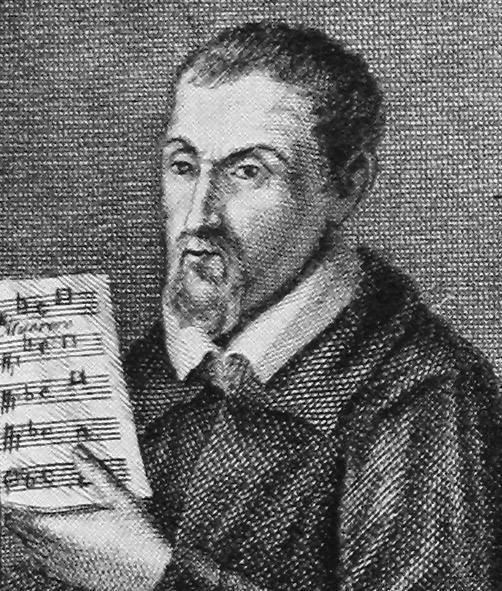
    Clockwise from left: Allegri; happy Mozarts, father and son; Mendelssohn; and the Abbé Liszt

  • Andrew Rudin 80th Birthday Concert on WWFM

    Andrew Rudin 80th Birthday Concert on WWFM

    I suppose it’s no secret – there’s an 80th birthday concert coming up at Bargemusic in Brooklyn tomorrow night – but it sure as hell stunned me to learn that Andrew Rudin is now four score. In addition to being a very fine composer, the evergreen Rudin, of course, was once a regular presence on the airwaves as a music host at WWFM.

    A former student of George Rochberg, Rudin writes uncompromising music of great integrity, yet manages to communicate with the listener without pandering. Nowhere is that more evident than in his attractive Piano Concerto, a recording of which I will include, among my featured works today, between 4 and 6 p.m. EDT, on The Classical Network. If you like Bartók or Ravel, give this one a shot.

    I’ll also mark the birthday anniversaries of Eugen d’Albert, Yefim Bronfman, Jorge Mester, and Victor de Sabata.

    There’s nothing quite like Schubert for a good palate cleanser. Wait a minute, that’s sherbet I’m thinking of. At any rate, come 6:00, enjoy an all-Schubert hour on the next “Music from Marlboro.”

    Among the melancholy masterpieces churned out during Schubert’s remarkably productive final year, the Piano Trio No. 1 in B-flat major, D. 898, actually comes across as comparatively light-hearted.

    We’ll hear it performed at the 2008 Marlboro Music Festival by pianist Jonathan Biss, violinist David Bowlin, and cellist Marcy Rosen. Biss, who is on the faculty of the Curtis Institute of Music in Philadelphia, was recently named co-artistic director (with Mitsuko Uchida) of Marlboro Music.

    Finally, we’ll turn to what may have been the last music Schubert ever wrote. “The Shepherd on the Rock,” D. 965, was completed barely a month before the composer’s death at the age of 31. This multi-sectional “lied” traverses a broad range of emotions, as a shepherd listens to echoes from the valley below, grapples with feelings of loneliness, and finds hope in the prospect of Spring and renewal.

    Marlboro legends, soprano Benita Valente, clarinetist Harold Wright, and pianist Rudolf Serkin, set down a classic recording of the work in 1960. We’ll hear a live performance captured at Marlboro nine years later.

    In all, it will be a playlist in celebration of births and renewals, from 4 to 7 p.m. EDT, on WWFM – The Classical Network and wwfm.org.

    Marlboro School of Music and Festival: Official Page

  • Ron Howard Doc Mayberry’s Musical Secret

    Ron Howard Doc Mayberry’s Musical Secret

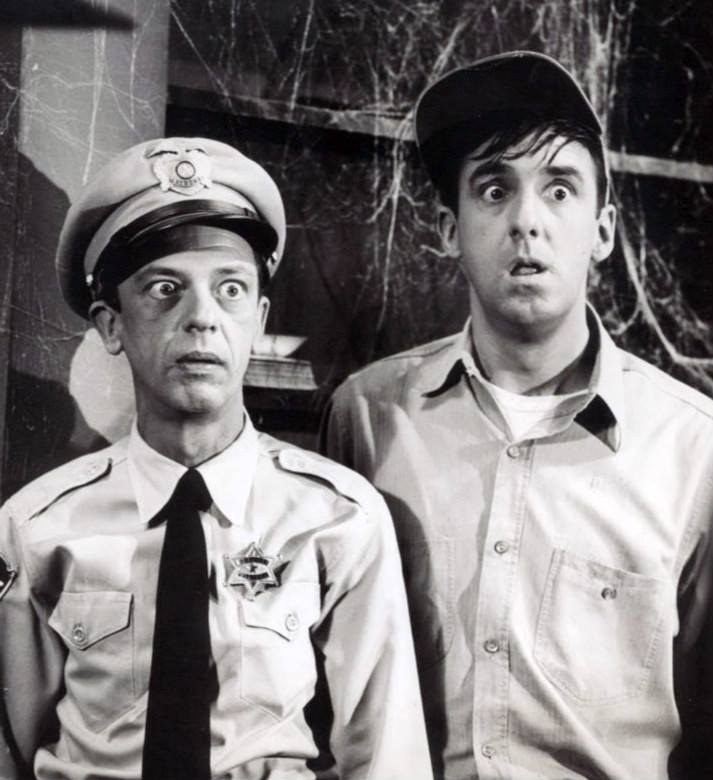
    One might not be surprised to find Opie at the Opry. But music in Mayberry, it turns out, doesn’t end with Fife. Ron Howard has made a documentary about the only man with a better voice than Gomer Pyle. Let’s hope this is better than Aunt Bee’s pickles!

  • Richard Arnell Rediscovered on WWFM

    Richard Arnell Rediscovered on WWFM

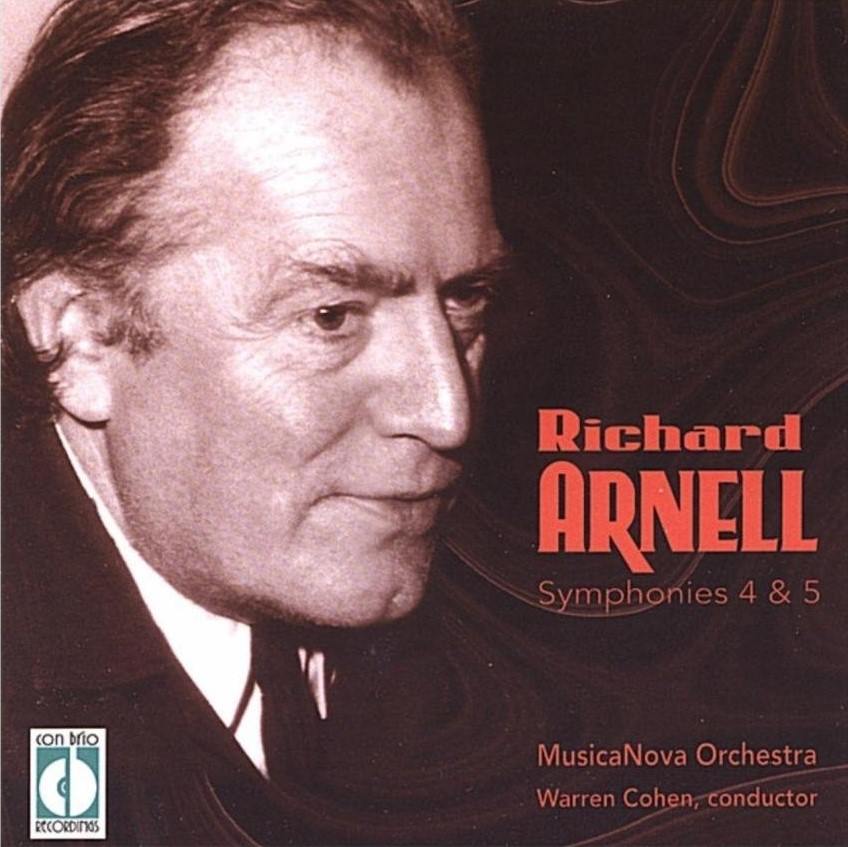
    It’s been brought to my attention by Patrick Jonathan that tomorrow will mark the tenth anniversary of the passing of English composer Richard Arnell. While I am not in the habit of commemorating death anniversaries, I will make an exception in the case of this neglected and deserving composer of much attractive and inspirational music.

    Join me today on The Classical Network, following today’s Noontime Concert, for a sampling of Arnell’s output. Just how much of it will be heard remains to be seen. I’ve pretty much got a clean slate from 1 to 4 p.m. EDT.

    First, we’re off to midtown Manhattan for another concert presented under the auspices of Gotham Early Music Scene (or GEMS). Empire Viols will perform a program of transcriptions of organ trios by Johann Sebastian Bach and Bach pupil Johann Ludwig Krebs. The concert was given last June at Saint Bartholomew’s Church, 325 Park Avenue, as part of GEMS’ free Midtown Concerts series. Free concerts are held at St. Bart’s every Thursday at 1:15 p.m. This Thursday, Douglas Lundeen will perform a recital of French works composed for the piston-valve French horn. To find out more, visit gemsny.org.

    Then stay tuned, as I dip into my arsenal of Arnell. I’ll be manning the cannons against the canon, from 12 to 4 p.m. EDT, on WWFM – The Classical Network and wwfm.org.


    If you’re interested, here’s a link to a conversation I had with Warren Cohen, music director of the MusicaNova Orchestra. Musica Nova is a really fascinating organization, based in Phoenix, AZ, that bills itself as presenting “the greatest music you’ve never heard – yet.” Cohen knew Arnell personally and gave the U.S. premieres of a number of his major works. The interview took place on the occasion of the composer’s centenary. The soundfile includes a Musica Nova performance of Arnell’s Symphony No. 5 – subtitled “The Gorilla!” – and Cohen’s beautiful arrangement for string orchestra, sanctioned by the composer, of the Elegy from Arnell’s String Quartet No. 3.

  • Celebrating Adrian Boult and Musical Birthdays

    Celebrating Adrian Boult and Musical Birthdays

    As a self-professed anglophile, I do so enjoy the recordings of Sir Adrian Boult. I am especially grateful for the famous ones, the recordings and re-recordings of the repertoire with which he is most closely associated – the works of Elgar, Vaughan Williams, Holst, and some of the lesser sons of Albion.

    But Boult’s interests – and excellence – extended across a considerably wider field, and though not always reflected in the comparative timidity of what record companies were prepared to roll the dice on, Sir Adrian was always game for Bach, Beethoven, Verdi, Stravinsky, and even the Second Viennese School.

    I’m hoping to reflect just a little of that questing spirit in what I have to work with, this afternoon on The Classical Network, as I celebrate Boult’s birthday with compelling performances of Sibelius and Schumann alongside perhaps the more expected fare.

    It will be a very competitive playlist, however, as I’d also like to offer salutes to John Antill, Franco Corelli, Asger Hamerik, Josef Krips, Karl Hermann Pillney, and Giuseppe Tartini, all of whom were also born on this date. I’ve only got three hours to do so, and each of these figures, it seems, is more fascinating than the last.

    When so spoiled for choice, what’s a poor radio host to do? Sense my frantic indecision when you tune in today, from 4 to 7 p.m. EDT, to WWFM – The Classical Network and wwfm.org.


    PHOTO: Boult, a spring chicken at 80. He died in 1983, at the age of 93.

Tag Cloud

Aaron Copland (93) Beethoven (95) Composer (114) Film Music (137) Film Score (143) Film Scores (255) Halloween (94) John Williams (195) KWAX (229) Leonard Bernstein (103) Marlboro Music Festival (125) Movie Music (152) Mozart (88) Opera (208) Philadelphia Orchestra (89) Picture Perfect (174) Princeton Symphony Orchestra (108) Radio (88) Ross Amico (244) Roy's Tie-Dye Sci-Fi Corner (290) The Classical Network (101) The Lost Chord (268) Vaughan Williams (103) WPRB (396) WWFM (881)

DON’T MISS A BEAT

Receive a weekly digest every Sunday at noon by signing up here


RECENT POSTS