Category: Daily Dispatch

  • Greek Myths in Music Medusa Penelope & More

    Greek Myths in Music Medusa Penelope & More

    Medusa. Penelope. The Sirens. The Fates. Pandora.

    This Sunday night on “The Lost Chord,” we’ll complete our set of mythological bookends that began with “Picture Perfect” on Friday evening – a mythological mash-up of film scores from movies based on classical myths – with a program devoted to two works inspired by familiar tales from Greek mythology.

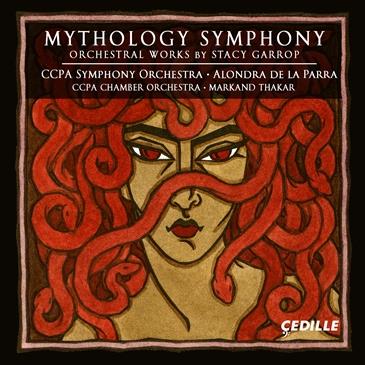
    Female characters from the classical myths provide the inspiration for Stacy Garrop’s “Mythology Symphony.” The movements of Garrop’s symphony – really more of a collection of symphonic poems – were composed between 2007 and 2013, on separate commissions from the Detroit Symphony Orchestra (“Becoming Medusa”), the Albany Symphony Orchestra (“The Lovely Sirens” and “The Fates of Man”), and the Chicago College of the Performing Arts, Roosevelt University (“Penelope Waits” and “Pandora Undone”), where Garrop was associate professor of composition from 2000 to 2016.

    Likewise, archetypes from Homer inform Princeton composer Sarah Kirkland Snider’s post-genre song cycle “Penelope.” Inspired by “The Odyssey,” Snider’s work originated as a music-theater monodrama, composed in 2007-08, on texts by playwright Ellen McLaughlin. A woman’s husband, a veteran of an unnamed war, returns home after 20 years. He suffers from brain damage and memory loss. The woman reads to him from Homer’s epic as together they journey through the healing process.

    The cycle explores the subjects of memory, identity, and what it means to come home, alongside the terrors and traumas of war. Musically, “Penelope” straddles the worlds of chamber music and indie rock, with any demarcations between the two skillfully blurred and blended. We’ll hear selections from Snider’s song cycle to round out the hour.

    Enduring myths of the ancient world are viewed from fresh perspectives this week, on “Myth Conceptions,” this Sunday night at 10:00 EDT, on WWFM – The Classical Network and wwfm.org.

  • Remembering André Previn: A Hollywood & Classical Music Giant

    Remembering André Previn: A Hollywood & Classical Music Giant

    The outpouring of love and grief precipitated by the death of André Previn on February 28 seems to have brought the music world to state of catharsis. So I wonder how many will pause to remember him today, on what would have been his 90th birthday. Clearly any musical tributes will take place as scheduled over the coming season.

    For now, I offer a few reminiscences of “Previn & The Pittsburgh,” a television series featuring performances by the Pittsburgh Symphony Orchestra, introduced by Previn, then the orchestra’s music director. Of particular interest was an episode subtitled “The Music that Made the Movies,” devoted to outstanding film scores, with special guests John Williams and Miklós Rózsa. To hear Rózsa talk and to see him conduct his music for “Ben-Hur” is priceless.

    It is to be remembered that before he became recognized as a world-class conductor of symphonies, Previn enjoyed an active and successful career in the film industry, where he rubbed shoulders with many Hollywood legends, musical and otherwise.

    Thank you, André Previn, for all the beauty, inspiration, solace, and refinement you brought to the world.


    Previn conducts Jerry Goldsmith, from “The Blue Max.”

    Miklós Rózsa talks about Old Hollywood and Bernard Herrmann.

    Previn conducts Bernard Herrmann’s music for “Psycho.”

    Rózsa, bringing it Old School, as he conducts “Ben-Hur.”

    Previn invites John Williams to conduct “Star Wars.”

    Williams conducts “Superman.”


    Three Magi of movie music (left to right): Williams, Previn, and Rózsa

  • Mythological Movie Music Clash of the Titans & More

    Mythological Movie Music Clash of the Titans & More

    Release the Kraken!

    This week on “Picture Perfect,” it’s a mythological mash-up, with music from four films inspired by classical myths.

    “Helen of Troy” (1956) is based on events recounted in Homer’s “The Iliad.” Like the more recent film, “Troy,” this version glosses over any participation by the gods. Could it be their wrath that caused this Robert Wise-directed spectacle to be plagued with difficulties?

    Reportedly three people were killed during the making of the film, extras were injured by a runaway chariot, and 80 percent of the two-acre recreation of Troy was burned to the ground by a cigarette. On the bright side, it was Bridgette Bardot’s first film made outside of France, and Rossana Podestà played Helen. A spectacle indeed! Max Steiner provided the lush, romantic score.

    “Clash of the Titans” (1981) is not to be confused with the 2010 CGI-fest. This is the real deal, with special effects by legendary stop motion maestro Ray Harryhausen.

    Just as special is its luxury casting of supporting players, including Sir Laurence Olivier as Zeus, and Claire Bloom, Maggie Smith, Sian Phillips, and Ursula Andress as fellow Olympians. Burgess Meredith is among the mortals, Flora Robson turns up in one scene as a witch, and Perseus is played by newcomer Harry Hamlin, soon to find fame on television’s “L.A. Law.”

    The composer, Laurence Rosenthal, studied at the Eastman School and in Paris with Nadia Boulanger. He also wrote the music for “Raisin in the Sun,” “The Miracle Worker,” “Becket,” and the 1977 version of “The Island of Dr. Moreau.”

    “Clash of the Titans” would be Harryhausen’s final film. Despite flashes of his inimitable brilliance, in sequences like the one involving Medusa, and the creation of something of a cultural icon in the Kraken, the effects came to seem a little retro in the wake of “Star Wars” and “Superman.” Though a sequel, “Force of the Trojans,” was pitched to M-G-M, it was not to materialize. Harryhausen died in 2013, at the age of 92.

    It would be a crime against a peplum to put together a program of this sort without at least a nod to Hercules. The peplum genre originated in Italy with Maciste, a supporting character in the 1914 classic “Cabiria.” So powerful did this strongman prove that he became an industry unto himself. The Maciste craze reached its muscular peak in the late ‘50s and early ‘60s. When the films arrived in the United States, in hilariously dubbed versions, the character was invariably renamed Hercules, Samson, Atlas, Goliath, or any other mythological, Biblical, or historical bodybuilder you can think of.

    A peplum revival sprang up around “Conan the Barbarian” in the early 1980s. We’ll hear a selection from “Hercules” (1983), starring Lou Ferrigno, television’s Incredible Hulk. The music was by Pino Donaggio.

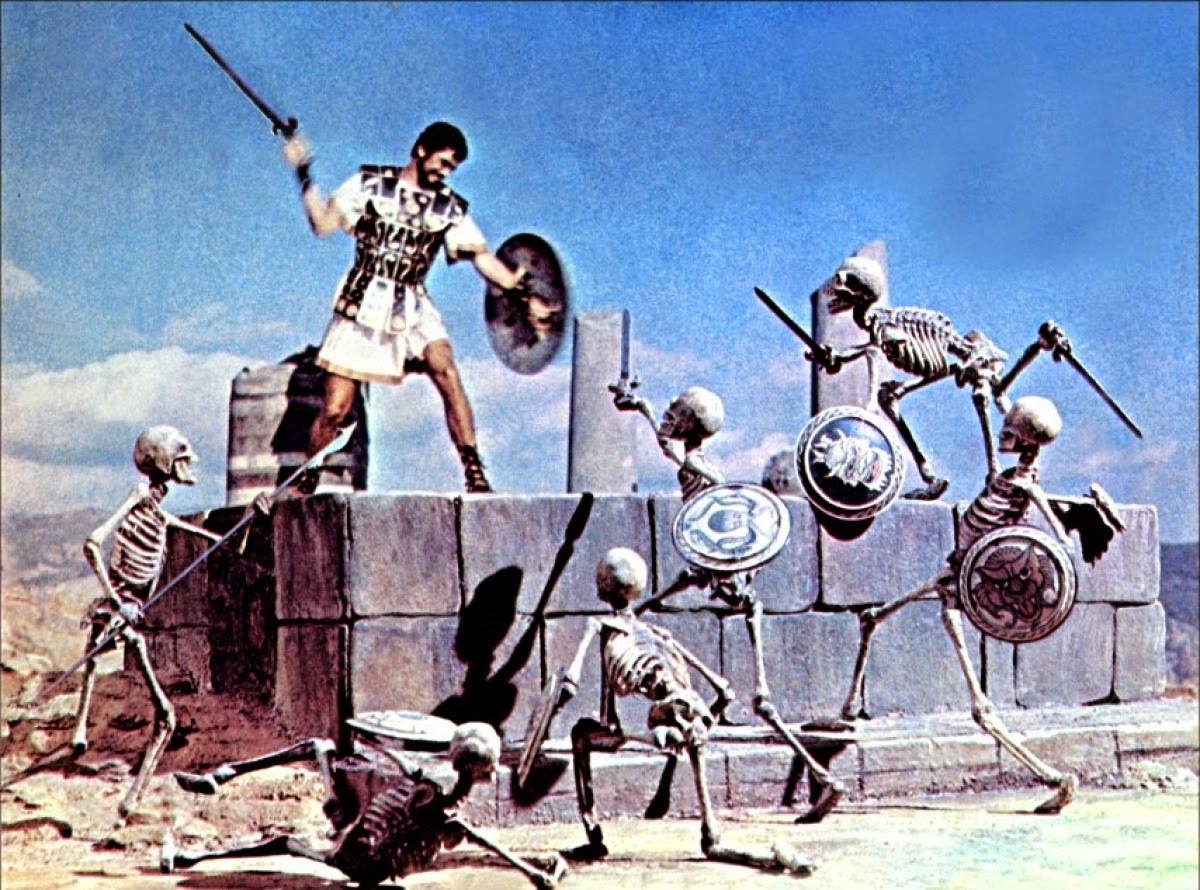
    Finally, we’ll make things right again with an extensive suite from the ultimate Ray Harryhausen mythological playground, “Jason and the Argonauts” (1963). This is the one that features the climactic battle with the skeleton army. The music, by Bernard Herrmann, brilliantly suits the visuals. We’ll hear a superb re-recording of the score, on the Intrada label, with the Sinfonia of London, conducted by Bruce Broughton.

    No bones about it, you won’t want to myth it! it’s music from movies (loosely) inspired by classical mythology this week, on “Picture Perfect,” this Friday evening at 6:00 EDT, on WWFM – The Classical Network and wwfm.org.

  • Elmer Bernstein a Hollywood Legend

    Elmer Bernstein a Hollywood Legend

    Over the course of an enviable career that spanned some 50 years, Elmer Bernstein composed music for dozens of movies, many of them still much-beloved, including “The Ten Commandments” (1956), “The Magnificent Seven” (1960), “To Kill a Mockingbird” (1962), and “The Great Escape” (1963).

    In addition, he was one of the first film composers to incorporate jazz elements into his work for dramatic purposes, in movies like “The Man with the Golden Arm” (1955), “Sweet Smell of Success” (1957), and “Walk on the Wild Side” (1962).

    Coming out of the Swinging Sixties, when the industry clearly favored a more “popular” sound over purely orchestral scores (until John Williams changed everything), Bernstein kept right on working. Thanks to a generation of younger filmmakers who had grown up on his classics, he never lacked for opportunities. Suddenly he found himself much in demand as a comedy composer, providing the underscores for “Animal House” (1978), “The Blues Brothers” (1980), “Airplane!” (1980), “Stripes” (1981), and “Ghostbusters” (1984).

    For Martin Scorsese, he composed music for “The Age of Innocence” (1993), “Bringing Out the Dead” (1999), and “The Gangs of New York” (2002), though his score for the latter was ultimately rejected. He also adapted Bernard Herrmann’s music for Scorsese’s remake of “Cape Fear” (1991).

    Oh yeah, along the way, he also composed the iconic National Geographic theme – clearly by the same man who wrote “The Magnificent Seven.”

    In all, Bernstein was nominated for 14 Academy Awards, but claimed the Oscar only once, fairly early on, for his work on “Thoroughly Modern Millie” (1967), of all things. His final nomination was for his very last score, for “Far from Heaven” (2002). Elmer Bernstein died on August 18, 2004 at the age of 82.

    No relation to Leonard Bernstein (or “Bern-STINE”), Elmer pronounced his name “Bern-STEEN.” The two were sometimes further differentiated as “East Coast Bernstein” and “West Coast Bernstein.”

    In the year 2000, Elmer Bernstein composed a guitar concerto and expressed regret that he hadn’t contributed more to the concert hall. At least it was good one. David Hurwitz of classicstoday.com describes it as “incontestably the finest piece ever composed for this combination” (i.e. guitar and orchestra), going so far as to hold it up to Joaquin Rodrigo’s “Concierto de Aranjuez.” I don’t know if I’d take it that far, but it is pretty damn good.

    https://www.youtube.com/watch?v=eOxXLDdWZF8&list=PLjRpv3cr2epHnVUvbZhp8v0de0pXaOjkY

    Happy birthday, Elmer Bernstein. You are very much missed!

  • Marlboro Music Winds & Composer Birthdays

    This week on “Music from Marlboro,” we’re gone with the winds – woodwind instruments, that is. Tune in at 6 p.m. EDT for the Bassoon Quartet, Op. 40, No. 3, by Franz Danzi and the Quintet for Piano and Winds by Beethoven.

    For the remainder of the late afternoon, we’ll celebrate the birthdays today of composers Elisabetta Brusa, Mario Castelnuovo-Tedesco, Reginald De Koven, and Grigoras Dinicu, conductor Sixten Ehrling, and pianist Garrick Ohlsson.

    Hang on tight, from 4 to 7 p.m. EDT, on WWFM – The Classical Network and wwfm.org.

Tag Cloud

Aaron Copland (93) Beethoven (95) Composer (114) Film Music (137) Film Score (143) Film Scores (255) Halloween (94) John Williams (195) KWAX (229) Leonard Bernstein (103) Marlboro Music Festival (125) Movie Music (152) Mozart (88) Opera (208) Philadelphia Orchestra (89) Picture Perfect (174) Princeton Symphony Orchestra (108) Radio (88) Ross Amico (244) Roy's Tie-Dye Sci-Fi Corner (290) The Classical Network (101) The Lost Chord (268) Vaughan Williams (103) WPRB (396) WWFM (881)

DON’T MISS A BEAT

Receive a weekly digest every Sunday at noon by signing up here


RECENT POSTS