Category: Daily Dispatch

  • Westminster Choir Homecoming Concert Tonight

    Westminster Choir Homecoming Concert Tonight

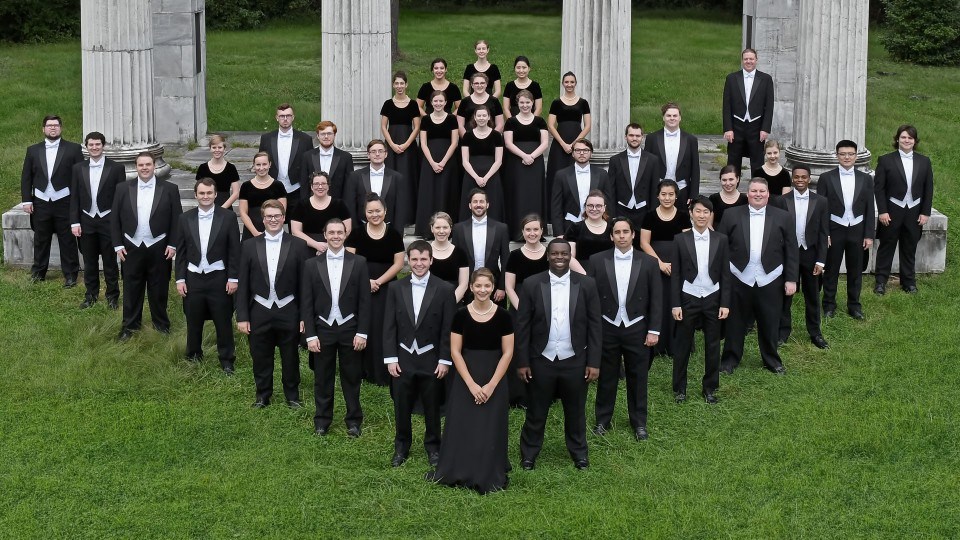
    When you’ve got a nasty cold, all you want to do is come home. It’s rather fortunate for me, then, that tonight will be WWFM’s annual broadcast of Westminster Choir’s Homecoming Concert. The program will be heard live, coming your way from Princeton University’s Richardson Auditorium, starting at 7:30 p.m.

    Joe Miller will lead the world-renowned Westminster Choir of Westminster Choir College in works of Ēriks Ešenvalds, Ted Hearne, Dan Messé, and Claudio Monteverdi, as well as a selection of traditional American folk songs and spirituals. I’ll be sticking around a little later than usual to man the board and to provide the fill music, following the concert, up until 10 p.m.

    You can listen to a preview of the program with Joe Miller and founding “Sounds Choral” host Marjorie Herman here:

    https://www.rider.edu/events/westminster-choir-homecoming-concert-2019

    Of course, I’ll be spinning the platters, as usual, beginning this afternoon at 4 p.m. I hope you’ll join me as I observe the birthday anniversaries of Johann Ernst Bach, Frederic Lamond, Vittorio Rieti, Arthur Rubinstein, Sir John Tavener, and Gregor Joseph Werner.

    And I wouldn’t be the least bit surprised if we also hear music by William Alwyn, Johann Sebastian Bach, Mario Castelnuovo-Tedesco, Franz Liszt, Ottorino Respighi, and Camille Saint-Saëns, with a couple of send-offs to organist Jean Guillou and composer Michel Legrand, both of whom died over the weekend.

    I’ll be sure to have plenty of tissues and lozenges on hand. I invite you to come home to great music, from 4 to 10 p.m. EST, on WWFM – The Classical Network and wwfm.org.
  • Marcel Tyberg Holocaust Composer Rediscovered

    Marcel Tyberg Holocaust Composer Rediscovered

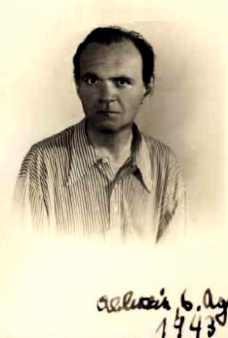
    Marcel Tyberg was a forgotten casualty of the Holocaust. Targeted because of his Jewish ancestry (a mere 1/16th of his make-up), Tyberg was deported to Auschwitz, where his death was recorded on New Year’s Eve, 1944.

    His music alone should not have attracted unfavorable attention from the authorities. Quite apart from the modernism being explored by many of the composers interned in the “artists’ camp” of Terezin – a musical language the Nazis branded “degenerate” – Tyberg’s symphonies are very much in the Austro-German romantic tradition.

    Nevertheless, his output was revived only in the last decade or so, thanks in large part to conductor JoAnn Falletta. This week on “The Lost Chord,” learn about the extraordinary journey of Tyberg’s scores from wartime Italy to 21st century Buffalo.

    Tyberg lives again, through his Symphony No. 3, on “Resurrection Symphony,” this Sunday night at 10:00 EST, on WWFM – The Classical Network and wwfm.org.
  • WWFM Mozart Campaign Thanks & Figaro Sunday!

    WWFM Mozart Campaign Thanks & Figaro Sunday!

    Thank you to all of you who contributed to yesterday’s Mozart campaign. It’s because of listeners just like you that we at WWFM are privileged to be able to do what we love to do – share great music with the community. And that community is huge! Yesterday, someone called in all the way from Nikiski, Alaska.

    Unfortunately, we still came up considerably short of our projected goal, which means that we’ll have to come back and do it again sooner than we had hoped. If you had been meaning to contribute and did not have an opportunity to do so, you may still donate online at wwfm.org.

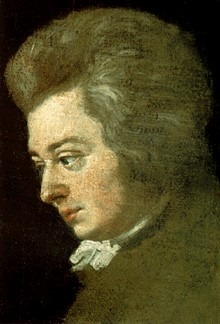
    Tomorrow (Mozart’s actual birthday), the “Sunday Opera” will be devoted to a special presentation of “The Marriage of Figaro,” hosted by Michael Kownacky and David Osenberg. The performance, captured at the 1962 Glyndebourne Festival, will feature Heinz Blackenburg as Figaro and Mirella Freni as Susanna. Silvio Varviso will conduct. If you find you like it, the recording is still available as one of our thank you gifts. Search for it under the thank you gift drop-down box, when you make your online contribution.

    There are also options to obtain all of the offered Mozart recordings as a bundle, with or without the handsome and durable WWFM tote bag.

    Again, thank you for all that you do to help keep great music on the air on WWFM – The Classical Network.


    As a token of my gratitude, please enjoy this duet from “The Magic Flute” rendered by actual birds:

  • Celebrate Mozart’s Birthday with Classical Music

    Celebrate Mozart’s Birthday with Classical Music

    There’s no art quite like MozArt.

    Reacquaint yourself with the astonishing facility and pervasive humanity of Mozart’s music, as we observe his birthday today (he was born on January 27, 1756) with a full playlist of his symphonies, concertos, chamber and choral works, and selections from his music for the stage.

    Yes, Mozart is good for you. Whether or not exposure to his output improves the development of babies’ brains, it has undoubtedly contributed to the world’s sentimental education. Mozart’s music is just plain good for the soul. It reassures and it keeps us in touch with the larger truths of what it means to be human. Was Mozart’s life a bed of roses? No. But he knew where to find beauty, and he devoted a substantial portion of his brief existence to shepherding it into the world.

    We at The Classical Network understand the significance of keeping great music in our lives and in our community. But we can only do it with your help and with the help of listeners just like you. If you haven’t contributed to The Classical Network, or if you haven’t contributed recently – or if you HAVE contributed, but now feel you are in a position to bestow an additional gift – please consider joining us in membership today. We have four brand new Mozart-oriented thank you gifts to hopefully entice you and certainly to demonstrate our gratitude to you for doing your part to keep classical music on the airwaves and in continued good health.

    There’s more to life than acquiring things, struggling to survive, or shouting down those who happen to disagree with us. The greatest truths and consolations are to be found in the finest music. You don’t have to “know” anything about it. All you to do is open yourself up to it and support it.

    Please call us today (between 9 a.m. and 6 p.m. EST) at 1-888-232-1212, or donate online (anytime) at wwfm.org. Then enjoy the music of Mozart right along with us, your friends, at WWFM – The Classical Network. Thank you for ALL that you do.

  • Women’s Names in Classic Film History

    Women’s Names in Classic Film History

    This week on “Picture Perfect,” building a show around women’s names for titles permits us to travel across a broad of array of genres – contemporary drama, Regency Era comedy of manners, 1940s film noir, and 16th century costume picture.

    “Rachel, Rachel” (1968) stars Joanne Woodward as a repressed, small-town schoolteacher, who learns to take control of her own life. The film marked the directorial debut of Woodward’s husband, Paul Newman. “Rachel, Rachel” was nominated for four Academy Awards, including those for Best Actress and Best Picture. Newman picked up a Golden Globe and a New York Critics Circle Award for his direction. The lovely Americana score was composed by Jerome Moross.

    “Emma” (1996) was adapted from the Jane Austen novel. Gwyneth Paltrow plays the high spirited-though-somewhat-clueless matchmaker, who fails to recognize her own feelings or those of the men around her. Also among the cast are Alan Cumming, Toni Collette, Ewan McGregor and Jeremy Northam. Screenwriter and director Douglas McGrath fell in love with the book while an undergraduate at Princeton University. Rachel Portman wrote the Academy Award-winning score.

    Otto Preminger’s film noir, “Laura” (1944), features quite the cast, including Gene Tierney, Dana Andrews, Clifton Webb, Judith Anderson and Vincent Price. The equally impressive theme, which is heard in endless permutations throughout the film, was by Philadelphia-born David Raksin. Outfitted with lyrics by Johnny Mercer, it became the second most-recorded song during the composer’s lifetime, after only Hoagie Carmichael’s “Stardust.”

    Finally, “Diane” (1956) takes us back to 16th century France, with a plot concerning Diane de Poitiers (played by Lana Turner), a member of the court of Francis I, who becomes the mistress of the king’s son, Henri d’Orleon (played by a very young Roger Moore). Their illicit love unfolds against the backdrop of Medici intrigue and lust for power. Miklós Rózsa, M-G-M’s go-to-composer for its historical spectacles, wrote the music.

    I hope you’ll join me for “What’s in a Name?,” this Friday evening at 6:00 EST, on WWFM – The Classical Network and wwfm.org.
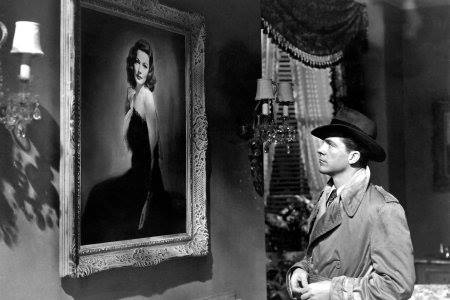

    PHOTO: Dana Andrews likes his women stiff, like his bourbon

Tag Cloud

Aaron Copland (93) Beethoven (95) Composer (114) Film Music (137) Film Score (143) Film Scores (255) Halloween (94) John Williams (195) KWAX (229) Leonard Bernstein (103) Marlboro Music Festival (125) Movie Music (152) Mozart (88) Opera (208) Philadelphia Orchestra (89) Picture Perfect (174) Princeton Symphony Orchestra (108) Radio (88) Ross Amico (244) Roy's Tie-Dye Sci-Fi Corner (290) The Classical Network (101) The Lost Chord (268) Vaughan Williams (103) WPRB (396) WWFM (881)

DON’T MISS A BEAT

Receive a weekly digest every Sunday at noon by signing up here


RECENT POSTS