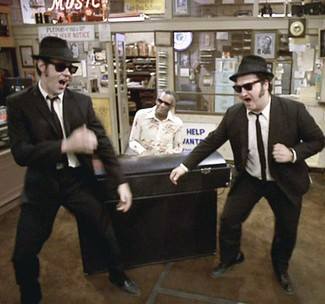
I just realized John Belushi would have been 70 today. He died of a drug overdose in 1982. He was 33 years-old.
Category: Daily Dispatch
-
E.T.A. Hoffmann Birthday: Madness & Inspiration
Today is the birthday of E.T.A. Hoffman (1776-1822), and what a good day for it! Mid-winter is the perfect time to enjoy Hoffmann’s tales of madness and obsession.
Not only was Hoffmann a seminal author of dark fantasy and horror, he was also a jurist, a draftsman, a caricaturist, and of course a composer and music critic.
Well, perhaps I shouldn’t say “of course.” Hoffmann is most famous for his writings, and justifiably so. None of his musical compositions have attained anything like repertoire status. However he did manage to turn out a lovely Harp Quintet, and his opera, about the water spirit “Undine,” certainly shows promise, though given the source – after all, he was the author of “The Sandman” and “Mademoiselle de Scuderi” – it is a mite disappointing.
Perhaps that’s the viewpoint of someone looking back from a more jaded era, when the fantastic is routinely hammered home in all its CGI vulgarity. By contrast, Hoffmann’s tales are dream-like and insinuating in ways that still have the power to haunt across the centuries.
Musically, from our perspective, Hoffmann is perhaps more important for having inspired other, more enduring composers, who wrote works like “Coppelia” (Delibes), “The Nutcracker” (Tchaikovsky) and of course “The Tales of Hoffmann” (Offenbach). Even so, these works seldom reflect the spirit of Hoffmann’s originals.
Of the Romantics, surprisingly, only Robert Schumann seems to have really got it. You can really hear how Hoffmann got into his head in works like “Kreisleriana” and the “Nachtstücke.” But Schumann was perhaps one step away from “Sandman” material anyway.
Hoffmann’s tales have had a more palpable influence on 19th century literature, firing the creative imaginations of writers from Dostoyevsky to Dumas to (least surprisingly) Edgar Allan Poe.
If all you know is “The Nutcracker” or the Offenbach opera, you don’t really know Hoffmann. Though Tchaikovsky had an intuitive grasp of the idiom, he was working from a watered down adaptation by Dumas. It took Maurice Sendak to bring the story back to its roots.
Sadly, Pacific Northwest Ballet discontinued its annual presentations of this gutsy production. Apparently, it was too freaky for audiences expecting to be spoon-fed sugar plums. Instead the company has taken up the insipid Balanchine version, which inexplicably thrives like fungus on a fruitcake. Is this really the same artist who choreographed “Agon?”
Fortunately, the PNB Sendak version was made into a feature film in 1986.
This is a “Nutcracker” that will put hair on your chest.
Anyway, “The Nutcracker, “The Tales of Hoffmann,” and especially “Coppelia” are almost like children’s book versions of the originals. If you have a taste for such things, you owe it to yourself to at least read “The Sandman.” Here it is, though it’s really not the kind of story you should read off of a computer:
https://germanstories.vcu.edu/hoffmann/sand_e.html
Happy birthday, E.T.A. Hoffmann!
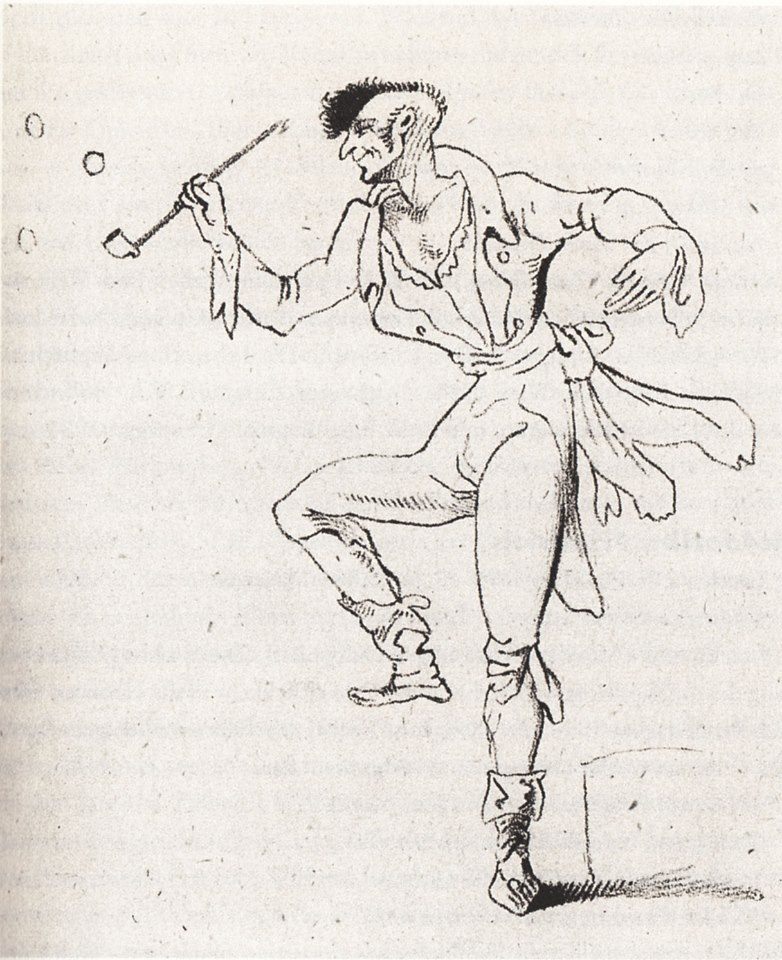
IMAGE: One of Hoffmann’s most famous creations, Kapellmeister Kreisler, sporting a rad haircut and blowing bubbles
-
Marlboro’s Haunting Chamber Music Classics
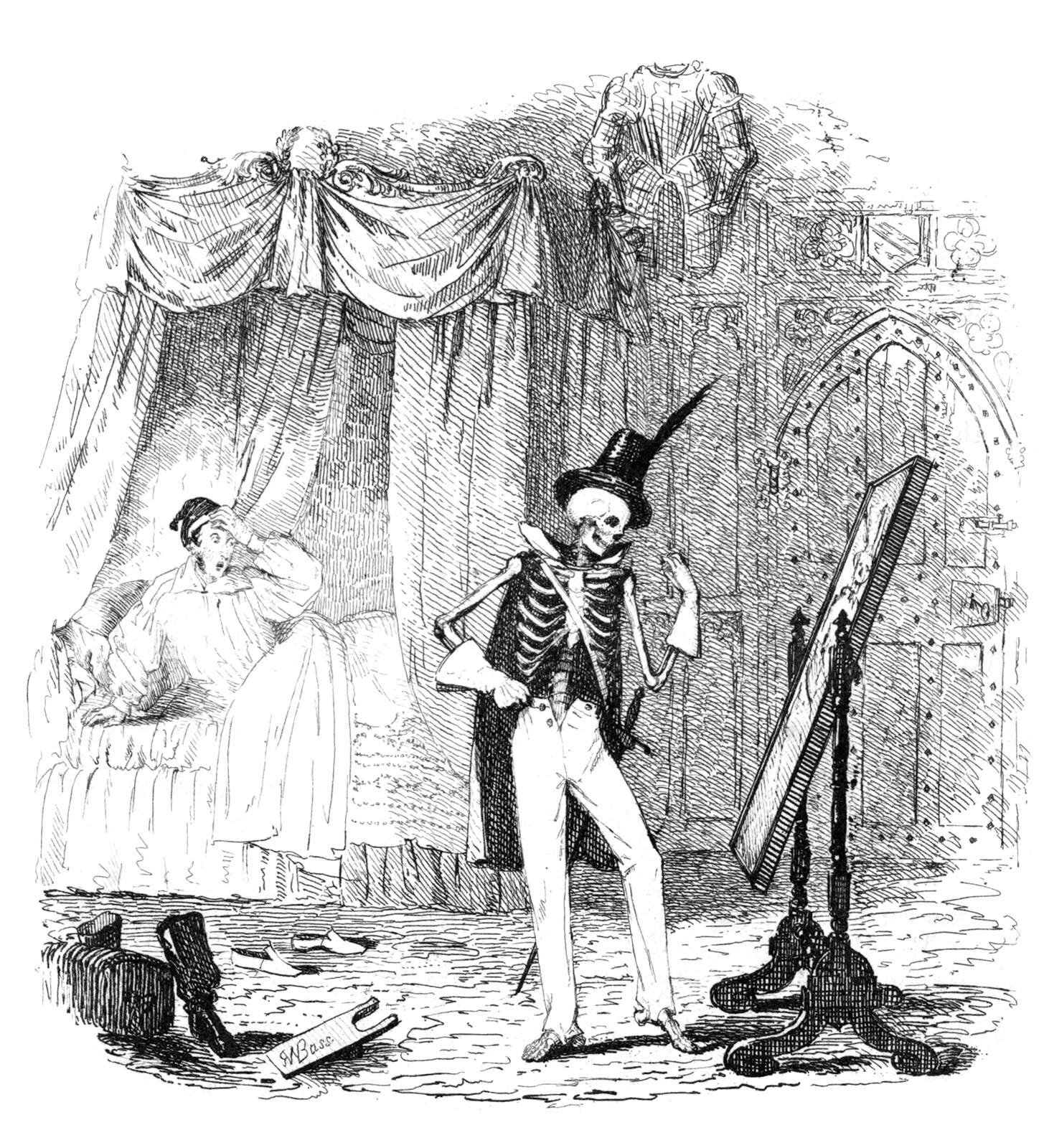
For obvious reason, the ghost story is inextricably linked in many people’s thoughts with Hallowe’en. But there was a time when reading and sharing eldritch tales were common pastimes even at Christmas. I suppose it makes sense that during a time of year when there is less light, the skies are bleak, and the landscapes withered – a time when people are essentially housebound and comparatively isolated – the mind would be most susceptible to chilling thoughts of something sinister underlying a gust of wind or a creak on the cellar stairs.
I thought it rather appropriate, then, to revisit a couple of chamber music classics with a supernatural bent on this week’s “Music from Marlboro.”
French composer André Caplet was winner of the esteemed Prix de Rome in 1901, placing ahead of Maurice Ravel. He played percussion with the Colonne Orchestra and trained as a conductor under Arthur Nikisch. From 1910 to 1914, he served as director of the Boston Opera. While serving in the First World War, he was engulfed in poisonous gas, which resulted in the pleurisy that plagued him for the remainder of his short life. Caplet died in 1925, at the age of 44.
As the Prix de Rome would suggest, Caplet composed music of considerable merit. Nonetheless, he was fated to be remembered for his work as an orchestrator for Claude Debussy. Debussy’s “Children’s Corner,” “The Martyrdom of Saint Sebastian,” “La Boiîte à joujoux,” and “Clair de lune” would all be draped in Caplet’s finery.
Of Caplet’s original music, only his “Conte fantastique” (“Fantastic Tale”), after Edgar Allan Poe’s “The Masque of the Red Death,” retains a foothold on the repertoire. Composed in 1908 for harp and string orchestra, it was arranged for harp and string quartet in 1922. The work crackles with atmosphere, invention and suspense. In fact, the program is brought so vividly to life that one can’t help but think that Caplet would have made an excellent film composer. Savor the chill as Prince Prospero’s decadent revels are curtailed by the implacable chimes of midnight!
The Marlboro performance, which dates from 2009, features Sivan Magen, harp; Liana Gourdjia and Bella Hristova, violins; Sally Chisolm, viola; and Paul Wiancko, cello. As an added bonus, the music will be prefaced by a reading from Poe’s creepy classic.
Fifteen years after the death of Beethoven, the composer’s star pupil, Carl Czerny, noted that the slow movement of his Piano Trio in D, Op. 70, No.1, reminded him of the ghost of Hamlet’s father. Czerny may not have been all that far off the mark.
Actually, at the time of the work’s composition, in 1808, Beethoven had been kicking around the idea for opera on the subject of Macbeth. The words “Macbett” and “Ende” appear near sketches for the Largo. It’s been speculated that the music may have been a working out of ideas for a proposed scene featuring the three witches. The ominous mood is heightened by eerie and mournful touches, sudden pauses and outbursts, and the use of a ghostly tremolo. The operatic project collapsed when Beethoven’s librettist, Heinrich Joseph von Collin (to whom Beethoven had dedicated the “Coriolan Overture”), begged off of the project, thinking it was too dark.
We’ll hear Marlboro musicians Dénes Várjon, piano; Michelle Ross, violin; and Brook Speltz, cello, captured on tour in Washington, D.C., in 2015. You can learn more about this season’s tours (the next two are coming up in March) by visiting marlboromusic.org.
Turning up your radio has been proven to drown out bumps in the night. Join me for “haunting” performances from the legendary Marlboro Music Festival, this Wednesday evening at 6:00 EST, on WWFM – The Classical Network and wwfm.org.
Marlboro School of Music and Festival: Official Page
-
Ballet Ambivalence Balanchine Stravinsky & More
I have always had been ambivalent about the ballet. On the one hand, I am quite enthusiastic about attending live performances of works written specifically for the stage, especially those by 20th century masters (Stravinsky, Prokofiev, Hindemith). On the other, I am generally put off, at least in theory, by choreographers employing in their programs pre-existing works that have nothing at all to do with the dance. When I look at an advertisement for the ballet, and I see a triple bill featuring “George Balanchine’s Piano Concerto,” and there is no indication anywhere of who the actual composer is, I have less than no interest in attending and even feel inclined to fury. But I guess that’s what happens when you’re someone who puts the music first.
I understand, if I am to be objective (which I seldom am), that that’s not what dance is about. It’s also certainly not about story. How many evening-length ballets have I endured in which the “plot,” such that it is, has run its course by the end of the second act? There really is no purpose for Act III, except to have everyone leap about in a series of interminable divertissements. I learned this lesson early, at my first “Nutcracker” (mercifully a two-acter), when I discovered that most of the famous music underscored the less-than-thrilling-for-children-everywhere second part. Don’t get me wrong, I have grown to love “The Nutcracker,” but I love it most when imaginative choreographers find ways to tie the events of Act II into the narrative set up in Act I. As a boy, I was all about the Mouse King. It was only later, after I hit puberty, that the Act II pas de deux became indispensible. After all, there is no love like doomed love. But why is this music for the Sugar Plum Fairy and her consort so ardent? Doesn’t it make more sense to tie it back in to Clara (as some choreographers thankfully have)?
But I digress.
I admit, dogma is a dangerous thing, and there have been notable exceptions to my aversion to ballet set to music not intended for the dance. I was very pleasantly surprised, for instance – especially after having endured his horrible “Nutcracker,” with its stupid candy cane hula hoops – by Balanchine’s “A Midsummer Night’s Dream,” which I recall as compelling and often brilliant. In the end, however, I admit I am not really qualified to assess dance. So I’ll just shut up and play the music.
Today is Balanchine’s birthday, so I thought I’d spend the bulk of the afternoon spinning records of some of the works he introduced and/or choreographed. My heart is with the commissions, of course, so we’ll hear Stravinsky’s “Apollo,” Prokofiev’s “The Prodigal Son,” and Hindemith’s “The Four Temperaments,” alongside splashy arrangements by Hershy Kay (which I am less enthusiastic about) after works of Gottschalk and Sousa. I also have a vintage recording of Antal Dorati conducting Vittorio Rieti’s arrangement of “Cotillon,” after Chabrier, if I can lay my hands on it, which Balanchine choreographed for the Ballets Russes de Monte-Carlo.
First, it’s another Noontime Concert from Gotham Early Music Scene, or GEMS. Concordian Dawn will present a program titled “Fortuna Antiqua et Ultra,” medieval music illustrative of the ever-turning Wheel of Fortune and the consolation of hope.
We’ll be wheeling and pirouetting from 12 to 4 p.m. EST, on WWFM – The Classical Network and wwfm.org.
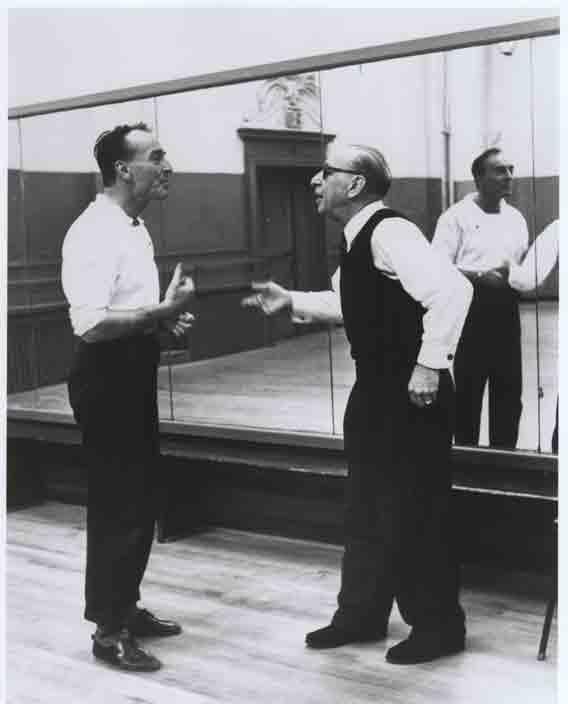
PHOTO: Balanchine and Stravinsky
-
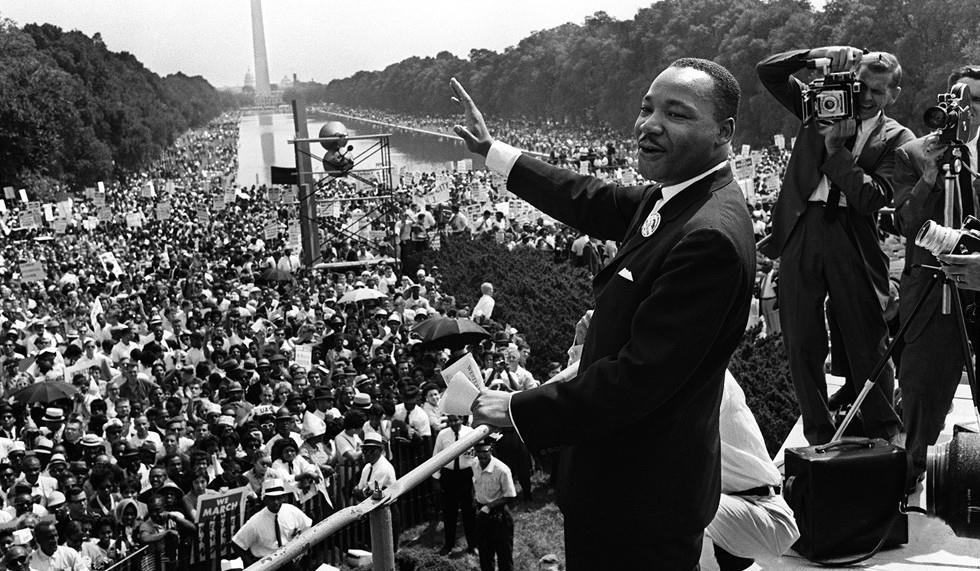
MLK Day Music Inspired by King’s Words
“You don’t have to see the whole staircase. Just take the first step.”
So said Dr. Martin Luther King, Jr. On this MLK Day, we’ll hear at least two works inspired by King’s speeches.
“New Morning for the World: Daybreak of Freedom,” by the Pulitzer Prize winner Joseph Schwantner, has become something of a contemporary classic. My preferred performance of the piece is from an out-of-print LP, featuring narration by former Pittsburgh Pirate Willie Stargell. However, last year I played a digital recording, with Raymond Bazemore and the Oregon Symphony conducted by James DePreist. This year, I thought we’d give a try to Vernon E. Jordan, Jr., and the National Symphony Orchestra conducted by Leonard Slatkin. You’ll be able to hear it in this afternoon in the 4:00 hour.
Then at 6:00, I’ll be sharing a recording of Adolphus Hailstork’s inspiring oratorio “Done Made My Vow,” which also incorporates texts from King’s speeches, with the Baltimore Symphony Orchestra and Morgan State University Choir.
In between, we’ll mark the birthday anniversaries of Placido Domingo, Henri Duparc, Nikolai Golovanov, Antonio Janigro, and Alexander Tcherepnin.
The music is King, on this MLK Day, from 4 to 7 p.m. EST, on WWFM – The Classical Network and wwfm.org.
Tag Cloud
Aaron Copland (93) Beethoven (95) Composer (114) Film Music (137) Film Score (143) Film Scores (255) Halloween (94) John Williams (195) KWAX (229) Leonard Bernstein (103) Marlboro Music Festival (125) Movie Music (152) Mozart (88) Opera (208) Philadelphia Orchestra (89) Picture Perfect (174) Princeton Symphony Orchestra (108) Radio (88) Ross Amico (244) Roy's Tie-Dye Sci-Fi Corner (290) The Classical Network (101) The Lost Chord (268) Vaughan Williams (103) WPRB (396) WWFM (881)