Category: Daily Dispatch

  • Rosemary Brown: Medium or Musical Genius?

    Rosemary Brown: Medium or Musical Genius?

    The medium is the message.

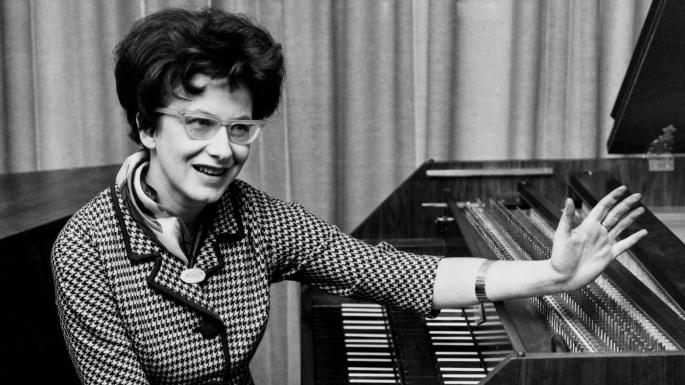
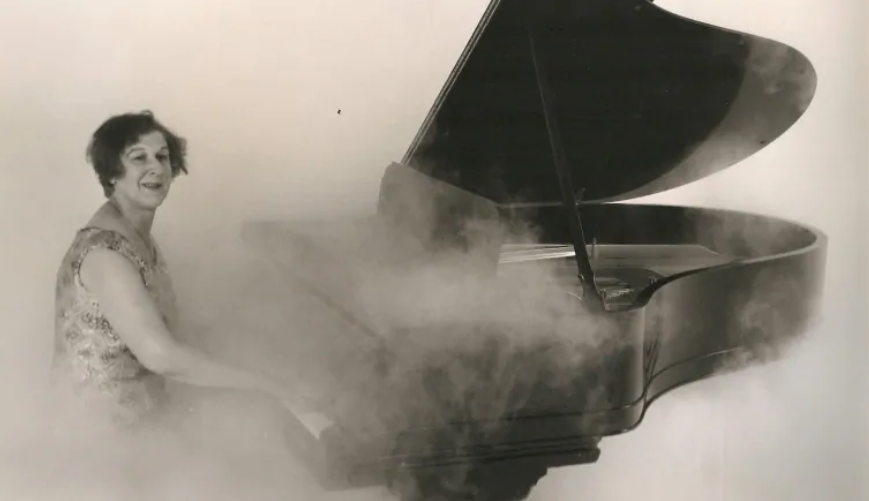
    Does anyone remember Rosemary Brown? Brown was the English spiritualist who claimed that the great composers were still very much active and dictating posthumous works to her.

    At the age of 7 (circa 1923), Brown claimed to have been confronted by a curious specter with long white hair and a flowing cassock. The specter prognosticated that one day he would make her famous. It was ten years before she stumbled across an old photograph and realized that what she had encountered was no less than the shade of Franz Liszt.

    Brown was born into a family of alleged psychics. Both her parents and grandparents claimed extrasensory powers. Brown took up the piano at the age of 15. Her period of study is unclear, as she seems to have changed her story over the decades, but she would have us believe she was basically a dilettante with little formal training.

    Then, in 1964, the ghost of Liszt reappeared and she began “transcribing” new works by the great composers – Bach, Mozart, Beethoven, Schubert, Schumann, Chopin, Brahms, Grieg, Debussy, Rachmaninoff, and Stravinsky. And Liszt, of course. These included two symphonies she attributed to Beethoven, a new “Fantaisie-Impromptu” by Chopin, and a 40-page sonata by Schubert.

    She claimed that some of the composers directed her hands on the keyboard (Chopin and Liszt); others sang (Schubert) or dictated notes (Bach and Beethoven). All of them communicated in English.

    Skeptics abounded. A number of critics and musicologists dismissed the new compositions as substandard pastiches, claiming that the great composers tended to reinvent themselves and push boundaries, while these freshly “dictated” works offered nothing of the sort.

    Some psychologists attributed the phenomena to extraordinary activity on the part of Brown’s subconscious, with the medium essentially reworking and synthesizing all the music she had been exposed to as a child.

    Still, they had to admit it was impressive. Over the course of her life, Brown produced hundreds of such pieces. One expert described it as “the most convincing case of unconscious composition on a large scale.”

    Respected concert pianists Howard Shelley, Peter Katin, Cristina Ortiz, and John Lill have all included these perhaps spurious works on their programs.

    Brown died in 2001. Whether or not she herself is now dictating is anyone’s guess.


    Rosemary Brown’s obituary in The Guardian:
    https://www.theguardian.com/news/2001/dec/11/guardianobituaries

    Brown meets the Amazing Kreskin (she makes her appearance 9 minutes in; she plays at 12:30):

    Documentary on Brown from 1976:
  • Alfred Newman’s Tyrone Power Swashbucklers

    Alfred Newman’s Tyrone Power Swashbucklers

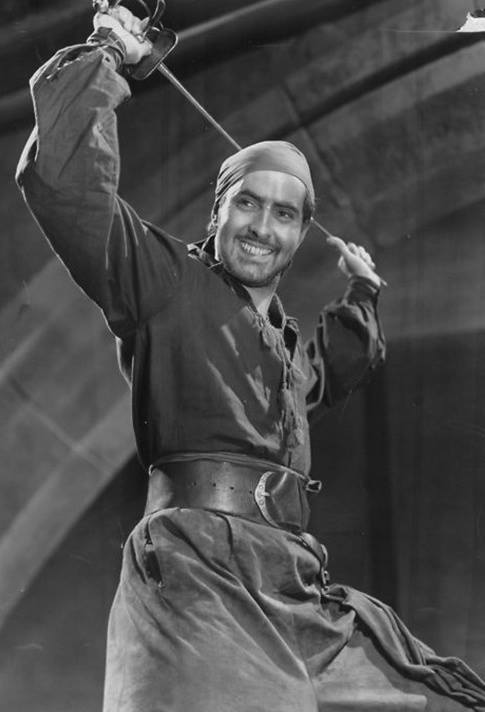
    This week on “Picture Perfect,” experience the Power of Alfred Newman – TYRONE Power, that is. It’s all music from Power swashbucklers made at 20th Century Fox, where Newman served as music director for 20 years.

    “Captain from Castile” (1947) was one of Power’s most opulent vehicles. Based on the novel by Samuel Shellabarger, the film relates Pedro de Vargas’ escape from persecution at the hands of the Inquisition and his accompaniment of Hernán Cortéz in the conquest of Mexico. Also starring Jean Peters and Cesar Romero (as Cortéz), the film capitalizes on the happenstance of a real-life erupting volcano. The climactic march, known as “Conquest,” went on to become one of Newman’s greatest hits. It’s entered the marching band repertoire and has been recorded many times.

    “The Black Swan” (1942) costars Maureen O’Hara and Laird Cregar (as Henry Morgan). Also, if you ever wanted to see George Sanders in a red beard, then this is the movie for you. This time the source material is a novel by Rafael Sabatini, who also created “Captain Blood,” “The Sea Hawk,” and “Scaramouche.”

    Of course, it was “The Mark of Zorro” (1940) that solidified Power’s reputation as 20th Century Fox’s resident swashbuckler. In its own way, the remake manages to match the delights of Douglas Fairbanks’ 1920 original, which was one of the silent era’s most thrilling adventures.

    Finally, it’s back to Shellabarger for “Prince of Foxes” (1949). This time, the setting is the Italian Renaissance. Orson Welles is Cesare Borgia, with an oddly cast Everett Sloane playing an assassin. Sloane was a veteran of Welles’ Mercury Theatre. You may remember him as Mr. Bernstein from “Citizen Kane,” or perhaps from the famous funhouse finale from “The Lady from Shanghai.”

    It’s interesting that all of the films represented this week were inspired by books. (Zorro was introduced in “The Curse of Capistrano” by Johnston McCully.) It was another day, as they say.

    I hope you’ll join me for music by Alfred Newman, written for the swashbucklers of Tyrone Power, on “Picture Perfect” – music for the movies – this Friday evening at 6:00 EST, on WWFM – The Classical Network and wwfm.org.


    A fun reminiscence of Newman (“the best conductor who ever picked up a baton in Hollywood”) by composer David Raksin:

    http://www.americancomposers.org/raksin_newman.htm

  • Chausson’s Death and Debussy’s Music

    Chausson’s Death and Debussy’s Music

    Suicide by bicycle?

    That’s the theory put forth by Debussy biographer Edward Lockspeiser concerning the untimely death of Ernest Chausson. In 1899, Chausson hurtled downhill into a brick wall at the age of 44. While Chausson was certainly prone to depression, the theory of slamming into a wall with intent was emphatically refuted by Chausson’s own biographer, Ralph Scott Grover.

    Chausson left behind a comparatively small, but meticulous output, a mere 39 opus numbers – Chausson got a late start, abandoning law at 25 to devote himself to composition – among them are the ravishing “Poème” for violin and orchestra, the song cycle “Poème de l’amour et de la mer,” and the Concert for Piano, Violin and String Quartet.

    Chausson’s “Concert” of 1891 is especially noteworthy, its title recalling chamber music of the French baroque by composers such as Couperin and Rameau, but also suggesting more of a concerto than a sextet, with solo violin and piano playing against the backdrop of a standard string quartet. It’s a creative gamble with its own unique challenges, and Chausson acquits himself marvelously.

    On this week’s “Music from Marlboro,” we’ll hear a 1968 performance, featuring solo violinist Jaime Laredo and pianist Ruth Laredo, with violinists Michael Tree and Hidetaro Suzuki, violist Nobuko Imai, and cellist Robert Sylvester. That’s a starry line-up by anyone’s standards. You’ll note that Tree is best known as a violist from his 45-year tenure with the Guarneri String Quartet.

    Chausson and Claude Debussy were like brothers. Chausson invited his friend for a long stay in the summer of 1893 at a rented house in Luzancy. To make the visit even more agreeable, Chausson sent away for the score to Mussorgsky’s “Boris Godunov,” knowing Debussy’s fondness for it, and the they passed many enjoyable hours together at the piano, with Debussy playing through the opera while Chausson acted as page-turner.

    The two were close enough that Chausson felt he could speak frankly of his disapproval of Debussy’s profligate lifestyle. Whether or not he overstepped his bounds, their friendship did cool somewhat after that, though they continued to find much to admire in one another’s music.

    Chausson did not live to hear Debussy’s Sonata for Flute, Viola and Harp, a late work composed in 1915. We’ll hear it performed at the 1978 Marlboro Music Festival by flutist Carol Wincenc, violist Samuel Rhodes, and harpist Moya Wright.

    Incidentally, Chausson biographer Ralph Scott Grover lived next store to my grandparents. Grover was the head of the music department at Lafayette College and also a great Anglophile – so much so that he spoke with a Mid-Atlantic accent. Even as a boy, I found this puzzling. It turns out he was a world authority on the music of Edmund Rubbra and a personal friend of the composer. In fact, he wrote a book on Rubbra in 1993 and his encapsulated biography for “The New Grove Dictionary of Music and Musicians.” Grover died in 2002. Though I regret not comprehending who he was, as a child, well before I developed my passion for music, we did get to know one another a little toward the end of his life, by which time he was already listening to me on the radio. We nearly missed one another completely, but I am thankful for the conversations we enjoyed. If only the timing had been better, I might have benefited from more of a master-disciple relationship.

    But let us not speak of regrets! Rather, join me for works of Debussy and Chausson on the next “Music from Marlboro,” this Wednesday evening at 6:00 EST, on WWFM – The Classical Network and wwfm.org.

    Marlboro School of Music and Festival: Official Page


    PHOTO: Chausson turning pages for Debussy

  • Medieval Bestiary Music on The Classical Network

    Medieval Bestiary Music on The Classical Network

    In the Middle Ages, a bestiary was a collection of descriptions and stories about animals, ranging from the mundane to the fantastical, from which moral and theological lessons were gleaned from the natural world. The symbols of the bestiary were likewise absorbed into the conventions of courtly love.

    On today’s Noontime Concert on The Classical Network, the ensemble Marginalia will present “The Book of Beasts: A Medieval Bestiary,” musical evocations of the lion, the panther, the unicorn, the elephant, the phoenix, the pelican, and the dragon, from medieval sources.

    The program, part of a free midday concert series presented by Gotham Early Music Scene (or GEMS), was given at Saint Bartholomew’s Church, 50th Street and Park Avenue, in New York City. Free concerts are held there every Thursday at 1:15 p.m.

    Following the broadcast, stick around, as we’ll continue with an afternoon of zoological and cryptozoological wonders, including Peter Schickele’s “Bestiary,” Jennifer Higdon’s “An Exaltation of Larks,” Lucas Richman: Conductor/Composer’s “Behold the Bold Umbrellaphant” – and, okay, Camille Saint-Saëns’ “The Carnival of the Animals,” among others.

    Take a walk on the wild side, this afternoon from 12 to 4:00 EST, on WWFM – The Classical Network and wwfm.org.

  • Bach, Schweitzer, Růžičková: Music for the Soul

    Bach, Schweitzer, Růžičková: Music for the Soul

    If there is any doubt that Bach is good for the soul, one need look no further than two spiritual titans whose birthdays we’ll celebrate today.

    Albert Schweitzer (1875-1965) is widely remembered for his humanitarian efforts. A lifelong scholar, a missionary, and a physician who brought medical assistance to the people of Gabon, he was awarded the Nobel Prize in 1952.

    A frail child, Schweitzer took to the organ as soon as he was tall enough to reach the pedals. His love of music paralleled his development as a philosopher and a theologian. In fact, no less an authority than Charles-Marie Widor was stunned by Schweitzer’s insights into Bach’s organ works, which were informed in part by a Lutheran background he shared with the composer. Schweitzer wrote extensively on Bach, in French, German, and English. In addition, he gave numerous organ recitals in Europe to finance his hospital in Africa.

    A reverence for life was central to Schweitzer’s philosophy. While he continued his humanitarian work in Lambaréné throughout World War II, Zuzana Růžičková (1927-2017) weathered the incomprehensible in several Nazi concentration camps.

    Růžičková survived internment at Terezin, Auschwitz, and Bergen-Belsen. Of the latter, in particular, she recalled, “If ever there was Hell, this was the lowest part of Hell.” Following the war, she stood up for years against political and anti-Semitic persecution under Czechoslovakia’s communist rule. She survived Stalin and lived through the Velvet Revolution, maintaining her integrity and gaining recognition as “first lady of the harpsichord.” Růžičková became the first harpsichordist to record all of Bach’s keyboard music.

    Unlike Schweitzer, Růžičková was not particularly religious, but her spirit was large and her will indomitable. Her love of music was with her always, even in the camps. (At Terezin, she transcribed some of Bach’s music to take with her to Auschwitz.) Both she and Schweitzer were acutely aware of human suffering on a scale that most of us are lucky never to have encountered. Yet they also recognized a greater good. Perhaps it’s no coincidence that they both lived to be 90.

    I hope you’ll join me today as we sample their artistry, among my featured offerings from 4 to 7 p.m. EST, on WWFM – The Classical Network and wwfm.org.

Tag Cloud

Aaron Copland (94) Beethoven (95) Composer (114) Film Music (153) Film Score (143) Film Scores (255) Halloween (107) John Williams (198) KWAX (233) Leonard Bernstein (105) Marlboro Music Festival (125) Movie Music (168) Mozart (91) Opera (222) Philadelphia Orchestra (91) Picture Perfect (174) Princeton Symphony Orchestra (110) Radio (90) Ross Amico (244) Roy's Tie-Dye Sci-Fi Corner (290) The Classical Network (101) The Lost Chord (269) Vaughan Williams (107) WPRB (397) WWFM (881)

DON’T MISS A BEAT

Receive a weekly digest every Sunday at noon by signing up here


RECENT POSTS