Category: Daily Dispatch

  • Licorice Sticks Beethoven Dutilleux at Marlboro

    Licorice Sticks Beethoven Dutilleux at Marlboro

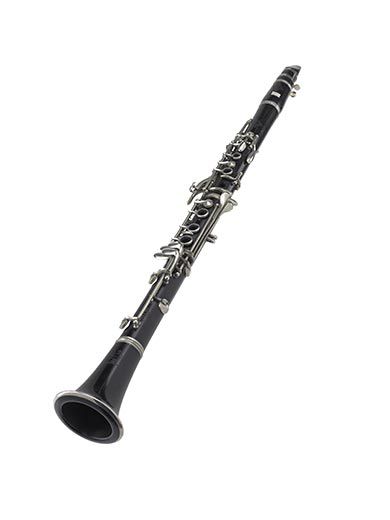
    I hope you’re in the mood for some licorice stick. On this week’s “Music from Marlboro,” our program will be bookended by two works for clarinet trio.

    For Darius Milhaud, as a member of that loose collective known as “Les six,” tomfoolery and high-spirits were a matter of course. Milhaud’s Suite for Violin, Clarinet and Piano, composed in 1936, revisits material from incidental music written for Jean Anouilh’s play “Le Voyageur sans bagages” (“The Traveler without Luggage”). The play deals with an amnesiac World War I soldier attempting to reestablish his identity. Milhaud might seem like an unlikely source for such a serious subject – but then the drama turns out to be a comedy!

    The piece falls into four movements: “Ouverture;” “Divertissement;” “Jeu” (literally “Game”); and “Introduction et Final.” We’ll hear it performed at the 1971 Marlboro Music Festival by violinist Marilyn Dubow, clarinetist Richard Stoltzman, and pianist David Effron.

    All things considered, Beethoven tended to be a little more severe than Milhaud. If there is play in his music, it is the play of a cat, pursuing a musical idea relentlessly, batting it around, adopting an air of calm, and then tearing off its appendages and hammering it through the floorboards.

    Even if that is not your idea of a good time, there is plenty to smile about in his Trio in B-flat, Op. 11. Sometimes identified by the nickname “Gassenhauer,” the work borrows a theme for its third movement set of variations from the drama giocoso (literally, drama with jokes) “L’amor marinaro ossia il corsaro” by Joseph Weigl. Weigl, by the way, was Haydn’s godson.

    “Gassenhauser” denotes a certain kind of popular music, a tune picked up by your average man in the street, and sung or whistled oblivious to its origins. The melody was so well-known, in fact, that it was also treated by Johann Nepomuk Hummel and Niccolo Paganini, among others.

    You’ll sometimes hear the trio performed with a violin in place of the clarinet – the cello is also sometimes swapped out for a bassoon – but for our purposes this evening we’ll go with the distinctive timbres of the sanctioned version for clarinet trio. Again, Richard Stoltzman will be the clarinetist, alongside cellist Alain Meunier, and pianist (and Marlboro co-founder) Rudolf Serkin.

    In between, we’ll experience something completely different. Henri Dutilleux meticulously crafted his seven-movement string quartet, “Ainsi la nuit” (Thus the Night), between 1973 and 1976, after intensive studies of the works of Beethoven, Bartok, and Webern, and a series of preliminary sketches he called “Nights.” All the hard work certainly paid off – the quartet was embraced as a modern masterpiece – though, to my ears, I’ve yet to find any humor in it.

    We’ll hear a performance from Marlboro in 2001. Joseph Lin and Harumi Rhodes will be the violinists, Richard O’Neill the violist, and Marcy Rosen the cellist.

    It’s said that licorice is very good for the digestion. You’ll find plenty to chew on, on this week’s “Music from Marlboro. Join me this Wednesday evening at 6:00 EDT, on WWFM – The Classical Network and wwfm.org.

    Marlboro School of Music and Festival: Official Page
  • Villa-Lobos Zemlinsky Schoenberg on The Classical Network

    Villa-Lobos Zemlinsky Schoenberg on The Classical Network

    Heitor Villa-Lobos’ “Bachianas Brasileiras” suites are fascinating experiments, attempts to marry the composer’s native Brazilian folk music with the forms of Johann Sebastian Bach. Arguably one of the most evocative of these, the “Bachianas Brasileiras No. 4,” will act as a bridge from today’s Noontime Concert on The Classical Network, which has featured The Dryden Ensemble in music by Bach and his contemporaries. The Villa-Lobos work will begin around 1:40 p.m. EDT.

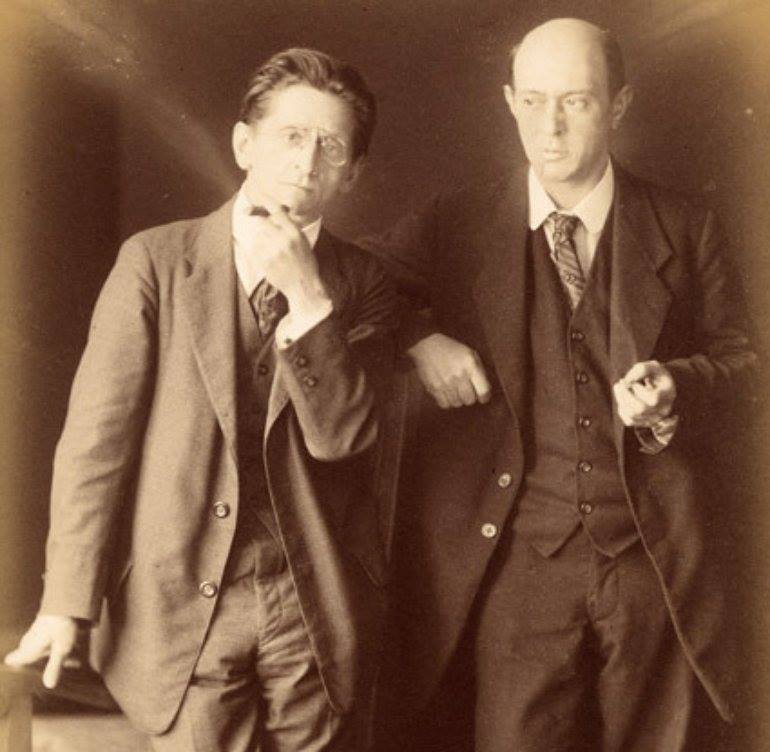
    Then, in the 2:00 hour, we’ll shift gears and enjoy the Symphony in B flat by Alexander Zemlinsky. The symphony was composed very much under the influence of Brahms and Dvořák. Some of Zemlinsky’s mature works undoubtedly achieved greater distinction, but there’s something to be said for great tunes and abundant charm. The composer also happened to be the teacher of Arnold Schoenberg and Vienna’s great musical prodigy of the day, Erich Wolfgang Korngold.

    Korngold, of course, went on to become one of the great film composers. He applied the same romantic opulence that made his operas so successful to his work for the silver screen. His Piano Trio in D major, Op. 1, written at the age of 13, reveals him to be already in command of the distinctive musical language that would later serve him so well.

    Schoenberg too wound up in Hollywood. He may have been the godfather of dodecaphonic music, but his neoclassical Suite for String Orchestra in G, his first piece composed in the New World, could almost be described as a charmer. This work “in the olden style” is wholly tonal and betrays the composer’s love of the music of Johann Sebastian Bach.

    Clearly, what goes around comes around, from roughly 1:40 to 4 p.m. EDT, on WWFM – The Classical Network and wwfm.org.


    Zemlinsky and Schoenberg: Let us entertain you.

  • Bach & Beyond with The Dryden Ensemble

    Bach & Beyond with The Dryden Ensemble

    Ah! Few things are as warming in the middle of a school day as a “Bach’s lunch” – especially when it has been packaged so lovingly.

    Join me for today’s Noontime Concert on The Classical Network, when we’ll present “Bach & Beyond,” with The Dryden Ensemble. On the menu will be music by George Philipp Telemann, Johann Gottlieb Janitsch, Johann Christian Bach, and Johann Sebastian Bach himself. The only thing missing will be a note from Mom.

    The Dryden Ensemble’s Bach Cantata Fest will be presented on two concerts this weekend: on Saturday, October 20, at 7:30 p.m., at Trinity Episcopal Church, 6587 Upper York Road, in Solebury, PA; and on Sunday, October 21, at 3 p.m., at Miller Chapel, on the campus of Princeton Theological Seminary.

    The program will include the Cantatas 87 and 154, with selected Bach arias performed by mezzo-soprano Kristen Dubenion-Smith, tenor Jason McStoots, and baritone William Sharp.

    The Dryden Ensemble is made up of artistic director Jane McKinley and Julie Brye, oboes; Vita Wallace and Dongmyung Ahn, violins; Andrea Andros, viola; Rebecca Humphrey, cello; Motomi Igarashi, double bass; Daniel Swenberg, theorbo, and Webb Wiggins, chamber organ, all performing on period instruments.

    The ensemble will continue its celebration of Bach on November 10 at 3 p.m. with a Bach organ recital performed by Jacob Street at Miller Chapel on the Princeton Theological Seminary campus. On January 19 & 20 the group will present “Queen Christina Goes to Rome,” a theatrical program featuring two acclaimed actors. The season will conclude on April 6 & 7 with Musica Stravagante and glorious music for oboe and strings by Albinoni, Vivaldi, Biber, Bach, and others. Tickets and information are available at drydensensemble.org.

    Following today’s broadcast concert, stick around for the Symphony in B flat by Alexander Zemlinsky, a work written very much under the influence of Brahms and Dvořák. Zemlinsky’s style would evolve. Some of his mature works undoubtedly achieve greater distinction, but there’s something to be said for great tunes and abundant charm. He also happened to be the teacher of Arnold Schoenberg and Vienna’s great musical prodigy of the day, Erich Wolfgang Korngold.

    Korngold, of course, went on to become one of the great film composers. He applied the same romantic opulence that made his operas so successful to his work for the silver screen. His Piano Trio in D major, Op. 1, written at the age of 13, reveals him to be already in command of the distinctive musical language that would serve him so well.

    Schoenberg too wound up in Hollywood. He may have been the godfather of dodecaphonic music, but his neoclassical Suite for String Orchestra in G, his first piece composed in the New World, could almost be described as a charmer. This work “in the olden style” is wholly tonal and betrays the composer’s love of the music of Johann Sebastian Bach.

    I hope you’ll join me for Bach and beyond today. The lunch box doubles as a music box, from 12 to 4 p.m. EDT, on WWFM – The Classical Network and wwfm.org.

  • Hear the Difference Classical Music Matters

    Hear the Difference Classical Music Matters

    Can you hear the difference?

    At The Classical Network, we’re proud to offer programming and musical selections unlike what you often hear at other stations – and our listeners have told us that makes us stand out.

    As we move toward our Fall Membership Campaign, we’re asking you, our listeners, to “Hear the Difference,” and to take a moment to tell us what exactly it is that you love about WWFM, and what it is that makes us different.

    Send us your thoughts by heading over to our website at wwfm.org and clicking on the “Hear the Difference” box at the top upper right corner of the screen. Type your comments into the box, then hit submit, and we’ll share them next week, as we encourage other listeners to step up and join you in support of the great – and unique – classical music programming we provide every day on The Classical Network.

    And if your membership is up for renewal, please take a moment to renew your commitment by going to wwfm.org and clicking on “donate.”

    As always, thank you for supporting WWFM – The Classical Network.

  • Eerie Poe Music on the Classical Network

    Eerie Poe Music on the Classical Network

    October 15 – beware the Ides of October!

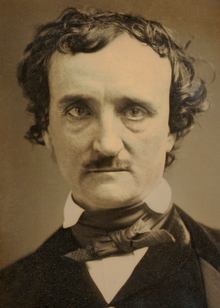
    With Hallowe’en fast descending on raven wings, what better time to don your black frock coat and brood over many a quaint and curious volume of forgotten lore? I’ll conclude my shift early this evening on The Classical Network (the 6:00 hour) with music inspired by the writings of Edgar Allan Poe.

    For the birthday of Arcady Dubensky (1890-1966), we’ll hear “The Raven,” a “melo-declamation” for narrator and orchestra. The work was given its premiere by the Philadelphia Orchestra under Leopold Stokowski at the Academy of Music in 1932. The performance was preserved on an experimental recording made by RCA Victor, on 35mm optical film, and issued as a special 78 rpm 2-record set. Included was the original poem, and monochrome engravings of Stokowski and Poe were etched into the shellac. The speaker will be Benjamin de Loache.

    The fact that I will be in an hour earlier than usual enhances the atmosphere of eerie premonition. It should give us plenty of time also to observe the birthdays of composers Dag Wiren and Jaan Rääts, clarinetist and composer Bernhard Crusell, philosopher and composer Friedrich Nietzsche, and conductor Karl Richter.

    Again, the Poe-inflected works will be heard in the final hour. Nothing assuages guilt and madness like laudanum and Edgar Allan Poe music. Join me one hour earlier today, from 3 to 7 p.m. EDT, on WWFM – The Classical Network and wwfm.org.

Tag Cloud

Aaron Copland (93) Beethoven (95) Composer (114) Film Music (137) Film Score (143) Film Scores (255) Halloween (94) John Williams (195) KWAX (229) Leonard Bernstein (103) Marlboro Music Festival (125) Movie Music (152) Mozart (88) Opera (208) Philadelphia Orchestra (89) Picture Perfect (174) Princeton Symphony Orchestra (108) Radio (88) Ross Amico (244) Roy's Tie-Dye Sci-Fi Corner (290) The Classical Network (101) The Lost Chord (268) Vaughan Williams (103) WPRB (396) WWFM (881)

DON’T MISS A BEAT

Receive a weekly digest every Sunday at noon by signing up here


RECENT POSTS