Category: Daily Dispatch

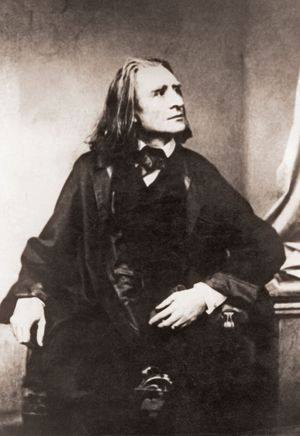
  • Franz Liszt Underrated Genius Radio Tribute

    Franz Liszt Underrated Genius Radio Tribute

    He is one of history’s most influential and undersold composers.

    A champion of program music (music intended to express extramusical ideas), the inventor of the symphonic poem, a pioneer of structural innovation, and an explorer of strange new harmonies, Franz Liszt seldom gets the credit he deserves. By contrast, a composer like Richard Wagner (Liszt’s son-in-law) is revered for the “Tristan chord,” a kind of shot-heard-‘round-the-world that is said to have changed music. It’s seldom noted that it was but one of the ideas Wagner “borrowed” from Liszt.

    As a conductor, Liszt’s energetic promotion of composers like Hector Berlioz and Wagner – then a political fugitive – marred with scandal and intrigues his tenure at the Weimar court. For his pains, he was frequently attacked by critics, derided by his peers, and undercut by his own showmanship.

    No one seems to contest that he was one of the most remarkable pianists who ever lived, but the assessment is often tempered by charges of vulgarity, of crass pandering to sensation and to the mob.

    Liszt played benefit concerts for victims of flood and fire, as well as for political refugees, spearheaded the creation of a monument to and festival for Beethoven in Bonn, never charged a fee for his lessons to his many pupils, and selflessly promoted the works of others, including (beside Berlioz and Wagner) Grieg, Smetana, Debussy, Saint-Saëns, Fauré, and Borodin.

    This is the thanks he gets?

    At the very least, I think he deserves three hours of airplay on his birthday. I hope you’ll join me this afternoon for a mix of piano and orchestral works, choral music and lieder, and transcriptions and fantasies of famous works by other composers.

    It will be an all-Liszt playlist, from 4 to 7 p.m. EDT, on WWFM – The Classical Network and wwfm.org.

  • Liszt and Friends Collaborative Classics

    Liszt and Friends Collaborative Classics

    Sometimes even Romantic geniuses can use an extra hand.

    This Sunday night on “The Lost Chord,” on the eve of the anniversary of the birth of Franz Liszt (born October 22, 1811), we’ll have several works in which Liszt was aided and abetted by his peers.

    While it’s true that, early on, Liszt possessed a degree of insecurity over his ability to orchestrate – after all, he had been largely a “keyboard” composer, enlisting the aid of pupils like Joachim Raff and Franz Doppler during his years as a conductor in Weimar – Liszt quickly mastered the art himself and set about revising every bar of his earlier orchestral compositions, stamping them very much with his own distinctive voice.

    The story behind Liszt’s “Concerto in the Hungarian Style,” however, is quite a different matter.

    German pianist Sophie Menter studied with Liszt in Weimar, from 1869. Her gift was such that Liszt dubbed her “the greatest pianist of her day.” He admired her “singing hand” and called her his “only legitimate daughter as a pianist.” George Bernard Shaw compared her favorably to Paderewski. She was by Liszt’s side in Bayreuth when he died in 1886.

    Menter taught at the St. Petersburg Conservatory between 1883 and 1887. There, she became friendly with Tchaikovsky and convinced him to orchestrate a piano concerto she said she had written to showcase her talents as a performer. Tchaikovsky did so and also dedicated the orchestral score of his own “Concert Fantasy” to her.

    What he didn’t realize – and what is now widely believed (according to Menter, who confided it to a friend and fellow Liszt pupil, Vera Timanoff) – is that the piece was actually written, at least in part, by Liszt himself. Had Tchaikovsky known, he may very well have torn up the manuscript. He had come to loathe Liszt, and was particularly disgusted by Liszt’s transcription of the Polonaise from “Eugene Onegin.” But the truth – if truth it be – didn’t emerge, for nearly a hundred years, and Tchaikovsky conducted the first performance of the work in Odessa in 1893.

    Roll over Beethoven, tell Tchaikovsky the news…

    Alongside this colorful concerto by Menter’s mentor, we’ll also hear “The Black Gondola” (orchestrated by John Adams about a century after Liszt’s death); “Hexameron,” a titanic set of piano variations with contributions from six virtuoso superstars of the 1830s, including Liszt, Carl Czerny, Sigismond Thalberg, and Frederic Chopin; and a selection from the ballet “Apparitions,” engineered in 1936 by Constant Lambert and Gordon Jacob.

    Liszt gets by with a little help from his friends, on “An Assist for Liszt,” this Sunday night at 10:00 EDT, on WWFM – The Classical Network and wwfm.org.
  • Happy Birthday Charles Ives A Musical Celebration

    Happy Birthday Charles Ives A Musical Celebration

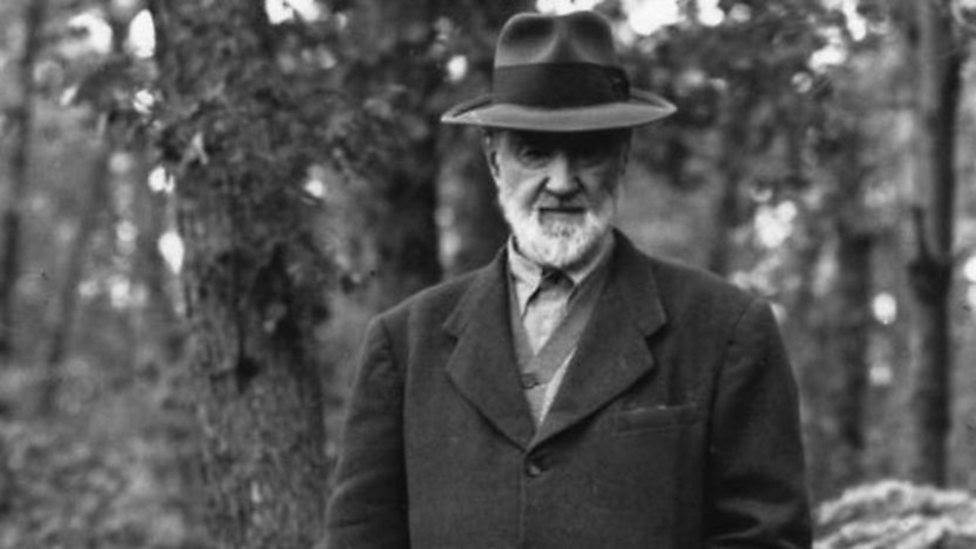
    Happy birthday, Charles Ives!


    Ives’ “Hallowe’en” for string quartet and piano (though I miss the big drum):

    https://www.youtube.com/watch?v=NVnU4t5hMI4

    Leonard Bernstein on the Symphony No. 2:

    My preferred recording of the symphony, so beautiful (though not always entirely accurate, in regard to Ives’ intentions), with Bernstein and the New York Philharmonic in 1960.

    The Yale-Princeton Football Game:

    Ives sings!

  • Frankenstein Film Music for a Monster Weekend

    Frankenstein Film Music for a Monster Weekend

    Long week? Feel like you’re coming apart at the seams? Kick off your elevator shoes and relax with an hour of music from Frankenstein films!

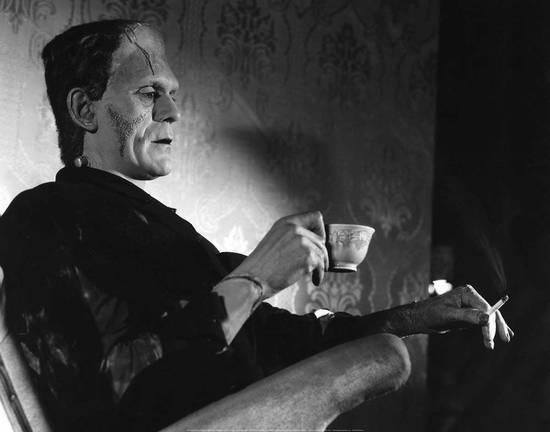
    This week on “Picture Perfect,” we’ll honor the legacy of Mary Shelley’s cautionary tale, “Frankenstein; or, The Modern Prometheus.” The influential novel first saw print in 1818 – 200 years ago. Although the film adaptations tend not to be very faithful to their alleged source material, there is no denying “Frankenstein’s” enduring appeal. We’ll hear music from just a few of the dozens of films that have been made in the hundred years or so since the Thomas Edison version, all the way back in 1910.

    “The Bride of Frankenstein” (1935) is the “Godfather Part II” of Frankenstein films. One of the greatest sequels ever made, “Bride” manages to deepen and expand elements of the Boris Karloff original. Both were directed by James Whale. Sporting a terrific cast, plenty of atmosphere, a wry sense of humor, and abundant pathos, it also happens to feature one of the finest music scores of the era, composed by Franz Waxman.

    Say what you will about Hammer Studio’s more lurid approach to its monster franchises, with their Technicolor gore and false whiskers. What the films lacked in budget, they certainly made up for in creativity. In “Frankenstein Created Woman” (1967), Peter Cushing yet again plays the overweening doctor, who transplants the soul of his wrongly condemned assistant into the body of a suicide, his assistant’s lover. Together, soul and body, the two enact revenge on the young woman’s father’s actual murderers. Don’t try to figure it out; just go with it. The music was by Hammer house composer, James Bernard.

    “House of Frankenstein” (1944) is the sixth film in Universal Studios’ “Frankenstein” franchise, a follow-up to “The Ghost of Frankenstein,” but also a sequel of sorts to “Frankenstein Meets the Wolfman.” A mad scientist (“Frankenstein” veteran Karloff) and his hunchback assistant resurrect “the monster,” Dracula, and the Wolfman, beating “Abbott and Costello Meet Frankenstein” (1948) to the punch! The music is also a monster mash of sorts, co-composed by Hans J. Salter and Paul Dessau.

    Mel Brooks’ super duper parody, “Young Frankenstein” (1974), plays with genuine affection on the Universal classics. The result is the richest comedy Brooks ever filmed. The love of detail extends even to the use of some of the authentic laboratory equipment from the original movies. Composer John Morris’ score reflects the underlying pathos of the monster, in brilliant counterpoint to the onscreen comedy. That’s FRANCKEN-SHTEEN!

    Finally, “Mary Shelley’s ‘Frankenstein’” (1994) was promoted as the most faithful adaptation of the original novel – which it most certainly is not. It does retain the rarely-used framing device, and the creature, played by Robert De Niro, is intelligent and articulate, as he is in the book, but so rarely on film. However, director Kenneth Branagh and his team can’t resist juicing up the story with lurid thrills and plot twists that seem more like cast-offs from Hammer. Favorite scene: a bare-chested Branagh swings on chains while bringing life to De Niro through the use of electric eels(!). The equally over-the-top score is by Patrick Doyle.

    “Frankenstein” has proven itself as indestructible as its alleged monster. Jump-start your weekend with revivifying music straight to the neck-bolts. It’s all-Frankenstein, on “Picture Perfect,” this Friday evening at 6:00 EDT, on WWFM – The Classical Network and wwfm.org.
  • Skeleton on the Rock Obscure Schubert Gem

    Skeleton on the Rock Obscure Schubert Gem

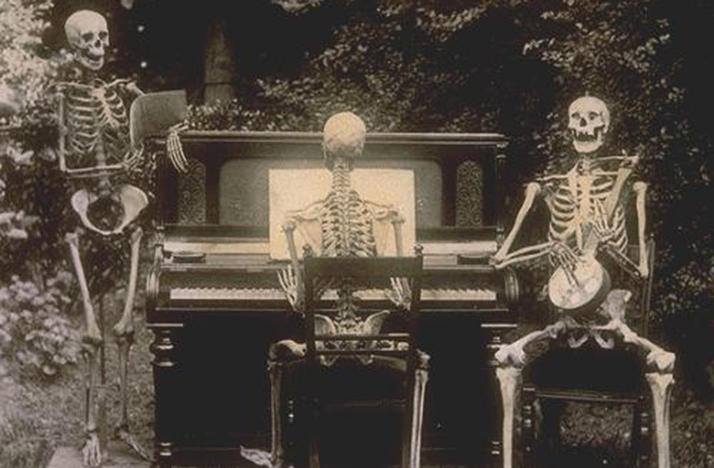
    Not to be outdone by Franz Schubert. Why is it not better known? “The Skeleton on the Rock” for voice, piano and banjo.

Tag Cloud

Aaron Copland (93) Beethoven (95) Composer (114) Film Music (137) Film Score (143) Film Scores (255) Halloween (94) John Williams (195) KWAX (229) Leonard Bernstein (103) Marlboro Music Festival (125) Movie Music (152) Mozart (88) Opera (208) Philadelphia Orchestra (89) Picture Perfect (174) Princeton Symphony Orchestra (108) Radio (88) Ross Amico (244) Roy's Tie-Dye Sci-Fi Corner (290) The Classical Network (101) The Lost Chord (268) Vaughan Williams (103) WPRB (396) WWFM (881)

DON’T MISS A BEAT

Receive a weekly digest every Sunday at noon by signing up here


RECENT POSTS