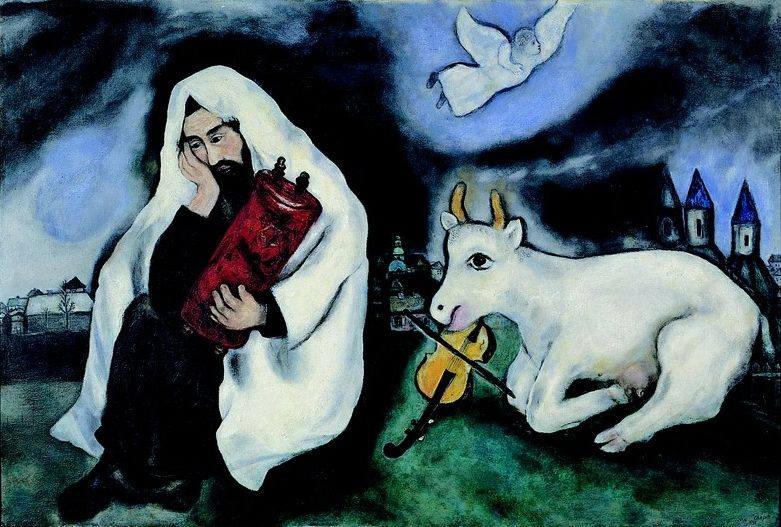
Yom Kippur, the Day of Atonement, begins at sundown. To mark the occasion, the holiest day on the Jewish calendar, I’ll present Jacob Weinberg’s String Quartet, Op. 55, which incorporates melodies for the High Holy Days; Enest Bloch’s moving “Israel Symphony;” Joseph Joachim’s “Hebrew Melodies;” David Stock’s “Yizkor;” and Emil Nikolaus von Reznicek’s “Symphonic Variations on ‘Kol Nidre.’” It all begins at 2 p.m. EDT, on WWFM – The Classical Network and wwfm.org. G’mar Hativa Tova.
Category: Daily Dispatch
-

Dvořák’s New World Symphony Goes Home for Yom Kippur
Everyone knows the “New World” Symphony, right? You know, THE musical blueprint laid out by Antonin Dvořák, through which, as an outside observer, while visiting director of the National Conservatory in New York, he hoped to reveal to American artists the raw material on which could be built a uniquely national identity. In particular, Dvořák found fascination in African-American spirituals and Native American dances.
Except on today’s Noontime Concert on The Classical Network, the “New World” is goin’ home. In an interesting feat of cross-fertilization, the Alba Consort will weave iconic themes from Dvořák’s most famous symphony into a program of early Sephardic, Iberian, French, Italian, Cypriot, Armenian, and North African music.
The imaginative and revelatory venture is Alba’s response to an invitation from the New York Philharmonic as part of the orchestra’s “New World Initiative,” which encouraged fresh perspectives on the “New World” Symphony. The result is like the discovery of a lost bridge from the Old Country to a brave New World.
The concert was made possible in part by Gotham Early Music Scene, or GEMS, one of its free lunchtime offerings presented on Thursdays at 1:15 p.m, at St. Bartholomew’s Church, 50th Street and Park Avenue, in Midtown Manhattan.
GEMS is a non-profit corporation that supports and promotes artists and organizations in New York City devoted to Early Music – music of the Middle Ages, Renaissance, Baroque, and early Classical periods. For more information on its upcoming midday concerts and other GEMS’ events, look online at gemsny.org.
Then stick around for more music reflective of a journey from the Old World to the New – with works by Dvořák and his colleague at the National Conservatory, Victor Herbert – and some musical presentiments of Yom Kippur.
The holiest day on the Jewish calendar begins at sunset. Get ready to mark the occasion with, among others, Enest Bloch’s moving “Israel Symphony,” Joseph Joachim’s “Hebrew Melodies,” David Stock’s “Yizkor,” and Emil Nikolaus von Reznicek’s set of unpredictable variations on “Kol Nidre.”
We’ll sail the ocean blue and set the tone for atonement, between 12 and 4 p.m. EDT, on WWFM – The Classical Network and wwfm.org.
“Yom Kippur” (1969), by Chaim Gross
-
Griffes Kubla Khan and American Impressionism
“In Xanadu did Kubla Khan
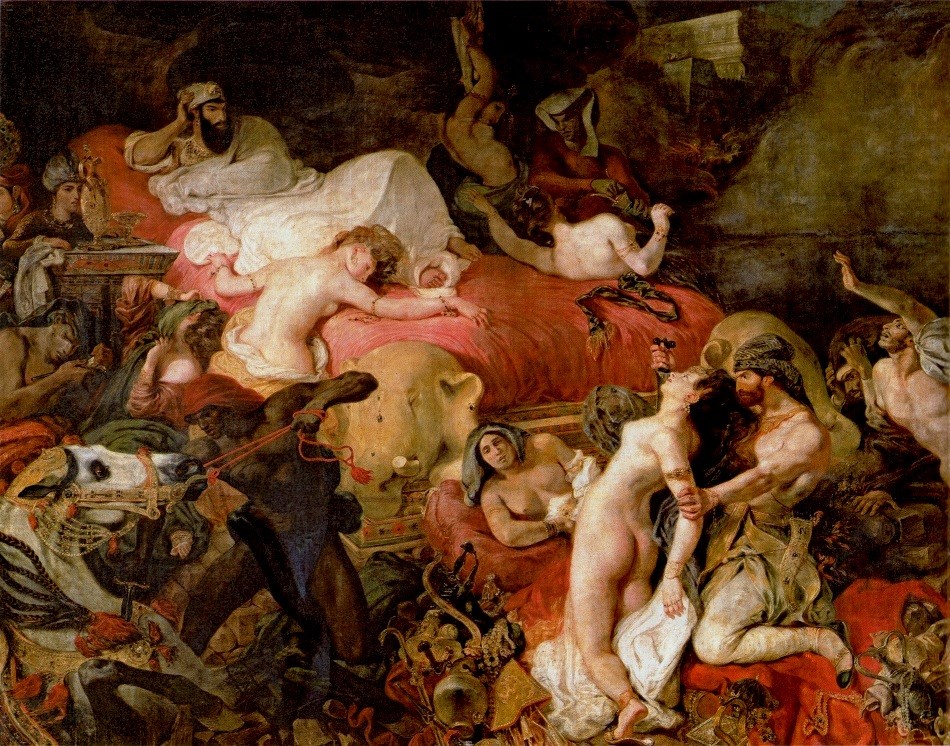
A stately pleasure-dome decree…”Sounds good to me! As I sit here like Sardanapalus luxuriating amidst my musical treasures, I contemplate the short life and creative promise of Charles Tomlinson Griffes.
Griffes’ was a unique voice in American music. At the beginning of his life, our native composers mostly emulated Mendelssohn, Schumann and Brahms; by the end, they were starting to gravitate toward jazz. By contrast, Griffes, like the painter Mary Cassatt, was attracted to French Impressionism, yet the weird incense of Scriabin also permeates his work.
He is best known for dreamy meditations like “The White Peacock” and “The Pleasure Dome of Kubla Khan,” after Coleridge.
Griffes was born in Elmira, NY, on this date in 1884. He died of influenza in 1920, aged only 35 years. Elmira was Mark Twain’s home from 1870. I’ve sometimes wondered if the two ever met. It has been documented that Griffes saw Twain there when moving about the streets. They certainly adhered to very different aesthetics.
I hope you’ll join me for an opiate dream at the Pleasure-Dome, part of a phantasmagoric mix, between 4 and 7 p.m. EDT, on WWFM – The Classical Network and wwfm.org.
Delacroix, “The Death of Sardanapalus.” It’s good to be the king.
-
Lars-Erik Larsson Radio Suites Premiere
During his time with the Swedish Broadcasting Corporation (1937-1944), Lars-Erik Larsson provided music for everything from cantatas to radio plays to brief vignettes to accompany the recitation of poetry.
Material from these projects would frequently find its way into the composer’s concert works. Most notably, three of the six movements of “Hours the Day,” from 1938, were organized into what went on to become the composer’s most famous piece, the “Pastoral Suite.”
This Sunday night on “The Lost Chord,” we’ll hear the world premiere recording, from 1994, of the complete, original, six-movement work, alongside another one of Larsson’s poetic suites for radio, “God in Disguise,” from 1940.
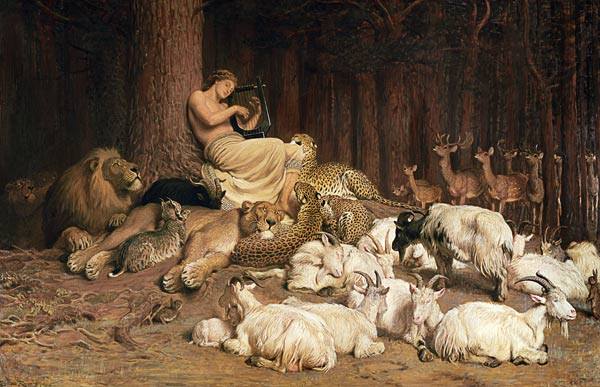
Larsson had been asked as early as 1930 if he would be interested in setting to music Hjalmar Gullberg’s cycle of poems. Gullberg, then the head of Swedish Radio’s drama division, took as his starting point Euripides’ “Alcestis,” in which the god Apollo, temporarily exiled from Olympus, acts as servant and shepherd to King Admetus of Thessaly.
It would be a full decade before the project was realized, in part due to the scale of the undertaking. By then, neighboring Denmark and Norway were under Nazi occupation. Gullberg wrote additional text to mold the work into a protest against violence in the world. In spite – or perhaps because – of the harsh reality of the times, “God in Disguise” retains an optimistic and indeed a determinedly pastoral outlook.
This too will be heard in a world premiere recording, from 1956, featuring speaker Lars Ekborg, soprano Elisabeth Soderstrom, and the orchestra and chorus conducted by Stig Westerberg.
Brush up on your Swedish, as we celebrate all that is worthy and simple. I hope you’ll join me for “Best at Verse” – Lars-Erik Larsson’s poetic suites for radio – this Sunday night at 10:00 EDT, on WWFM – The Classical Network and wwfm.org.
-
Darwin Galapagos & Vaughan Williams’ Cats
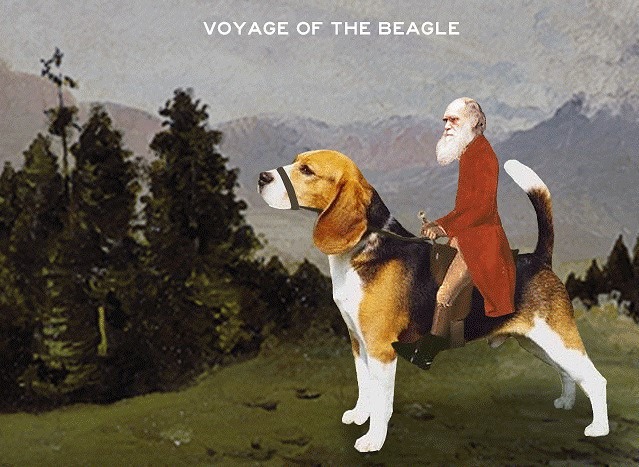
It was on this date in 1835 that Charles Darwin arrived at the Galapagos Islands aboard the Beagle.
Fun fact: Darwin was the great uncle of Ralph Vaughan Williams.
Vaughan Williams, however, was partial to cats.
Tag Cloud
Aaron Copland (93) Beethoven (95) Composer (114) Film Music (137) Film Score (143) Film Scores (255) Halloween (94) John Williams (195) KWAX (229) Leonard Bernstein (103) Marlboro Music Festival (125) Movie Music (152) Mozart (88) Opera (208) Philadelphia Orchestra (89) Picture Perfect (174) Princeton Symphony Orchestra (108) Radio (88) Ross Amico (244) Roy's Tie-Dye Sci-Fi Corner (290) The Classical Network (101) The Lost Chord (268) Vaughan Williams (103) WPRB (396) WWFM (881)