Category: Daily Dispatch

  • Saint Nicholas The Problematic Origins of Santa

    Saint Nicholas The Problematic Origins of Santa

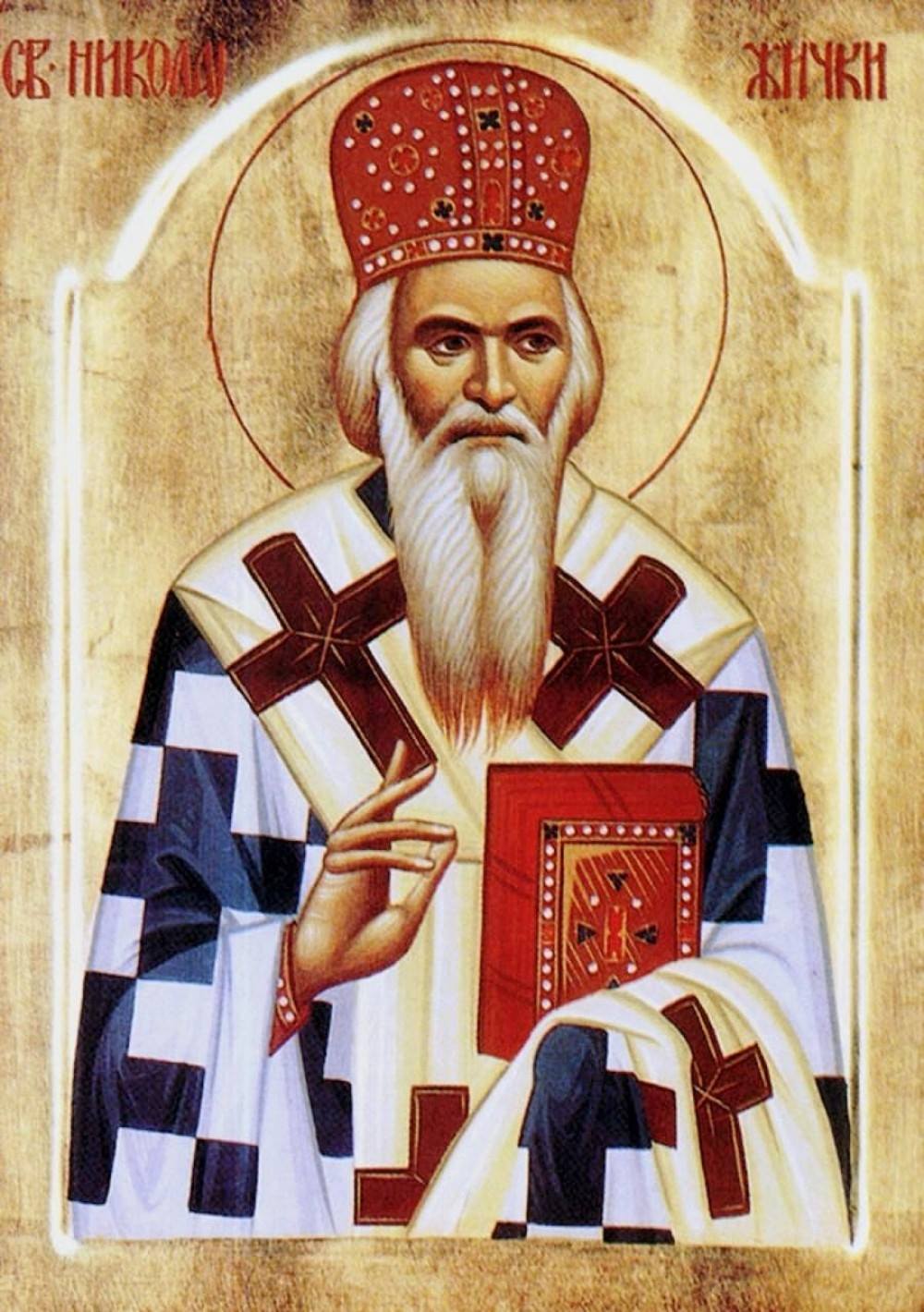
    December 6. After all the press I gave Krampus yesterday, it wouldn’t be right to ignore his keeper, Saint Nicholas, on his special day.

    Krampus, of course, is the demon who beats wicked children and hurls them into hellfire. Saint Nicholas, on the other hand, rewards the good. He is justly celebrated for his miracles and outstanding generosity. Let us all hoist an eggnog to the jolly old elf! Yay!

    Except that – what’s that you say? – the historic Nicholas was not so jolly?

    While it would be impossible to deny Saint Nicholas as having done a lot of good in the world, his personality could be a bit, shall we say, problematic. In fact, his modesty could be so extreme as to sometimes verge on the sociopathic. Among other things, he suffered fools grudgingly and became cantankerous if thanked.

    Nicholas is one of those rare all-purpose saints, who seems to watch over everyone – sailors, merchants, archers, prostitutes, women seeking husbands, repentant thieves, wrongly condemned prisoners, travelers, pawnbrokers, students, and of course children. Is it any wonder he’s grouchy?

    The historic Nicholas served as Bishop of Myra (part of modern day Turkey) in the 4th century. When his parents died, he gave away his inheritance to the poor.

    To avoid uncomfortable scenes, he developed a reputation for secret gift-giving. In one famous incident, he rescued three daughters of an unfortunate man who could not afford a proper dowry. In that time and place, it would have made them unmarriageable, and with no opportunity for honest employment, they would have had no alternative but to enter into a life of prostitution.

    Nicholas learned of their plight and under the cloak of darkness passed their house three times, each time tossing a purse of gold through a window. Some traditions say he dropped the purses down the chimney; others claim he left coins in stockings left out to dry. When the elated father tried to thank him, Nicholas responded gruffly that it is God he should thank. O-kayyyyy, Nicholas.

    On another occasion, during a sea voyage, Nicholas’ ears were assailed by a cacophony of oaths and blasphemies lustily exchanged by the crew. When he tried to get them to mind their language, the sailors laughed and mocked him, and took to swearing with renewed vigor. Nicholas responded by praying for stormy seas, until the sailors dropped to their knees in repentance, effectively scared straight.

    He was also wholly intolerant of pagans and heretics. He sent Arius, the father of Arianism, sprawling with a box on the ears, for his assertion that Jesus Christ is subordinate to the entity of God.

    The creepiest Nicholas tale concerns the murder of three boys by a butcher during a time of famine. The butcher placed their remains in a barrel to cure, hoping to pass them off as ham(!). Not surprisingly, this didn’t go down well with Nicholas, who resurrected the three children. The episode is recreated most eerily by Benjamin Britten in his cantata, “Saint Nicholas.”

    While he’s not a “Bad Santa,” exactly, he’s also not the jolly old elf Clement Moore, Thomas Nast and Coca-Cola would have us believe. He’s just your garden-variety, high-maintenance saint. To me, somehow, this makes him all the more lovable.

    But, as was advised in “The Man Who Shot Liberty Valance,” when the legend becomes fact, print the legend. In the Clement Moore/Thomas Nast vein, here’s the “Santa Claus Symphony,” really an ambitious symphonic poem, by the Philadelphia composer William Henry Fry (1813-1864):

    If Saint Nick were on Facebook, I am sure I would be flamed so bad right now I’d be wishing for a ride in Krampus’ wicker basket.
  • Saint-Saëns, Rossini & More From Marlboro

    Saint-Saëns, Rossini & More From Marlboro

    On this week’s “Music from Marlboro,” we’ll travel from Saint-Saëns to Saint Petersburg, with a performance by Lara St. John tossed into the mix.

    Works by two child prodigies (well, one of them “former”) will be heard on the first half of the program.

    Camille Saint-Saëns demonstrated perfect pitch at the age of two and gave his first public concert at five. He was 72, at the other end of a very long career, when he composed his Fantaisie, Op. 124. We’ll hear it performed by violinist Thomas Zehetmair and harpist Alice Giles, at the 1982 Marlboro Music Festival.

    Gioachino Rossini would blossom into one the most productive of opera composers, but even as a boy there was evidence of his remarkable facility and fecundity. He wrote his six string sonatas, scored for two violins, cello, and double bass, in 1804, over a period of three days. Rossini was twelve years-old. The sonatas are rhythmically vital and full of the kinds of melodies that would soon endear him to audiences the world over. We’ll hear the third of these, the String Sonata in C major, in a 1989 performance, featuring violinists St. John and Ivan Chan, cellist Paul Tortelier, and double bassist Timothy Cobb.

    Then we’ll round out the hour with Anton Arensky’s Piano Trio No. 1 in D minor. Arensky, a pupil of that icon of Russian nationalism, Nikolai Rimsky-Korsakov, gravitated more toward the cosmopolitan sound of Rimsky’s rival, Peter Ilych Tchaikovsky. His trio is full of good tunes, always charming, regardless of whether the music is melancholy, turbulent, reflective, or good humored. It’s the kind of piece that will have you humming for the rest of the day. It was played at the 1982 Marlboro Music Festival by pianist Frederick Moyer, violinist Isodore Cohen, and cellist John Sharp.

    We’re grasping for saints on this Krampusnacht. I hope you’ll join me for the next “Music from Marlboro,” this Wednesday evening at 6:00 EST, on WWFM – The Classical Network and wwfm.org.

    In the meantime, here’s a link to Lara St. John’s new “Hanukkah Carol,” co-written with accordionist Ronn Yedidia and sung by countertenor Aryeh Nussbaum Cohen.

    Marlboro School of Music and Festival: Official Page

  • Krampusnacht Devilish Delights & Dark Carols

    Krampusnacht Devilish Delights & Dark Carols

    Here comes Krampus – and along with him, my most controversial post of the year. I always lose one or two followers over Krampusnacht. Apparently it’s hard for some folks to reconcile Christmas with an Alpine devil. But when it comes to the holidays, the Central European psyche holds nothing in reserve.

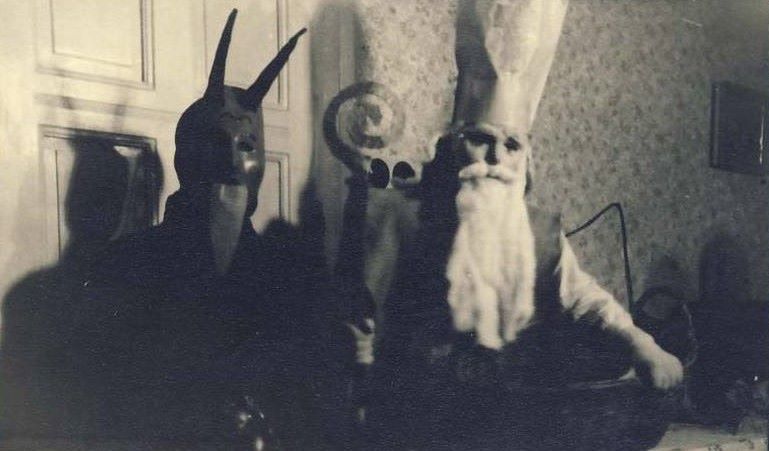
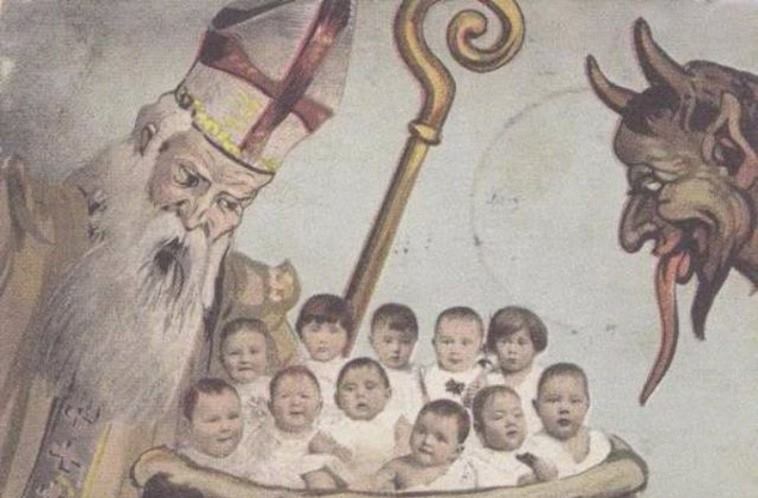
    In the grand tradition of spare the rod, spoil the child (Proverbs 13:24), with Krampus the Old World really pulls out all the stops. On December 5, the eve of Saint Nicholas’ Day, it is the custom for an egregiously-horned, whiplash-tongued demon to emerge from his mountain lair, festooned in chains and cow bells, to accompany the Patron Saint of Children on his rounds. Saint Nick bestows small gifts to all the good boys and girls; the bad are handed over to Krampus.

    Garden-variety naughtiness may earn the sting of a switch; but the especially ill-behaved are clapped in chains, taken for a short ride in a wicker basket, and then drowned in a stream or immolated by hellfire. With mounting anxiety a thousand times worse than the anticipation of a bad report card, a wee sinner pulls the sweat-soaked blankets over his head and begins to pray vociferously for a stocking full of coal.

    It is with mixed emotions that I watch Saint Nick’s dark helper creep ever closer to the mainstream. It used to be that there were one or two books of vintage postcards, and they were out of print and difficult to get a hold of. Now Krampus has become something of a shadow industry. He’s even been the subject of a major motion picture, for crying out loud. I never thought I would see it, but The Man is trying to appropriate Krampus, just like he did rock ‘n’ roll. But you can’t keep a good demon down. As long as there are people fed up with Black Friday sales on Thanksgiving, there will always be plenty of fuel for a reactionary Black Christmas. And no amount of tinsel is going to change that.

    If there is any classical music written for Krampus, I have yet to hear it. Therefore, as a kind of place holder on this Krampusnacht, I will offer a suite by Finnish composer Einar Englund for a film inspired by another bizarre legend, that of “The White Reindeer.” Don’t go into it expecting any Rankin-Bass Rudolph. This is Lapland, after all, the land of shape-shifting, vampiric livestock. This Rudolph sports teeth like The Abominable.

    It’s also the birthday today of pianist Krystian Zimerman. He’ll be the soloist in Franz Liszt’s “Totentanz” (“Dance of Death”). As time allows, we’ll even have a diabolical sleigh-ride courtesy of Bernard Herrmann.

    Oh yes! We’ll also mark the birthdays of Francesco Geminiani, Vítězslav Novák, Osvaldo Golijov, and José Carreras, with a little more Hanukkah music tossed into the mix, from 4 to 6 p.m. EST. Then stick around for “Music from Marlboro.” We’ll embrace the saints at 6 – more about that in an upcoming post – on WWFM – The Classical Network and wwfm.org.

    This year’s Parade of Spirits, Liberty Lands, formerly known as Krampuslauf, spills into the streets of Philadelphia’s Northern Liberties neighborhood on December 15. The event will benefit Delaware Valley homeless shelters.

    Go ahead and unfollow me, if you must. You can stop your ears, but you can’t stop Krampus.

  • Krampus is Coming Controversial Christmas Devil

    Here comes Krampus – and along with him, my most controversial post of the year. I always lose one or two followers over Krampusnacht. Apparently it’s hard for some folks to reconcile Christmas with an Alpine devil. But when it comes to the holidays, the Central European psyche holds nothing in reserve.

    In the grand tradition of spare the rod, spoil the child (Proverbs 13:24), in Krampus the Old World really pulls out all the stops. On December 5, the eve of Saint Nicholas’ Day, it is the custom for an egregiously-horned, whiplash-tongued demon to emerge from his mountain lair, festooned in chains and cow bells, to accompany the Patron Saint of Children on his rounds. Saint Nick bestows small gifts to all the good boys and girls; the bad are handed over to Krampus.

    Garden-variety naughtiness may earn the sting of a switch; but the especially ill-behaved are clapped in chains, taken for a short ride in a wicker basket, and then drowned in a stream or immolated by hellfire. With mounting anxiety a thousand times worse than the anticipation of a bad report card, a wee sinner pulls the sweat-soaked blankets over his head and begins to pray vociferously for a stocking full of coal.

    It is with mixed emotions that I watch Saint Nick’s dark helper creep ever closer to the mainstream. It used to be that there were one or two books of vintage postcards, and they were out of print and difficult to get a hold of. Now Krampus has become something of a shadow industry. He’s even been the subject of a major motion picture, for crying out loud. I never thought I would see it, but The Man is trying to appropriate Krampus, just like he did rock ‘n’ roll. But you can’t keep a good demon down. As long as there are people fed up with Black Friday sales on Thanksgiving, there will always be plenty of fuel for a reactionary Black Christmas. And no amount of tinsel is going to change that.

    If there is any classical music written for Krampus, I have yet to hear it. Therefore, as a kind of place holder on this Krampusnacht, I will offer a suite by Finnish composer Einar Englund for a film inspired by another bizarre legend, that of “The White Reindeer.” Don’t go into it expecting any Rankin-Bass Rudolph. This is Lapland, after all, the land of shape-shifting, vampiric livestock. This Rudolph sports teeth like The Abominable.

    It’s also the birthday today of pianist Krystian Zimerman. He’ll be the soloist in Franz Liszt’s “Totentanz” (“Dance of Death”). Then, if time allows, we’ll have a diabolical sleigh-ride courtesy of Bernard Herrmann.

    Oh yes! We’ll also mark the birthdays of Francesco Geminiani, Vítězslav Novák, Osvaldo Golijov, and José Carreras, with a little more Hanukkah music tossed into the mix, from 4 to 6 p.m. EST. Then stick around for “Music from Marlboro. We’ll embrace the saints at 6 – more about that in an upcoming post – on WWFM – The Classical Network and wwfm.org.

    This year’s Parade of Spirits, Liberty Lands, formerly known as Krampuslauf, spills into the streets of Philadelphia’s Northern Liberties neighborhood on December 9. The event will benefit Delaware Valley homeless shelters.

    Go ahead and unfollow me, if you must. You can stop your ears, but you can’t stop Krampus.

  • Krampus is Coming Controversial Christmas

    Here comes Krampus – and along with him, my most controversial post of the year. I always lose one or two followers over Krampusnacht. Apparently it’s hard for some folks to reconcile Christmas with an Alpine devil. But when it comes to the holidays, the Central European psyche holds nothing in reserve.

    In the grand tradition of spare the rod, spoil the child (Proverbs 13:24), in Krampus the Old World really pulls out all the stops. On December 5, the eve of Saint Nicholas’ Day, it is the custom for an egregiously-horned, whiplash-tongued demon to emerge from his mountain lair, festooned in chains and cow bells, to accompany the Patron Saint of Children on his rounds. Saint Nick bestows small gifts to all the good boys and girls; the bad are handed over to Krampus.

    Garden-variety naughtiness may earn the sting of a switch; but the especially ill-behaved are clapped in chains, taken for a short ride in a wicker basket, and then drowned in a stream or immolated by hellfire. With mounting anxiety a thousand times worse than the anticipation of a bad report card, a wee sinner pulls the sweat-soaked blankets over his head and begins to pray vociferously for a stocking full of coal.

    It is with mixed emotions that I watch Saint Nick’s dark helper creep ever closer to the mainstream. It used to be that there were one or two books of vintage postcards, and they were out of print and difficult to get a hold of. Now Krampus has become something of a shadow industry. He’s even been the subject of a major motion picture, for crying out loud. I never thought I would see it, but The Man is trying to appropriate Krampus, just like he did rock ‘n’ roll. But you can’t keep a good demon down. As long as there are people fed up with Black Friday sales on Thanksgiving, there will always be plenty of fuel for a reactionary Black Christmas. And no amount of tinsel is going to change that.

    If there is any classical music written for Krampus, I have yet to hear it. Therefore, as a kind of place holder on this Krampusnacht, I will offer a suite by Finnish composer Einar Englund for a film inspired by another bizarre legend, that of “The White Reindeer.” Don’t go into it expecting any Rankin-Bass Rudolph. This is Lapland, after all, the land of shape-shifting, vampiric livestock. This Rudolph sports teeth like The Abominable.

    It’s also the birthday today of pianist Krystian Zimerman. He’ll be the soloist in Franz Liszt’s “Totentanz” (“Dance of Death”). Then, if time allows, we’ll have a diabolical sleigh-ride courtesy of Bernard Herrmann.

    Oh yes! We’ll also mark the birthdays of Francesco Geminiani, Vítězslav Novák, Osvaldo Golijov, and José Carreras, with a little more Hanukkah music tossed into the mix, from 4 to 6 p.m. EST. Then stick around for “Music from Marlboro.” We’ll embrace the saints at 6 – more about that in an upcoming post – on WWFM – The Classical Network and wwfm.org.

    This year’s Parade of Spirits, Liberty Lands, formerly known as Krampuslauf, spills into the streets of Philadelphia’s Northern Liberties neighborhood on December 9. The event will benefit Delaware Valley homeless shelters.

    Go ahead and unfollow me, if you must. You can stop your ears, but you can’t stop Krampus.

Tag Cloud

Aaron Copland (94) Beethoven (95) Composer (114) Film Music (153) Film Score (143) Film Scores (255) Halloween (107) John Williams (198) KWAX (233) Leonard Bernstein (105) Marlboro Music Festival (125) Movie Music (168) Mozart (91) Opera (222) Philadelphia Orchestra (91) Picture Perfect (174) Princeton Symphony Orchestra (110) Radio (90) Ross Amico (244) Roy's Tie-Dye Sci-Fi Corner (290) The Classical Network (101) The Lost Chord (269) Vaughan Williams (107) WPRB (397) WWFM (881)

DON’T MISS A BEAT

Receive a weekly digest every Sunday at noon by signing up here


RECENT POSTS