Category: Daily Dispatch

  • Hemingway’s Hollywood Soundtracks

    Hemingway’s Hollywood Soundtracks

    This week on “Picture Perfect,” we get in touch with our masculine side, with music from movies inspired by the writings of Ernest Hemingway.

    Seemingly at odds with Hemingway’s minimalist, “iceberg” style, big screen adaptations of the writer’s work show what the stories don’t tell. In the case of 1946’s “The Killers,” the screenwriters unapologetically just made stuff up, an entire back story explaining the motivations for the hit of boxer “Swede” Andreson. Fortunately those screenwriters happened to include an uncredited John Huston, who virtually codified noir with “The Maltese Falcon.”

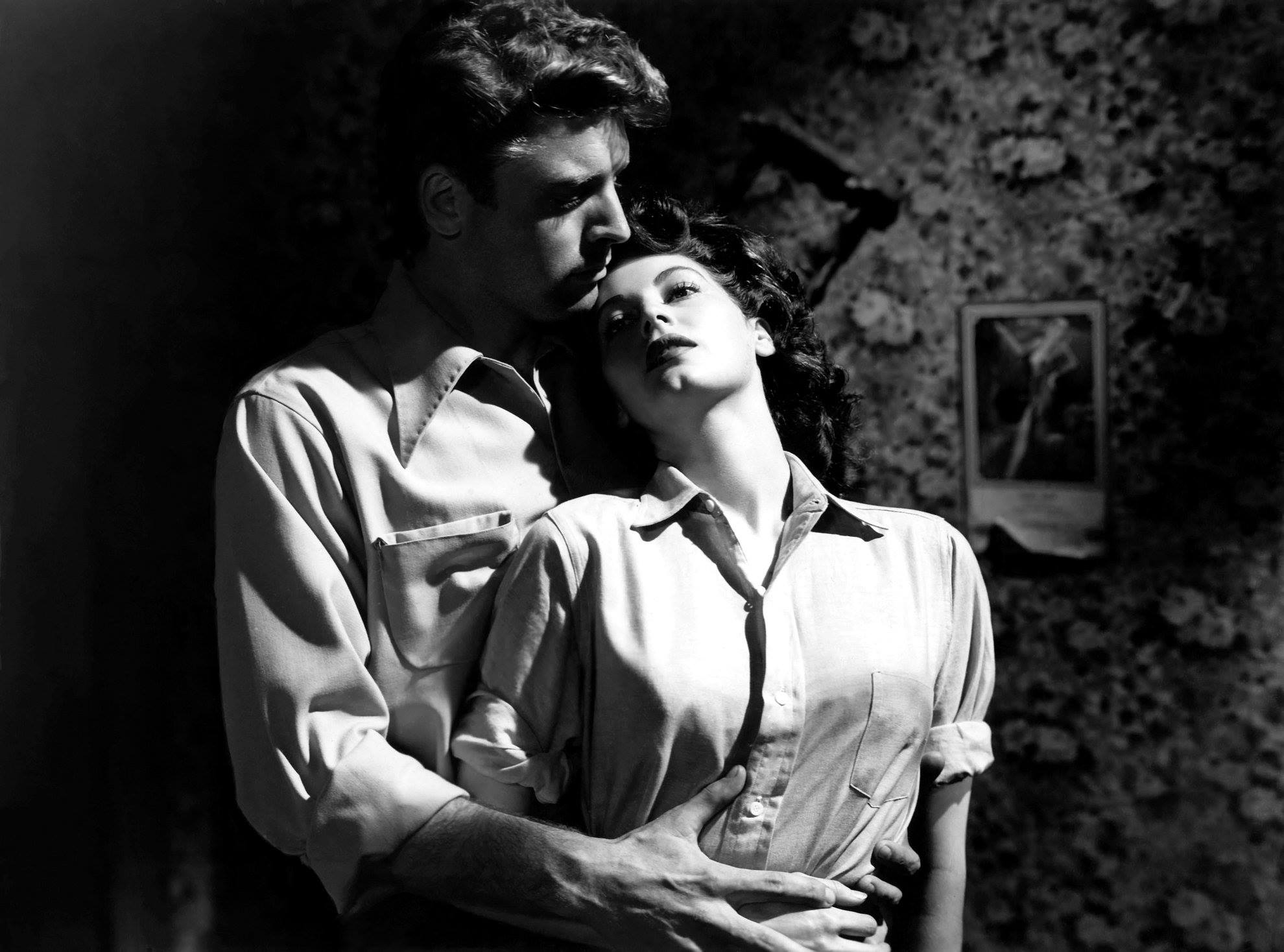
    “The Killers” provided Burt Lancaster with his break-out role. It also features a knock-out score by Miklós Rózsa, in which he uses the dum-dee-dum-dum motto later made famous by the television series “Dragnet.”

    In 1977, George C. Scott reunited with his “Patton” director, Franklin J. Schaffner, for an adaptation of Hemingway’s posthumously published novel, “Islands in the Stream.” Scott gives one of his best performances as a Hemingway-like figure living on a Caribbean island. “Patton” composer Jerry Goldsmith wrote the music. Goldsmith spoke of it often as his favorite score.

    Hemingway himself handpicked the leads for the 1943 adaptation of “For Whom the Bell Tolls,” with Gary Cooper and Ingrid Bergman falling in love against the backdrop of the Spanish Civil War. The music was by the prolific and versatile Victor Young.

    And finally, Spencer Tracy is the whole show, as he faces off against a large marlin, in the 1958 version of “The Old Man and the Sea.” Dimitri Tiomkin’s music earned him his fourth Academy Award.

    Join me for an hour of laconic grace and stoic manliness on “Picture Perfect,” music for the movies, this Friday evening at 6:00 EDT, on WWFM – The Classical Network and wwfm.org.


    PHOTO: Burt Lancaster and Ava Gardner killing it in “The Killers”
  • Schoenberg’s Birthday Celebrate 12-Tone Music

    Schoenberg’s Birthday Celebrate 12-Tone Music

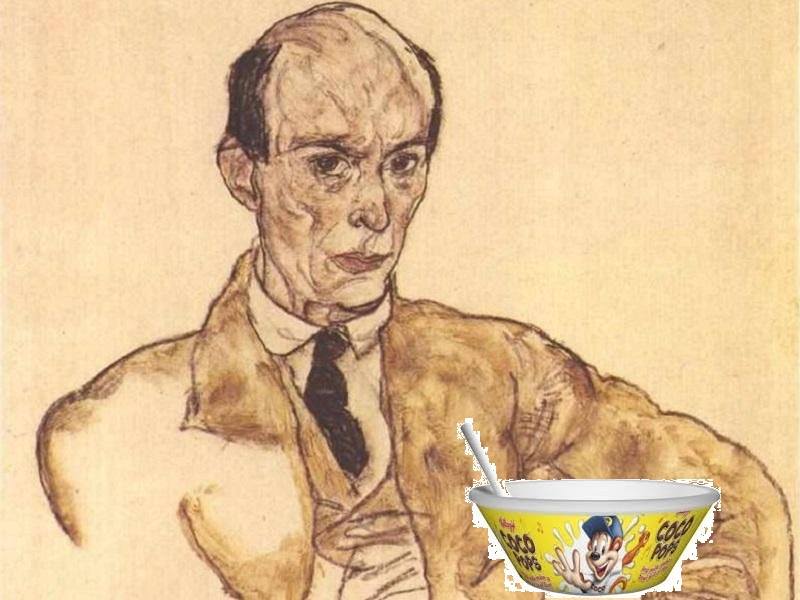
    It’s Arnold Schoenberg’s birthday! Pour yourself a nice bowl of “serial” and celebrate with this collection of twelve-tone’s greatest hits!

  • Shostakovich & Jewish Folk Song at Marlboro

    Shostakovich & Jewish Folk Song at Marlboro

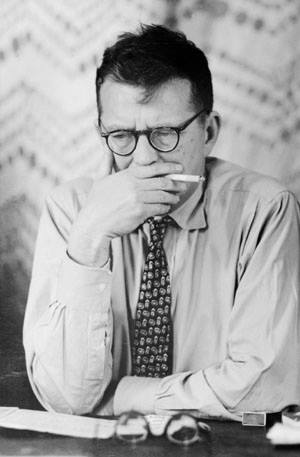
    Wrote Dmitri Shostakovich, “Jewish folk music has made a most powerful impression on me. I never tire of delighting in it; it is multifaceted – it can appear to be happy while it is tragic. It’s almost always laughter through tears…. This quality of Jewish folk music is close to my ideas of what music should be….”

    Keeping that in mind, this week on “Music from Marlboro,” we’ll hear Shostakovich’s song cycle “From Jewish Folk Poetry.” The work was conceived in 1948 at great personal risk to the composer (who, by the way, was not Jewish). Under the Zhdanov decree, Shostakovich had already been denounced for the second time with charges of “formalism” for his alleged embrace of decadent Western tendencies in his music. Furthermore, it was a time of heightened anti-Semitism in the Soviet Union, as Stalin targeted Jewish intellectuals and artists.

    For these reasons, Shostakovich’s songs were not given their first public performance until 1955, two years after Stalin’s death. The first eight of them were performed at a private birthday celebration at the composer’s home in September of 1948. Shostakovich would incorporate Jewish music, whether as an act of solidarity or a gesture of subversion, in many of his major works.

    “From Jewish Folk Poetry” was toured around the United States by Marlboro musicians in 1968. We’ll hear a 1967 performance from the Marlboro Music Festival, featuring soprano Benita Valente, mezzo-soprano Glenda Maurice, and tenor John Humphrey, with Luis Batlle at the keyboard.

    Then we’ll turn to a String Quintet in A major, by a composer Shostakovich knew very well, Alexander Glazunov. Glazunov, who was director of the Petrograd Conservatory, saw to it that the talented young Shostakovich be allowed to bypass preparatory theoretical courses and enter directly into the conservatory’s composition program. In general, Shostakovich was lukewarm on his mentor’s music, but he had very kind words for the man and expressed admiration for his scherzos.

    The String Quintet is full of serene lyricism, generously melodic and beautiful. We’ll hear it performed at Marlboro in 1982, by violinists Sylvie Gazeu and Ernestine Schor, violist Toby Hoffman, and once-and-future cellists of the Guarneri Quartet, David Soyer and Peter Wiley.

    That’s an hour of music from Russia, with love, on the next “Music from Marlboro,” this Wednesday evening at 6:00 EDT, on WWFM – The Classical Network and wwfm.org.

    Marlboro School of Music and Festival: Official Page

  • 9/11 Music of Remembrance and Reflection

    9/11 Music of Remembrance and Reflection

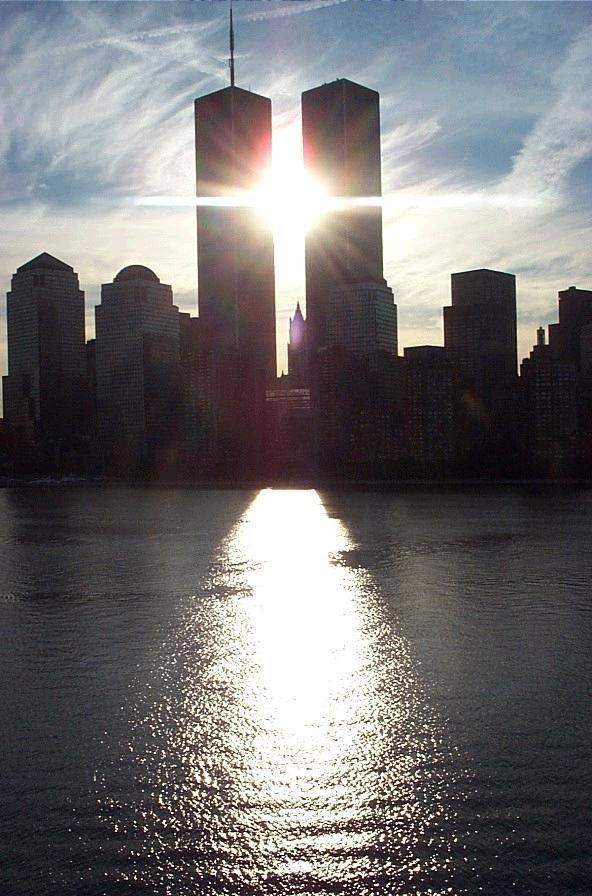
    Where has the time gone? Has it really been been 17 years since the terrorist attacks of September 11, 2001? On the one hand, we should definitely be thankful that the catastrophe hasn’t been repeated. On the other, it sure does seem like yesterday.

    Not surprisingly, September 11 has inspired a lot of music, and this afternoon on The Classical Network, I thought we’d listen to just some of it.

    Wojciech Kilar is probably best known in this country for his film scores, including those for “Bram Stoker’s Dracula,” “Portrait of a Lady,” and “The Pianist.” He was more prolific in Polish cinema, but his concert output has been equally fruitful, if not more so. Kilar emerged from the Polish avant-garde movement of the 1960s. He is of the same generation as Henryk Gorecki and Krzysztof Penderecki. Like those composers, he eventually reconciled his experimental impulses with a more accessible language.

    Kilar emphasizes that his musical response to 9/11, his “September Symphony,” was not an act of opportunism, but a heartfelt response written for a country he has always loved. In the finale, he draws on familiar quotations from Gershwin and “America the Beautiful,” as well as gospel, blues, and American westerns.

    Closer to home, Philadelphia composer Robert Moran’s “Trinity Requiem” was named for Trinity Wall Street, the so-called “Ground Zero” church in Lower Manhattan. Moran’s approach to the Requiem Mass is akin to that of Gabriel Fauré, a work of solace and consolation. The substantial role sung by children’s chorus only lends to the work’s innocent and ethereal qualities.

    New York composer and Juilliard professor Eric Ewazen’s “A Hymn for the Lost and the Living” was originally composed for the United States Air Force Heritage of America Band, but has since widely circulated in a version for trumpet and piano. Ewazen writes, “It is intended to be a memorial for those lost souls, gone from this life, but who are forever cherished in our memories.” Even so, I think you’ll find a lot of resilience in this music.

    Along the way, we’ll also hear works by Fauré and Aaron Copland. David Osenberg will include further 9/11 reflections as part of his programming, later in the day.

    The afternoon will begin with a Noontime Concert, brought to us from indomitable New York by Gotham Early Music Scene, or GEMS. The duo Hollingshead & Bass (mezzo-soprano Barbara Hollingshead and lutenist Howard Bass) will present “Time, Cruell Time!” Selections by John Dowland and his contemporaries will be performed as sets organized into subcategories such as “Passing Time,” “Crabbed Age and Youth,” “ Earthly Folly,” and “Time and the Court.” The program took place on January 11 at St. Bartholomew’s Church, 50th Street and Park Avenue, in Midtown Manhattan.

    GEMS is a non-profit corporation that supports and promotes artists and organizations in New York City devoted to early music – music of the Middle Ages, Renaissance, Baroque, and early Classical periods. For more information about St. Bart’s free lunchtime concerts, presented on Thursdays at 1:15 p.m., and other GEMS’ events, look online at gemsny.org.

    Experience the music, remember the past, and give thanks for the present, this afternoon, from 12 to 4 p.m. EDT, on WWFM – The Classical Network and wwfm.org.

  • WWFM Classical Today Purcell Comics More

    WWFM Classical Today Purcell Comics More

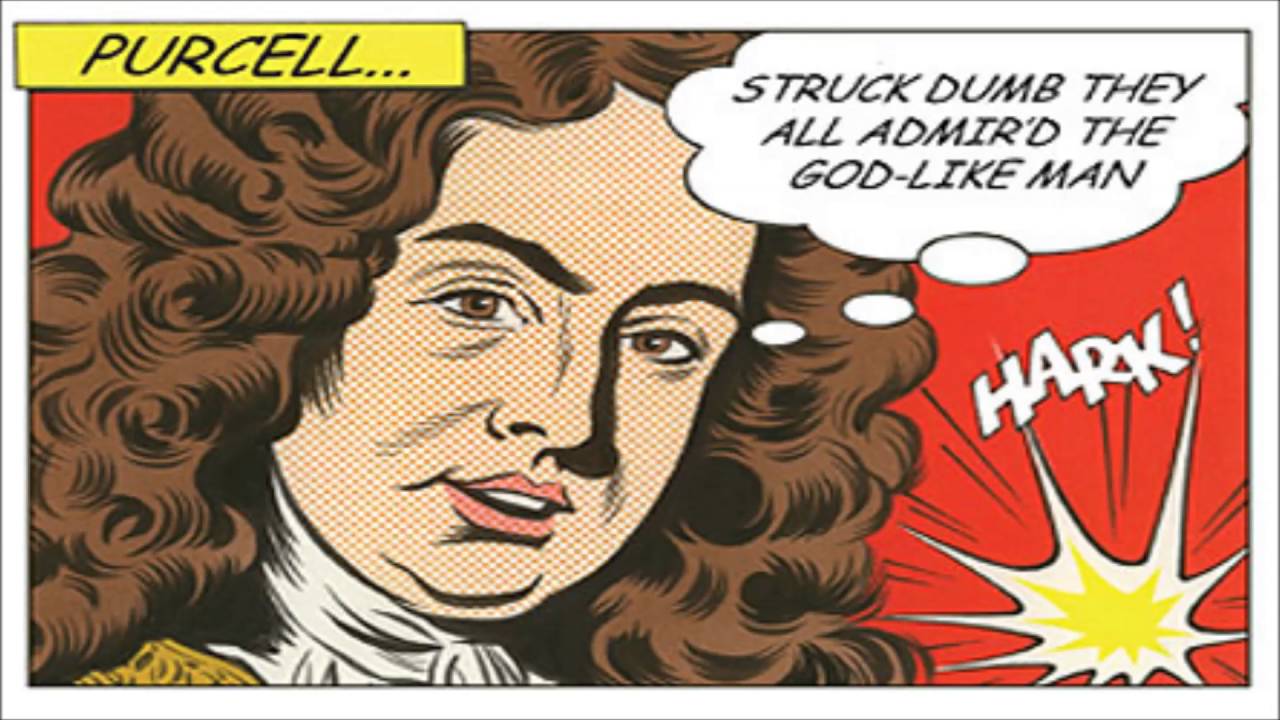
    Romance comic? Or the Man of Steel’s greatest challenge? Listen in for Henry Purcell and tributes by later composers (along with music by Tor Aulin and Sholom Secunda), between 4 and 7 p.m. EDT on WWFM – The Classical Network and wwfm.org.

Tag Cloud

Aaron Copland (93) Beethoven (95) Composer (114) Film Music (137) Film Score (143) Film Scores (255) Halloween (94) John Williams (195) KWAX (229) Leonard Bernstein (103) Marlboro Music Festival (125) Movie Music (152) Mozart (88) Opera (208) Philadelphia Orchestra (89) Picture Perfect (174) Princeton Symphony Orchestra (108) Radio (88) Ross Amico (244) Roy's Tie-Dye Sci-Fi Corner (290) The Classical Network (101) The Lost Chord (268) Vaughan Williams (103) WPRB (396) WWFM (881)

DON’T MISS A BEAT

Receive a weekly digest every Sunday at noon by signing up here


RECENT POSTS