Category: Daily Dispatch

  • Jón Leifs Icelandic Composer Rediscovered

    Jón Leifs Icelandic Composer Rediscovered

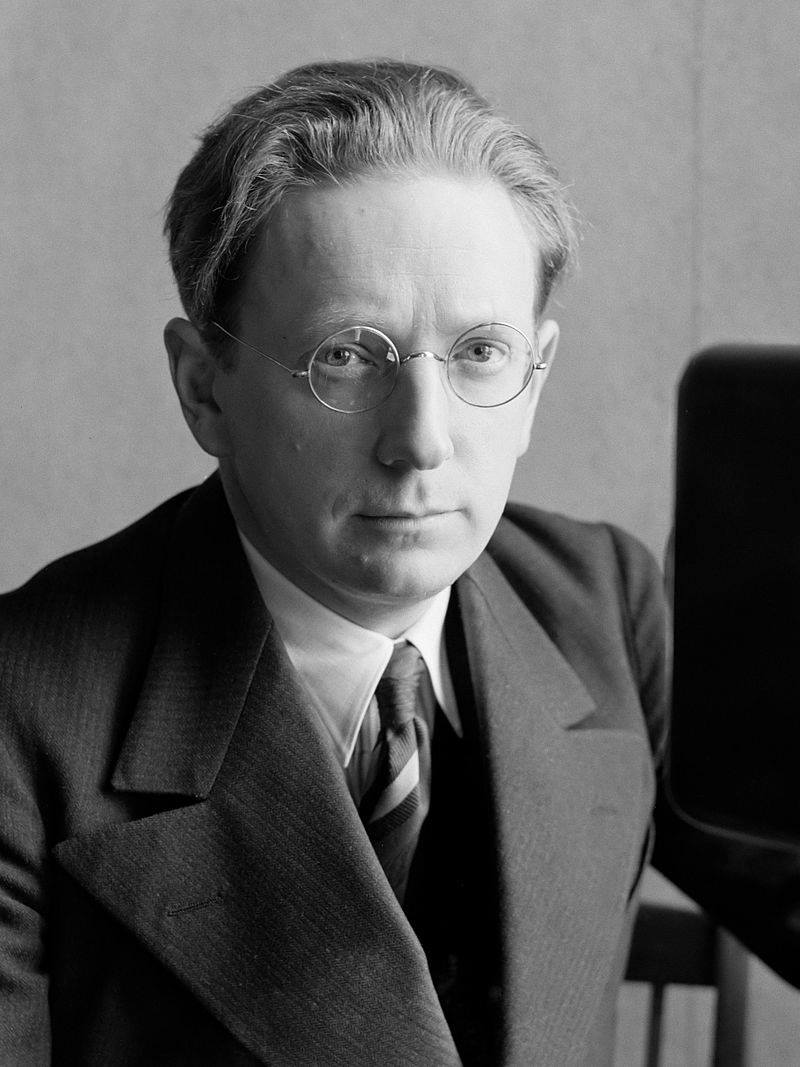
    No one scores natural phenomena quite like Jón Leifs.

    Leifs, who was born on a farm in northwestern Iceland, traveled to Germany to study music at the Leipzig Conservatory in 1916. Soon after graduation, he married the pianist Annie Reithof, a decision that necessitated some careful maneuvering in the perilous years to come.

    Leifs remained in Nazi Germany through much of World War II. On the surface, his celebration of Norse heroism should have been just the thing to endear him to the National Socialists. However, two things worked against him: the modernistic language of his music, and the fact that his wife and children were Jewish.

    Performances of Leifs’ music were derided or discouraged. This, apparently, he took in his stride, finding solace in re-reading the Icelandic Sagas and finding strength in the exploits of their heroes. Above all, on account of his family, Leifs tried not to attract a lot of unwanted attention. He was still useful for propaganda purposes in Germany’s relations with Scandinavia.

    Leifs finally managed to obtain permission to leave Germany in 1944, his family temporarily settling in Sweden. He and his wife divorced, and Leifs returned to Iceland. There, he was regarded with suspicion due to his Nazi “associations.”

    Also, much of his music was conceived on such a gargantuan scale, and scored for such outlandish instruments, there was no way they could be practically performed. Therefore much of it went unheard in his lifetime.

    In particular, “Hekla,” his evocation of a volcano in eruption, has been called the loudest piece of classical music ever written, requiring 19 percussionists hammering away at a most unconventional arsenal: anvils, stones, sirens, plate bells, chains, shotguns, cannons, and a large wooden stump. For their own well-being, the performers are instructed to wear earplugs.

    His “Saga Symphony,” inspired by prose accounts of battles, feuds, and power struggles of early Viking settlers, is enlivened by tuned anvils, stones, whip, shields of iron, leather, and wood, great wooden containers (played by large hammers), and six lurs – copies of ancient long horns.

    Leifs’ music can be austere to the Nth degree. The severity of his art is reflective of the unforgiving-yet-sublime Icelandic landscape and the stoicism of the heroes of the sagas. His is a wholly unique voice in 20th century music that deserves to be much better known. `

    Join me this afternoon, as we remember Leifs on the 50th anniversary of his death. I’ll go easy on you by vaulting over the volcanoes and geysers and presenting instead the elemental “Iceland Overture” and the “Variazioni pastorale” – his variations on a theme by Beethoven.

    The Viking longboat will be well-provisioned. Be ready to row, from 4 to 7 p.m. EDT, on WWFM – The Classical Network and wwfm.org.


    PHOTOS: Jón Leifs and Hekla

  • English Pastoral Piano Music

    English Pastoral Piano Music

    According to a certain school of thought, folk music – music of the land – embodies the spirit of a nation. And no nation’s composers milked that cow quite as soulfully as the English.

    This Sunday night on “The Lost Chord,” we’ll have an hour of bucolic reflections for the keyboard of a time lost to technology and industrialization.

    We’ll begin with Gerald Finzi’s “Eclogue” for piano and string orchestra. Originally drafted in the mid-‘20s as the projected slow movement of a piano concerto, the material was later reshaped by the composer, who was content to let it stand on its own. In case you’re not familiar with the term, an eclogue is a short pastoral poem.

    If you find yourself transported by this, I think you will also really enjoy Cyril Rootham’s “Miniature Suite” of 1921. Rootham, better known for his choral music, was a friend of Ralph Vaughan Williams and Gustav Holst. His work at Cambridge University exerted a significant influence over English musical life. Like the “Eclogue,” the “Miniature Suite” is scored for piano and strings.

    In between, I’ll provide a palette cleanser in the form of E.J. Moeran’s “Summer Valley.” Moeran was one of the last composers to really thrive on English folk music. “Summer Valley,” composed for solo piano in 1925, was dedicated to Frederick Delius.

    Finally, we’ll engage in a bit of musical time travel. In addition to the whole folk song perspective, England is justifiably proud of its formal musical past. The legacy of the Tudors was a particular influence on works such as Benjamin Britten’s “Gloriana,” Gordon Jacob’s “William Byrd Suite,” and Vaughan Williams’ “Fantasia on a Theme by Thomas Tallis.”

    In the case Herbert Howells – like Rootham, a composer better recognized for his choral endeavors – he fell under the spell of the clavichord, after he was lent one by one Herbert Lambert, a photographer with a passion for building replicas of early keyboard instruments.

    The fortuitous encounter led to the composition of three suites, written in different periods of Howells’ life, which hark back to the glory days of the “Fitzwilliam Virginal Book.” All three sets are characterized by an inventive blend of Tudor and English folk influences. Each of the individual movements are dedicated to a friend or colleague of the composer. We’ll hear the first set, titled “Lambert’s Clavichord,” written in 1927, which was sanctioned for performance on the modern piano.

    I hope you’ll join me for an hour of musical escapes to the countryside and the golden musical past. That’s “Idyll Thoughts” – pastoral English works for piano – this Sunday night at 10:00 EDT, on WWFM – The Classical Network and wwfm.org.

  • Shostakovich’s Lost Impromptu Rediscovered

    Shostakovich’s Lost Impromptu Rediscovered

    A lost impromptu by Dmitri Shostakovich was recently rediscovered in Moscow’s Central State Archive, among the papers of Vadim Borisovsky.

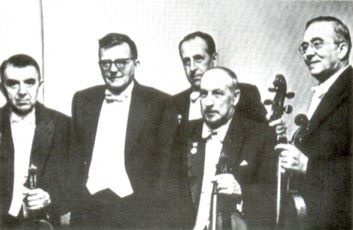
    Borisovsky was violist in the Beethoven Quartet. The quartet, made up of graduates of the Moscow Conservatory, was founded in the mid-‘20s and played together for half a century. The ensemble gave first performances of thirteen of Shostakovich’s fifteen string quartets (Nos. 2 through 14). The third and fifth quartets were dedicated to the group, and Nos.11 through 14 to its individual members (No. 13 to Borisovsky himself). Shostakovich joined the quartet, at the keyboard, for the first performance of his Piano Quintet. He also played with quartet members at the premiere of his Piano Trio No. 2. Borisovsky died in 1972. He taught at the conservatory since the 1920s.

    The impromptu – formally titled Impromptu, op. 33 – is a beautiful little piece. It is believed to have been written in one sitting in 1931. It is only the second known work written by Shostakovich to highlight the viola. The other is the Viola Sonata, Op. 147, of 1975, which has become a viola standard.

    The discovery was announced on September 25, the composer’s birthday, but to my knowledge this is the first time a performance has been posted online. Listen to the “new” impromptu here, played by Paul Neubauer and Wu Han:

    https://www.thestrad.com/artists/newly-discovered-viola-impromptu-by-shostakovich-performed-by-paul-neubauer/8038.article


    PHOTO: Shostakovich (second from left) with the Beethoven Quartet. Borisovsky is on the far right.

  • Movie Music for Speed Demons

    Movie Music for Speed Demons

    What’s your hurry?

    This week on “Picture Perfect,” we’ve got the need for speed.

    We’ll hear music from the second of the “Mad Max” movies, “The Road Warrior” (1981), which cleverly changed the course of the series by turning it into a kind of post-apocalyptic Western. Australian composer Brian May wrote the music, as he did for the original. The director, George Miller, specified that he was looking for a gothic, Bernard Herrmann-type mood to underscore his dystopian vision of the Australian Outback.

    Maurice Jarre took over to write the music for the third installment, “Mad Max Beyond Thunderdome.” However, it’s purely by coincidence that we’ll hear selections from another Jarre score built for speed, “Grand Prix” (1966). The film’s international cast featured James Garner, Eva Marie Saint, Yves Montand, and Toshiro Mifune, but the plot’s assorted relationship and business conflicts take a back seat to driver’s-eye views of lapping the track.

    When we remember Steve McQueen, chances are, if he’s not jumping barbed wire on a motorcycle, he’s behind the wheel of his Ford Mustang GT 390 Fastback, tearing up and down the streets of San Francisco in “Bullitt” (1968). The high-octane action sequence became the yardstick against which all big screen car chases were measured (at least until “The French Connection”). Lalo Schifrin provided the jazzy score.

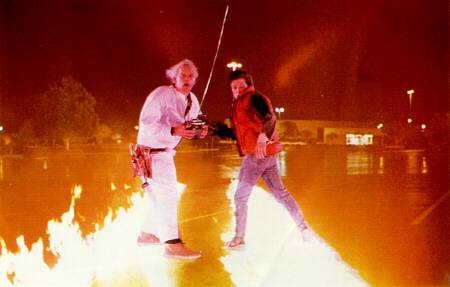
    Finally, Marty McFly and Doc Brown’s time-travelling DeLoreon needs to hit 88 miles per hour in order to get “Back to the Future” (1985). Director Robert Zemeckis had already worked with composer Alan Silvestri on “Romancing the Stone,” but the producer of “Back to the Future,” Steven Spielberg, didn’t care for the music in that film. Zemeckis’ advice to his colleague: go grand and epic, since Spielberg had a marked preference for the music of John Williams. It was a very good choice.

    I hope you’ll join me for an hour of chases and races, on “Picture Perfect,” music for the movies, this Friday evening at 6:00 EDT, on WWFM – The Classical Network and wwfm.org.

    Just be sure you’re not driving when you do!

  • Ernest Schelling A Jersey Boy’s Dark Legacy

    Ernest Schelling A Jersey Boy’s Dark Legacy

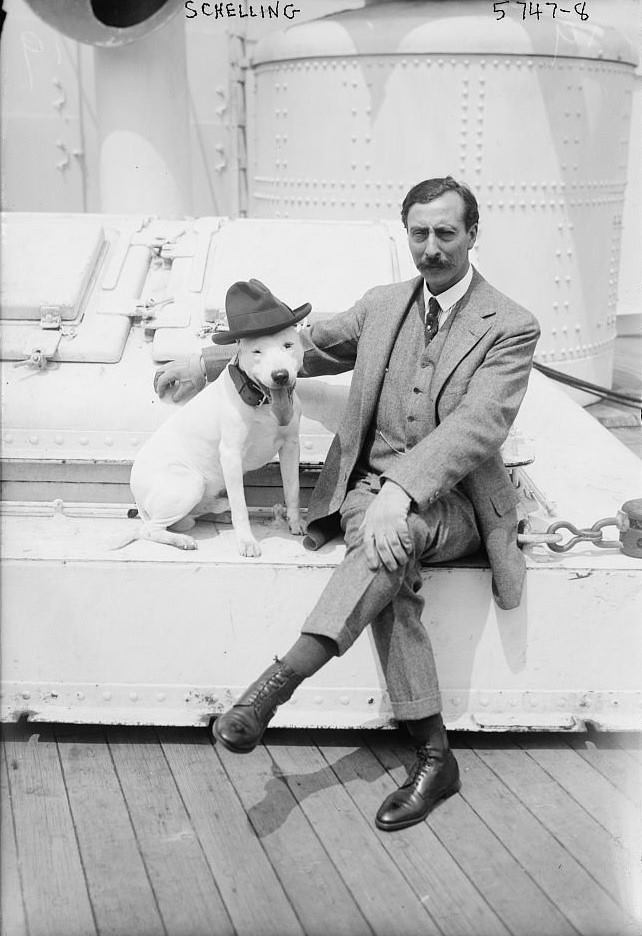
    You might say that Ernest Schelling was a Jersey boy made good. He also happened to be responsible, in part, for the death of Enrique Granados.

    Schelling, a celebrated pianist who for a period of three years became the exclusive pupil of Ignacy Paderewski, was born in Belvidere on this date in 1876. A child prodigy, he made his debut at Philadelphia’s Academy of Music at the age of 4. At 7, he was admitted to the Paris Conservatory. Among the other notable musicians he worked with were Hans Huber, Moritz Moszkowski, and Theodor Leschetizky. Leschetizky was the pupil of Carl Czerny, who of course studied with Beethoven.

    As a conductor, Schelling became music director of the Baltimore Symphony Orchestra, which he led from 1935 to 1937. Well before Bernstein, he conducted the New York Philharmonic Young People’s Concerts, beginning in 1924. They were such a success, he took them on tour, with stops in Philadelphia, Los Angeles, London and Rotterdam.

    Schelling gave the U.S. premiere of Granados’ piano cycle “Goyescas.” In fact it was he who encouraged the composer to craft the music into an opera. Granados liked the idea, and “Goyescas” was given its first performance at the Metropolitan Opera in 1916. It created such a sensation that Woodrow Wilson invited the composer to the White House, an offer Granados could hardly refuse. He postponed the date of his journey home, and was killed a few weeks later, after his ship, the S.S. Sussex, was torpedoed by a German submarine.

    Thanks a lot, Ernest Schelling – and by the way, happy birthday.


    Schelling plays Liszt’s Sonata in B minor:

    Willem Mengelberg conducts Schelling’s “A Victory Ball:”

    A selection from Schelling’s “Suite Fantastique:”


    PHOTO: Ernest Schelling (right) with friend. His ship didn’t sink.

Tag Cloud

Aaron Copland (93) Beethoven (95) Composer (114) Film Music (137) Film Score (143) Film Scores (255) Halloween (94) John Williams (195) KWAX (229) Leonard Bernstein (103) Marlboro Music Festival (125) Movie Music (152) Mozart (88) Opera (208) Philadelphia Orchestra (89) Picture Perfect (174) Princeton Symphony Orchestra (108) Radio (88) Ross Amico (244) Roy's Tie-Dye Sci-Fi Corner (290) The Classical Network (101) The Lost Chord (268) Vaughan Williams (103) WPRB (396) WWFM (881)

DON’T MISS A BEAT

Receive a weekly digest every Sunday at noon by signing up here


RECENT POSTS