Category: Daily Dispatch

  • Czech Music from Marlboro Festival Schulhoff & Dvořák

    Czech Music from Marlboro Festival Schulhoff & Dvořák

    In a spirit of unusual generosity, I’ll be picking up the Czech for this week’s “Music from Marlboro.”

    That’s right, it’s an all-Czech hour.

    We’ll begin with music by Erwin Schulhoff, who was encouraged as a young man by Antonin Dvořák. A Jew, a communist, and a nose-thumbing Dadaist, Schulhoff must have been regarded as a triple threat by the Nazis. Who else but Schulhoff would set “The Communist Manifesto” to music? His promising career was cut short when he was arrested while fleeing to the Soviet Union. He died of tuberculosis in a concentration camp in 1942.

    We’ll hear Schulhoff’s cheeky “Divertissement for Wind Trio” from 1928. The 2002 performance will feature oboist Ariana Ghez, clarinetist Charles Neidich, and bassoonist Shinyee Na.

    Then kick back and enjoy Dvořák’s beloved Piano Quintet in A Major. Composed in 1887, Dvořák’s amply melodic and affirmatively gorgeous Quintet is the perfect antidote to any of your day’s cares. The 2008 performance will feature Marlboro Artistic Director Mitsuko Uchida as pianist, with Benjamin Beilman and David Bowlin, violins; Maiya Papach, viola; and Judith Serkin, cello.

    Only three weekends left to attend this year’s Marlboro Music Festival in Marlboro, VT. On Sunday at 2:30 p.m., Uchida will perform Mozart’s Piano Quartet No. 2 in E-flat, K. 493, on a program that will also include works by Schumann and Marlboro Resident Composer, Pulitzer Prize winner Shulamit Ran.

    Ran’s music will also feature on Saturday’s program, at 8 p.m., which will also include works by Beethoven and Alexander Zemlinsky. For more information or to plan your visit, look online at marlboromusic.org.

    Then join me this Wednesday evening at 6:00 EDT for an all-Czech hour, on the next “Music from Marlboro,” on WWFM – The Classical Network and wwfm.org.

    Marlboro School of Music and Festival: Official Page
  • Ricci Centenary Menotti Violin Concerto on WWFM

    Ricci Centenary Menotti Violin Concerto on WWFM

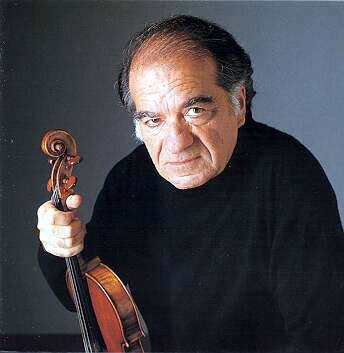
    We mark the centenary of the birth of violinist Ruggiero Ricci (1918-2012) with a recording of Gian Carlo Menotti’s rarely heard Violin Concerto this afternoon in the 3:00 hour. Menotti’s concerto was written for Efrem Zimbalist, then the head of the Curtis Institute Music, and given its first performance by the Philadelphia Orchestra under Eugene Ormandy.

    The piece will cap an afternoon of “New World” treasures, building on Dolce Suono Ensemble’s “Música en tus Manos: The Americas” noontime concert broadcast. Between now and 4 p.m. EDT, stay tuned for Morton Gould’s “Latin American Symphonette,” Leo Brouwer’s Guitar Concerto No. 4 “Concerto de Toronto,” Robert Farnon’s Symphony No. 2 “Ottawa,” and more, on WWFM – The Classical Network and wwfm.org.

  • Americas Music Journey with Dolce Suono

    Americas Music Journey with Dolce Suono

    There’s more to America than just the United States.

    Today’s Noontime Concert on The Classical Network will highlight the Philadelphia-based Dolce Suono Ensemble’s “Música en tus Manos: The Americas” project. “Música en tus Manos” (“Music in Your Hands”) is an outreach initiative that explores the artistic contributions of Spain and the Americas as part of the ensemble’s ongoing engagement with Philadelphia’s Latino community.

    Among the composers represented on today’s broadcast will be Joaquin Turina (Spain), Ernesto Lecuona (Cuba), and Jennifer Higdon, Ned Rorem, and Jelly Roll Morton (U.S.A.). Dolce Suono’s artistic director, flutist Mimi Stillman, will co-host with WWFM’s David Osenberg.

    Then stick around. I’ll be by at 1:35 to bring Canada into the mix with the “Ottawa” Symphony by Robert Farnon, whose birthday it is today. In fact, I think I can pretty much promise you a New World in music until 4 p.m. EDT, on WWFM – The Classical Network and wwfm.org.

  • Leon Fleisher A Living Legend at 90

    Leon Fleisher A Living Legend at 90

    The appellation “Living Legend” has been perhaps too widely applied; but at the age of 90, pianist Leon Fleisher really is one. A former child prodigy, his is a direct line to Beethoven. He studied with Artur Schnabel, who studied with Theodor Leschetizky, who studied with Carl Czerny, who studied with the Master himself.

    When he performed with the New York Philharmonic under Pierre Monteux at the age of 16, Monteux called him “the pianistic find of the century.” Fleisher landed a recording contract with Columbia Records and began laying down benchmark recordings of Beethoven, Brahms, Schumann, Grieg and Rachmaninoff with George Szell and the Cleveland Orchestra.

    Then everything changed.

    Fleisher was diagnosed with focal dystonia in 1964. He gradually lost control of his right hand, and his career as a concert pianist was in jeopardy. His struggle with the affliction led to a period of soul-searching, and it forced him to diversify. He realized, as Schnabel had espoused, that music is music, regardless of the medium.

    Fleisher began channeling his energy into teaching and conducting. He has been a venerable presence at the Peabody Conservatory of Music in Baltimore, the Royal Conservatory of Music in Toronto, and the Curtis Institute of Music in Philadelphia.

    Fortunately, the left-hand piano repertoire is extensive, and Fleisher himself has added considerably to it, through commissioned works from contemporary composers or gifts from friends. His album, “All the Things You Are,” released a few years ago on Bridge Records, Inc., documents some of these. The album became a surprise hit, with The New Yorker’s Alex Ross lauding it as “one of his finest hours on record.”

    Fleisher is an extraordinary artist and individual. Not only has he fought hard to regain control of his right hand – and done so, thanks to experimental treatments with, of all things, Botox – he is quite possibly the most gracious and generous interview subject I’ve ever encountered.

    In honor of his milestone birthday, I’ve posted an unedited conversation we had four years ago for my radio program, “The Lost Chord.” In the version I whittled down for broadcast, selections were interspersed with performances from “All the Things You Are.” I realize there is a lot of extraneous material in the raw audio, but it’s all here for you to skim as you please:

    Then I hope you’ll join me this afternoon for an assortment of Fleisher’s recordings, which will be among the featured offerings from 4 to 7 p.m. EDT, on WWFM – The Classical Network and wwfm.org.

    PLEASE NOTE: Bill McGlaughlin will also be saluting Fleisher on “Exploring Music,” all this week at 7 p.m. I have glanced through the playlists; repertoire will not be duplicated.

    Happy birthday, Leon Fleisher!

  • Norwegian Stage Music Halvorsen & Grieg

    Norwegian Stage Music Halvorsen & Grieg

    If, as the Bard asserts, all the world’s a stage, then why not Norway? This Sunday night on “The Lost Chord,” we vicariously tread the boards through incidental music by two of that country’s most prominent composers.

    Following a lengthy apprenticeship as a violinist, in the course of which he performed in orchestras all over Europe, Johan Halvorsen (1864-1935) developed an interest in conducting. In 1893, the same year he was appointed principal conductor of the Bergen Philharmonic, he worked as conductor of the theater orchestra at Bergen’s National Stage. In 1899, he became conductor of the newly-opened National Theater in Kristiana, a post he would occupy for the next three decades, until his retirement in 1929.

    Following his retirement, Halvorsen largely concentrated on writing symphonies and his popular Norwegian Rhapsodies. Until then, his work in the theater, understandably, brought many opportunities to write for the stage. In fact, he composed music for more than 30 plays.

    One of those was “Askeladden,” or “The Ash Lad,” a children’s comedy, based on Norwegian folk tales. Askeladden is an unprepossessing young man who succeeds where others fail, generally winning the hand of a princess and half the kingdom. Halvorsen actually composed the music for this particular play in his retirement. In fact, it is his last orchestral score.

    Norway’s best known composer, of course, is Edvard Grieg (1843-1907). Grieg’s suite from the play “Sigurd Jorsalfar,” or “Sigurd the Crusader,” is actually rather famous, yet we the seldom have an opportunity to hear the complete incidental music. Sigurd I, King of Norway, reigned from 1103 to 1130. His reign is regarded by historians as a golden age for medieval Norway.

    Sigurd became the subject of a play by Bjornsterne Bjornson, for which Grieg provided music in 1872. The familiar suite was given its premiere 20 years later. Bjornson’s play concerns the brothers, Sigurd and Oystein, joint rulers of 12th century Norway, and the beautiful Borghild, whose love for Oystein is unrequited, but who herself is loved by Sigurd. The composer does his best to lend a third dimension, or at least some pageantry, to this historical tableau.

    I hope you’ll join me for “A-fjordable Theater,” music for the Norwegian stage, this Sunday night at 10:00 EDT, on WWFM – The Classical Network and wwfm.org.

Tag Cloud

Aaron Copland (93) Beethoven (95) Composer (114) Film Music (137) Film Score (143) Film Scores (255) Halloween (94) John Williams (195) KWAX (229) Leonard Bernstein (103) Marlboro Music Festival (125) Movie Music (152) Mozart (88) Opera (208) Philadelphia Orchestra (89) Picture Perfect (174) Princeton Symphony Orchestra (108) Radio (88) Ross Amico (244) Roy's Tie-Dye Sci-Fi Corner (290) The Classical Network (101) The Lost Chord (268) Vaughan Williams (103) WPRB (396) WWFM (881)

DON’T MISS A BEAT

Receive a weekly digest every Sunday at noon by signing up here


RECENT POSTS