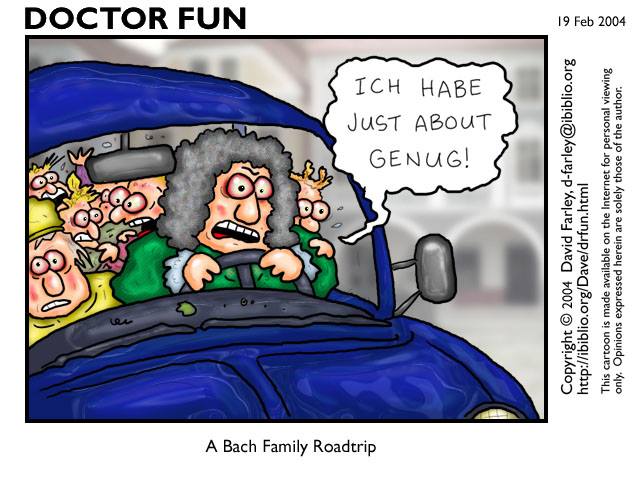
Memories of those childhood trips to the Jersey shore, stuck in traffic on the Garden State Parkway. Windows down out of fear of the car overheating. They don’t call it the Parkway for nothing.
Category: Daily Dispatch
-
Lost Worlds Epic Film Scores Picture Perfect
This week on “Picture Perfect,” prepare to get “lost.” We’ll have an hour of music from fantasy films set in lost worlds.
In “King Kong” (1933), filmmaker and entrepreneur Carl Denham hires a ship to an uncharted island, known only from a secret map in his possession. There the crew discovers the titular gorilla and other outsized and should-be-extinct creatures. Kong is abducted from his natural habitat – and you know the rest. The composer, Max Steiner, pulls out all the stops. “Kong” was one of the first films to demonstrate how truly powerful an orchestral soundtrack could be.
Then we travel to the earth’s core, courtesy of Jules Verne, and “Journey to the Center of the Earth” (1959). James Mason is the professor who leads the expedition. The film sports one of Bernard Herrmann’s most outlandish soundscapes, the orchestra consisting of winds, brass and percussion, but also cathedral organ, four electric organs, and an obsolete Renaissance instrument called the serpent. Watch out for that giant chameleon!
“One Million Years B.C.” (1966) is a guilty pleasure if ever there was one. Produced by Hammer, the studio that gave us all those repugnant yet somehow delicious Peter Cushing-Christopher Lee horror team-ups, the film features special effects by the legendary Ray Harryhausen and an equally legendary fur bikini, worn by Raquel Welch. The music is by Mario Nascimbene, who wrote one of my favorite scores for Kirk Douglas, for “The Vikings.” We’ll be listening to the film’s climactic volcano sequence.
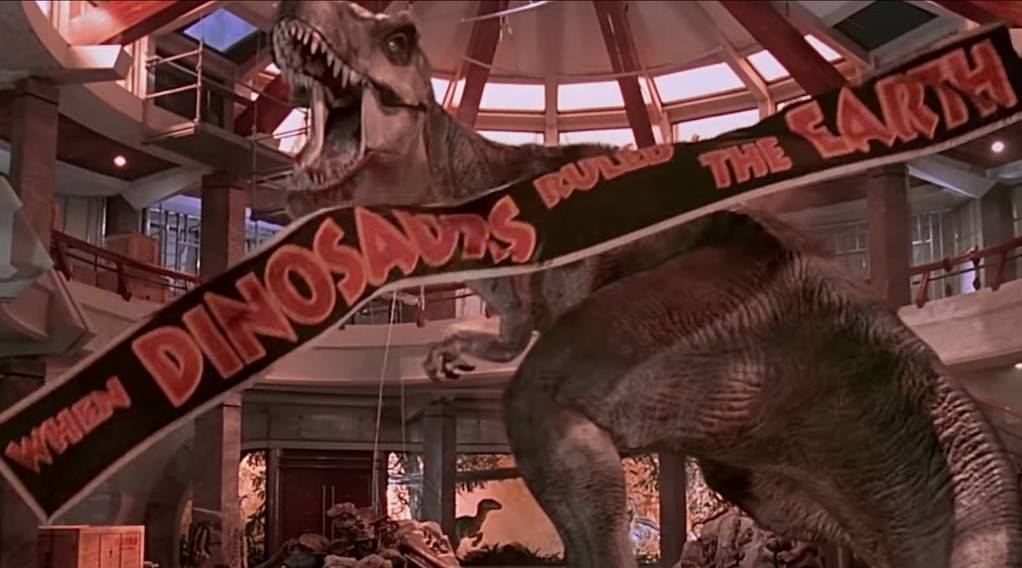
As he did with the Indiana Jones films, director Steven Spielberg turned to B-movie source material for his visual inspiration for “Jurassic Park” (1993), based on the novel by Michael Crichton. The herky-jerky dinosaur effects of yore are replaced by state of the art computer-generated effects, in the story of a safari park on a remote island gone wrong.
Sure, we’ve come a long way from Raquel Welch getting carried off by a pteranodon, but admit it, we all still want to see people fight dinosaurs. Instead of fudging history, now we can feel superior by fudging science. “Jurassic Park” plays on the most recent scientific thinking, with DNA extracted from mosquitoes trapped in amber, cloning, and the theory that dinosaurs were not lizards, after all, but rather birds. The music is by long-time Spielberg-collaborator, John Williams.
I hope you’ll join me for music for these “Lands That Time Forgot,” this Friday evening at 6:00 EDT, on WWFM – The Classical Network and wwm.org.
Did anyone else see this story about the 25-foot statue of Jeff Goldblum erected in London this week to celebrate 25 years of “Jurassic Park?”
-

Louis Kentner Warsaw Concerto Fame
When he was hired to play the piano in a World War II potboiler, he asked that he not receive credit, for fear that it would damage his integrity as a concert artist. But when the spin-off record sold millions, he wisely changed his tune.
Today is the birthday of Louis Kentner (1905-1987). The pianist went by several names. He was born Lajos Kentner to Hungarian parents in the present-day Czech Republic (then Austrian Silesia). Among his teachers at the Royal Academy of Music in Budapest were Arnold Székely (piano), Leó Weiner (chamber music) and Zoltán Kodály (composition). He began performing in public at the age of 15. Until 1931, he was known professionally as Ludwig Kentner. He settled in England in 1935 and became a naturalized citizen in 1946.
Kentner excelled in the works of Franz Liszt. He founded the British Liszt Society. The sprawling “Years of Pilgrimage” was among the works he tackled complete. He also gave radio broadcasts of the complete sonatas of Beethoven and Schubert, and Bach’s “The Well-Tempered Clavier.” He was the pianist of choice for Béla Bartók, who requested him as soloist for the Hungarian premiere of his Piano Concerto No. 2 and the first European performance of the Concerto No. 3. Later, Kentner gave the British premiere of Bartók’s Scherzo for Piano and Orchestra.
Also in England, he gave first performances of works by Sir Arthur Bliss, Sir Michael Tippett, and Sir William Walton (Walton’s Violin Sonata, played with his brother-in-law, the violinist Yehudi Menuhin).
Nothing he played, however, touched so many as Richard Addinsell’s “Warsaw Concerto,” which became world-famous following its use in the 1941 film “Dangerous Moonlight” (known in the U.S. by the more lurid title, “Suicide Squadron”). The piece, never heard complete in the film, took on a life of its own when arranged as a mini Rachmaninoff-style concerto by Addinsell’s frequent collaborator, Roy Douglas. The eight-minute playing time ensured that it would fit perfectly on two sides of a 78 rpm disc. Its sheet music sales went through the roof, and the “Warsaw Concerto” was a smash. It was not the first spin-off concerto from the movies, but it did spark an unlikely rage for concertos at the movies.
Kentner’s legacy has been tied very closely to my own radio work, since it is he who performs the theme to my weekly show, “The Lost Chord” (which is, for the record, the “Berceuse” from Kentner’s 1972 recording of the “Transcendental Etudes” of Sergei Lyapunov).
So it is with gratitude, as well as with admiration, that I offer this remembrance of Louis Kentner on his birthday!
Kentner’s recording of the “Warsaw Concerto:”
His first of three recordings of the “Berceuse” from Lyapunov’s “Transcendental Etudes” (this one made in 1939):
-
Kurt Masur Google Doodle Celebrates Conductor
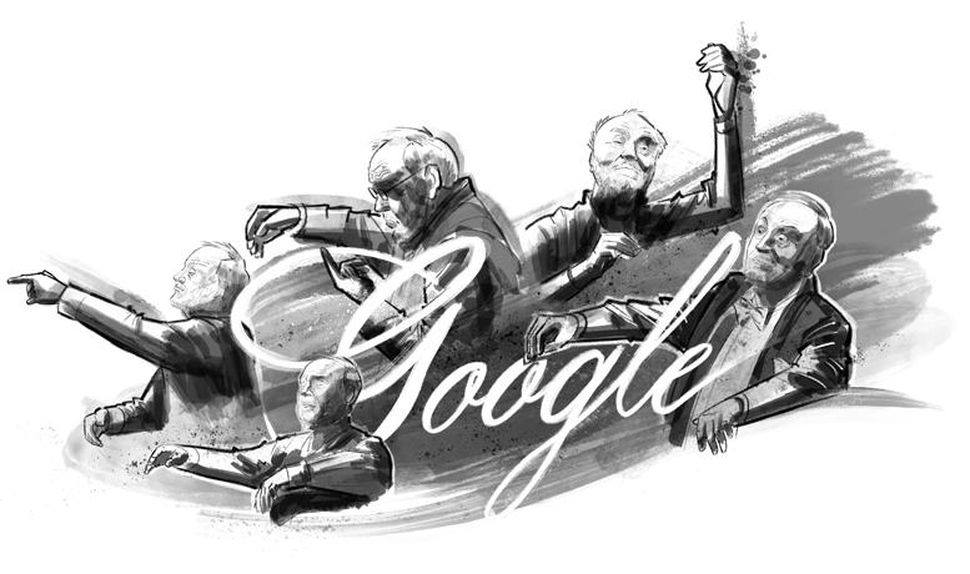
Well, dog my cats! Kurt Masur gets his own Google doodle, as you will find when doing Google searches today, the 91st anniversary of the conductor’s birth.
https://www.cnet.com/news/google-doodle-celebrates-renowned-conductor-kurt-masur/
I’ll be playing some of Masur’s recordings this afternoon, from 4 to 6 p.m. EDT, on WWFM – The Classical Network and wwfm.org.
Then stay tuned for “Music from Marlboro” at 6!
-
Remembering Wayne Conner Philadelphia’s Opera Voice
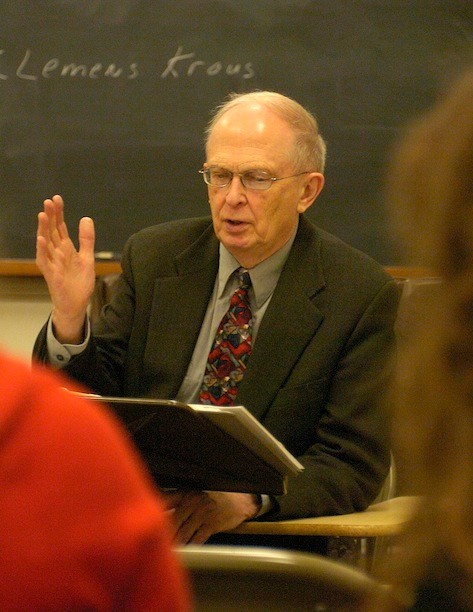
Anyone else miss Wayne Conner?
Philadelphia area opera lovers may recollect Conner as the alternative voice of opera on the airwaves. While the Met had Peter Allen for its live opera broadcasts from New York City – and Allen was marvelous at what he did – I much preferred the lovingly curated shows put together by Conner for WHYY FM. For 30 years, Conner was host and producer of “Singers World” and “Collector’s Corner,” both of which were syndicated on National Public Radio. Then he presented “Sunday Opera” for 12 years, into the mid-‘90s.
“Sunday Opera” was like a balm to me. I myself hosted weekend mornings on WWFM for 19 years. For much of that time, I would be up at 4:00, or even 3:00 in the morning. I would get home on Sundays just in time to dissolve into whatever world of operatic bliss Conner would devise.
Conner introduced recordings from his own extensive collection, bringing to bear his broad historical knowledge. He particularly loved French opera, and I looked forward to discovering all of the rare Massenet and Bizet he would share with his loyal listeners. He offered these on what I perceived as a “one for me, one for you” basis, with one week a historically significant recording of Verdi’s “La forza del destino,” and the next Chausson’s “Le roi Arthus.” In those days before the prominence of online shopping, “Le roi Arthus” moved me to place a special order at my local record dealer, and how I anticipated its arrival!
What I didn’t realize until well into Conner’s tenure was that he also had a firm foundation as an experienced singer. Born Jesse Wayne Conner in Dallas, TX, on January 5, 1929, Conner started out as an accountant and was working toward a law degree when he was convinced to pursue singing. He was accepted into the Curtis Institute of Music in Philadelphia, and earned a graduate degree from the Peabody Conservatory of John Hopkins University. He would later teach at both institutions – for well over four decades commuting to Baltimore twice a week from his home in Philadelphia – as well as at the Mannes School of Music in New York and Philadelphia’s Academy of Vocal Arts.
As a professional singer, he appeared with the Philadelphia Orchestra, the Chamber Orchestra of Philadelphia, the Philadelphia Lyric Opera Company, the Baltimore Bach Society, the Bach Choir of Bethlehem, and the Zagreb Philharmonic Orchestra. He performed recitals at the Phillips Collection in Washington, DC, the Philadelphia Museum of Art, and the Palace of Fine Art in San Francisco. He also lent his tenor voice to performances at Congregation Keneseth Israel in Elkins Park and First Baptist Church in Philadelphia.
At the time not realizing the full extent of his career, I was excited nonetheless to run into Conner once at my neighborhood grocery store. It allowed me to tell him just how much I enjoyed his work on “Sunday Opera.” I think he must have been surprised to hear this from a listener then in his 20s, who had no obvious connection to any of his teaching positions. How I recognized him, I don’t recall, but I am glad I had the chance to tell him.
“Sunday Opera” was pulled from the WHYY roster shortly after I contributed to the station’s pledge drive. I didn’t have a lot of disposable income, but I made it a point to donate for the past few years out of my love for the show. To my knowledge, it would be Conner’s last regular program, although he would be called in from time to time to host special opera broadcasts, and he continued to lecture.
Conner died of liver cancer on May 9, 2008. He was 79 years-old. At some point, I was elated to discover he had recorded Brahms’ “Liebeslieder Waltzes” with a starry ensemble of musicians he had known through his association with the Marlboro Music Festival. Conner appears with soprano Benita Valente, alto Marlena Kleinman, bass Martial Singher, and pianists Rudolf Serkin and Leon Fleisher. I’ll share that recording on the next “Music from Marlboro,” this Wednesday evening at 6:00 EDT, on WWFM – The Classical Network and wwfm.org.
Marlboro School of Music and Festival: Official Page
Tag Cloud
Aaron Copland (93) Beethoven (95) Composer (114) Film Music (137) Film Score (143) Film Scores (255) Halloween (94) John Williams (195) KWAX (229) Leonard Bernstein (103) Marlboro Music Festival (125) Movie Music (152) Mozart (88) Opera (208) Philadelphia Orchestra (89) Picture Perfect (174) Princeton Symphony Orchestra (108) Radio (88) Ross Amico (244) Roy's Tie-Dye Sci-Fi Corner (290) The Classical Network (101) The Lost Chord (268) Vaughan Williams (103) WPRB (396) WWFM (881)