Category: Daily Dispatch

  • Tall Ships Music from Classic Movies

    Tall Ships Music from Classic Movies

    Ahoy!

    This week on “Picture Perfect,” we give in to the impulse to run away to sea, with music from movies featuring tall ships.

    Though Gregory Peck cuts a dashing figure as “Captain Horatio Hornblower” (1951), the movie itself is a bit episodic, adapted as it was from three of C.S. Forester’s Hornblower novels. Canadian-born master of British Light Music Robert Farnon wrote the music, lending another dimension to this nautical adventure.

    Alan Ladd and James Mason engage in a battle of wills in “Botany Bay” (1953). Ladd plays a doctor, wrongly convicted of a crime, who is transported to a penal colony in New South Wales on a ship under the harsh command of Mason. In perhaps the film’s most memorable sequence, Mason has one of his charges keelhauled. Franz Waxman wrote the score.

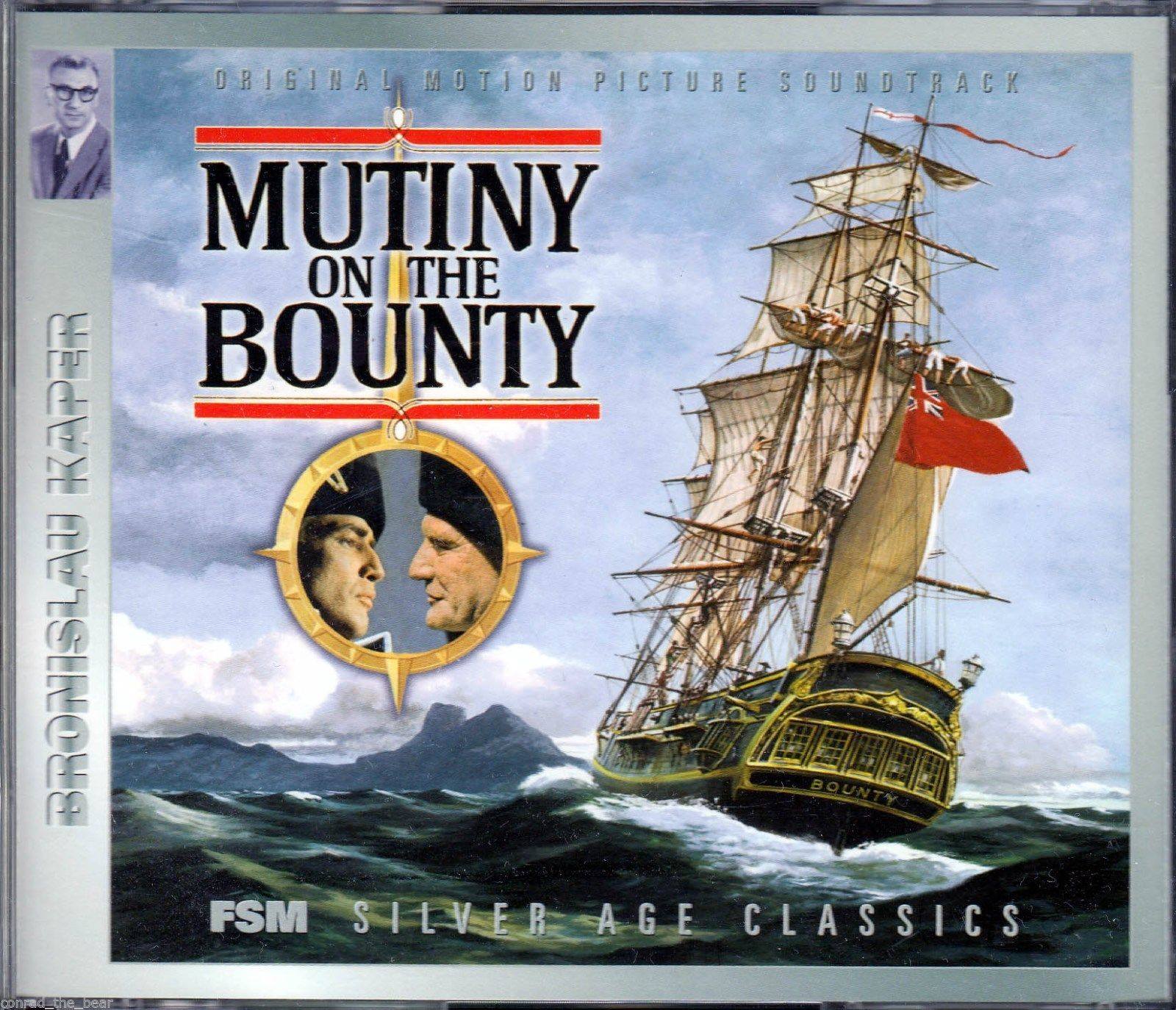
    If it all sounds a mite familiar, it’s because the story was by Charles Nordhoff and James Norman Hall, who also wrote the book that became the basis for “Mutiny on the Bounty” (1962). The classic film version of “Bounty” dates from 1935, with Clark Gable butting up against Charles Laughton’s Captain Bligh. The ‘60s version bears a certain notoriety, mostly for Marlon Brando’s eccentric performance, which turns Fletcher Christian into a fop, and the fact that he essentially directed all his own scenes himself. The film was colossal failure, earning back only $13 million of its $19 million budget. Nonetheless, it managed to inspire Bronislau Kaper to compose one of his most monumental scores.

    (Interesting fact: the enlarged replica of the 1787 HMS Bounty, constructed specifically for the 1962 film, sank off the coast of North Carolina during Hurricane Sandy in 2012. The ship had also been used in the “Pirates of the Caribbean” franchise.)

    Finally, we’ll hear selections from “Windjammer” (1958), the only film shot using the Cinemiracle process. The film documents the round-trip, transatlantic journey of a Norwegian vessel from Oslo to the Caribbean to New York to Portsmouth, NH, and then back home again. Morton Gould wrote the evocative score, which alternates dance rhythms and sea shanties with a recurring melody suggestive of the sweeping romance of the high seas.

    Join me for these tall ships recommissioned on “Picture Perfect,” music for the movies, this Friday evening at 6:00 EDT, on WWFM – The Classical Network and wwfm.org.
  • From the Top Host O’Riley Steps Down

    From the Top Host O’Riley Steps Down

    You fans of “From the Top” might be interested in this press release I received in my email yesterday afternoon:

    Dear fans,

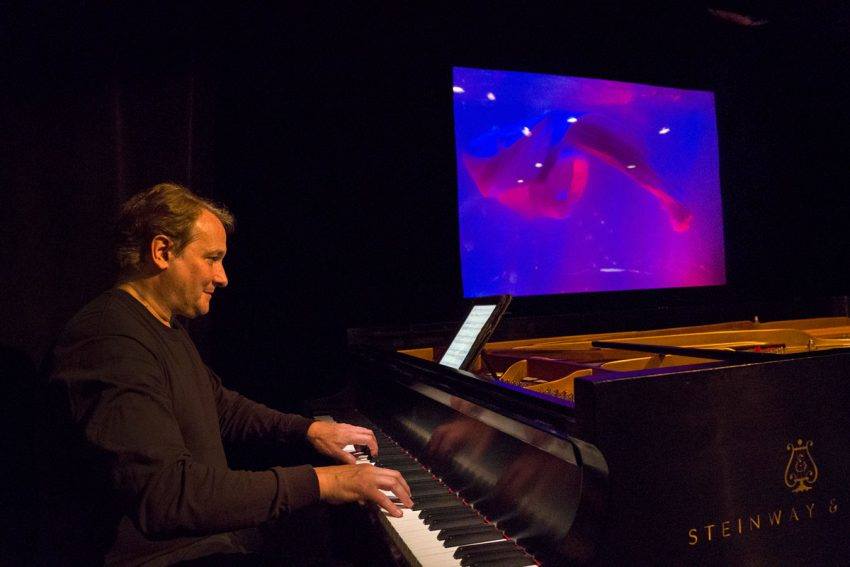
    I am writing to you with some difficult news to share. We announced today that we will not be renewing radio host Christopher O’Riley’s contract next season.

    I’m sure this comes as a surprise; after all, Chris has been with From the Top from the very beginning. He’s been dedicated to our mission from day one, and has made a huge contribution to the music industry with his commitment to pushing musical boundaries and introducing new audiences to classical music.

    Despite the fact that we were not able to reach an agreement, we are deeply grateful to Chris for his work over nearly two decades. He is currently starring in the twice-extended Off-Broadway hit, “Symphonie Fantastique,” playing in New York City, and we wish him all the best in that and his next creative endeavors.

    I did want to assure Chris’ fans that the shows Chris has recorded recently will air over the next few months. Beginning in Fall 2018, you’ll start to hear shows recorded with guest hosts. If you are interested in knowing more about our first guest host, who happens to be one of our From the Top alumni, please read more here: https://www.fromthetop.org/musician/peter-dugan/

    I came to From the Top this past spring because, first and foremost, I was a fan of the radio show, and believed powerfully in From the Top’s mission to support young musicians. I am looking forward to working with our talented team of producers and staff to keep From the Top going strong. I am also hopeful that new collaborations with our alumni and guest hosts will begin to add new voices and perspectives to our programs, helping us to serve more young artists and reach a broad audience of fans around the country.

    Please feel free to share your thoughts or feedback with us by replying to this email.

    Gretchen Nielsen

    Executive Director, From the Top


    No mention of an “agreement” in the official notice posted on the “From the Top” website:

    From the Top Announces Hosting Changes


    Snippet of O’Riley doing his thing on “From the Top:”

    More about “Symphonie Fantastique:”

    https://www.nytimes.com/2018/04/04/theater/symphonie-fantastique-review-basil-twist.html

  • Marlboro Music Festival Beethoven & Spohr

    Marlboro Music Festival Beethoven & Spohr

    Caution! Musicians at play!

    The Marlboro Music Festival will present this summer’s opening concerts this weekend, in Marlboro, VT. Extraordinarily talented young performers will share the stage with seasoned veterans when presenting music by Mozart, Copland and Schumann (Saturday) and Beethoven, Schubert, Nielsen and Schumann (Sunday). For the complete schedule and to plan your visit, look online at marlboromusic.org.

    Then join me this Wednesday evening on The Classical Network, for performances by Marlboro musicians of works by Ludwig van Beethoven and Ludwig “Louis” Spohr.

    In his day, Spohr was as highly regarded as Beethoven. A triple threat – a violinist, a conductor, and a composer – he churned out music in all genres. He wrote nine symphonies, ten operas, fifteen violin concertos, four clarinet concertos, and 36 string quartets. Add to that, innumerable chamber works for all sorts of instrumental combinations – with a special emphasis on the harp, since it was the instrument of his wife, with whom he often appeared in concert.

    Following his death, in 1859, his reputation plummeted. It wasn’t until the late 20th century that his music underwent a significant revival.

    We’ll hear Spohr’s Sextet in C major, Op. 140, a comparatively late work, but one infused with a remarkably youthful spirit. A supporter of German unification, republicanism, and democratic causes, Spohr was inspired by the revolutions that swept across Europe in 1848.

    From the 1980 Marlboro Music Festival, we’ll enjoy a performance by violinists Pina Carmirelli and Veronica Knittel, violists Philipp Naegele and Karen Dreyfus, and cellists Peter Wiley and Georg Faust.

    Spohr was a friend and colleague of Beethoven. He participated in a memorable run-through of Beethoven’s “Ghost” Trio, with the composer banging away at an out-of-tune piano. He also played in the premiere of Beethoven’s Seventh Symphony.

    With their association in mind, we’ll also hear Beethoven’s Wind Octet in E-flat major, Op. 103, from 1792. The 1957 recording will feature Marlboro cofounder Marcel Moyse as director of an ensemble made up of oboists Alfred Genovese and Earl Schuster, clarinetists Harold Wright and Richard Lesser, bassoonists Anthony Checchia and Roland Small, and hornists Myron Bloom and Richard Mackey.

    I hope you’ll join me for music by the two Ludwigs, this Wednesday evening at 6:00 EST, on WWFM – The Classical Network and wwfm.org.

    Marlboro School of Music and Festival: Official Page

  • Folia Madness on The Classical Network

    Folia Madness on The Classical Network

    On today’s Noontime Concert on The Classical Network, we go mad for the folia.

    Of course “folia” means madness, or folly. This anonymous dance of Iberian origin has been a classical music earworm since at least the 15th century.

    The folia started out as a fertility dance in three-four time. It was fast-paced and even tumultuous, with cross-dressing men borne on the shoulders of dancers, said to be driven mad by the stirring rhythm. Over time, the dance insinuated its way into the royal courts of Europe, and the tempo became more stately.

    Allegedly Jean-Baptiste Lully was the first to legitimize the “later folia,” in a work published in 1672 (though there were earlier examples published by Gaspar Sanz and Francesco Corbetta). The folia became codified as a kind of passacaglia, with a fixed melody supported by a standard chord progression.

    Since then, more than 150 composers have been infected by the Folia Bug, over a span of more than three centuries. Baroque composers, in particular, were crazy for it, with Corelli’s trio sonata arguably being the most famous. In the 20th century, Rachmaninoff and Ponce were all too ready to “go there.”

    Today’s program, presented by the Belladonna Baroque Quartet, will include folias from Spain, Italy and France, alongside pieces built upon other ground bass dances and those that incorporate dance rhythms into their structures.

    The program was presented on November 2, 2017 at St. Bartholomew’s Church, 50th Street and Park Avenue, in Midtown Manhattan, where free lunchtime concerts are held every Thursday at 1:15 p.m. The 2017-2018 schedule has run its course, but concerts will resume in the fall.

    Today’s broadcast is made possible in part by Gotham Early Music Scene, or GEMS. GEMS is a non-profit corporation that supports and promotes artists and organizations in New York City devoted to early music – music of the Middle Ages, Renaissance, Baroque, and early Classical periods. For more information and updates to GEMS’ events calendar, look online at gemsny.org.

    Then stick around for more madness, as we present Carl Orff’s settings of poetry by the debauched monks of Benediktbeuren Abbey, “Carmina Burana.” It’s one of our featured highlights, on this, Orff’s birthday.

    Tune in for Belladonna Baroque’s “Follies Festival” at 12 p.m. EDT. I’ll be dancing and drinking until 4, on WWFM – The Classical Network and wwfm.org.

  • Respighi’s Rafter-Rattling Birthday Bash

    Respighi’s Rafter-Rattling Birthday Bash

    Hey, when you write tone poems that rattle the rafters, you deserve to enjoy a little down time.

    Ottorino Respighi may be taking the day off, but we’ll celebrate the anniversary of his birth, with music that’s so over-the-top that Cecile B. DeMille would have blushed.

    The ballet “Belkis, Queen of Sheba,” a quasi-Biblical spectacle set at the court of King Solomon, was given its first performance at La Scala in 1932. The finale featured over a thousand performers, which likely accounts for the work’s subsequent neglect. Grandiose even by Respighi standards, the concluding orgiastic dance whipped the opening night audience into a frenzy.

    We’ll also observe the birthdays today of composers David Diamond and Paul Chihara, pianist Leonard Pennario, and conductor David Zinman, and remember composer and conductor Oliver Knussen, who died yesterday at the age of 66.

    The music will be pretty spectacular, between 4 and 7 p.m. EDT, on WWFM – The Classical Network and wwfm.org.


    Respighi (second from right) hits the beach with quattro amici

Tag Cloud

Aaron Copland (93) Beethoven (95) Composer (114) Film Music (137) Film Score (143) Film Scores (255) Halloween (94) John Williams (195) KWAX (229) Leonard Bernstein (103) Marlboro Music Festival (125) Movie Music (152) Mozart (88) Opera (208) Philadelphia Orchestra (89) Picture Perfect (174) Princeton Symphony Orchestra (108) Radio (88) Ross Amico (244) Roy's Tie-Dye Sci-Fi Corner (290) The Classical Network (101) The Lost Chord (268) Vaughan Williams (103) WPRB (396) WWFM (881)

DON’T MISS A BEAT

Receive a weekly digest every Sunday at noon by signing up here


RECENT POSTS