Category: Daily Dispatch

  • George Antheil Trenton’s Bad Boy of Music

    George Antheil Trenton’s Bad Boy of Music

    This Sunday night on “The Lost Chord,” Trenton’s Bad Boy makes good.

    George Antheil, self-proclaimed “Bad Boy of Music” (the title of his autobiography), sparked one of classical music’s great riots when his “Ballet Mécanique” was unveiled in Paris in 1926.

    The work made preposterous demands on performers and audience alike, with its battery of player pianos, sirens, bells, and airplane propellers – all difficult to coordinate, but worth it, if they were to transform concert halls into free-for-alls and secure Antheil’s status as enfant terrible. His notoriety earned him the respect, friendship, and envy of Paris’ artistic community. From the stage, he watched as Man Ray punched a heckler in the face, as Satie cheered, “Quel precision!,” and as Ezra Pound shouted, “Shut up, you are all stupid idiots.” Pound became one of Antheil’s most ardent champions, taking a break from poetry to publish an inflammatory book, “Antheil and the Treatise on Harmony.”

    Antheil speculated, perhaps facetiously, that his mechanistic nightmares may have been inspired by his having been born across the street from a noisy machine shop. In fact, a number of his works bear the boisterous imprint of the factories he knew in Trenton as a boy, including the “Airplane Sonata,” “The Death of Machines,” and the “Sonata Sauvage.”

    It was all rather forward-looking. Antheil was one of the first composers to search beyond conventional instruments for musical means. He not only presaged the alien soundscapes of Edgard Varèse, but also anticipated the stupefying repetitions of minimalism – though infusing his own compositions with enough violence to prevent them from ever becoming numbing. Stravinsky was his hero. He fed off the savagery of “The Rite of Spring,” then followed the master’s subsequent hairpin turn into neoclassicism. Both artists suffered a backlash from former idolaters who felt betrayed by what was perceived as a cowardly retreat into the past.

    In Antheil’s case, his reputation never recovered. The one-two punch of his Piano Concerto No. 2, transparently influenced by Bach, and the spectacular failure of his “Ballet Mécanique” to impress at its American premiere at Carnegie Hall (mostly due to faulty machinery) cast Antheil, rebel angel that he was, from the lofty heights of notoriety to the slag heap of has-beenery.

    But if it is true that the remainder of his career was indeed that of a has-been, we should all be so lucky.

    The composer of six symphonies, Antheil also wrote books on endocrinology and speculative war tactics, a murder mystery, a nationally syndicated column of advice to the lovelorn, and over 30 Hollywood film scores. With the actress Hedy Lamarr, he patented a torpedo guidance system that became the basis for modern Bluetooth, Wi-Fi, and cellular phone technology.

    I hope you’ll join me for music by this eccentric and multitalented figure, including “Ballet Mécanique,” in all its original, uncompromising glory; then selections from his neo-classical Piano Concerto No. 2, his wartime Symphony No. 4, and dance music from his score to the ballet film noir “Specter of the Rose.”

    Trenton’s “Bad Boy” makes good, on “Antheil Establishment,” this Sunday night at 10:00 EDT, on WWFM – The Classical Network and wwfm.org.

    Happy birthday, George Antheil (born July 8, 1900).


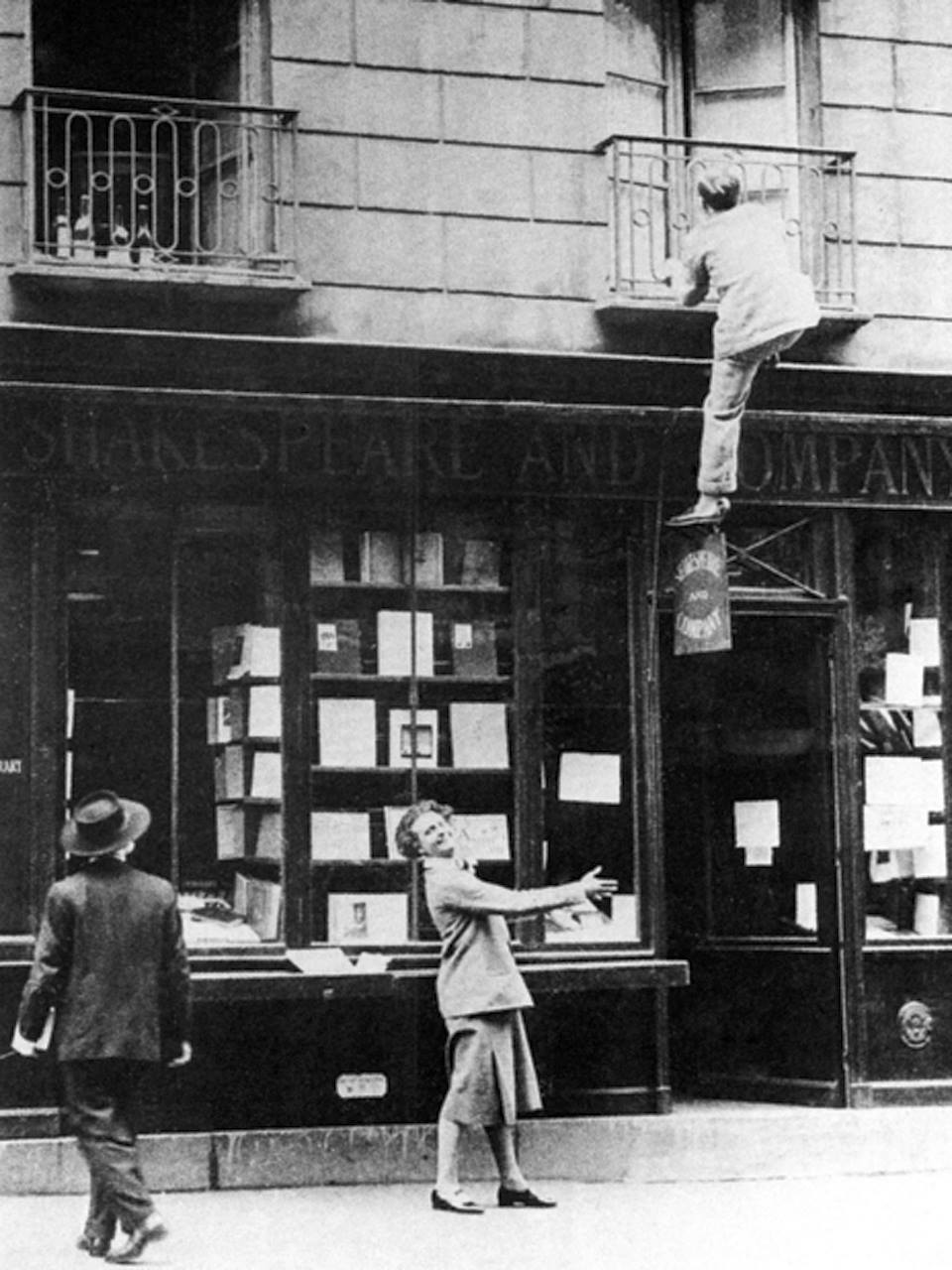
    Sylvia Beach acts as spotter as Antheil ascends to his second-story apartment, located above the legendary Parisian bookshop Shakespeare and Company

  • Mahler Still Being Talked About

    Mahler Still Being Talked About

    As Oscar Wilde memorably observed, “… There is only one thing in the world worse than being talked about, and that’s not being talked about.”

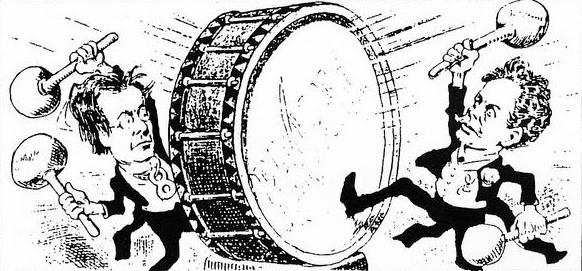
    Gustav Mahler’s unprecedentedly ambitious – and loud – masterworks caused his contemporaries to sit up and take notice. Reactions ranged from exaltation to confusion to outright hostility, and not necessarily in that order. Of course Mahler got the last laugh. Despite the high cost of presenting his symphonies, they are now more prevalent on concert programs than ever before. And the halls are packed.

    You haven’t really made it until you are widely caricatured. You’ll find more examples by following the link below. Some of the portraits are affectionate; some are mean-spirited. Either way, it’s clear that Mahler was being talked about.

    Happy birthday, Gus!

    https://www.gustav-mahler.eu/index.php/private-life/3206-caricatures

  • Jane Austen Film Scores: A Radio Playlist

    Jane Austen Film Scores: A Radio Playlist

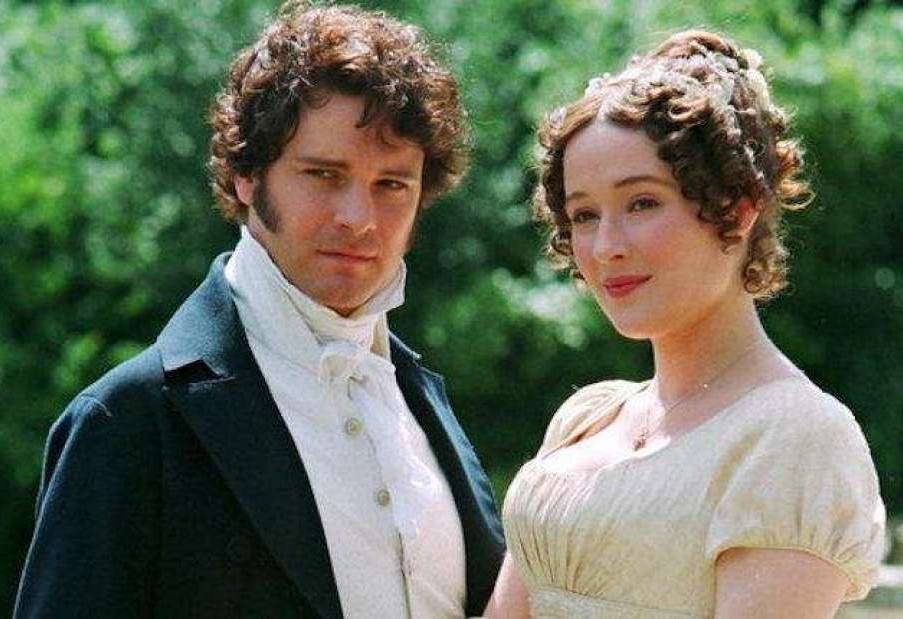
    It is a truth universally acknowledged that a radio host in possession of a weekly film music show must be in want of a good theme. This week on “Picture Perfect,” we eschew the usual fare of Vikings, pirates and dinosaurs, to enter the world of Jane Austen.

    We’ll hear Rachel Portman’s Academy Award winning score for “Emma” (1996), Patrick Doyle’s music for “Sense and Sensibility” (1995), and selections from two versions of “Pride and Prejudice,” with music by Carl Davis (1995) and Dario Marianelli (2005).

    Not only do Austen adaptations sport amazing casts, the scores attract some of classical music’s star performers. Listen in for contributions by soprano Jane Eaglen, pianist Jean-Yves Thibaudet, and fortepianist Melvyn Tan.

    A large income is the best recipe for happiness I ever heard of – at least according to “Mansfield Park.” The next best is a playlist assembled from Jane Austen movies. Join me this Friday evening at 6:00 EDT, on WWFM – The Classical Network and wwfm.org.

    Jane Austen
    Jane Austen Society of North America
    Jane Austen Society of North America – Eastern Pennsylvania Region

  • Eugene List: Philly Roots, Pianist of Presidents

    Eugene List: Philly Roots, Pianist of Presidents

    Illustrating the adage (coined by me, I believe) that no one can ever get away from Philadelphia forever, the pianist Eugene List – who was born there 100 years ago today – returned from a childhood spent in Los Angeles to study piano with Olga Samaroff. Samaroff herself, of course, was born in Austin, TX, as Lucy Hickenlooper and later married Leopold Stokowski.

    The prodigious List had already made his orchestral debut with the Los Angeles Philharmonic. He rode the bus back to Philly to enter into a competition to study with Samaroff, who would train a remarkable stable of pianists, including Richard Farrell, Natalie Hinderas, William Kapell, Raymond Lewenthal, Rosalyn Tureck, and Alexis Weissenberg. In his second year with Samaroff, he won another competition which allowed him to perform with the Philadelphia Orchestra. At the behest of Stokowski, he ditched his plans to play the Schumann concerto and instead played the American premiere of Shostakovich’s Piano Concerto No. 1.

    While never entirely eschewing the standard Romantic literature, List was renowned for his devotion to neglected repertoire, including underserved works of Edward MacDowell and especially Louis Moreau Gottschalk, a revival of whose music he spearheaded. In particular, he drew attention for recreating some of Gottschalk’s “monster concerts,” which involved enormous numbers of pianists. He gave the American premiere of Carlos Chavez’s Piano Concerto (with the New York Philharmonic). He also edited the complete works of Stephen Foster.

    Motivated by the attack on Pearl Harbor in December of 1941, he promptly enlisted in the US Army at the age of 26. Initially, he was given an office job as a typist at the New York Port of Embarkation, but soon he was transferred to the Army Special Services Division. At the postwar Potsdam Conference, he was asked to play for Harry S. Truman, Winston Churchill, and Joseph Stalin. For Chopin’s Waltz in A-flat, Op. 42, a work he had not memorized, Truman acted as his page-turner. This earned List a reputation as “Pianist of the Presidents.” He played at the White House many times; the last was for Jimmy Carter in 1980.

    List’s later life was marred by tragedy. In 1983, after 42 years of marriage, his wife, the violinist Carroll Glenn, slipped into a coma only days after being diagnosed with a brain tumor. Two years later, while planning a recital to mark the 50th anniversary of his Carnegie Hall debut, List fell down the steps of his New York brownstone and broke his neck. He was 66 years-old.

    List was a familiar presence on radio and television, and he even appeared in a movie, “The Bachelor’s Daughters,” in 1946.

    We’ll hear List perform music by Gottschalk and Howard Hanson, alongside observances of the birthdays today of composers Hanns Eisler, Elisabeth Lutyens, and Wenzel Thomas Matiegka, and pianist and conductor Vladimir Ashkenazy – all to come between 4 and 6 p.m. EDT, on WWFM – The Classical Network and wwfm.org.

    Then stick around for music from cinematic adaptations of the books of Jane Austen on “Picture Perfect” at 6!


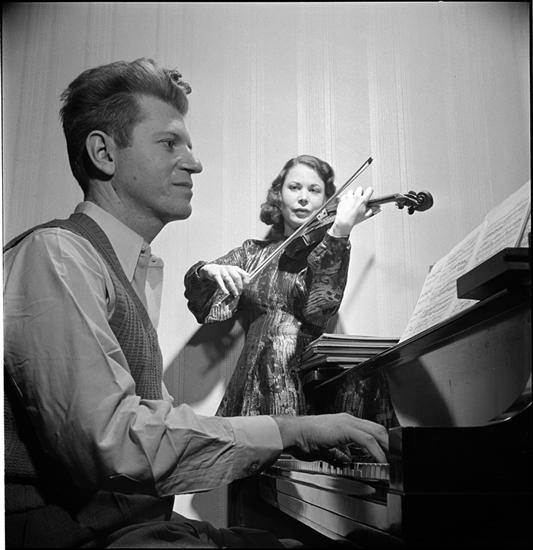
    PHOTO: Eugene List and Carroll Glenn

Tag Cloud

Aaron Copland (93) Beethoven (95) Composer (114) Film Music (137) Film Score (143) Film Scores (255) Halloween (94) John Williams (195) KWAX (229) Leonard Bernstein (103) Marlboro Music Festival (125) Movie Music (152) Mozart (88) Opera (208) Philadelphia Orchestra (89) Picture Perfect (174) Princeton Symphony Orchestra (108) Radio (88) Ross Amico (244) Roy's Tie-Dye Sci-Fi Corner (290) The Classical Network (101) The Lost Chord (268) Vaughan Williams (103) WPRB (396) WWFM (881)

DON’T MISS A BEAT

Receive a weekly digest every Sunday at noon by signing up here


RECENT POSTS