Category: Daily Dispatch

  • George Rochberg A Centennial Celebration

    George Rochberg A Centennial Celebration

    Rock on, George!

    Today is the 100th birthday of George Rochberg (born in Paterson, NJ, in 1918; died in Bryn Mawr, PA, in 2005), for decades a staple of the University of Pennsylvania music department, which he chaired until 1968. He continued to teach there until 1983.

    Rochberg’s music underwent a compelling transformation, when, following the death of his teenage son in 1964, he suddenly found the serial palette he had up until then employed inadequate to express his grief. By the 1970s, he had begun incorporating tonal passages into his music, much to the dismay of his peers. Little did anyone realize at the time that this was the most avant garde approach Rochberg could have taken. His music heralded a return to tonality and the embrace of a new romanticism that has since become the norm.

    Here’s his Symphony No. 2 (1955-1956), which is serial but, contrary to his later concerns, still emotionally expressive. It’s conducted by George Szell, no less.

    https://www.youtube.com/watch?v=Mk74WLg8Iu4

    The Pachelbel variations from Rochberg’s String Quartet No. 6 (1978):

    And finally, his lovely “Transcendental Variations” (1971-1972, the third movement of the String Quartet No. 3, transcribed for string orchestra in 1975). Some of the variations have been blocked by Naxos, but there’s enough here to give a good idea. This luminous music could have been written at the turn of last century.

    Happy birthday, George Rochberg!


    PHOTOS: Rochberg (left) and a bust by his friend, the sculptor Christopher Cairns
  • July 4th: American Music from Marlboro

    July 4th: American Music from Marlboro

    Somewhere between the pie-eating contests and the fireworks displays comes “Music from Marlboro.” We’ve got the perfect soundtrack for your Independence Day, with an all-American hour.

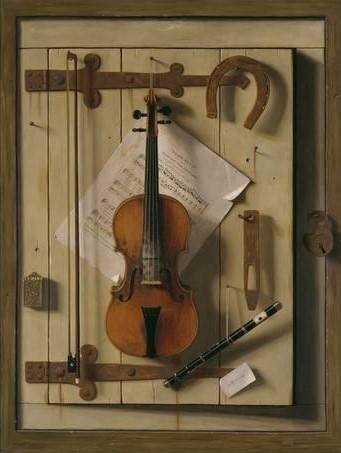
    At the heart of the program will be a work by Moravian composer John Antes (1740-1811). Antes, born in Frederick, Montgomery County, PA, is credited with being one the first composers born on American soil to write chamber music, and as the creator of perhaps the earliest surviving bowed string instrument made in the American colonies. Antes’ violin, made in 1759, is housed in the Museum of the Moravian Historical Society in Nazareth, PA. A viola, made by Antes in 1764 (again believed to be the earliest surviving of American origin), is housed in the Lititz Moravian Congregation Collection in Lancaster County. Antes created at least seven such instruments.

    In 1752, Antes attended school in Bethlehem, PA. In 1760, he was admitted into the Single Brethren’s choir there. From Bethlehem, he travelled to Herrnhut, Germany, the international center of the Moravians, to prepare for a career as a missionary. In the meantime, he also took up watchmaking. He was ordained a minister in 1769, then set out for Egypt. There, he served as a missionary to the Coptic Church in Grand Cairo. After a largely uneventful decade, he was captured and tortured by followers of Osman Bey.

    During his convalescence, he occupied himself with the composition of three string trios. He also sent a copy of six quartets to Benjamin Franklin, whom he had known in America. The quartets are lost (nice job, Ben), but the trios survive. We’ll hear Antes’ Trio in D minor, from the 1976 Marlboro Music Festival.

    To open the hour, from the 1977 festival, we’ll hear a Divertimento for Nine Instruments by two-time Pulitzer Prize winner Walter Piston. In addition to being an important teacher, Piston was regarded as one of our country’s great symphonists. Finally, we’ll have the suite from Aaron Copland’s beloved Pulitzer Prize decorated ballet “Appalachian Spring,” in its original version for 13 instruments, performed at Marlboro in 2006.

    Enjoy these musical fireworks with performances from the archives of the celebrated Marlboro Music Festival, this Wednesday evening at 6:00 EDT, on WWFM – The Classical Network and wwfm.org.

    Marlboro School of Music and Festival: Official Page

  • Copland Sensually Played Independence Day

    Copland Sensually Played Independence Day

    The most sensually played Copland you will ever hear. Happy Independence Day.

  • Ember WW1 Concert on The Classical Network

    Ember WW1 Concert on The Classical Network

    For today’s Noontime Concert on The Classical Network, on the eve of Independence Day, we offer “Safe for Democracy,” a concert presented by the ensemble Ember. The thoughtfully structured program was one of several this season put together by Ember to reflect on the centenary and legacy of World War I – the so-called “War to End All Wars” – the contributions of veterans, the human impact of military conflict, and the social realities of post-War America.

    Repertoire will encompass Charles Ives’ jingoist call to arms “He is there!” and the WWI popular song “How ya gonna keep ‘em down on the farm,” alongside music and poetry by Duke Ellington, George Gershwin, Langston Hughes, and others, with some rather surprising discoveries. Deborah Simpkin King directs.

    Then stick around as we attempt to tamp down the excessive temperatures with music of a somewhat cooling nature. The air waves will be full of water and ice and maybe even a little snow. We’ll wrap ourselves in the flag as we crank up the air conditioning, this Tuesday from 12 to 4 p.m. EDT, on WWFM – The Classical Network and wwfm.org.


    PHOTO: The Iwo Jima flag-raising, one of the most iconic images to come out of WWII, rendered in snow in the parking lot of the National Museum of the Marine Corps in Quantico, VA, in 2014

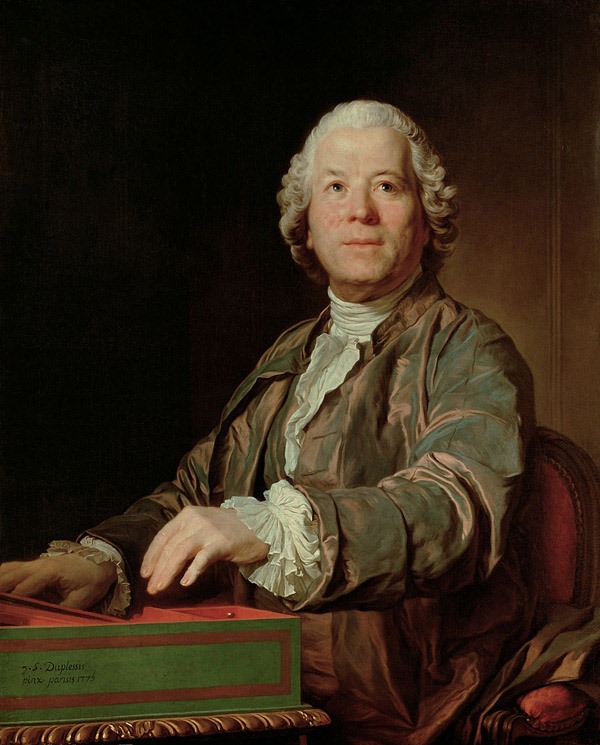
  • Gluck Opera Reformer You Should Know

    Gluck Opera Reformer You Should Know

    Get ready to Gluck out.

    Today marks the anniversary of the birth of Christoph Willibald Gluck (1714-1787), a composer concert promoters and marketers seem to have a hard time getting their heads around. Give them Verdi, Wagner or even Britten, and they’ll run with it. But Gluck? Who he?

    Oh yeah. Isn’t he the guy who wrote the “Dance of the Blessed Spirits?”

    We always hear about Gluck being a reformer, and in truth his influence on the future of opera was incalculable. He shunned floridity for its own sake. He was not a sensualist. He rebelled against the superficial effects of “opera seria,” with its showy arias ornamented beyond recognition by star castrati, to arrive at something closer to naturalism.

    With Gluck, words and music bore equal weight. Drama was of the foremost importance. He tossed out the dry recitative to create a more continuous flow in the action. Performers took a back seat to emotional truth. The effect was kind of a chaste grandeur, simplicity at the service of theatrical power. Works like “Orfeo ed Euridice” and “Alceste” were radical for their time.

    Gluck’s influence runs through Mozart to Weber, Berlioz and Wagner. Yet today his works are less frequently performed than those of any of his followers.

    Find out more about Gluck in “Gluck the Reformer” (featuring John Eliot Gardiner, William Christie and others):

    Then join me this afternoon, when among my featured works will be a selection of Gluck arias and ballet music, and even a monumental arrangement of a Gluck overture by Richard Wagner. We’ll also honor Frederick Fennell and Gilbert Kalish on their birthdays.

    “Glück” means “happiness” in German, you know. We’ll cram in as much happiness as we can, this Monday afternoon from 4 to 7 p.m. EDT, on WWFM – The Classical Network and wwfm.org.

Tag Cloud

Aaron Copland (93) Beethoven (95) Composer (114) Film Music (137) Film Score (143) Film Scores (255) Halloween (94) John Williams (195) KWAX (229) Leonard Bernstein (103) Marlboro Music Festival (125) Movie Music (152) Mozart (88) Opera (208) Philadelphia Orchestra (89) Picture Perfect (174) Princeton Symphony Orchestra (108) Radio (88) Ross Amico (244) Roy's Tie-Dye Sci-Fi Corner (290) The Classical Network (101) The Lost Chord (268) Vaughan Williams (103) WPRB (396) WWFM (881)

DON’T MISS A BEAT

Receive a weekly digest every Sunday at noon by signing up here


RECENT POSTS