Category: Daily Dispatch

  • Chopin’s Birthday Liberace Plays On

    Chopin’s Birthday Liberace Plays On

    Happy birthday, Frédéric Chopin (1810-1849).

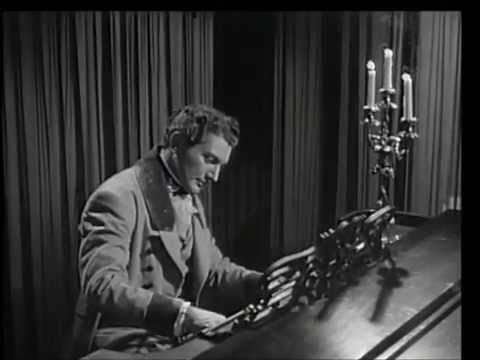
    Liberace loved Chopin. In fact, he claimed to have been dubbed “The Chopin of TV.” When life gives you lemons, make lemonade. Make sure you stick around for the three violinists – and hornist! – at 2:13:

    Now watch as Liberace transforms into Chopin himself (starting around 1:40) and back again (around 4:25). In case you don’t get it, you can judge the time travel from the dissolve from electric light bulbs to actual candles in the candelabra:

    Liberace and Virgil Fox on “The Mike Douglas Show” (Next: Ben Gazzara!):

    Those were the days…

  • Verdi, Rossini, and Mignone at Marlboro Music

    Verdi, Rossini, and Mignone at Marlboro Music

    Viva Verdi!

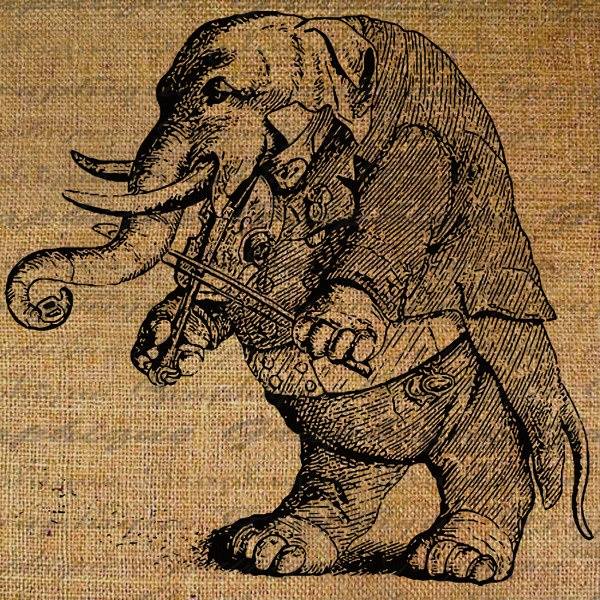
    When we think of “Aida,” perhaps what springs immediately to mind is a stage full of elephants, but when a Naples performance of Verdi’s grandest grand opera was delayed, the composer found diversion on a much smaller scale. Verdi tossed off his first piece of chamber music at the age of 60. The String Quartet in E minor was given an informal performance at the Hotel delle Crocelle on April 1, 1873. Said Verdi of his latest creation, “I don’t know whether the Quartet is beautiful or ugly, but I do know that it’s a Quartet!” We’ll get to hear it on this week’s “Music from Marlboro,” in a 1969 performance featuring violinists Pina Carmirelli and Endre Granat, violist Martha Strongin Katz, and cellist Ronald Leonard.

    The hour will open with another quartet by a figure who would go on to become one of the most productive of opera composers, Gioachino Rossini. Even as a boy, there was evidence of his remarkable fecundity. He wrote his six string sonatas, scored for two violins, cello, and double bass in 1804, over a period of three days. Rossini was twelve years-old. The sonatas are rhythmically vital and full of the kinds of melodies that would soon endear him to audiences the world over. We’ll hear the third of these, the String Sonata in C major, in a 1989 performance, with violinists Lara St. John and Ivan Chan, cellist Paul Tortelier, and double bassist Timothy Cobb.

    In between, we’ll find further enjoyment in the music of Brazilian composer Franciso Mignone. Born in São Paolo to an Italian immigrant flutist, Mignone studied at the Milan Conservatory before returning to accept a teaching position in Rio de Janeiro. Over the course of his career, he accumulated a diverse output written across many styles, from native “choros” to highly-schooled serialism. He is best known for his music composed in a folk-inflected, nationalistic idiom. Brazilian influences color many of his works, including his “Five Songs for Voice and Bassoon,” written around 1931 and revised in 1976. We’ll hear it performed at the 2016 Marlboro Music Festival by soprano Lucy Fitz Gibbon and bassoonist Catherine Chen.

    I hope you’ll join me for music by two Italian masters and one of Italian descent, on “Music from Marlboro,” this Wednesday evening at 6:00 EST, on WWFM – The Classical Network and wwfm.org.

    Marlboro School of Music and Festival: Official Page

  • First Piano Quintet Schumann or Before?

    First Piano Quintet Schumann or Before?

    Quick! Who wrote the first piano quintet?

    The combo of keyboard and four string instruments began to exert its pull on composers as far back as the 18th century, with artists like Luigi Boccherini experimenting with works for piano and string quartet. More commonly, the piano was joined by violin, viola, cello, and double bass. Think Schubert’s “Trout” Quintet. Mozart and Beethoven both wrote quintets for piano and winds (oboe, clarinet, horn, and bassoon).

    But it wasn’t until 1842 that the genre firmly took root with Robert Schumann’s chamber music masterpiece, the Piano Quintet in E-flat major, Op. 44. It was Schumann who brought together the modern piano, with its increased power and dynamic range, with the established string quartet (two violins, viola, and cello) that had become the most common and confessional of chamber music combinations. The result allowed for the unprecedented exploration of a much broadened musical vocabulary that spanned confessional intimacy and public declaration. The innovation was immediately recognized and embraced as the quintessential Romantic chamber music form.

    Hear Schumann’s pioneering Piano Quintet on today’s Noontime Concert on The Classical Network, as we present a performance by the Manhattan Chamber Players. The program, titled “Breaking New Ground,” will also include Mozart’s String Quintet in C major, K. 515, from 1787. Again, Boccherini wrote a lot of string quintets, but his preference had been to augment the classical quartet through the addition of a second cello. It was Mozart who established the more common practice of doubling the violas. K. 515 became the inspiration for one of Schubert’s greatest works, the String Quintet in C major of 1828. This concert took place at Manhattan’s Baruch Performing Arts Center on April 26, 2017.

    Then stick around – at 2:00, we’ll hear a complete performance of Bedřich Smetana’s sprawling collection of nationalistic tableaux, “Má Vlast” (“My Country”). There’s more to this cycle of six symphonic poems than the well-worn “Vltava” (a.k.a. “The Moldau”). Each movement evokes some aspect of Czech history, legend, and countryside.

    I hope you’ll join me for Mozart, Schumann, Smetana, and more, this Tuesday from 12 to 4 p.m. EST, on WWFM – The Classical Network and wwfm.org.
  • Richard Wetz: Rediscovering a Lost Romantic

    Richard Wetz: Rediscovering a Lost Romantic

    When it comes to the music of Richard Wetz, all bets are off.

    This unsung German composer has been dismissed as a second-rate Bruckner who made some questionable political choices toward the end of his life, under the mistaken impression that it would help to advance his career. (He smoked like a Camry and died in 1935, a month shy of his 60th birthday.) Admittedly, he was also a little too enthusiastic about the whole nationalism thing. He considered Germany’s defeat in World War I a humiliation, so I guess at least we know where he was coming from, even if it seems, as would be the case with so many artists of the time and place, that he sold his soul to the Devil.

    His music is grander than grand and plenty solemn, a last gasp of Old School German Romanticism. The Nazis loved Bruckner (who died in 1896 and likely would have been appalled to know it), but for some reason, they had very little use for Wetz. The composer was enlisted to write some occasional works, but his symphonies went nowhere. Ironically, for someone who was so outspoken in his love of country, he was perceived as something of a loner. He was certainly reclusive and felt he could only create within the comfortable surroundings of his home. By extension, he had no interest in contemporary musical developments. He kept right on composing as if it were 1880.

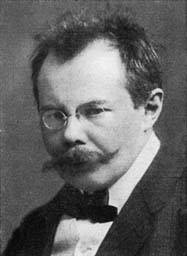
    We’ll sample some of Wetz’s music this afternoon, alongside works by fellow birthday celebrants Frank Bridge and Anton Reicha, and performances by pianist Lazar Berman, soprano Emma Kirkby, and conductor Witold Rowicki. Here’s hoping today’s playlist “Wetz” your appetite, from 4 to 7 p.m. EST, on WWFM – The Classical Network and wwfm.org.


    Clockwise from left: Richard Wetz, Frank Bridge, and Anton Reicha

  • Northern Lights Music Klami & Tveitt

    Northern Lights Music Klami & Tveitt

    “The northern lights can be much more than the superficial play of colors in the sky,” observed the Finnish composer Uuno Klami. “They can be an expression of the infinite loneliness of the human spirit.”

    This Sunday night on “The Lost Chord,” Klami’s “Northern Lights” (1948) will be one of two works inspired by the atmospheric phenomena, written by composers who would have been intimately acquainted with them.

    Klami’s melancholy observation seems almost superficial alongside the life experience of Norwegian composer Geirr Tveitt. In 1970, Tveitt suffered an unfathomable loss, when fire swept through his farmhouse in Nordheimsund, destroying most of his unpublished manuscripts – 300 pieces, stored in wooden chests – fully 4/5ths of his compositional output. By extension, and not surprisingly, it also destroyed his ability to compose. He succumbed to alcoholism and died a broken man, with little hope of being remembered, in 1981.

    Two of Tveitt’s piano concertos, Nos. 2 & 6, seem to have been lost forever in the conflagration. Another, No. 3, was reconstructed from a broadcast recording. Orchestral parts to the Piano Concerto No. 4 (1947) survived, along with the score to a two-piano version, and again a recording, so that the work could be restored.

    The work, subtitled “Aurora Borealis,” falls into three movements – “The Northern Lights awaken above the autumn colors;” “Glittering in the winter heavens,” and “Fading away in the bright night of spring.”

    I hope you’re moved to join me for “Aural Borealis,” this Sunday night at 10:00 EST, on WWFM – The Classical Network and wwfm.org.
Tag Cloud

Aaron Copland (93) Beethoven (95) Composer (114) Film Music (137) Film Score (143) Film Scores (255) Halloween (94) John Williams (195) KWAX (229) Leonard Bernstein (103) Marlboro Music Festival (125) Movie Music (152) Mozart (88) Opera (208) Philadelphia Orchestra (89) Picture Perfect (174) Princeton Symphony Orchestra (108) Radio (88) Ross Amico (244) Roy's Tie-Dye Sci-Fi Corner (290) The Classical Network (101) The Lost Chord (268) Vaughan Williams (103) WPRB (396) WWFM (881)

DON’T MISS A BEAT

Receive a weekly digest every Sunday at noon by signing up here


RECENT POSTS