Category: Daily Dispatch

  • Grey Day Blues? Dance Your Way to Happiness

    Grey Day Blues? Dance Your Way to Happiness

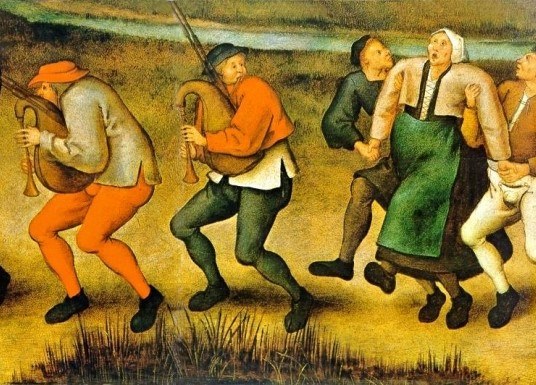
    I don’t know, I love grey days. I just find them so… cozy. But I know they get a lot of people down. If you find yourself in the latter category, maybe a little movement would improve your mood. Then again, here’s an article on the Dancing Plague of 1518.

    http://www.history.com/news/ask-history/what-was-the-dancing-plague-of-1518

  • Schumann & Mendelssohn: Musical Friendship

    Schumann & Mendelssohn: Musical Friendship

    On this week’s “Music from Marlboro,” we’ll have works by two composers who were definitely BFF.

    Though for some reason I always peg Robert Schumann as significantly younger, he and Felix Mendelssohn were in fact born only a year apart (Mendelsson in 1809 and Schumann in 1810).

    Schumann’s ideas were more progressive, for one, at least on the surface. Mendelssohn, more of a classicist, achieved superstardom early as one of music’s great child prodigies. The two met in 1835. Schumann was a struggling artist with ambitions to become a piano virtuoso – ambitions frustrated by a hand injury he sustained a few years earlier. He was in the process of composing a string of piano masterworks that would help cement his lasting fame.

    Mendelssohn was from a well-to-do family, the grandson of philosopher Moses Mendelssohn, and currently Kapellmeister of the Leipzig Gewandhaus Orchestra. He had given his first concert at the age of nine and composed two of his most astonishing masterpieces while yet in his teens (the Octet for Strings in 1825, at the age of 16, and the Overture to “A Midsummer Night’s Dream” in 1826). What the two men shared in common, aside from a passion for music, were an intellectual curiosity and a love of literature.

    Needless to say, they became fast friends. Mendelssohn conducted Schumann’s orchestral works, they entertained themselves by playing chamber music, and they engaged in engrossing discussions about the nature and direction of their art in the wake of Beethoven. It was a friendship that would last for the remainder of their lives.

    Mendelssohn died in 1847 at the age of 38; Schumann, who struggled with mental illness since at least 1833, began to exhibit psychotic behavior and asked to be placed in an institution in 1854. He died there two years later at the age of 46.

    Schumann’s “Andante and Variations” was composed in 1843, in the wake of two chamber music masterworks, the Piano Quintet and the Piano Quartet, both in the key of E flat major. For the composer, sadly, three times was not to be a charm. Part of the problem was the unusual instrumentation, which calls for two pianos, two cellos, and horn. Early performances in the Schumann home were so loud, it may have contributed to his disgust with the piece. At Mendelssohn’s suggestion, he arranged it for two pianos alone. It was only in 1868 that Johannes Brahms, another of Schumann’s friends, recognized the worth of the original version and gave its first public performance with the composer’s widow, Clara, in 1868.

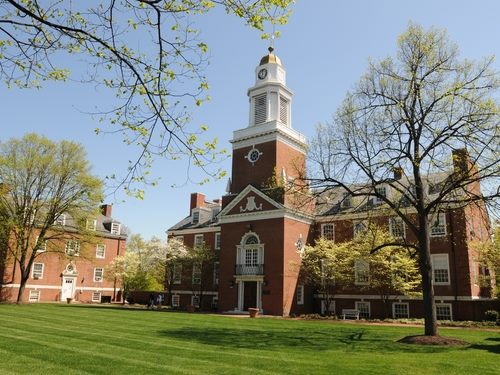
    We’ll hear it today, performed at the Marlboro Music Festival in 1985 by husband-and-wife pianists Claude Frank and Lilian Kallir, cellists Melissa Meell and Peter Stumpf, and hornist Julie Landsman.

    We’ll also have Mendelssohn’s String Quartet in A minor, written in 1827, a few months after Beethoven’s death. Mendelssohn was 18 years-old at the time and clearly intoxicated by Beethoven’s late quartets, which had only recently been published. Though certainly influenced by the deceased master, Mendelssohn’s own essay in the form is quite at odds with the introspection of Beethoven’s Op. 135. In contrast, he infuses the quartet’s Classical structure with a passionate Romanticism. He also explores the possibilities of cyclic form more exhaustively than any other composer, possibly, before César Franck. We’ll hear it performed at the 1995 Marlboro Music Festival by violinists Lisa-Beth Lambert and Hiroko Yajima, violist Annemarie Moorcroft, and cellist Sophie Shao.

    I hope you’ll join me for works by Schumann and Mendelssohn, on the next “Music from Marlboro,” this Wednesday evening at 6:00 EST, on WWFM – The Classical Network and wwfm.org.

    Marlboro School of Music and Festival: Official Page


    Robert Schumann (left) and his “brother from another mother”
  • Gaspar Cassadó Rediscovered on The Classical Network

    Gaspar Cassadó Rediscovered on The Classical Network

    ¡Hola!

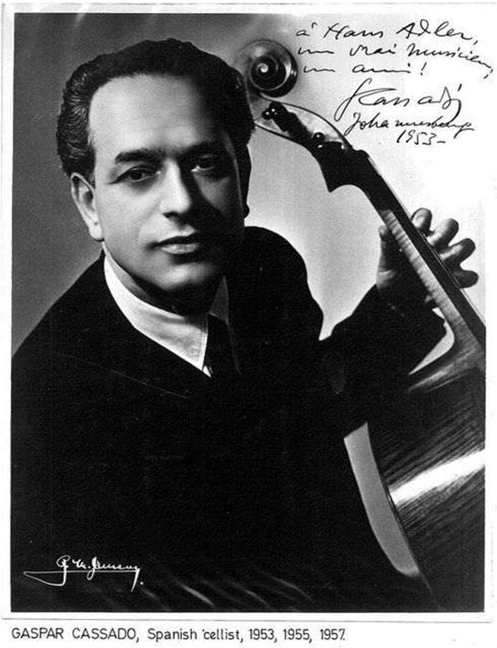
    The centerpiece of today’s Noontime Concert on The Classical Network will be a chamber music rarity by the great Spanish cellist Gaspar Cassadó (1897-1966). Cassadó had the advantage of having been born into a musical household in Barcelona. His father, a composer, organist, and piano salesman, shepherded his development and even moved the family to Paris so that he and his elder brother, Augustin, a violinist, could take advantage of the artistic climate there.

    At the age of nine, Cassadó was heard in recital by Pablo Casals, and though Casals was at the height of his career and very much in demand, he took the boy on as one of only three pupils. Needless to say, Casals’ influence made a deep impression on the young cellist. Cassadó also studied composition with Maurice Ravel and Manuel de Falla.

    Like the violinist Fritz Kreisler, Cassadó remained sheepish about some of his original miniatures in the styles of other composers and gained a degree of notoriety when it was discovered that many of the works he had been attributing to others, such as Frescobaldi, Boccherini, and Schubert, were in fact his own.

    Casals performed and conducted a number of Cassadó’s acknowledged works, and teacher and student often appeared together in concert. However, with the outbreak of the Spanish Civil War in 1936, Casals fled the country, effectively abandoning his career, while Cassadó chose to continue to perform extensively. Though Cassadó stayed out of Spain until after World War II and performed only once in fascist Germany, Casals publicly disavowed him in a letter to the New York Times. It’s thought that this irreparably damaged Cassadó’s career, though the two cellists later reconciled.

    Among Cassadó’s most frequently performed works are his “Rapsodia Catalana,” his Suite for Solo Cello, and “Requiebros,” which was championed by Casals.

    We will hear Cassadó’s Piano Trio in C major, performed by artists of the Lenape Chamber Ensemble, from a concert given at Delaware Valley University on July 22. Also on the program is Mozart’s Horn Quintet in E-flat major and Tchaikovsky’s string sextet, “Souvenir de Florence.”

    The Lenape Chamber Ensemble is made up of hornist David Jolley, violinists Nancy Bean and Cyrus Beroukhim, violists Catherine Beeson and Brett Deubner, cellist Arash Amini, and pianist Marcantonio Barone.

    The ensemble’s next concerts – featuring works by Haydn, Poulenc, and Schubert – will take place at 8:15 p.m. on March 2 at Upper Tinicum Lutheran Church, 188 Upper Tinicum Church Road, in Upper Black Eddy, PA, and at 3 p.m. on March 4 at Delaware Valley University’s Life Sciences Auditorium, 700 E. Butler Street and Route 611, in Doylestown. To learn more, visit lenapechamberensemble.org.

    For today, I hope you’ll join me for music by Mozart, Cassadó, and Tchaikovsky, at 12:00 EST, on WWFM – The Classical Network and wwfm.org.


    Casals performs Cassadó’s “Requiebros:”

  • Presidents Day Classical Music Broadcast

    Presidents Day Classical Music Broadcast

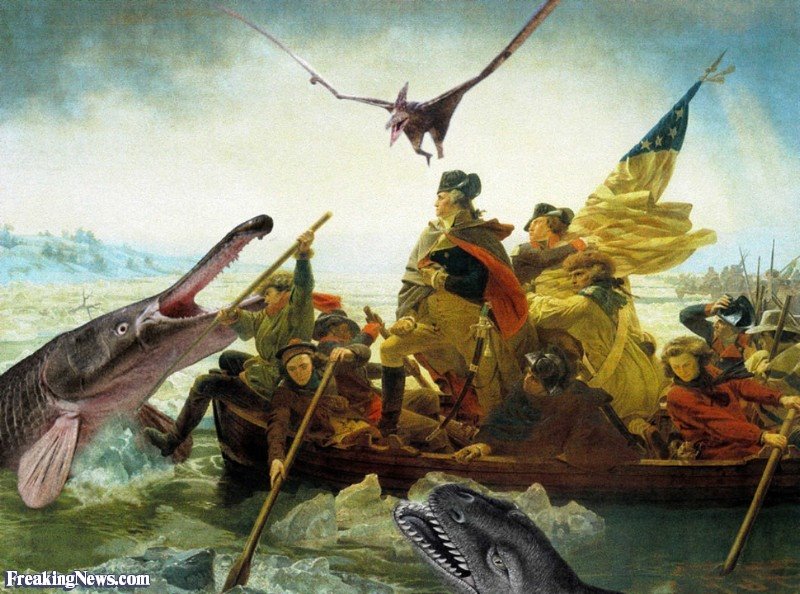
    It’s Presidents’ Day. Hopefully you hit the white sales early, so that you can sit back and enjoy the music. We’ll have works inspired by Thomas Jefferson, Andrew Jackson, Chester A. Arthur, John F. Kennedy, Richard Nixon, and of course Washington and Lincoln. I’ll be practicing arithmetic on the back of a coal shovel and hurling silver dollars across the Potomac, from 4 to 7 p.m. EST, on WWFM – The Classical Network and wwfm.org

Tag Cloud

Aaron Copland (93) Beethoven (95) Composer (114) Film Music (137) Film Score (143) Film Scores (255) Halloween (94) John Williams (195) KWAX (229) Leonard Bernstein (103) Marlboro Music Festival (125) Movie Music (152) Mozart (88) Opera (208) Philadelphia Orchestra (89) Picture Perfect (174) Princeton Symphony Orchestra (108) Radio (88) Ross Amico (244) Roy's Tie-Dye Sci-Fi Corner (290) The Classical Network (101) The Lost Chord (268) Vaughan Williams (103) WPRB (396) WWFM (881)

DON’T MISS A BEAT

Receive a weekly digest every Sunday at noon by signing up here


RECENT POSTS