Category: Daily Dispatch

  • Samuel Coleridge-Taylor’s Lost Chord

    Samuel Coleridge-Taylor’s Lost Chord

    Afro-British composer Samuel Coleridge-Taylor (1875-1912) achieved much in his comparatively short life, attracting the attention and advocacy of Sir Charles Villiers Stanford, Sir Edward Elgar, and Sir Malcolm Sargent.

    His cantata “Hiawatha’s Wedding Feast” became a cultural phenomenon between the wars. Sargent led performances of the piece annually, from 1928 to 1939, in a costumed, semi-ballet version, featuring close to a thousand performers. Unfortunately, this was among the works the composer had sold outright, his heirs thereby missing out on the royalties. By the time of Sargent’s advocacy, the short-lived Coleridge-Taylor had already been dead for 16 years.

    This Sunday night on “The Lost Chord,” we’ll hear selections from a complete recording of “Scenes from ‘The Song of Hiawatha,’” one of the earliest to feature rising star Bryn Terfel, released on the Argo label back in 1991. We’ll also hear Sargent’s 1932 recording of Coleridge-Taylor’s “Othello Suite.” The hour will conclude with one of the composer’s musical explorations of his African heritage, the “Symphonic Variations on an African Air,” in a performance conducted by Grant Llewellyn, released on Argo in 1993.

    That’s “Taylor-Made” – music of Samuel Coleridge-Taylor – this Sunday night at 10:00 EST, on WWFM – The Classical Network and wwfm.org.

  • Joplin’s Treemonisha Education vs Superstition

    Joplin’s Treemonisha Education vs Superstition

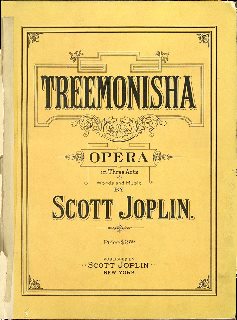
    It’s education versus superstition in Scott Joplin’s “Treemonisha” – with the added peril of being tossed into a wasps’ nest!

    “Treemonisha” (1915) has often been described, though perhaps not entirely accurately, as a “ragtime opera” – Joplin was, after all, the king of the rag – but his opera encompasses a broader range of influences than that would suggest. Even so, none of it could have been written by anyone else. Everything is distilled into a unified artistic statement. Better still, all of it is tuneful and engaging and very, very American.

    “Treemonisha” will be our featured work this Sunday morning on WPRB, the crowning achievement in three hours of earworms and toe-tappers by American composers of African descent.

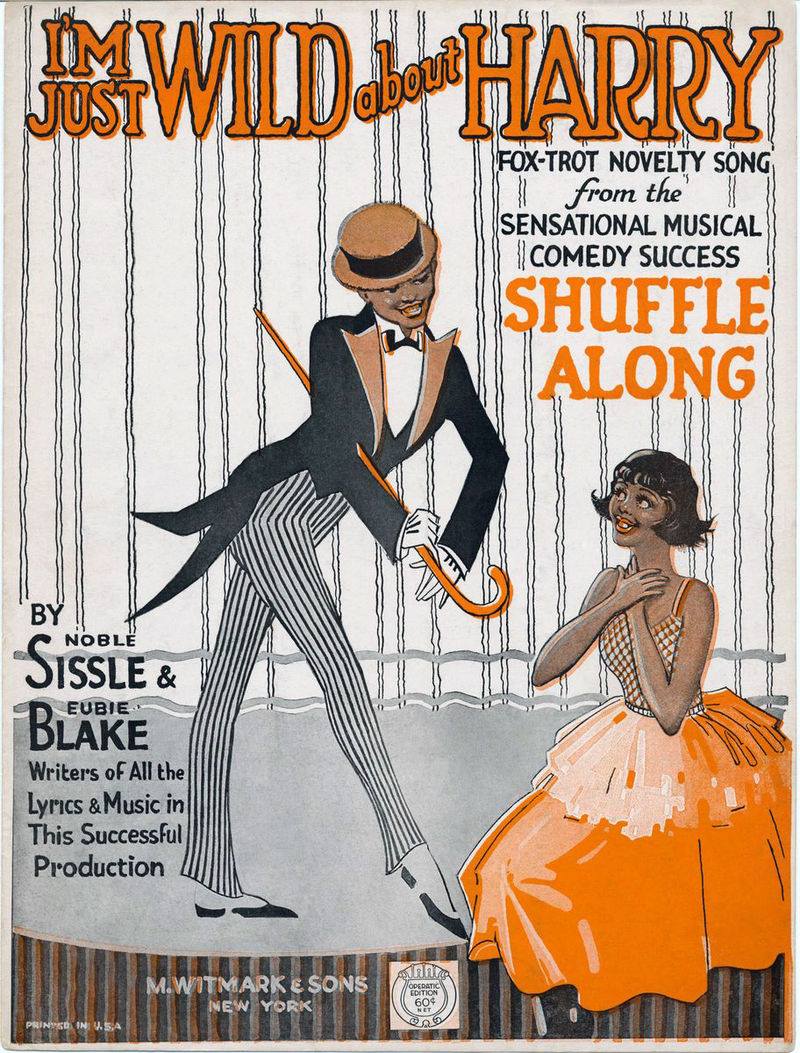
    We’ll also hear ballet music, “Miss Sally’s Party” (1940), by William Grant Still, and the Paragon Ragtime Orchestra will perform a medley of hit tunes from the Broadway revue “Shuffle Along” (1921), by Noble Sissle and Eubie Blake.

    Perhaps the least likely pupil of Edgard Varèse, Still cut his teeth writing arrangements for Paul Whiteman, W.C. Handy, and Artie Shaw. According to Blake, one of Still’s improvisations while working in the pit band for “Shuffle Along” became the basis for George Gershwin’s hit tune “I Got Rhythm.” Still didn’t appear to be bitter about the appropriation (which Blake conceded was probably inadvertent), and in fact Still and Gershwin were on friendly terms and made it a point to attend performances of one another’s music.

    “Shuffle Along” was the first financially successful Broadway play to have African-American writers and an all African-American cast. “I’m Just Wild About Harry” became the show’s break-out number. The song shattered what had been a taboo against musical and stage depictions of romantic love between African-Americans.

    Fun fact: So mainstream was the show’s success, and so enduring its influence, that Harry Truman selected “I’m Just Wild About Harry” for his campaign song during the presidential election of 1948.

    We’re just wild about light music, this Sunday morning from 7 to 10 EST, on WPRB 103.3 FM and wprb.com. Join me for these compositions in black and light, on Classic Ross Amico.

  • Scott Joplin’s Treemonisha on WPRB

    Scott Joplin’s Treemonisha on WPRB

    This Sunday morning on WPRB, we’ll defy the elements to bring you Scott Joplin’s most ambitious endeavor, the opera “Treemonisha.”

    Joplin, of course, is rightly celebrated as the master of the piano rag, but in “Treemonisha” he aspired for something more – a “serious” opera in the European tradition, though infused with rhythms and melodies that could have come from no one else. In fact, the work is often described erroneously as a “ragtime opera.”

    Sadly, Joplin never lived to see his magnum opus fully staged. “Treemonisha” received its sole read-through in 1915, at the Lincoln Theater in Harlem, with the composer at the keyboard. In fact, the work’s existence was virtually unknown until its revival in 1972, in a joint production of the music department of Morehouse College and the Atlanta Symphony Orchestra. The opera went on to be performed by companies all over the United States, making its Broadway debut in 1975. In 1976, Joplin was honored with a posthumous citation from the Pulitzer Prize committee – a mere 59 years after his death.

    I hope you’ll join me for Joplin’s “Treemonisha.” The opera will cap three hours of light classics written or influenced by African-American composers – including a performance by the Paragon Ragtime Orchestra, from its ongoing “Black Manhattan” series on New World Records – this Sunday morning, from 7 to 10 EST, on WPRB 103.3 FM and wprb.com. We may be expecting some white stuff overnight, but we’ll be drinking our coffee black, on Classic Ross Amico.

  • Gilded Age Novels on Film Picture Perfect

    Gilded Age Novels on Film Picture Perfect

    The opening scene of Martin Scorsese’s “The Age of Innocence,” in which Newland Archer (Daniel Day-Lewis) first glimpses his cousin, Ellen Olenska, during a performance of Gounod’s “Faust,” was actually shot at the Academy of Music in Philadelphia. I remember the call for anyone with a tux to come down to the Academy so that they could fill out the balconies with extras. Sadly, I had to work (not that I owned a tux).

    “The Age of Innocence” is but one of the films we’ll be treating this week on “Picture Perfect,” as the focus will be on adaptations from novels of, or about, the Gilded Age. “The Gilded Age” was a term coined by none other than Mark Twain to describe the era extending roughly from the end of Reconstruction (following the Civil War) to the turn of the 20th century. He didn’t mean it as a compliment. A gilded age is one which conceals serious social problems beneath a veneer of gold.

    “The Heiress” (1949) was adapted from a play by Ruth and Augustus Goetz, which in turn was based on the Henry James’ novel, “Washington Square.” Olivia De Havilland is the “plain Jane” heiress of the title, Ralph Richardson her overbearing father, and Montgomery Clift, the adventurer who may or may not be out for her fortune. De Havilland won an Oscar for her portrayal, as did the music, by Aaron Copland.

    “The Age of Innocence” (1993) is based on a novel by one-time James correspondent and close friend, Edith Wharton. The book was published in 1920, but looks back to the 1870s, its story dealing with the impending marriage of an upper class couple and the appearance of a disreputable interloper who threatens their happiness. The title is an ironic play on the outward manners of New York society, in contrast to its inward machinations. The novel earned a Pulitzer Prize, the first Pulitzer awarded to a woman. The film was something of a curve ball from director Martin Scorsese, who made his name on meaner streets. Veteran composer Elmer Bernstein provided a lovely, Brahmsian score.

    “The Magnificent Ambersons” (1942) is based on another Pulitzer Prize winner, this time by Booth Tarkington, from 1918. The novel is part of trilogy that tells the story of the declining fortunes of three generations of an aristocratic Midwestern family, between the end of the Civil War and the early years of the 20th century. With industrialism on the rise, the Ambersons’ “old money” wealth and prestige wane.

    “Ambersons” became the basis for only the second film directed by Orson Welles. By that time, however, the fall-out from “Citizen Kane” caused the film to be removed from Welles’ control and re-cut by the studio, shaving a full hour off the original running time. It says something about the quality of the film that it yet remains in itself a magnificent achievement.

    The score was by Bernard Herrmann, CBS staff composer from Welles’ radio days. Herrmann had followed Welles to Hollywood to provide the music for “Citizen Kane.” Like the film, the score was drastically edited, with half the music removed. The famously irascible Herrmann, who had just written his Academy Award winning music for “The Devil and Daniel Webster,” was so angry that he threatened legal action if his name was not removed from the credits.

    The action of “Mr. Skeffington” (1944), based on a 1940 novel by Elizabeth von Arnim, begins at a point some consider the end of the Gilded Age, the eve of World War I. Bette Davis stars as a woman so enamored of her own beauty and the suitors it attracts that she fails to value the affections of the man who eventually becomes her husband. Mr. Skeffington, played by Claude Rains, is a Jewish financier, riding high in the ‘teens, but his fortunes change when he’s caught in Europe during the rise of the Nazis.

    Both Davis and Rains earned Academy Award nominations for their work. The vivid score is by Franz Waxman. Davis was going through a period of emotional turmoil during the filming, so that she was allegedly insufferable to everyone during the entire shoot. Someone finally poisoned her eyewash. When the police questioned the director, Vincent Sherman, he wished them good luck with their investigation. “If you asked everyone on the set who would have committed such a thing, everyone would raise their hand!”

    Certainly all that glitters is not gold, this week. We peel back the veneer of prosperity with “Novels of the Gilded Age,” on “Picture Perfect,” this Friday evening at 6:00 EST on WWFM – The Classical Network and wwfm.org.

  • Classical Music Birthdays & Listener Appreciation

    Classical Music Birthdays & Listener Appreciation

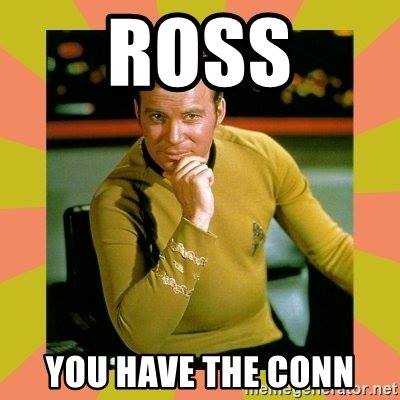
    Unusually for me, I’ll have the conn this Thursday afternoon on The Classical Network. And what an assortment of birthdays to observe! Georges Auric, Jean Langlais, Michael Praetorius, Robert Fuchs, Friedrich Ernst Fesca, John Adams, Christopher Rouse, and Harold Arlen. Of course I’ll have a few other surprises along the way.

    Where else are you going to find an afternoon playlist made up of music by these composers? Remember, it’s all made possible because of listeners just like you.

    It’s Sustaining Member Appreciation Week at The Classical Network. I hope you will consider making a monthly commitment to the station in the form of an automatic charge to your credit card or bank account for whatever amount you decide. It could be $5, $10, $20 – you fix the amount. The donation will continue, once a month, until you tell us to stop. This will save us paperwork, it will save us man hours, and it will save us from losing revenue during the period after which a traditional, yearly membership will have lapsed. You can cancel or change your sustaining membership at any time.

    We also encourage those of you who are already sustaining members to consider bumping up to the next level. If you’re already committed to $5 a month, do you think you can bump it up to $10? I mean, you’ll be abstaining from something during Lent anyway. Think about it – for the price of a doughnut and a coffee, you could double a $5-a-month investment in The Classical Network. You’d be strengthening the classical music service you love – and it’s a lot less fattening (Shatner).

    Call us now at 1-888-232-1212, or visit our website at wwfm.org and click on the “We love our Sustaining Members” link at the top of the page, or the Valentine over to the right.

    Thank you to all of you who have kept us strong over the past 35 years. I hope you’ll join me today – as a sustaining member – for another stimulating and uplifting playlist, from 4 to 7 p.m. EST, on WWFM – The Classical Network and wwfm.org.
Tag Cloud

Aaron Copland (93) Beethoven (95) Composer (114) Film Music (137) Film Score (143) Film Scores (255) Halloween (94) John Williams (195) KWAX (229) Leonard Bernstein (103) Marlboro Music Festival (125) Movie Music (152) Mozart (88) Opera (208) Philadelphia Orchestra (89) Picture Perfect (174) Princeton Symphony Orchestra (108) Radio (88) Ross Amico (244) Roy's Tie-Dye Sci-Fi Corner (290) The Classical Network (101) The Lost Chord (268) Vaughan Williams (103) WPRB (396) WWFM (881)

DON’T MISS A BEAT

Receive a weekly digest every Sunday at noon by signing up here


RECENT POSTS