Category: Daily Dispatch

  • Northern Lights Music Klami & Tveitt

    Northern Lights Music Klami & Tveitt

    “The northern lights can be much more than the superficial play of colors in the sky,” observed the Finnish composer Uuno Klami. “They can be an expression of the infinite loneliness of the human spirit.”

    This Sunday night on “The Lost Chord,” Klami’s “Northern Lights” (1948) will be one of two works inspired by the atmospheric phenomena, written by composers who would have been intimately acquainted with them.

    Klami’s melancholy observation seems almost superficial alongside the life experience of Norwegian composer Geirr Tveitt. In 1970, Tveitt suffered an unfathomable loss, when fire swept through his farmhouse in Nordheimsund, destroying most of his unpublished manuscripts – 300 pieces, stored in wooden chests – fully 4/5ths of his compositional output. By extension, and not surprisingly, it also destroyed his ability to compose. He succumbed to alcoholism and died a broken man, with little hope of being remembered, in 1981.

    Two of Tveitt’s piano concertos, Nos. 2 & 6, seem to have been lost forever in the conflagration. Another, No. 3, was reconstructed from a broadcast recording. Orchestral parts to the Piano Concerto No. 4 (1947) survived, along with the score to a two-piano version, and again a recording, so that the work could be restored.

    The work, subtitled “Aurora Borealis,” falls into three movements – “The Northern Lights awaken above the autumn colors;” “Glittering in the winter heavens,” and “Fading away in the bright night of spring.”

    I hope you’re moved to join me for “Aural Borealis,” this Sunday night at 10:00 EST, on WWFM – The Classical Network and wwfm.org.
  • Rediscovering Lost Incidental Music

    Rediscovering Lost Incidental Music

    The play’s the thing – not only to uncover the conscience of the king, but to inspire music from untold composers down the ages. We refer to this kind of music, somewhat belittlingly, as “incidental.”

    No doubt, there are instances of incidental music having entered the standard concert repertoire – Edvard Grieg’s “Peer Gynt,” Georges Bizet’s “L’Arlésienne,” Felix Mendelssohn’s “A Midsummer Night’s Dream” – but so much more numerous are those that have suffered from neglect. Generally speaking, even under the best circumstances, the music is distilled into concert suites, offering but a few numbers, while some excellent work by some very fine composers goes unheard.

    This Sunday morning on WPRB, we’ll listen to incidental music by composers both well-known and perhaps not-quite-so, and marvel at the ingenuity on display, as acts are bridged and scenes are set in flourishes that last no more than a few moments.

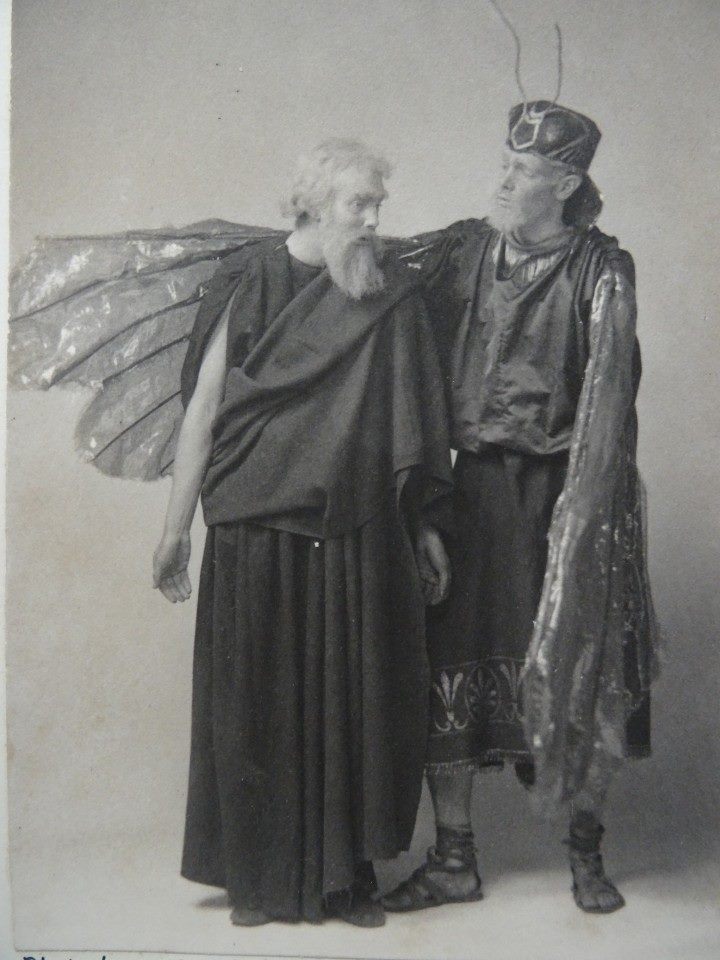
    The highlight of the morning will be a complete performance of Ralph Vaughan Williams’ “The Wasps,” written for a 1909 Cambridge University production of Aristophanes’ satire. Vaughan Williams re-arranged parts of the music to create a five-movement concert suite – the overture is especially well-known – but the complete, original, 80-minute score had faded from memory until this 2005 world premiere recording. The whole is held together by judicious narration and a pinch of salty dialogue.

    Join me for these unstung pleasures. We offer them incidentally, this Sunday morning from 7 to 10 EST, on WPRB 103.3 FM and wprb.com. Needless to say, it will all be very “playful,” on Classic Ross Amico.

  • Espresso Handel Concert Chaos Funny

    Espresso Handel Concert Chaos Funny

    This is what happens when you drink a triple shot of espresso before your Handel concert.

  • Prison Break Movies on the Radio

    Prison Break Movies on the Radio

    This week on “Picture Perfect,” we’re bustin’ out of the joint, with an hour of films about prison breaks.

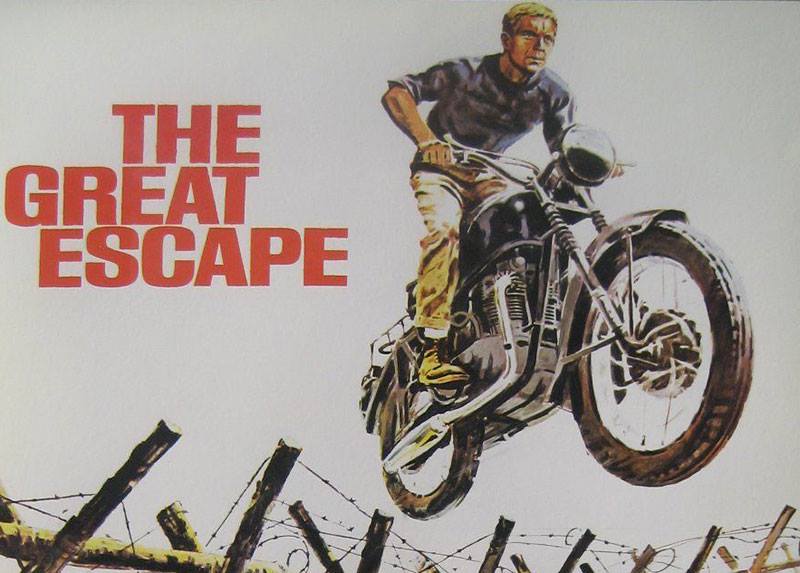
    Indomitable Steve McQueen does hard time on Devil’s Island in “Papillon” (1973), with music by Jerry Goldsmith. Paul Newman sticks it to The Man in “Cool Hand Luke” (1967), with music by Lalo Schifrin. Tim Robbins makes good use of a Rita Hayworth poster in “The Shawshank Redemption” (1994), with music by Thomas Newman. And an all-star cast, led by a barbed-wire hopping McQueen (again), flee their Nazi captors in “The Great Escape” (1963), with music by Elmer Bernstein.

    Face it, nobody looks good in orange. Grab a shank and a file, and join me this Friday evening at 6:00 EST, on WWFM – The Classical Network and wwfm.org.
  • Handel The Greatest Composer Ever?

    Handel The Greatest Composer Ever?

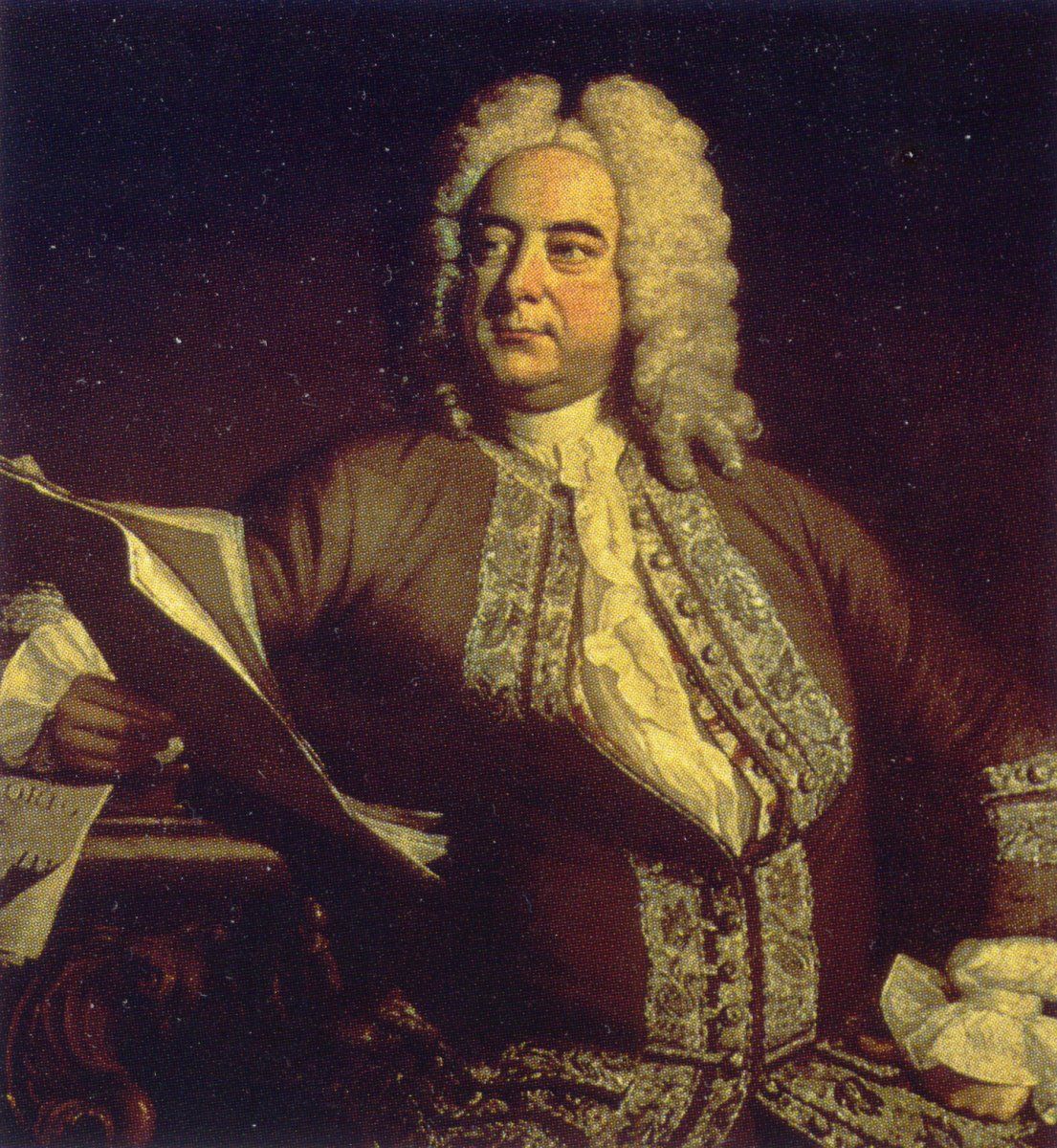
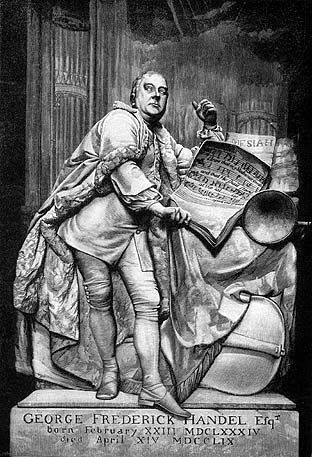
    Beethoven is remembered to have praised Handel on numerous occasions. “Handel is the greatest composer who ever lived,” he said. “I would uncover my head and kneel down on his tomb.” On his deathbed, he indicated an edition of Handel’s works and said, “There is the truth.”

    Upon hearing the “Hallelujah Chorus,” Haydn wept and declared, “He is the master of us all.”

    Mozart said, “He understands effect better than any of us – when he chooses, he strikes like a thunderbolt.”

    Berlioz? Berlioz called him “a tub of pork and beer.” Knowing what I do of Handel, he probably would have enjoyed that best of all.

    Happy birthday, George Frideric Handel (1685-1759).


    “Ariodante” was the opera I hated most when I first heard it in 1990. Now I hold it dear. Funny how things change.

    “Scherza infida”

    “Dopo notte”

Tag Cloud

Aaron Copland (93) Beethoven (95) Composer (114) Film Music (137) Film Score (143) Film Scores (255) Halloween (94) John Williams (195) KWAX (229) Leonard Bernstein (103) Marlboro Music Festival (125) Movie Music (152) Mozart (88) Opera (208) Philadelphia Orchestra (89) Picture Perfect (174) Princeton Symphony Orchestra (108) Radio (88) Ross Amico (244) Roy's Tie-Dye Sci-Fi Corner (290) The Classical Network (101) The Lost Chord (268) Vaughan Williams (103) WPRB (396) WWFM (881)

DON’T MISS A BEAT

Receive a weekly digest every Sunday at noon by signing up here


RECENT POSTS