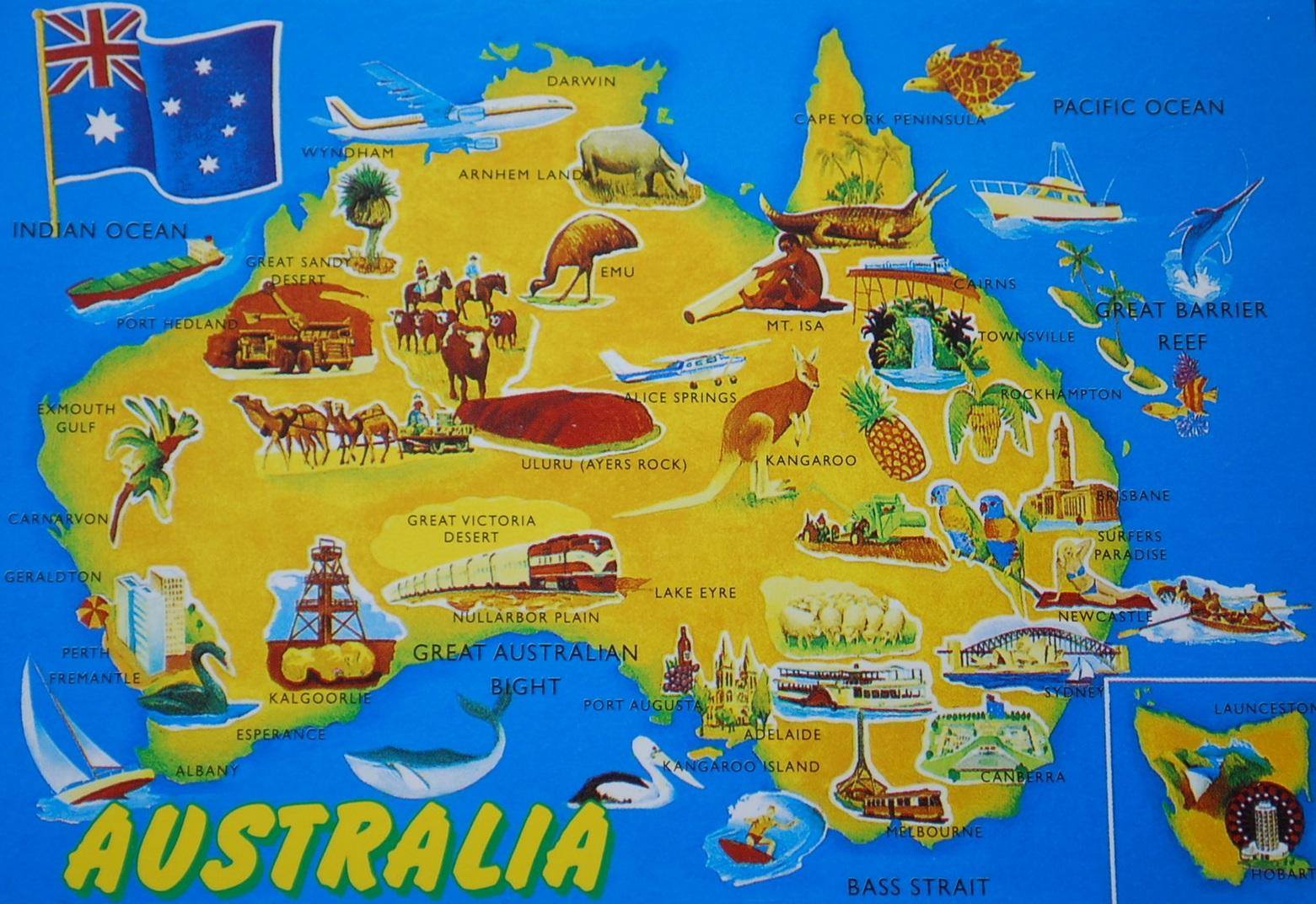
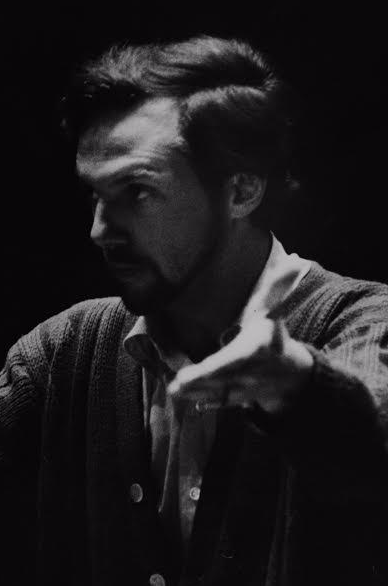
With the recent death of composer Colin Brumby on January 3 at the age of 84, it occurred to me that I have never given Australia the WPRB treatment. Therefore, get ready to suffer some serious jet lag, as we embark for the antipodes and five hours of music from the Land Down Under.
We’ll hear from composers who found world renown in London, and others who chose to remain at home to find inspiration in their native traditions and geography. Among our featured composers will be John Antill, John Carmichael, Ross Edwards, Peggy Glanville-Hicks, Sir Eugene Goossens, Matthew Hindson, Peter Sculthorpe, and Brumby himself.
I hope you’ll join me this Thursday morning for a full playlist of didgeridoos and don’ts, from 6 to 11 EST on WPRB 103.3 FM and wprb.com. If the crocodiles don’t get you, the dingoes will, on Classic Ross Amico.
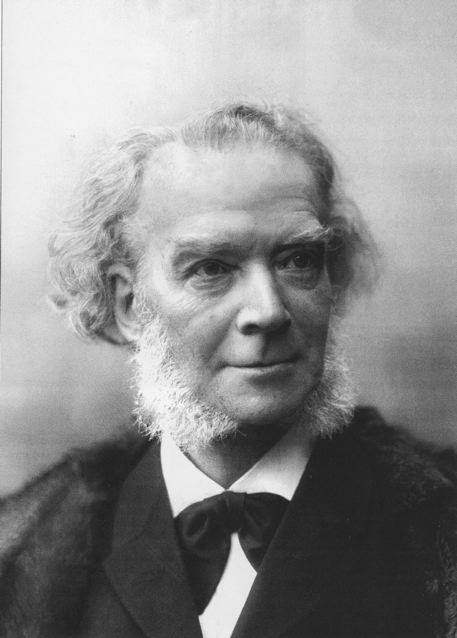
Carl Reinecke lived an unusually long life for his day. Or perhaps it is just the amount of incident crammed into that life that makes it seem so.
A musical prodigy who composed from the age of 7 and performed in public from the age of 12, Reinecke lived and worked in Copenhagen, Paris, Cologne, and Leipzig. He studied with Mendelssohn, Schumann, and Liszt. His concert tours took him throughout Germany, Denmark, Sweden, and the British Isles.
He taught in Cologne, Breslau, and Leipzig. Among his pupils were Isaac Albéniz, Max Bruch, Ferruccio Busoni, Mikalojus Čiurlionis, Edvard Grieg, Leoš Janáček, Julius Röntgen, Christian Sinding, Charles Villiers Stanford, Johan Svendsen, and Felix Weingartner. In addition, he was music director of the Leipzig Gewandhaus Orchestra for over three decades.
Somewhere along the way, he found time to compose – three hundred published works, including operas, symphonies, concertos, chamber music, and instrumental pieces. When he was born, Beethoven and Schubert were still alive. Toward the end of his life, he was making piano rolls, the earliest born musician to have his artistry preserved in any format. Reinecke died in 1910 at the age of 85.
For having lived such a monumental life and having wielded such an enormous influence, Reinecke’s own compositions can seem so effortless – modest, even.
On this week’s “Music from Marlboro,” we’ll enjoy his utterly charming Octet for Winds, Op. 216. Also on the program will be a performance of Beethoven’s “Three Marches for Piano Four Hands,” with the 87 year-old Mieczyslaw Horszowski and the 18 year-old Cecile Licad.
Age is just a number, at the legendary Marlboro Music Festival, this Wednesday evening at 6:00 EST, on WWFM – The Classical Network and wwfm.org.
Marlboro School of Music and Festival: Official Page
Carl Reinecke: He had the chops – mutton and otherwise
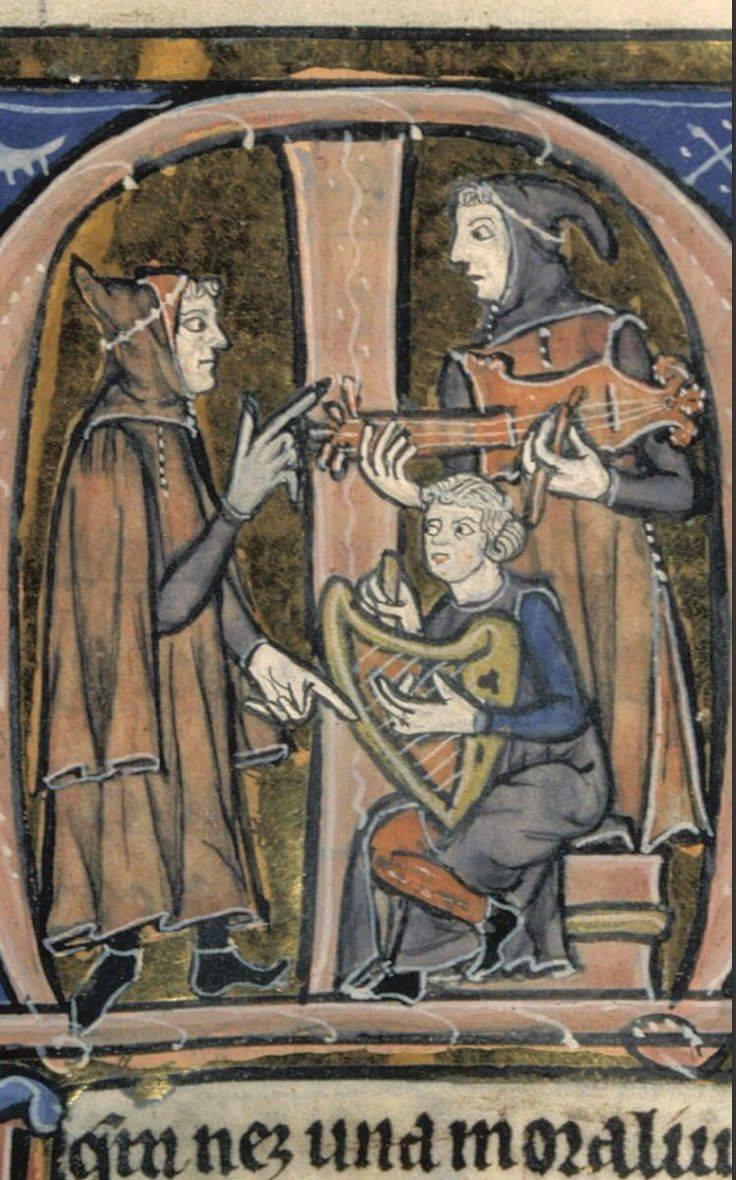
This Tuesday at noon on The Classical Network, we present another gem from GEMS – Gotham Early Music Scene – as the ensemble Marginalia enlivens your lunch hour with a program of medieval French music. The broadcast will feature selections from the 13th century, including songs of the trouvères and troubadours, as well as instrumental dances. Marginalia consists of Dongmyung Ahn, rebec and vielle; Christa Patton, harp, pipe and tabor; and Peter Walker, bagpipe and voice.
Today’s program was recorded at St. Bartholomew’s Church, 50th Street and Park Avenue, in Midtown Manhattan. The next Midtown Concert will take place there this Thursday at 1:15 p.m., when Hollinshead & Bass (mezzo-soprano Barbara Hollinshead and lutenist and guitarist Howard Bass) will present “Time, Cruell Time!,” with music reflective of the passage of time by Thomas Campion, Robert Johnson, John Dowland, and others. You’ll find a complete schedule of free lunchtime performances at midtownconcerts.org.
In addition, GEMS presents evening concerts. Talisman Medieval (David Yardley, countertenor and harp, and Christopher Preston, tenor and harp) will present a program of medieval and newly-composed medieval-inspired music, this Friday at 7:30 p.m. at the Church of the Transfiguration, 1 East 29th Street, Manhattan.
On Sunday at 4 p.m., Juilliard415 will present “Madness and Enchantment,” with Luigi Boccherini’s Sinfonia in D minor “From the House of the Devil,” Georg Philipp Telemann’s “Burlesque de Quixotte,” and excerpts from Henry Purcell’s “The Fairy Queen.” Jonathan Cohen will direct, at Corpus Christi Church, 529 West 121st Street, Manhattan.
Gotham Early Music Scene is a non-profit organization that supports and promotes artists and organizations in New York City devoted to early music – music of the Middle Ages, Renaissance, Baroque, and early Classical periods. For more information on these and other programs presented by GEMS, look online at gemsny.org.
Then stick around – among my featured works this afternoon, between 12 and 4 p.m. EST, will be a concerto by Anton Rubinstein and a symphony by Eduard Tubin. Rubinstein is fine, and we’re cruisin’ for some Tubin, on WWFM – The Classical Network and wwfm.org.
Enjoy Bob’s gorgeous and serene “Trinity Requiem,” composed for the tenth anniversary of 9/11, in the 6:00 hour this evening on WWFM – The Classical Network and wwfm.org.
A work for amplified Volkswagen, played with flashlights. An opera for eleven dogs. A piano piece in which the performer crawls inside the lid and lets the piano play him.
Move over, Till Eulenspiegel. Today is the birthday of Robert Moran.
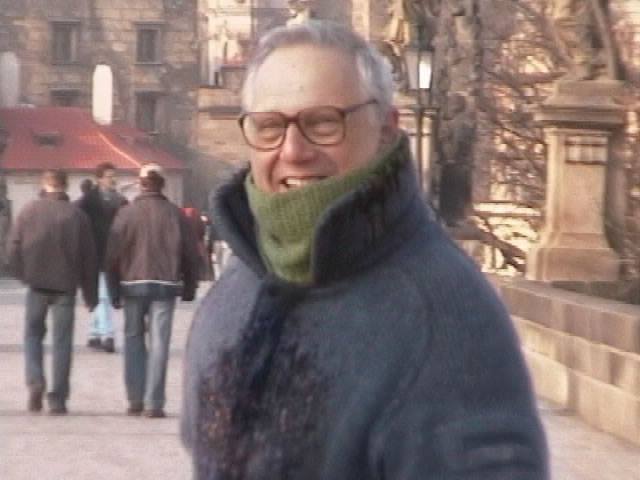
Moran, who’s made his home in Philadelphia for over 30 years, is contemporary music’s merry prankster.
Following studies in Vienna with Hans Erich Apostel, with whom he “learned to count to twelve” (as in twelve-tone music), Moran attended Mills College, where his teachers were Darius Milhaud and Luciano Berio. His classmates at Mills included Steve Reich, Phil Lesh, and Tom Constanten. Lesh and Constanten went on to play for The Grateful Dead. I wonder what ever happened to Reich?
While there, Moran became involved with the whole San Francisco scene. He gained notoriety in the late 1960s and early ‘70s through a series of performance pieces incorporating entire cities, including San Francisco, Bethlehem, PA, and Graz, Austria. These involved tens of thousands of performers.
His many stage works include “Desert of Roses” (after Beauty and the Beast), written for Houston Grand Opera, and “Alice” (after “Alice’s Adventures in Wonderland”), composed for the Scottish Ballet. Maurice Sendak introduced him to the Grimm fairy tale “The Juniper Tree,” which became an operatic collaboration with Philip Glass.
For the occasion of the tenth anniversary of the terrorist attacks on the World Trade Center, Moran was commissioned to write a work for the youth chorus of Trinity Wall Street, the so-called “Ground Zero” church in Lower Manhattan. “Trinity Requiem,” scored for children’s chorus, four cellos, harp and organ, offers a similar brand of solace to that conjured in the 19th century masterwork by Gabriel Fauré.
With Moran, you never know what you’re going to get. In his more puckish moments, he might write for harpsichord and electric frying pan. But then there are times when his natural gift for lyricism will melt your heart. Whether he’s writing for Houston Grand Opera, 39 autos, giant puppets, or electric popcorn popper, his music is always vital and worth getting to know.
Join me today, between 4 and 7 p.m. EST, for music by Robert Moran, among our birthday celebrants, on WWFM – The Classical Network and wwfm.org.
An aria from “Desert of Roses:”
Selections from “Trinity Requiem:”
“Obrigado” for Iowa Percussion:
Bob introducing his “Lunchbag Opera” for the BBC in 1971: