Category: Daily Dispatch

  • Unearthing Unique Holiday Music on WPRB

    Unearthing Unique Holiday Music on WPRB

    Tired of the same old, same old?

    Join me this Thursday morning on WPRB, as we tread the overgrown path of forgotten, overlooked, or neglected Christmas music (at least on the radio).

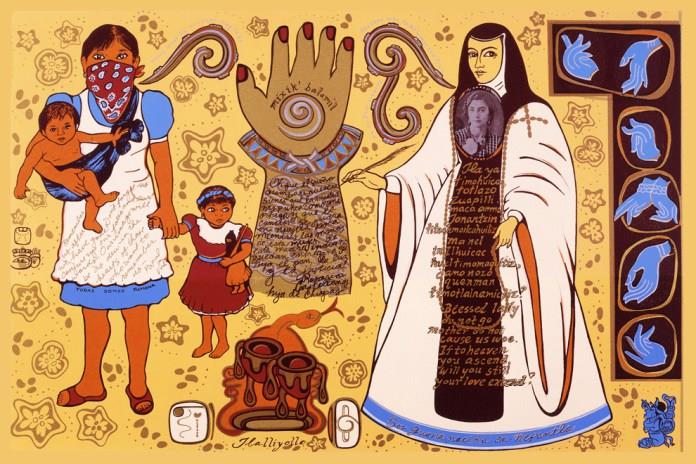
    We’ll be all over the globe, touching on many traditions. Among the highlights will be a complete performance of John Adams’ Nativity oratorio “El Niño.” The texts are taken or adapted from poems by Rosario Castellanos, Gabriela Mistral, Hildegard von Bingen, Sor Juana Inés de la Cruz, Rubén Darío, and Vicente Huidobro, as well as anonymous verses and passages from the Bible, the New Testament Apocrypha, and the Wakefield Mystery Plays.

    In my opinion, this is one of Adams’ most consistently inspired works. And what a cast! We’ll hear soprano Dawn Upshaw, mezzo-soprano Lorraine Hunt Lieberson, and baritone Willard White. Listen to it for the first ten minutes, and you’ll be hooked.

    I may even drop in a couple of pieces for Hanukkah, if I have anything worthwhile to contribute.

    However you celebrate, enjoy this season of light. The music will be our beacon, this Thursday morning from 6 to 11 EST, on WPRB 103.3 FM and wprb.com. We’ll have plenty of batteries, bulbs, and candles on hand, on Classic Ross Amico.


    The striking artwork of Yreina Cervantez that graces the cover of the Nonesuch recording of Adams’ “El Niño”

  • Czech Music at Marlboro: Janáček & Dvořák

    Czech Music at Marlboro: Janáček & Dvořák

    Czech, please!

    On this week’s “Music from Marlboro,” it’s an all-Czech affair.

    Legendary pianist Rudolf Firkušný, born in Moravia in 1912, was a living link to composers Leoš Janáček and Josef Suk (the pupil and son-in-law of Antonin Dvořák). Firkušný studied with both and with pianists Alfred Cortot and Artur Schnabel. What a pedigree!

    Despite a very long and remarkable career, Firkušný was likely recognized by more Americans because of an unlikely venture – selling Nike sneakers alongside David Robinson of the San Antonio Spurs:

    Firkušný was 78 years-old at the time of his television “15 minutes-of-fame” in 1990. He was about to make his triumphant return to Czechoslovakia, which he had fled ahead of the Nazi occupation in 1939 and then shunned during Communist rule. Firkušný had not performed in his homeland since 1946. He has been described by author, radio personality, and noted pedagogue David Dubal as “the preeminent Czech pianist of the 20th century.”

    We’ll hear Firkušný at the 1982 Marlboro Music Festival, performing Janáček’s “Concertino,” a chamber concerto of sorts, written in 1925. He’ll be joined by violinists Elena Barere and Mei-Chen Liao, violist Steven Tenenbom, clarinetists Cheryl Hill (E-flat) and Steven Jackson (B-flat), bassoonist Stefanie Przybylska, and hornist Robin Graham.

    Then we’ll turn to Dvořák’s String Quintet No. 2 in G major, Op. 77. Dvořák’s quintet is unusual in several regards. First, rather than doubling the violas or cellos, as you’ll find in most quintets for strings, Dvořák adds a double bass. Second, the piece originally included five movements, two of them slow. The composer second-guessed its length and removed one of them, which he later reworked as his “Nocturne for Strings” in B major.

    Dvořák dedicated the quintet, a competition winner, “To my Nation.” It was originally composed in 1875, then slightly revised and published in 1888.

    We’ll hear it performed at the 1985 Marlboro Music Festival by violinists Isidore Cohen and Ralph de Souza, violist Benjamin Simon, cellist Astrid Schween, and double bassist Peter Lloyd.

    That’s music by Janáček and Dvořák on this week’s “Music from Marlboro.” Czech it out, this Wednesday evening at 6:00 EST, on WWFM The Classical Network and wwfm.org.

    Marlboro School of Music and Festival: Official Page


    Firkušný knows… Nike and Janáček

  • Hanukkah Music & Holiday Concerts on Classical Network

    Hanukkah Music & Holiday Concerts on Classical Network

    Hanukkah begins at sunset. Get ready for the Festival of Light.

    String quintets by Mozart will illuminate your lunch hour, on today’s Noontime Concert on The Classical Network. The Manhattan Chamber Players will perform the Quintet No. 2 in C minor, K. 406, and the Quintet No. 4 in G minor, K. 516.

    The musicians will appear with guest artist/violist Samuel Rhodes tomorrow night (Wednesday at 7:30) in concert in Engelman Recital Hall at Baruch College in New York City. The program will include Maurice Ravel’s “Introduction and Allegro” for harp, flute, clarinet, and string quartet, Frank Bridge’s “Lament” for two violas, Brahms’ Clarinet Trio in A minor, and Arnold Schoenberg’s “Verklärte Nacht.” A pre-concert talk will be given at 7:00. You’ll find more information at manhattanchamberplayers.com.

    We’ll also hear the Symphony No. 3 by English composer Stanley Bate, on his birthday, and Ralph Vaughan Williams’ ballet “On Christmas Night,” inspired by Charles Dickens’ “A Christmas Carol.”

    If you like Benjamin Britten’s “A Ceremony of Carols,” I think you’ll enjoy Samuel Adler’s “The Flames of Freedom.” The cantata, scored for three-part treble chorus, is based on ten well-known Hanukkah songs and hymns, alongside original music to two other liturgical Hanukkah texts. The work is cast in eight movements to represent the eight candles of the menorah.

    Then, in the festive spirit of midwinter celebrations of all cultures, we’ll hear Christopher Rouse’s “Karolju,” a wholly fabricated holiday blow-out based on a kind of pidgin text drawn from many different languages. Even the title is pure invention, suggestive of the word “carol,” but ending with “u” (because the composer always liked words that end with “u”). Hey, just like “Merry Christmas” and “Happy Hanukkah,” it’s the thought that counts.

    There will be much multi-cultural merriment, this Tuesday from 12 to 4 p.m. EST, on WWFM – The Classical Network and wwfm.org.

  • Berlioz Love Passion and Revenge

    Berlioz Love Passion and Revenge

    Quite possibly, he is the quintessential Romantic composer, with a capital “R.”

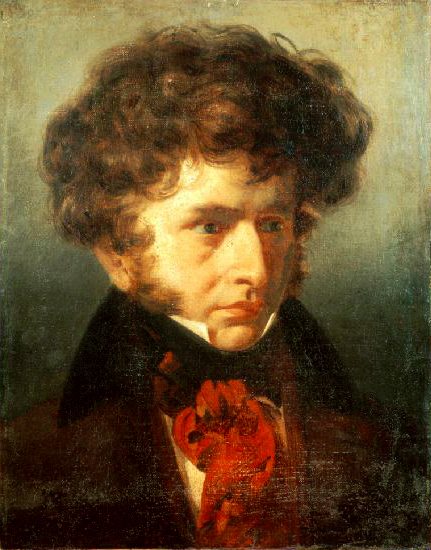
    Hector Berlioz revolutionized art music, even as his personal life practically rolled off the rails with unbridled emotion. My favorite Berlioz anecdote concerns Harriet Smithson, the equally fiery Irish actress who resisted his advances. Then he wooed her with a symphony – the grandest of grand gestures – and they lived miserably ever after, at least for a time. Berlioz could not understand spoken English, and Smithson didn’t know French, but apparently they were both fluent in volcanic passion.

    They married in 1833. (Franz Liszt was a witness at the civil ceremony.) It would prove to be a tempestuous relationship between two strong-willed artists. The couple had a son, but then Berlioz found a mistress and Smithson began to drink. Eventually, they separated, but Berlioz continued to support Smithson until her death in 1854.

    Ostensibly both the “Symphonie fantastique” (1830) – with a program of unrequited love that drives an artist to attempt suicide through an overdose of opium (and the nightmarish visions he experiences as a result) – and its seldom-heard sequel, “Lelio, or The Return to Life” (1831) – in which the artist finds consolation in music and literature, especially Shakespeare – were inspired by Smithson. That was the official story endorsed by the composer.

    However, Berlioz being Berlioz, after writing the symphony, but before Smithson could hear it, he reacted to her indifference by entering into a rebound relationship. This resulted in a quick engagement. Then the composer went to Italy to study, having been awarded a Prix de Rome scholarship. While there, he learned that his recent fiancée, prompted by her mother, had made a more favorable match.

    Berlioz flew into a rage, and he was determined to have his revenge. His plan involved assuming the disguise of a woman and taking a coach back to Paris with a pair of double-barrel pistols in order to put an end to his inconstant lover, her new beau, her mother, and then himself. If the pistols happened to jam, he would poison everyone instead. As luck would have it, he left the costume in the side pocket of the carriage, and this gave him a chance to cool down.

    In his day, much of Berlioz’s music was deemed hopelessly avant-garde and met with confusion, if not outright hostility. We know better now. Right?

    Join me for selections by Berlioz, Miecyszlaw Karlowicz, and Elliot Carter, all birthday celebrants, this afternoon between 4 and 7 p.m. EST, on WWFM – The Classical Network and wwfm.org.


    Berlioz in 1832. Believe it or not, I once had hair like this.
Tag Cloud

Aaron Copland (93) Beethoven (95) Composer (114) Film Music (138) Film Score (143) Film Scores (255) Halloween (94) John Williams (195) KWAX (229) Leonard Bernstein (103) Marlboro Music Festival (125) Movie Music (153) Mozart (88) Opera (208) Philadelphia Orchestra (89) Picture Perfect (174) Princeton Symphony Orchestra (108) Radio (88) Ross Amico (244) Roy's Tie-Dye Sci-Fi Corner (290) The Classical Network (101) The Lost Chord (268) Vaughan Williams (103) WPRB (396) WWFM (881)

DON’T MISS A BEAT

Receive a weekly digest every Sunday at noon by signing up here


RECENT POSTS