Category: Daily Dispatch

  • Child Alice A Carroll Mahler Masterpiece Rediscovered

    Child Alice A Carroll Mahler Masterpiece Rediscovered

    If Lewis Carroll and Gustav Mahler had a love child, this would be it.

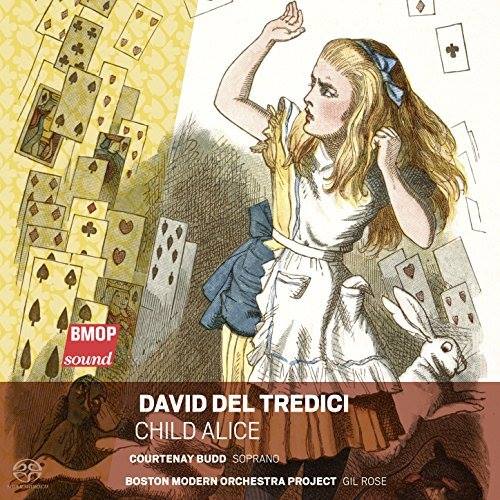
    David Del Tredici’s “In Memory of a Summer Day,” part one of his massive “Child Alice,” won the Pulitzer Prize for Music in 1980. The work was inspired by two prefatory poems from Carroll’s “Through the Looking Glass, and What Alice Found There” and “Alice’s Adventures in Wonderland.” It was performed for the first time in its completed form – including part two (an additional 73 minutes of music) – at Carnegie Hall in 1986.

    “Child Alice” was revived only last year by soprano Courtenay Budd and the Boston Modern Orchestra Project (BMOP), conducted by Gil Rose. A recorded performance was issued last month, with the same forces, on the BMOP Sound label. It is one of several stimulating releases from BMOP to arrive in my mailbox over the past 12 months.

    We will sample from “Child Alice,” among our featured recordings, this Thursday morning on WPRB, as I remove the shrink wrap from a number of CDs I have been unable to work into my usual thematic format. Curiously, I’ll also be including a selection from one of several releases of chamber music by a distant cousin of Carroll, Stephen Dodgson – composer.

    In addition, there will be a corker of a new release in the form of world premiere recordings of music composed for a trio of Greek plays by Ralph Vaughan Williams, issued on Albion Records, the official label of the Ralph Vaughan Williams Society.

    With the holidays fast approaching, you might be looking for some interesting stocking stuffers. Join me this Thursday morning from 6 to 11 EST, on WPRB 103.3 FM or at wprb.com. It will beat the hell out of batteries and new razors, on Classic Ross Amico.

  • Linda Holt on WPRB Discussing “The Black Spaniard”

    Linda Holt on WPRB Discussing “The Black Spaniard”

    Linda Holt will join Marvin Rosen for the last hour or so of Classical Discoveries this Wednesday morning on WPRB. Holt is the author of “The Black Spaniard,” a work of historical fiction about Beethoven. She’s expected between 9:50 and 11:00 EST. Listen in at WPRB 103.3 FM and wprb.com.

  • St Nicholas Day Miracle on WWFM

    St Nicholas Day Miracle on WWFM

    Happy St. Nicholas Day!

    Coming up on WWFM at 4:30 p.m. EST, it’s “The Miracle of Saint Nicholas” by Joseph-Guy Ropartz. Ropartz, a native of Brittany, and a pupil of Jules Massenet and César Franck, focuses on the infamous Nicholas legend in which three boys are slain by a butcher, and chopped up and pickled in brine, with the aim of passing them off as ham. Nicholas restores the youths, and the butcher repents. The story would later be set by Benjamin Britten, as part of his cantata, “Saint Nicholas.”

    ‘Tis the season, on WWFM – The Classical Network and wwfm.org.

  • Nielsen & Sibelius at Marlboro

    Nielsen & Sibelius at Marlboro

    We head north for this week’s “Music from Marlboro” for selections by the most famous composers from Denmark and Finland, respectively.

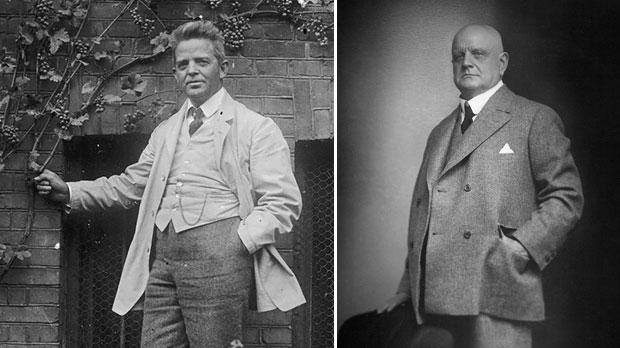
    Like “The Ugly Duckling” of his compatriot, Hans Christian Andersen, Carl Nielsen emerged from humble beginnings to blossom into Denmark’s national composer. Internationally, Nielsen has flitted in and out of the seemingly inescapable shadow of Finnish master Jean Sibelius. Both men were born in 1865. In fact, Nielsen was six months older. But it is an unfair comparison, not so much apples and oranges; more like kipper and pickled herring.

    The very fact that Nielsen is not referred to reductively as “The Sibelius of Denmark” is attributable to an unusually strong individual voice. His music is modern, yet traditional; Scandinavian, yet Germanic. Most important, it is full of personality, freshness and vitality.

    Nielsen’s Wind Quintet of 1922 reflects the composer’s optimism and good humor. Each part was tailored to the personality of the individual performer for which it was written (members of the Copenhagen Wind Quintet). There is also something of the outdoors about the piece. Nielsen was always fascinated by nature, and there are ample suggestions of bird song woven into the texture of the work’s pastoral neoclassicism.

    We’ll enjoy a recording made at Marlboro in 1971, with Paula Robison, flute; Joseph Turner, oboe; Larry Combs, clarinet; William Winstead, bassoon; and Robin Graham, horn.

    Sibelius, too, was influenced by nature. However, the very subtitle of his String Quartet in D minor, “Voces Intimae,” suggests a looking inward. The piece was composed in 1909, between the Third and Fourth Symphonies. It is the only chamber work of Sibelius’ maturity. The composer wrote to his wife, “It turned out as something wonderful. The kind of thing that brings a smile to your lips at the hour of death. I will say no more.” Ah, sweet nothings.

    We’ll hear it performed at the 2005 Marlboro Music Festival, by Dan Zhu and Sarah Kapustin, violins; Samuel Rhodes, viola; and Amir Eldan, cello.

    The prevailing winds will be from the north (strings, too, for that matter), on “Music from Marlboro,” this Wednesday evening at 6:00 EST, on WWFM – The Classical Network and wwfm.org.

    Marlboro School of Music and Festival: Official Page


    HAIR TODAY, GONE TOMORROW: Carl Nielsen (left) and Jean Sibelius

  • Krampusnacht Creepy Christmas Traditions

    Krampusnacht Creepy Christmas Traditions

    Advent may have begun on December 3, but the season really picks up steam on December 5, the eve of St. Nicholas Day, otherwise known as Krampusnacht. Krampusnacht jumpstarts a shadow season of creepy Christmas traditions. Christmas isn’t just about buying things, you know; it’s about scaring the bejeezus out of your kids.

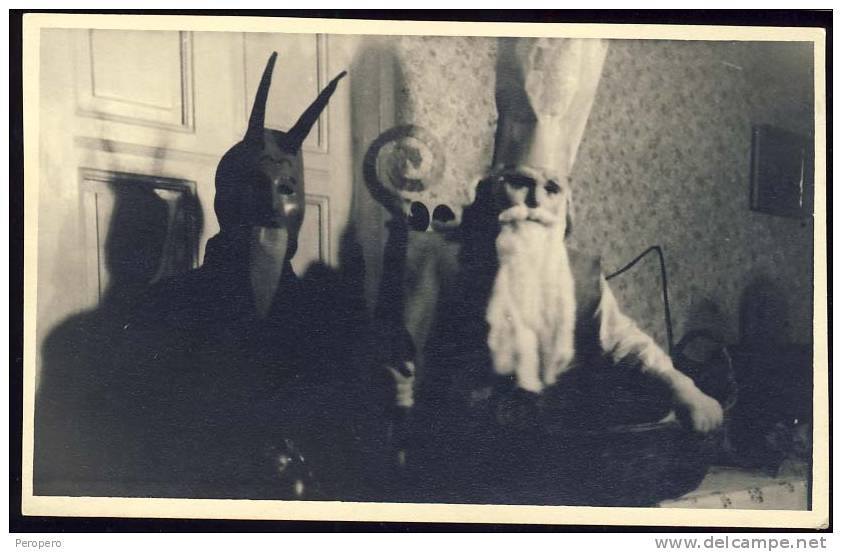
    What exactly is Krampus? Why, he’s St. Nicholas’ dark helper. Horned, hairy and horrifyingly long-tongued, Krampus emerges from his Alpine domain to dole out corporal punishment to the young and the wicked. For milder offenses, there is the sting of the switch; but for the especially ill-behaved, there are chains, a short ride in a wicker basket, and then drowning in a stream or immolation by hellfire. When a naughty child hears the dull clatter of approaching cow-bells, he knows it’s all over. He only wishes his stocking were full of coal.

    Happy holidays, everyone! Get ready for Black Pete, the Yule Lads, and the Gävle goat.

    Krampus cards were once widely circulated, not only on Christmas, but also on Valentine’s Day. I can think of no better way to catch a sweetheart.

    All hail Krampus!


    “A Krampus Carol” (incorporating a stop motion Krampus!):

    Family-friendly segment on the Krampus Renaissance in Bavaria, produced by The New York Times:

    A real, old-fashioned Krampuslauf:

    Pretty good Krampus carol (full text when you click on “show more”):

    Here comes Krampus:

    Nicholas and Krampus play “good cop/bad cop” with Tobias:

    Small child cowers behind door at 1:25:

    Academy Award-winner Christoph Waltz explains Krampus to Jimmy Fallon:

    The commercialization of Krampus:

Tag Cloud

Aaron Copland (93) Beethoven (95) Composer (114) Film Music (139) Film Score (143) Film Scores (255) Halloween (94) John Williams (195) KWAX (229) Leonard Bernstein (103) Marlboro Music Festival (125) Movie Music (154) Mozart (88) Opera (208) Philadelphia Orchestra (89) Picture Perfect (174) Princeton Symphony Orchestra (108) Radio (88) Ross Amico (244) Roy's Tie-Dye Sci-Fi Corner (290) The Classical Network (101) The Lost Chord (268) Vaughan Williams (103) WPRB (396) WWFM (881)

DON’T MISS A BEAT

Receive a weekly digest every Sunday at noon by signing up here


RECENT POSTS