Category: Daily Dispatch

  • Emiko Edwards Plays Beethoven in Plainsboro

    Emiko Edwards Plays Beethoven in Plainsboro

    Around 8:00 this Thursday morning, we’ll pause in our five-hour sesquicentennial celebration of the music of neglected French composer Charles Koechlin on WPRB to speak with pianist Emiko Edwards.

    Edwards will join the Bravura Philharmonic Orchestra and its music director Chiu-Tze Lin in Beethoven’s “Emperor” Concerto. The performance will be the centerpiece of a holiday concert to be given this Sunday night at 7:00 at Princeton Alliance Church in Plainsboro, NJ. Also on the program will be the “Polovtsian Dances” by Alexander Borodin, the “Toy Symphony” attributed to Franz Joseph Haydn, and selections from Handel’s “Messiah,” along with a holiday audience sing-along. More information is available at bravuraphil.org.

    Then I hope you’ll stick around, following our conversation, as we’ve got a cornucopia of Koechlin, including his “Seven Stars Symphony” – its individual movements inspired by legendary actors of classic cinema (Douglas Fairbanks, Greta Garbo, Marlene Dietrich, Charlie Chaplin, etc.), who were his contemporaries – until 11:00 EST, on WPRB 103.3 FM and wprb.com.
  • Charles Koechlin: Impossible Dreamer

    Charles Koechlin: Impossible Dreamer

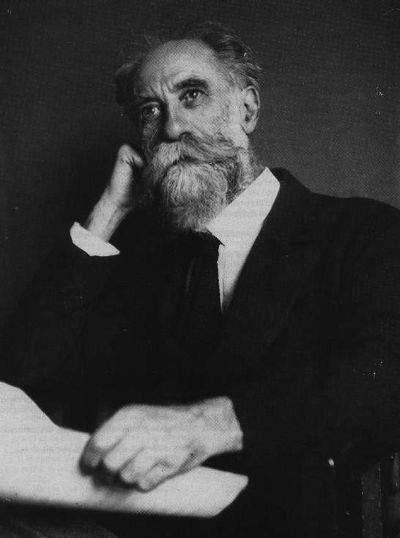
    Music is a quixotic profession, but few of its practitioners were as quixotic as Charles Koechlin. This Thursday morning on WPRB, we’ll play Sancho Panza to the impossible dreamer of French music.

    Here was an idealist of passionate enthusiasms. A pantheist and a communist, Koechlin’s sophisticated naïveté carried over into works like the mostly stagnant piano cycle “Les Heures persanes,” a dreamy sojourn across Persia, which in performance spans well over an hour. He staked out the home of (much younger) movie actress Lilian Harvey, hoping to propose. Prior to that, he had attempted to court her with reams of music, including alternate scores to scenes in her movies. It’s fascinating to contemplate that this footnote of world cinema (Harvey) has been kept alive for music-lovers by a footnote of classical music.

    Koechlin wrote whatever he pleased. His music is difficult to pigeon-hole. Some of his works are kind of impressionist, some are polytonal. He loved Bach, and even wrote a 50-minute meditation on the composer’s name, which stands as a kind of 20th century “Art of Fugue” (employing the ondes martenot!). In some of his works, he crosses over into serialism. He didn’t seem to care for boundaries, whether in his personal relationships, his religious and political convictions, or his music. What he did care for was following his muse, wherever it happened to lead him. Of course, he paid the price – beyond his work as an orchestrator for famous composers such as Gabriel Fauré, Claude Debussy, and Cole Porter (!), he is almost wholly forgotten.

    I hope you’ll join me as we tilt at windmills with Charles Koechlin, on the occasion of the 150th anniversary of his birth (November 27, 1867), this Thursday morning from 6 to 11 EST, on WPRB 103.3 FM and wprb.com. The ideal becomes real, on Classic Ross Amico.
  • Charles Koechlin Sesquicentennial on WPRB

    Charles Koechlin Sesquicentennial on WPRB

    The recordings of his music shall be as numerous as the strands of his beard. This Thursday morning on WPRB, we’ll celebrate the sesquicentennial of Charles Koechlin.

    Koechlin, the forgotten French composer who assisted Gabriel Fauré (his teacher) and Claude Debussy, was born on November 27, 1867. We’ll mark the anniversary in high style, with a five hour playlist of representative works – which won’t be easy, since Koechlin composed in such a wide variety of styles. His musical language encompassed impressionism, neo-classicism, polytonality, even quasi-serialism – occasionally within the same piece!

    His life was like his music, with many diverse interests jostling for primacy – medieval music, Bach, travel, stereoscopic photography, sports, politics, pantheism, the movies. He was especially interested in early film stars. He wrote works in tribute to Ginger Rogers, Douglas Fairbanks, Charles Chaplin and especially Lillian Harvey (who he basically stalked). Another source of endless fascination was Rudyard Kipling’s “The Jungle Book,” which inspired a series of orchestral works that span most of Koechlin’s creative life.

    For as much as he composed – he was very prolific – sadly, Koechlin has been relegated to a footnote in music histories, remembered, if at all, for his orchestrations for others, especially for Fauré’s “Pélleas and Mélisande” and Debussy’s “Khamma.” He also orchestrated Cole Porter’s ballet “Within the Quota.” (Porter was a Koechlin student.) In addition, he wrote a classic treatise on orchestration.

    We’ll hear Koechlin’s “Seven Stars Symphony,” each movement inspired by luminaries of the silver screen, complete with ondes martenot, as well as his orchestration of Schubert’s “Wanderer Fantasy,” among other oddities.

    Join me for music by the composer everyone forgot to remember, this Thursday morning from 6 to 11 EST, on WPRB 103.3 FM and wprb.com. We go kooky for Koechlin, on Classic Ross Amico.

  • Schubert’s Quintet: A Marlboro Masterpiece

    Schubert’s Quintet: A Marlboro Masterpiece

    On this week’s “Music from Marlboro,” we’ll have a single work – but what a work it is! Franz Schubert’s String Quintet in C major (D. 956, Op. posth. 163) sits at the very pinnacle of the composer’s mountain of masterpieces – which is to say, it is among the greatest pieces of chamber music ever written.

    Schubert wrote at least 15 string quartets. Here he doubles his cellos (a break from Mozart and Beethoven, who preferred to double their violas), enriching the ensemble’s lower register. The quintet’s emotional terrain is as comprehensive and kaleidoscopic as the ever-shifting autumnal skies.

    Though the work was completed in 1828, two months before Schubert’s death, its first public performance did not take place until 1850 – 22 years later.

    We’ll hear a recording made in conjunction with the 1986 Marlboro Music Festival, featuring Pamela Frank and Felix Galimir, violins; Steven Tenenbom, viola; and Peter Wiley and Julia Lichten, cellos.

    I hope you’ll join me for this, the quintessence of quintets, on “Music from Marlboro,” this Wednesday evening at 6 EST, on WWFM – The Classical Network and wwfm.org.

    Marlboro School of Music and Festival: Official Page


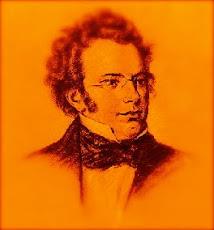
    Always refreshing: orange Schubert

  • WWFM Giving Tuesday Salutes Local Non-Profits

    WWFM Giving Tuesday Salutes Local Non-Profits

    To mark Giving Tuesday, The Classical Network will salute a number of non-profit organizations that continue to make a difference in our community.

    Throughout the day, WWFM hosts will conduct brief interviews with representatives of the following: SAVE, A Friend to Homeless Animals (10:15 a.m.), Trenton Area Soup Kitchen (11:15 a.m.), Trenton Music Makers (12:15 p.m.), Ryan’s Quest (1:15 p.m.), Princeton Senior Resource Center – PSRC (4:15 p.m.), and HomeFront (5:15 p.m.). Tune in to learn more and see how you, too, can lend a hand.

    Of course, as always, there will be plenty of music, also! It’s the gift that keeps on giving at WWFM – The Classical Network and wwfm.org.

Tag Cloud

Aaron Copland (93) Beethoven (95) Composer (114) Film Music (139) Film Score (143) Film Scores (255) Halloween (94) John Williams (195) KWAX (229) Leonard Bernstein (103) Marlboro Music Festival (125) Movie Music (154) Mozart (88) Opera (208) Philadelphia Orchestra (89) Picture Perfect (174) Princeton Symphony Orchestra (108) Radio (88) Ross Amico (244) Roy's Tie-Dye Sci-Fi Corner (290) The Classical Network (101) The Lost Chord (268) Vaughan Williams (103) WPRB (396) WWFM (881)

DON’T MISS A BEAT

Receive a weekly digest every Sunday at noon by signing up here


RECENT POSTS