Category: Daily Dispatch

  • Koechlin’s 150th A Neglected Genius?

    Koechlin’s 150th A Neglected Genius?

    Today is the 150th anniversary of the birth of French composer Charles Koechlin. If anyone can find even a single mention, anywhere on the internet, of an official sesquicentennial observance, I would be very curious to know. Alas, it would seem he is the very definition of a neglected composer.

    You can refer to my Saturday post on this fascinating polymath to learn more about his eclectic interests and his close associations with Gabriel Fauré and Claude Debussy. Things will only get more Koechlin-intensive as the week progresses and I pull out all the stops. (You certainly won’t catch me pulling at that beard.)

    For today, I hope you will join me for a selection from Koechlin’s music inspired by Rudyard Kipling’s “The Jungle Book” and some of his very famous work as an orchestrator. The music will be recognizable, even if, apparently, the orchestrator is not.

    We’ll be crushing on Koechlin, among our featured composers, this Monday from 4 to 7 p.m. EST, on WWFM – The Classical Network and wwfm.org.

  • Homebodies American Composers on WWFM

    Homebodies American Composers on WWFM

    With the lingering evidence of Thanksgiving both in our refrigerators and around our waistlines, it’s hardly surprising that our thoughts and memories would be full of home. Perhaps you still are “home,” with family and a full day of travel ahead of you, or you can’t wait to get home (your own).

    Whatever the case may be, this Sunday night on “The Lost Chord,” we’ll have music by American composers inspired by the idea of home.

    We’ll have a work by the “Dean of American composers,” Aaron Copland – his “Letter from Home,” from 1943-44; then a recent piece by John Fitz Rogers, “Magna Mysteria,” from 2010.

    Rogers, who studied with Steven Stucky, Roberto Sierra, Martin Bresnick, and Jacob Druckman, is an associate professor at the University of South Carolina School of Music and the founder of the Southern Exposure New Music Series, which received the 2005-2006 Chamber Music America/ASCAP Award for Adventurous Programming.

    “Magna Mysteria” was commissioned in 2009 to celebrate the restoration of Trinity Episcopal Cathedral (Columbia, South Carolina). From its very title, which translates as “Great Mysteries,” it is clear that this is a work about questions. Its intent is nicely encapsulated in the promotional material accompanying this release from innova Recordings.

    “Weaving together Latin biblical texts and poetic verse from the sixth-century philosopher Boethius, the composition explores ideas of home and the seeking of home, the elevation of home to a metaphorical or spiritual realm, and the nature of time.”

    What is clear is that the work is gorgeous. If you have a fondness for the choral music of Morten Lauridsen or Stephen Paulus, you will enjoy this, though Rogers is very much his own man. His music is tonal, melodic, and quite lovely.

    We’re home for the holidays this week. I hope you’ll join me for “Homebodies,” this Sunday night at 10:00 EST, on WWFM – The Classical Network and wwfm.org.

  • Charles Koechlin at 150 Rediscovering a Forgotten Genius

    Charles Koechlin at 150 Rediscovering a Forgotten Genius

    Monday marks the 150th anniversary of the birth of the remarkable French composer Charles Koechlin – whose name, it turns out, I have been mispronouncing for years (as if the “oe” were the equivalent of an umlauted “o” and the “ch” sounded like “sh”). In reality, the “oe” is said like an accented “e” (é) and the “ch” is hard, like a “k.” Who knew? Chalk it up to the composer’s German ancestry. Everyone repeat after me, then: Kake-LAN.

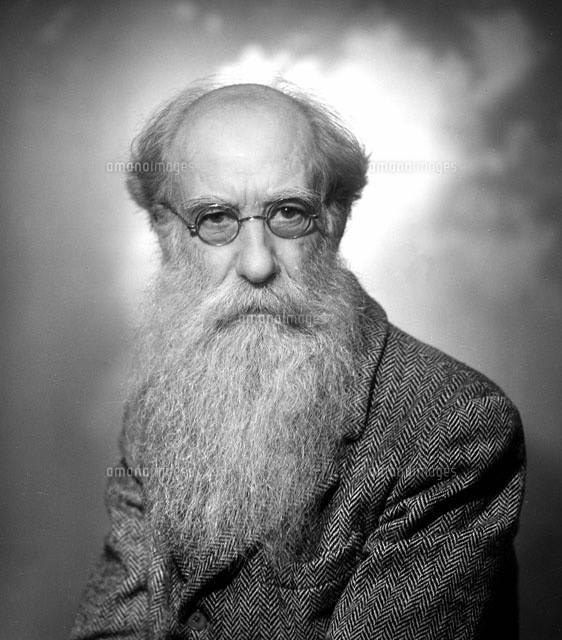
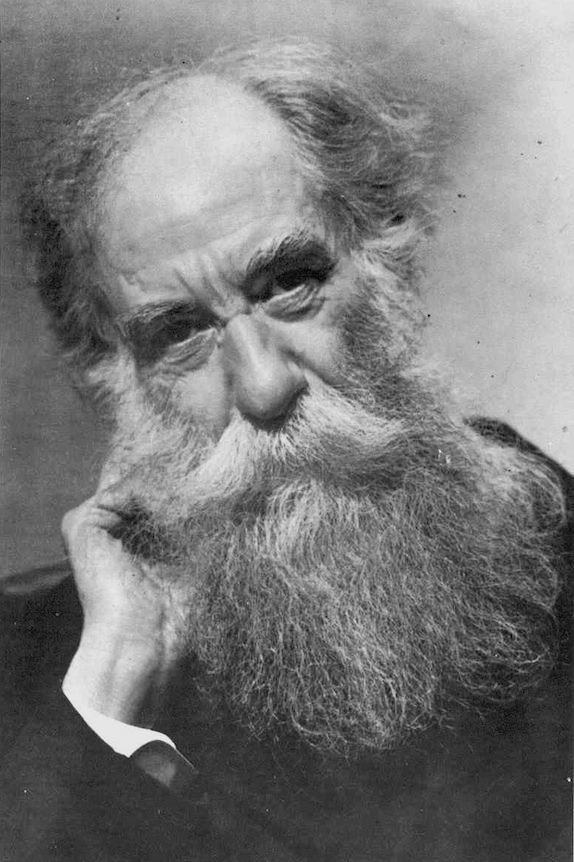
    Koechlin had many enthusiasms. He was interested in medieval music, Bach, travel, and stereoscopic photography. He was a communist sympathizer, a pantheist, and an athlete. He was also extraordinarily prolific, perhaps due to all the time he saved by not shaving. Koechlin had one of the most enviable beards in all of classical music. Children would ask him why he grew his beard so long, and he would respond, “Because I like it!”

    He was especially interested in early film stars (he wrote works in tribute to Ginger Rogers, Douglas Fairbanks, Charles Chaplin and especially Lillian Harvey, who he basically stalked) and the “Jungle Books” of Rudyard Kipling. He wrote a series of orchestral works inspired by Kipling, which span most of his creative life. These were composed in a wide array of styles. Koechlin’s language could encompass impressionism, neo-classicism, polytonality and even quasi-serialism.

    Despite being a figure of such energetic creativity, Koechlin is associated in most people’s minds with his orchestrations, especially those for Fauré’s “Pélleas and Mélisande” and Debussy’s “Khamma.” He also orchestrated Cole Porter’s ballet “Within the Quota.”

    Naturally, I’ll be playing some of his original music on WWFM The Classical Network and wwfm.org, late Monday afternoon, to mark the big day, but it’s on Thursday morning that I’ll really be doing it up right, with FIVE HOURS of Koechlin’s music and orchestrations, on WPRB 103.3 FM and wprb.com. Curious to hear what he did with Schubert’s “Wanderer Fantasy?” Tune in then. We’ll also hear his wacky “Seven Stars Symphony” (like Messiaen, he had a weakness for the ondes martenot), and much more.

    As for the pronunciation of his name, I’ll keep working on it. However, I can’t imagine that there’s that much “kake” in “Koechlin,” even if it is his 150th birthday.

  • Korngold’s Kings Row Star Wars Influence

    Korngold’s Kings Row Star Wars Influence

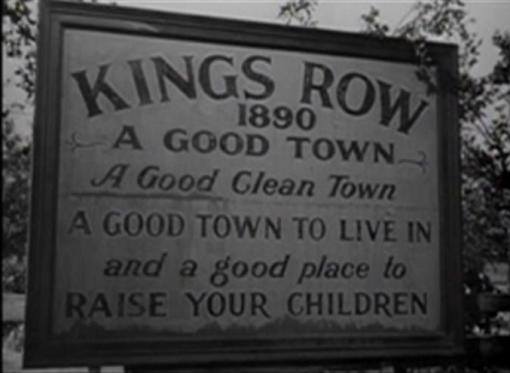
    This week on “Picture Perfect, with a new “Star Wars” right around the corner, we’ll hear an extensive suite from one of John Williams’ acknowledged influences, Erich Wolfgang Korngold’s “Kings Row” (1942). The settings of the two films couldn’t be more different – “Kings Row’s” struggle of decency against sinister impulses takes place in a small Midwestern town – but Korngold’s opulently orchestrated score brims with romance and heroism. Check out that opening fanfare!

    Although he was one of the great musical prodigies – celebrated in Vienna in his teens and 20s, especially for his operas – Korngold’s name was kept alive for decades after his death largely because of his work on a number of classic Warner Brothers films of the 1930s and ’40s. His music for the Errol Flynn swashbucklers has been particularly well-loved.

    He had already written music for “Captain Blood,” “The Prince and the Pauper,” “The Adventures of Robin Hood,” “The Private Lives of Elizabeth and Essex” and “The Sea Hawk” by the time he was offered work on “Kings Row.” Without knowing anything more about the project than the title, he commenced writing music for the main theme, on the assumption that the film was going to be another costume picture. In reality, it was a turn-of-the-century soap opera based in America’s heartland.

    Korngold’s approach couldn’t have been more fortuitous, since it led him to compose one of his grandest themes. It punctuates the action of the film like a cinematic “Ein Heldenleben” – which should come as little surprise, since Korngold actually knew Richard Strauss.

    “Kings Row” was based on the bestseller by Henry Bellamann. The book reveals a kind of dark underbelly to the civility of small town American life. The subject matter was ahead of its time, laying the groundwork for the novel “Peyton Place,” the film “Blue Velvet,” and television series such as “Twin Peaks” and “Desperate Housewives.” Yet at its core is the fundamental decency of its protagonist, Parris Mitchell, and his circle of friends. It is Mitchell’s ambition to become a doctor, and he heads to Vienna to study a new branch of science known as psychology.

    Mitchell was played in the film by Robert Cummings, his best friend Drake by Ronald Reagan, and Randy, a former tomboy from a family of railroad workers, by Ann Sheridan, who received top billing. The studio filled out the cast with a superb ensemble, including Claude Rains, Judith Anderson, Charles Coburn, Harry Davenport and even Maria Ouspenskaya, best known as Maleva the gypsy woman from “The Wolf Man.”

    It’s a grand piece of entertainment, if you can get into the spirit of it, depending on your tolerance for incest, sadism, involuntary amputation, wrongful commitment to an insane asylum and suicide. This is the film in which Reagan exclaims the immortal line, “Where’s the rest of me?”

    Thanks to the Hays Code, the screen adaptation was considerably toned down from – and more upbeat than – the novel. The emphasis is on Mitchell’s idealism in the face of a cruel, and at times horrifying, world. Along the way, there are several amusing (from our perspective) explanations of that mysterious new discipline, the study of the mind.

    I hope you’ll join me for an hour of music from “Kings Row,” by the King of Film Composers, Erich Wolfgang Korngold, this Friday evening at 6:00 EST, on WWFM – The Classical Network and wwfm.org.
  • Thanksgiving with Copland’s Letter from Home

    Thanksgiving with Copland’s Letter from Home

    For Thanksgiving, here’s Aaron Copland’s “Letter from Home.” Best wishes to you and yours.

Tag Cloud

Aaron Copland (93) Beethoven (95) Composer (114) Film Music (139) Film Score (143) Film Scores (255) Halloween (94) John Williams (195) KWAX (229) Leonard Bernstein (103) Marlboro Music Festival (125) Movie Music (154) Mozart (88) Opera (208) Philadelphia Orchestra (89) Picture Perfect (174) Princeton Symphony Orchestra (108) Radio (88) Ross Amico (244) Roy's Tie-Dye Sci-Fi Corner (290) The Classical Network (101) The Lost Chord (268) Vaughan Williams (103) WPRB (396) WWFM (881)

DON’T MISS A BEAT

Receive a weekly digest every Sunday at noon by signing up here


RECENT POSTS