Category: Daily Dispatch

  • Men and Mountains Radio: Classical Music Journey

    Men and Mountains Radio: Classical Music Journey

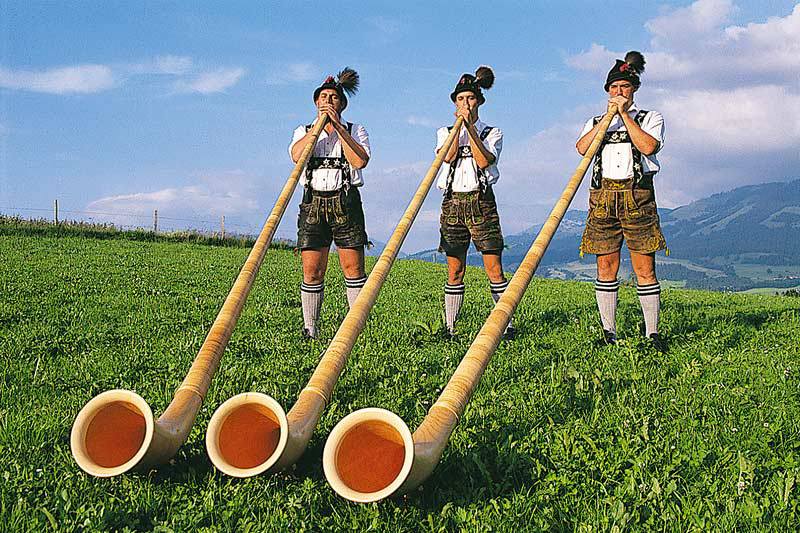
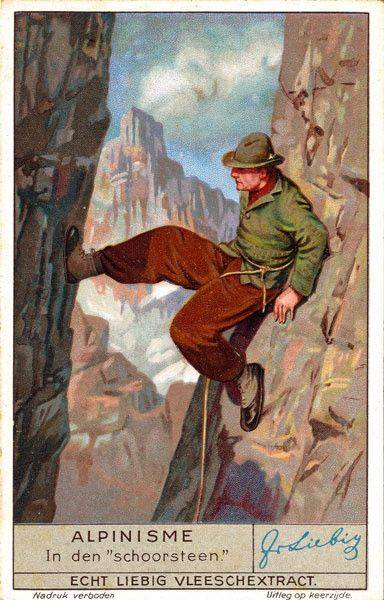
    Mountains can be the bearers of mystical revelations or shattering catastrophe. They are the wellsprings of folk song, beacons for recreation, escapes from the world of men, and safe harbor for exiles, brigands and monsters.

    This Thursday morning on WPRB, the focus will be on “Men and Mountains.” I borrow the name from a work by the original cranky Yankee, Carl Ruggles, who was a good friend of Charles Ives. We’ll hear Ruggles’ rugged masterwork, alongside music by Hugo Alfvén, Frederick Delius, Vincent d’Indy, Jon Leifs, E.J. Moeran, Vítězslav Novák, and Karol Szymanowski, among others.

    At 10:00, I’ll be joined by Daniel Spalding, music director of the Capital Philharmonic of New Jersey, which will be presenting Alan Hovhaness’ “Mysterious Mountain” at the center of a program which will also include music by Hector Berlioz and Camille Saint-Saëns (the mighty “Organ” Symphony, with Joseph Jackson at the console). Spalding will be on hand to tell us more about this exciting event, which will take place this Saturday at 7:30 p.m. at Patriots Theater at the War Memorial in Trenton.

    I’ll meet you at base camp, this Thursday morning, from 6 to 11 EDT, on WPRB 103.3 FM and wprb.com. Get ready to scale dizzying heights with Classic Ross Amico.

  • Horszowski & Forgotten Italian Gems

    Horszowski & Forgotten Italian Gems

    Okay, I’m kind of excited about this one. Mieczyslaw Horszowski was one of the great poets of the keyboard. He also happens to be one of my favorite pianists.

    On this week’s “Music from Marlboro,” we’ll hear Horzsowski perform music by…

    Chopin? No.

    Schumann? No.

    ILDEBRANDO PIZZETTI. Yes.

    Who the hell is HE?

    Pizzetti was one of the composers of the “generazione dell’Ottanta” (generation of the ‘80s), contemporaries of Ottorino Respighi, all born around 1880. These artists of the post-Puccini generation largely made a name for themselves in the concert halls as opposed to the opera houses. That was a change of pace for Italy.

    Pizzetti was best-known as an associate of Gabrielle d’Annunzio, providing incidental music for a number of d’Annunzio’s plays and setting “Fedra” as an opera. Pizzetti’s Piano Trio in A major, written in 1925, is big music with big things to say. There is plenty of drama, lyricism and warmth throughout the 30-minute piece, which is almost never heard. It was performed at the Marlboro Music Festival in 1968, by Pina Carmirelli, violin; Leslie Parnas, cello; and Mieczyslaw Horszowski, piano.

    Horszowski, who died in 1993, just shy of his 101st birthday, had one of the longest careers of any performing artist. He was a pupil of Theodor Leschetizky, who was a pupil of Carl Czerny, who in turn was a pupil of Beethoven. Horszowski played Beethoven’s Piano Concerto No. 1 in public for the first time in 1901! He joined the faculty of the Curtis Institute of Music in 1942. He remained there for over 50 years, giving his last lesson a week before his death.

    As if the idea of hearing Horszowski in this neglected repertoire isn’t compelling enough, we’ll also have a young Yo-Yo Ma among the personnel – alongside guitarist Javier Calderon, violinist Daniel Phillips, and violist Luigi Alberto Bianchi – in a 1976 performance of Niccolò Paganini’s Quartet No. 15 in A minor for guitar and strings.

    That’s Marlboro, Italian-style, on the next “Music from Marlboro,” this Wednesday evening at 6 EDT, on WWFM – The Classical Network and wwfm.org.

    Marlboro School of Music and Festival: Official Page


    PHOTO: Mieczyslaw Horszowski (center) with Marlboro co-founder Rudolf Serkin and an up-and-coming Ruth Laredo

  • Piffaro’s Sacred Winds on The Classical Network

    Piffaro’s Sacred Winds on The Classical Network

    My colleague, David Osenberg, decided he really wanted to do today’s Noontime Concert on The Classical Network. I’m up against a couple of writing deadlines, so that’s fine by me. Dave will welcome Joan Kimball and Robert Wiemken, artistic co-directors of Piffaro, The Renaissance Band. Together, they will introduce a program titled “Sacred Winds: Music for a Spanish Band.”

    Piffaro’s next series of concerts, featuring the award-winning chorus The Rose Ensemble, will take place Friday at 7:30 p.m. at Philadelphia Episcopal Cathedral, Saturday at 7:30 p.m. at Presbyterian Church of Chestnut Hill, and Sunday at 3 p.m. at Christ Church Christiana Hundred, Wilmington, DE. More information is available at piffaro.org.

    I’ll waltz in at around 2:00 today to share some new releases of music by Beethoven and Stephen Dodgson – composer (who, by the way, was a distant cousin of Lewis Carroll). Join Dave for Piffaro at noon, and yours truly from 2 to 4 p.m. EDT. We’ll have music from the Renaissance to the present, on WWFM – The Classical Network and wwfm.org.

  • Vaughan Williams & Sibelius Symphonies on WWFM

    Vaughan Williams & Sibelius Symphonies on WWFM

    Self-indulgence alert!

    This Monday afternoon, we’ll hear two symphonies: Ralph Vaughan Williams’ Symphony No. 8, with its striking use of percussion (no pun intended), and Jean Sibelius’ Symphony No. 6.

    The Vaughan Williams has been playing in my car pretty much incessantly since the composer’s birthday last Thursday. Beyond the “Sinfonia Antarctica” – the Symphony No. 7, with its programmatic associations with the film “Scott of the Antarctic” – we don’t really hear much of Vaughan Williams’ later symphonies. This one is a gem, with its tuned gongs and movement-long showcases for the wind and string sections. It also happens to be the shortest of Vaughan Williams’ symphonies, and, though marked by ambiguity, it seems not to slip into intimations of the unknown (i.e. death) in quite the same way as the Symphonies Nos. 6, 7 & 9 appear to do. That said, the third movement contains a theme that brings to mind the chorale “O Sacred Head, Now Wounded,” used in Bach’s “St. Matthew Passion.” Vaughan Williams wrote the work when he was in his early 80s, between 1953 and 1955.

    Sibelius’ 6th, completed in 1923, always puts me in an autumnal frame of mind, probably in part because of the composer’s suggested motto: “When shadows lengthen.” Sibelius described the work as “cold spring water;” no doubt an antidote to the contemporary “cocktails,” as he called them, being served up by Igor Stravinsky. It certainly opens with some of the composer’s most hypnotic and gorgeous music. Sibelius said of the work, “The sixth symphony always reminds me of the scent of first snow.” We all know winter comes early to Finland.

    We’ll also hear from Hungarian flutist and composer Franz Doppler, an associate of Franz Liszt; Bohemian Baroque master Jan Dismas Zelenka; contemporary Estonian composer Erkki-Sven Tüür; and Russian baritone Dmitri Hvorostovsky, on their birthdays. I hope you’ll join me for autumnal symphonies and more, from 4 to 7 p.m. EDT, on WWFM – The Classical Network and wwfm.org.


    Sardanapalus wants all his pleasures at once

  • Forgotten Swiss Music Bloch & Huber

    Forgotten Swiss Music Bloch & Huber

    Enough with your jokes about alphorns and cuckoo clocks! This Sunday night on “The Lost Chord,” we listen to forgotten music from Switzerland.

    Ernest Bloch, who is best known for his music on Jewish themes (such as his Hebraic rhapsody “Schelomo”), actually spent most of his life in the United States. He died in Portland, OR, in 1959, at the age of 78.

    50 years earlier, while still in Switzerland, he composed his song cycle “Poèmes d’automne.” At the time, he was at work on his opera, “Macbeth,” but was sidelined when he made the acquaintance of a young poet by the name of Beatrix Rodès. He fell instantly in love with her, and set four of her poems within two months. Rodès would eventually become his mistress, though in the end Bloch chose to remain with his wife. It’s said that the texts, even in the original French, are of dubious literary quality.

    The composer arranged them to form a kind of progression, in which a woman passes from sadness and desolation, to peace and love, to lamentation for the passing of her beauty, to an air of serenity as she becomes a priestess.

    Okay, so it’s not his strongest work, but it is seasonal and interesting to listen to.

    Hans Huber, who lived from 1852 to 1921, was the composer of nine symphonies (of which he acknowledged eight), five operas, and a number of concertos for various instruments. His four concertos for piano are somewhat unusual in that, like Brahms’ experiments in the form, they are made up of four movements, with the addition of a scherzo, as opposed to the customary three.

    The Piano Concerto No. 3 first appeared on a concert in Basel, in February of 1899, which also included Beethoven’s “Leonore Overture No. 3” and Berlioz’s “Harold in Italy.”

    It’s an unusual piece, for, among other things, presenting in the first movement the theme from the work’s finale as the underpinnings of a passacaglia.

    I hope you’ll join me for an hour of forgotten music from Switzerland – “Swiss Missed” – this Sunday night at 10:00 EDT, on WWFM – The Classical Network and wwfm.org.

Tag Cloud

Aaron Copland (93) Beethoven (95) Composer (114) Film Music (139) Film Score (143) Film Scores (255) Halloween (94) John Williams (195) KWAX (229) Leonard Bernstein (103) Marlboro Music Festival (125) Movie Music (154) Mozart (88) Opera (208) Philadelphia Orchestra (89) Picture Perfect (174) Princeton Symphony Orchestra (108) Radio (88) Ross Amico (244) Roy's Tie-Dye Sci-Fi Corner (290) The Classical Network (101) The Lost Chord (268) Vaughan Williams (103) WPRB (396) WWFM (881)

DON’T MISS A BEAT

Receive a weekly digest every Sunday at noon by signing up here


RECENT POSTS