Category: Daily Dispatch

  • Martinu Trio Celebrates 300 Likes & Views

    Martinu Trio Celebrates 300 Likes & Views

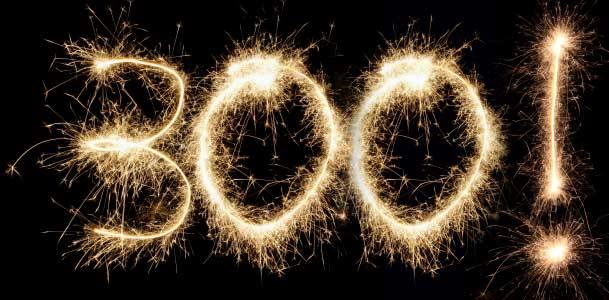
    My goodness, I hit 300 likes last night! Honestly, I don’t feel a day over 299. Thank you all for helping me build this little Facebook empire.

    To celebrate, here’s a performance of the prolific Czech composer Bohuslav Martinu’s Trio for Flute, Cello and Piano, H. 300, very well played by young performers. (Coincidentally, it looks as if the YouTube video has received a little over 300 views.)

    Martinu is a sleeping giant among 20th century composers. The only reason I can imagine that his music is not better known is that there is simply so overwhelmingly much of it, and all of it is of a comparatively similar (that is to say, very high) quality.

    The “H,” if you’re curious, refers to a system of cataloguing Martinu’s works that was prepared by the Belgian musicologist Harry Heilbreich, first introduced in 1968.

    Have a slice of cake (it’s only 300 calories), enjoy the Martinu, and thanks again for liking Classic Ross Amico!

  • Friday the 13th Music for Unlucky Composers

    Friday the 13th Music for Unlucky Composers

    Suffering from triskaidekaphobia? Join me on this Friday the 13th for music by composers who were afflicted with extraordinary bad luck.

    Jean-Baptiste Lully, also an accomplished dancer, injured his toe while pounding the floor with a heavy stick to mark time; the resultant infection killed him. Anton Webern violated curfew when he snuck out on his porch for a smoke and was shot by an American soldier. Ernest Chausson lost control of his bicycle and fatally slammed into a brick wall. Fire tore through Geirr Tveitt’s cabin and destroyed four-fifths of his compositional output, driving him to alcoholism. Friedrich Kuhlau blinded himself when he fell on a bottle at the age of seven; later, he died of complications after being left out in the cold all night as his house burned to the ground. Charles-Valentin Alkan was reaching for a copy of the Talmud, located on a high shelf, when the bookcase toppled, crushing him. Henry Purcell developed pneumonia after his wife locked him out of the house for coming home late after one too many pub crawls. Alexander Scriabin died of a septic carbuncle. Tchaikovsky drank cholera-contaminated water. Jean-Marie Leclair was found murdered in his room. Alessandro Stradella was set upon by unidentified assassins.

    None of these misfortunes occurred on Friday the 13th. Toss some salt over your shoulder and sit back and enjoy, this Friday from 4 to 6 p.m. EDT, on WWFM – The Classical Network and wwfm.org. And then stick around for a good luck charm forged by wizards and sorcerers on “Picture Perfect,” music for the movies, at 6.


    BONUS! Read about Giuseppe Verdi and the Evil Eye:

    http://www.classicfm.com/composers/verdi/guides/verdis-curse-evil-eye/

  • Wizard Movie Music: Lord of the Rings to Harry Potter

    Wizard Movie Music: Lord of the Rings to Harry Potter

    This week on “Picture Perfect,” you’ll be spellbound (I hope), as I present an hour of musical selections from movies about wizards and sorcerers.

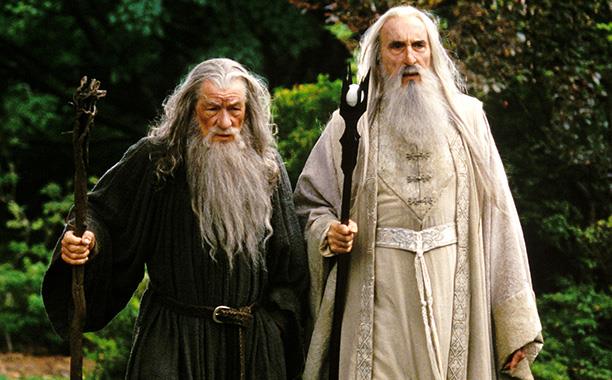
    Gandalf and Saruman duke it out in Peter Jackson’s frenetic, yet somehow ponderous adaptations of J.R.R. Tolkien’s “The Lord of the Rings,” films so bloated and poorly paced that anyone who had not read the books probably wondered what all the fuss was about. Its abundant defects didn’t keep the screen trilogy from making over a billion dollars and garnering 30 Academy Award nominations. Three of those were bestowed upon composer Howard Shore. We’ll be sampling from his music to “The Fellowship of the Ring” (2001).

    Made for a fraction of the budget, much less self-serious, and arguably way more fun is “The Sword and the Sorcerer” (1982), which holds no pretense to be anything beyond what it is: a schlocky B-movie sword and sandal swashbuckler. However, the composer, David Whitaker, aspired for something greater. Against tremendous time pressures, he turned in a marvelous score, which sounds like Erich Wolfgang Korngold on a shoestring. If this film had been made by George Lucas, Whitaker would be world famous.

    After creating one of his greatest scores for Stanley Kubrick’s “Spartacus,” Alex North had his music for Kubrick’s “2001: A Space Odyssey” rejected – and not in a nice way. (North didn’t find out about it until the lights went down at the film’s premiere.) Fortunately, the composer was able to salvage the best material for “Dragonslayer” (1981). The plot, about a bumbling sorcerer’s apprentice who faces a seemingly impossible challenge, is serviceable at best, but the dragon may yet be the most amazing committed to film. Also, the score is terrific.

    Finally, John Williams kicks off another billion dollar franchise with “Harry Potter and the Sorcerer’s Stone” (2001), which in England was released (as was the book) as “Harry Potter and the Philosopher’s Stone.” Who ever heard of a sorcerer’s stone? I guess the publishers were afraid Americans would be put off by any association with philosophy.

    I hope you’ll join me for wizards and sorcerers this week, on “Picture Perfect,” this Friday evening at 6 EDT, on WWFM – The Classical Network and wwfm.org.


    PHOTO: Saruman vexes Gandalf with the exquisite whiteness of his beard
  • Ralph Vaughan Williams: A Birthday Salute

    Ralph Vaughan Williams: A Birthday Salute

    Though he was affectionately known as “Uncle Ralph,” there was more to the man and his music than is suggested by his unpressed, avuncular persona. Ralph Vaughan Williams, more than anyone, elevated the music of the English countryside to high art. He reexamined the past, as he pushed to the future; he peered inward, even as he expressed the universal. Traditionalist and revolutionary, romantic and modernist – his was a remarkable career, and his body of work was more diverse than many realize from the countless performances of “The Lark Ascending” and the “Fantasia on a Theme by Thomas Tallis” for which he is best known.

    This Thursday morning on WPRB, we’ll attempt to convey the full genius of Ralph Vaughan Williams, with an assortment of his recordings from all across the spectrum. We’ll hear his bleakest symphony (conducted by Boult in 1954), as well as his most hopeful (conducted by Barbirolli in 1944). We’ll hear an orchestral fantasy from one of his least-known operas, and the final act of another, which became the basis for one of his most beloved works. We’ll hear rare gems issued by major labels, such as EMI and London/Decca, in their glory days, as well as hard-working independents that specialize in English music, such as Dutton Vocalion Records and Albion Records, the record label of the Ralph Vaughan Williams Society. We’ll hear a recording made by David Munrow, unheard since its release on LP in 1977. We’ll hear works inspired by Spenser and Shakespeare and Aristophanes. Sir David Willcocks will conduct one of RVW’s substantial choral works, and the composer himself with lead a rollicking performance of one of his most hilarious overtures.

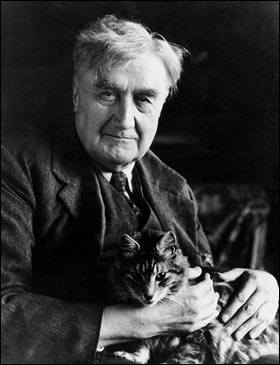
    These are some of the attractions you can expect, as we salute Ralph Vaughan Williams on his birthday. I hope you’ll join me this Thursday morning from 6 to 11 EDT on WPRB 103.3 FM and wprb.com. We’ll do our best to keep the cat hairs out of the cake, on Classic Ross Amico.


    PHOTO: Vaughan Williams engaged in a shedding contest with his friend, Foxy

  • Ralph Vaughan Williams Birthday Celebration

    Ralph Vaughan Williams Birthday Celebration

    It’s never truly autumn until we can celebrate the birthday of Ralph Vaughan Williams. One of England’s greatest composers, Vaughan Williams looked back to his country’s agrarian roots as a roundabout way of securing the future of its cultural identity. This Thursday morning on WPRB, we will salute the great man in all his rumpled glory by sampling from a broad cross-section of his multifaceted output.

    As did so many composers who were caught in the wildfire of nationalism that swept across Europe from the mid-19th century forward, Vaughan Williams rebelled against the prevailing academicism that stretched its tendrils all the way from Germany to choke the musically “provincial” outlands. He emerged from an environment that had produced far too many knock-offs of Mendelssohn and Brahms. Vaughan Williams would revolutionize his compatriots’ perception of art music by embracing the sounds of the English countryside.

    However, much like Béla Bartók, he was no simplistic, twee purveyor of folk music. On the contrary, the rhythms and inflections of his native land were already in his DNA. The songs he documented while roaming the fields and fens with his colleague, Gustav Holst, merely brought to the surface what was already innate. What he expressed in his original music was thoroughly digested and deeply personal.

    Some of Vaughan Williams’ best loved works are imbued with nostalgia for a faded world, but the composer pushed forward, as well, through two world wars and into the Great Beyond. He was not a conventionally religious man, but mysticism seems to color a fair amount of his music. Other pieces stare desolation unflinchingly in the face. His lessons with Maurice Ravel made him a thoughtful orchestrator, so that throughout his life he deployed his instrumental forces with considerable creativity and expertise. Given the proper attention, there is much to engage on all levels of his music.

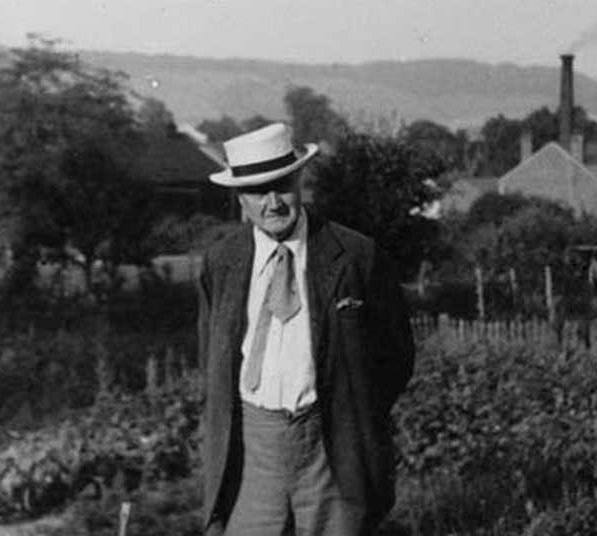
    I hope you’ll join me as we salute this fascinating composer with five hours of lesser-known works and recordings of historic significance. While you might not want to take his instruction on the best way to tie ties, musically you will be in the hands of a master, this Thursday morning from 6 to 11 EDT on WPRB 103.3 FM and wprb.com. You can put your faith in Ralph (pronounced “Rafe”), on Classic Ross Amico.


    Ralph Vaughan Williams Society

Tag Cloud

Aaron Copland (93) Beethoven (95) Composer (114) Film Music (139) Film Score (143) Film Scores (255) Halloween (94) John Williams (195) KWAX (229) Leonard Bernstein (103) Marlboro Music Festival (125) Movie Music (154) Mozart (88) Opera (208) Philadelphia Orchestra (89) Picture Perfect (174) Princeton Symphony Orchestra (108) Radio (88) Ross Amico (244) Roy's Tie-Dye Sci-Fi Corner (290) The Classical Network (101) The Lost Chord (268) Vaughan Williams (103) WPRB (396) WWFM (881)

DON’T MISS A BEAT

Receive a weekly digest every Sunday at noon by signing up here


RECENT POSTS