Category: Daily Dispatch

  • Viola Love from Marlboro Music Festival

    Viola Love from Marlboro Music Festival

    The viola gets some love on this week’s “Music from Marlboro.” We’ll hear two very different quintets, composed over a century apart, that yet reveal their creators’ shared affinity for the instrument’s dark, rich timbre.

    Ralph Vaughan Williams’ “Phantasy Quintet,” written in 1912, was one of numerous works commissioned from England’s great composers by one Walter Wilson Cobbett, a businessman and amateur musician whose dual passions were chamber music and music of the Elizabethan era. (“Phantasy” was Cobbett’s preferred spelling.) The work is full of Tudor inflections and stamped by Vaughan Williams’ tell-tale love of folk music. Vaughan Williams doubles his violas, and the instrument is heard to great effect throughout the piece. We’ll hear a performance from the 1975 Marlboro Music Festival, with James Buswell and Sachiko Nakajima, violins; Philipp Naegele and Caroline Levine, viola; and Anne Martindale, cello.

    Wolfgang Amadeus Mozart, too, adds a second viola to his String Quintet No. 5 in D Major, K. 593. Composed in 1790, the work was recollected by the composer’s widow, Costanze, to have been written for another musical amateur, speculated to be Johann Trost. Trost must have been quite the gifted dilettante. He also knew Haydn from Esterhaza, and Haydn dedicated some of his quartets to him. When Haydn and Mozart played through the D Major Quintet together before Haydn’s first visit to London, the two men took turns indulging in the first viola part.

    The work was known for centuries as the “Zigzag” because of an alteration to the original manuscript that modified what had been a descending chromatic figure in the final movement into something decidedly more humorous. We’ll hear a performance from Marlboro in 2005, with Sarah Kapustin and Diana Cohen, violins; Mark Holloway and Sebastian Krunnies, viola; and David Soyer, cello.

    The two quintets will be divided by an evocative “Elegiac Trio” by Sir Arnold Bax, composed in 1916. The work, scored for flute, viola, and harp, appeared the year after Debussy’s trio for the same instrumental combination (which Bax may or may not have known). Its alluring melancholy emerged from a world at war. Bax was especially affected by escalating tensions between England and his beloved Ireland, which had just boiled over into violence with the Easter Rising. We’ll hear a performance of the trio from 1978, with Carol Wincenc, flute; Caroline Levine, viola; and Moya Wright, harp.

    Leave your viola jokes in the comments section, if you must; then join me for more exceptional music-making from the archives of the Marlboro Music Festival, this Wednesday evening at 6 EDT, on WWFM – The Classical Network and wwfm.org.

    Marlboro School of Music and Festival: Official Page
  • Dolce Suono Ensemble Plays Higdon & More

    Dolce Suono Ensemble Plays Higdon & More

    Artistic director Mimi Stillman named her Dolce Suono Ensemble after a passage in Dante’s “Divine Comedy” that reads “…in voce mista al dolce suono” (“…the words blending with the sweet sound”).

    There will be sweet sounds aplenty on today’s Noontime Concert on The Classical Network, which will come your way from the Brandywine River Museum of Art in Chadds Ford, PA. On the program will be music by Jean Sibelius, Philippe Gaubert, Antonin Dvořák, Claude Debussy, and Leonard Bernstein, with two works by Philadelphia composers: Andrea Clearfield’s “Spirit Island” and Jennifer Higdon’s “American Canvas.”

    “American Canvas” falls into three movements, each named for a different visual artist – Georgia O’Keefe, Jackson Pollock, and Andrew Wyeth. The Brandywine Museum, of course, houses an extensive collection of canvases painted by three generations of the Wyeth family.

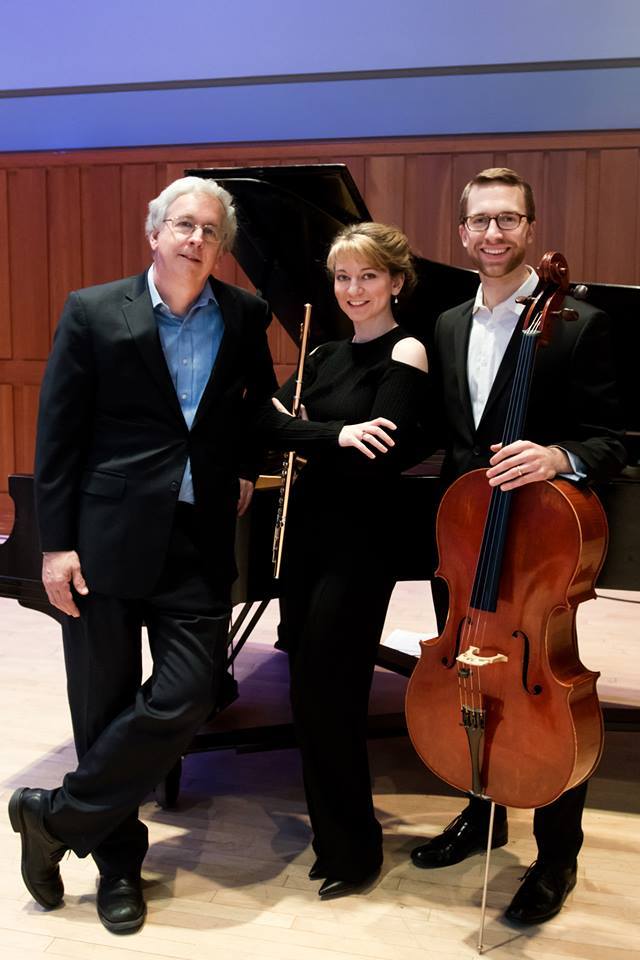
    “American Canvas” was composed on a commission from the Dolce Suono Ensemble with grants from the Musical Fund Society of Philadelphia and the William Penn Foundation. The Dolce Suono Trio consists of flutist and artistic director Mimi Stillman, pianist Charles Abramovic, and cellist Nathan Vickery. Stillman will introduce each of the pieces from the Brandywine stage.

    Dolce Suono’s next concert will explore the musical tastes of the Founding Fathers and the musical culture of Philadelphia around the founding of our nation. The ensemble will present “Music in the Second Capital” this Sunday at 3 p.m. at Old Pine St Presbyterian Church, 412 Pine Street, Philadelphia. For more information, look online at dolcesuono.com/events.

    Following today’s Noontime Concert, stick around for a complete recording of the “Messa da Requiem” by Giuseppe Verdi, as we celebrate the Italian master’s 204th birthday. There will be sweet sounds aplenty, this Tuesday, from 12 to 4 p.m. EDT, on WWFM – The Classical Network and wwfm.org.

  • Janis Ivanovs Symphony No 20 WWFM

    Janis Ivanovs Symphony No 20 WWFM

    This is making the rounds on the Twitters, but I thought I’d also share it here. Coming up at 4:30 EDT on WWFM – The Classical Network and wwfm.org, we celebrate the birthday of Latvian composer Janis Ivanovs with his Symphony No. 20 — heard on glorious vinyl!

  • Columbus Day Classical Composers

    Columbus Day Classical Composers

    On this Columbus Day, discover music by Johann Wilhelm Hertel, Camille Saint-Saëns, Janis Ivanovs, and Einojuhani Rautavaara. We’ll celebrate the birthday anniversaries of this very interesting assortment, from 4 to 7 p.m. EDT, on WWFM – The Classical Network and wwfm.org.


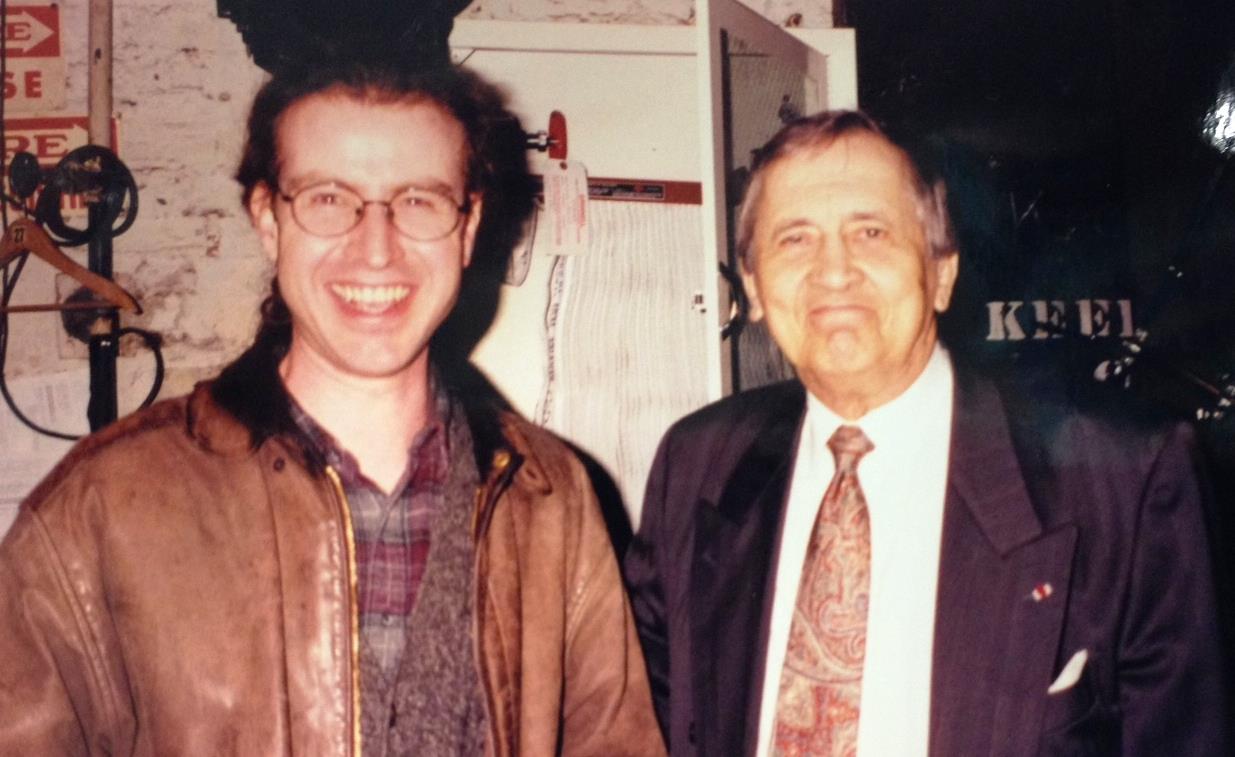
    PHOTO: A callow Classic Ross Amico backstage with Einojuhani Rautavaara at Philadelphia’s Academy of Music in 2000, following the premiere of the composer’s Symphony No. 8 “The Journey.” The photo was taken by Anssi Blomstedt, grandson of Jean Sibelius.

  • Atreus’ Fall: Music of Vengeance & Justice

    Atreus’ Fall: Music of Vengeance & Justice

    For some of us living here in the Northeast, autumn brings with it the pleasures of baked goods, homemade soups, colored leaves, moody skies, carved pumpkins, black-and-white horror movies, used book shopping, sweaters, Brahms, and cozy cups of tea. But for the House of Atreus, “fall” meant something completely different.

    This Sunday night on “The Lost Chord,” we’ll hear music inspired by “The Oresteia,” a trilogy of surviving plays by Aeschylus that relates the effects of a curse on the House of Atreus. Dating from the 5th century B.C., the overall story arc follows the shift from perpetual vengeance to the formation of a rational social justice system – the thinking being that man cannot hope to build a progressive civilization if he is engaged in unremitting bloodshed.

    However, along the way to that all-important message, the audience gets to have its cake and eat it, too, as it is treated such lurid incidentals as human sacrifice, incest, adultery, filicide, fratricide, mariticide, matricide, and cannibalism. The name of the cycle derives from Orestes, who avenges the murder of his father, Agamemnon, who in turn was killed by his wife, Clytemnestra, and her lover, Aegisthus.

    The subject was a popular one with the playwrights of antiquity – it was also treated by Sophocles and Euripides – and it continues to have resonance in the present day. It is certainly very well represented in the classical music world.

    French composer Darius Milhaud treated all three surviving plays in the Aeschylus cycle, as “The Oresteia of Aeschylus,” composed over a ten year span. Combined, the cycle runs to three hours and involves over 300 singers and players. Allegedly, Milhaud considered it his greatest work.

    The second part is titled “Les Choéphores,” or “The Libation-Bearers,” referring to the women who offer up ritual sacrifices at Agamemnon’s grave. The story, the familiar one, concerns the victorious Agamemnon returning from the Trojan War, only to be murdered in his bathtub Clytemnestra and Aegisthus.

    They go on to rule a resentful populace, with Agamemnon’s daughter Electra, consumed by her thirst for vengeance, which is delivered eventually, upon the secret return of her brother, Agamemnon’s brother, Orestes. In the meantime, Clytemnestra, racked by guilt and haunted by nightmares, attempts to appease her husband’s ghost and avert her fate by sending an offering of libations to his tomb.

    Milhaud worked with poet, playwright and frequent collaborator Paul Claudel to structure Aeschylus’ play, the second of the trilogy, into seven scenes, beginning with a threnody and concluding with a plea for justice.

    We’ll round out the hour with incidental music written by Dutch composer Alphons Diepenbrock, inspired by Sophocles’ “Electra.”

    That’s comedy tomorrow, tragedy tonight. Join me for “Fall at the House of Atreus,” music inspired by “The Oresteia,” this Sunday night at 10:00 EDT, on WWFM – The Classical Network and wwfm.org.


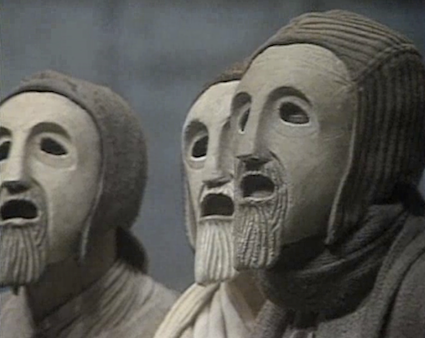
    PHOTO: The fall has seldom been so grim

Tag Cloud

Aaron Copland (93) Beethoven (95) Composer (114) Film Music (139) Film Score (143) Film Scores (255) Halloween (94) John Williams (195) KWAX (229) Leonard Bernstein (103) Marlboro Music Festival (125) Movie Music (154) Mozart (88) Opera (208) Philadelphia Orchestra (89) Picture Perfect (174) Princeton Symphony Orchestra (108) Radio (88) Ross Amico (244) Roy's Tie-Dye Sci-Fi Corner (290) The Classical Network (101) The Lost Chord (268) Vaughan Williams (103) WPRB (396) WWFM (881)

DON’T MISS A BEAT

Receive a weekly digest every Sunday at noon by signing up here


RECENT POSTS