• Margaret Bonds & Her Influential Teachers

    Margaret Bonds & Her Influential Teachers

    by 

    in
    2 responses

    Margaret Bonds was one of the first black composers and performers to gain recognition in the U.S. Born in Chicago on March 3, 1913, she is perhaps best-remembered for her collaborations with Langston Hughes and for her piano work “Troubled Water.”

    This Sunday night on “The Lost Chord,” we’ll pay tribute to Bonds and her notable teachers, Florence Price and William Levi Dawson, both of whom were also important figures in the history of African American art music.

    Price is considered the first African American woman to have composed symphonies. She wrote three of them (one was performed by the Chicago Symphony Orchestra). She also wrote orchestral works, chamber music, instrumental music, and numerous choral and vocal pieces. She and Bonds shared not only a teacher-student relationship, but also became very good friends. Tonight, we’ll hear Price’s “Fantasie Negre.”

    In addition to his many, many fine works for chorus, Dawson is notable for having written one of the most successful symphonies by an African-American composer, the so-called “Negro Folk Symphony.” The work was composed in 1934 and given its first performance by the Philadelphia Orchestra, under Leopold Stokowski. Dawson revised the piece in 1952, following a trip to West Africa, where he was influenced by the indigenous rhythms he encountered there. Stokowski later recorded the piece, as did Neeme Jarvi with the Detroit Symphony Orchestra. I have a preference for the latter recording.

    In 1933, Bonds appeared as a piano soloist with the Chicago Symphony. She performed Price’s Piano Concerto with the Women’s Symphony Orchestra of Chicago the next year. In 1939, she moved to New York, where she continued her studies at the Juilliard School. She also studied privately with Roy Harris.

    For all her accomplishments, her collaborations with Langston Hughes, her establishment of a cultural community center in Harlem, and the composition of two ballets and several theatre works, the Bonds discography is woefully thin. She’ll be represented tonight by her cycle of four songs, “Ah! Love But a Day,” and by her most-recorded piano work, “Troubled Water.”

    Shortly before her death in Los Angeles in 1972 (at the age of 59), Bonds’ “Credo” for baritone, chorus and orchestra was performed by the Los Angeles Philharmonic, under the direction of Zubin Mehta. Would that they had recorded it!

    I hope you’ll join me for “Educational Bonds” – music by Margaret Bonds and her teachers – this Sunday night at 10:00 EST on WWFM – The Classical Network and at wwfm.org.

  • Lincoln Symphonies Rare Finds for Presidents Day

    Lincoln Symphonies Rare Finds for Presidents Day

    by 

    in
    2 responses

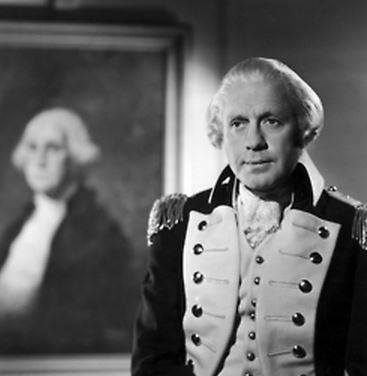
    If you’re looking for something unusual to listen to on this Presidents Day weekend, here are a couple of links to extremely rare symphonies inspired by Lincoln, neither of which, to my knowledge, has ever received a commercial recording:

    Daniel Gregory Mason’ Symphony No. 3 “Lincoln” (1936)

    Jaromir Weinberger’s “Lincoln Symphony” (1941)

    Yes, that’s the same Weinberger who composed “Schwanda the Bagpiper!”

    #AbrahamLincoln


  • City Mice in the Country Movie Music

    City Mice in the Country Movie Music

    by 

    in
    5 responses

    The Jack Benny comedy “George Washington Slept Here” has only the flimsiest connection to Presidents Day. Why, a dream sequence, in which Benny and Ann Sheridan are dressed like George and Martha Washington, was even cut from the film. Nevertheless, music from “George Washington Slept Here” will be heard on “Picture Perfect” this week, as the focus is on “city mice” in the country.

    Of course there are many, many movies about “city mice” and “country mice” – those from the city displaced to a rural setting, and those from the country dazzled by the city. These often take the form of fish-out-of-water comedies. But a trip the country can also be restorative, or even have redemptive qualities. Though in the end, more often than not, the central characters return to their place of origin.

    “Witness” (1985) employs elements of both “city mouse” and “country mouse.” The plot is set in motion by the witness of a murder by an Amish boy at Philadelphia’s 30th Street Station. The investigation reveals a vein of corruption in the Philadelphia Police Department, forcing a wounded detective, John Book (played by Harrison Ford), to lay low among the Amish. There are certainly comic elements, but also fascinating dramatic possibilities, in throwing together these figures from two very different cultures.

    The music was by Maurice Jarre. Jarre is best known for his scores presented on large orchestral canvases, for films like “Lawrence of Arabia” and “Dr. Zhivago.” But by the 1980s, he was experimenting with electronic music in films like “The Year of Living Dangerously,” “Mosquito Coast,” and “Dead Poets Society.” The approach worked particularly well in “Witness.”

    Another police thriller, “On Dangerous Ground” (1952), throws together a detective with definite anger management issues (played by Robert Ryan) with the backwoods father of a murder victim (played by Ward Bond) for a wild mountain manhunt. Ryan finds redemption through his interactions with the suspect’s blind sister, played by Ida Lupino. Bernard Herrmann wrote the music. If you find yourself trying to identify the solo string instrument, it’s actually a viola d’amore, an instrument rarely heard outside of the Baroque.

    “George Washington Slept Here” (1942), based on the play by Moss Hart and George S. Kaufman, is a “fixer-up” comedy, kind of a precursor to “Mr. Blandings Builds His Dream House” and “The Money Pit,” with perhaps a touch of “Green Acres” thrown into the mix. Benny and Sheridan play a Manhattan couple fed up with city living. They transport their family to a dilapidated Bucks County farmhouse, with predictably disastrous results.

    The somewhat cartoonish music is by English-born composer Adolph Deutsch, one of the less remembered names of Hollywood’s Golden Age, although he scored such high profile films as “The Maltese Falcon” and “Some Like It Hot.” His is an old fashioned approach – at any moment you might expect to hear a “sad trombone” – but it’s wholly appropriate in a film that features abundant pratfalls.

    Finally, the Billy Crystal comedy “City Slickers” (1991) is built on the premise of three middle-aged Manhattanites who find renewal and purpose at a kind of cowboy fantasy camp. Jack Palance gives an Oscar-winning performance as the intimidating trail boss. The music is by Marc Shaiman. Shaiman has also written for Broadway. He may be best known for his score to the musical “Hairspray.”

    I hope you’ll join me, as “city mice” go to the country this week, on “Picture Perfect,” music for the movies, this Friday evening at 6:00 EST, on WWFM – The Classical Network and at wwfm.org.

  • Chamber Music Concerts in Princeton & Solebury

    Chamber Music Concerts in Princeton & Solebury

    by 

    in
    4 responses

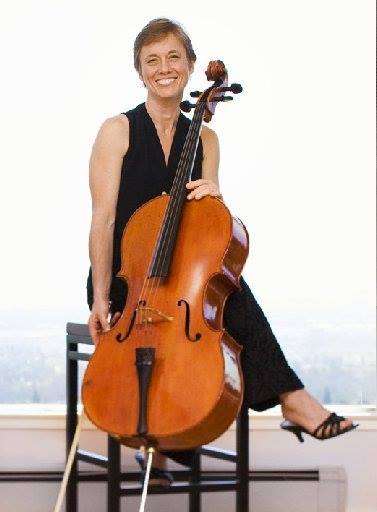
    Good things come in small packages on upcoming concerts of two area chamber music ensembles. Richardson Chamber Players will present “England’s Green and Pleasant Land” at Princeton University’s Richardson Auditorium on Sunday, and Concordia Chamber Players will present “All Things Strings” at Trinity Episcopal Church, Solebury, PA, on Feb. 26. Both concerts will begin at 3 p.m.

    The Princeton University Concerts program will highlight folk-inflected works by Ralph Vaughan Williams (“Merciless Beauty,” on texts of Geoffrey Chaucer), Gerald Finzi (“Five Bagatelles” for clarinet and piano), John McCabe, and Benjamin Britten, with a classic example of the renowned English facility for writing for string orchestra, Edward Elgar’s “Serenade for Strings in E minor.”

    Concordia will present string music on a more intimate scale, with quartets by Philip Glass and Claude Debussy alongside a quintet by Antonin Dvořák.

    Glass, who turned 80 on Jan. 31, wrote his String Quartet No. 2 in 1983. It grew out of incidental music he composed for a production of Samuel Beckett’s “Company.” Debussy’s String Quartet in G minor, from 1893, is universally regarded as one of the greatest of French string quartets; it is certainly one of the most popular.

    Dvořák wrote his String Quintet No. 3 in E-flat major, also from 1893, during the same trip that yielded his more famous “American” String Quartet. The composer had been lured to the United States from Bohemia to take up the directorship of the National Conservatory of Music in New York. He summered at a Czech community in Spillville, IA. The environment obviously agreed with him, as both works share an ingratiatingly sunny disposition. The music brims with Bohemian inflections and American inspiration.

    You can read more about it in my article in today’s Trenton Times.

    http://www.nj.com/times-entertainment/index.ssf/2017/02/classical_music_richardson_cha.html


    PHOTOS (clockwise from left): Concordia artistic director Michelle Djokic, Glass, Debussy and Dvořák


  • Presidents Day Party on WPRB with Presidential Music

    Presidents Day Party on WPRB with Presidential Music

    by 

    in
    3 responses

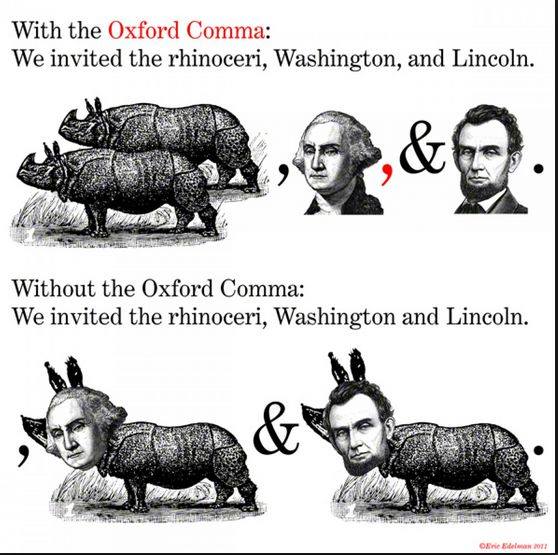
    It will be quite the party as we celebrate Presidents Day this morning on WPRB, what with the rhinoceri, Washington and Lincoln.

    We’ll have a full playlist of presidential music, with works inspired by the Gettysburg Address, the legend of the cherry tree, and “George Washington slept here.” We’ll also have room for nods to some other presidents, including Chester Alan Arthur, who disliked “Hail to the Chief” so intensely that he commissioned John Philip Sousa to write a new piece.

    Wasn’t the whole reason we tossed out the English because of their pedantic Oxford commas? Join me as we stick a feather in our cap and call it what we want, from 6 to 11 EST, on WPRB 103.3 FM and at wprb.com. Our commas are nothing if not uncommon, on Classic Ross Amico.


Tag Cloud

Aaron Copland (93) Beethoven (95) Composer (114) Film Music (144) Film Score (143) Film Scores (255) Halloween (94) John Williams (195) KWAX (229) Leonard Bernstein (104) Marlboro Music Festival (125) Movie Music (159) Mozart (91) Opera (213) Philadelphia Orchestra (89) Picture Perfect (174) Princeton Symphony Orchestra (109) Radio (88) Ross Amico (244) Roy's Tie-Dye Sci-Fi Corner (290) The Classical Network (101) The Lost Chord (269) Vaughan Williams (105) WPRB (397) WWFM (881)

DON’T MISS A BEAT

Receive a weekly digest every Sunday at noon by signing up here


RECENT POSTS