• Jerome Lowenthal Celebrates 85 Years

    Jerome Lowenthal Celebrates 85 Years

    by 

    in
    6 responses

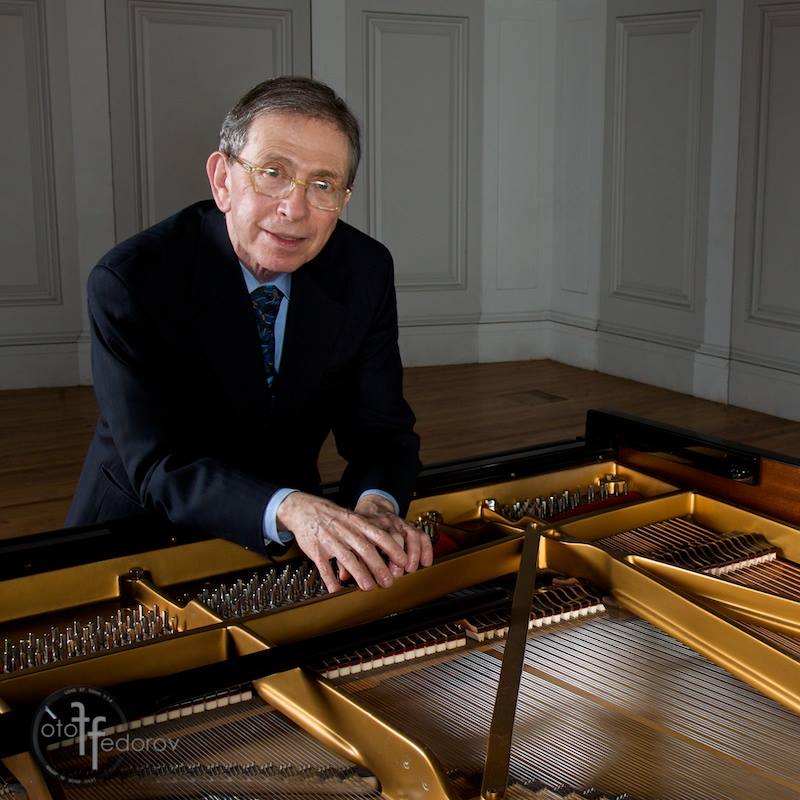
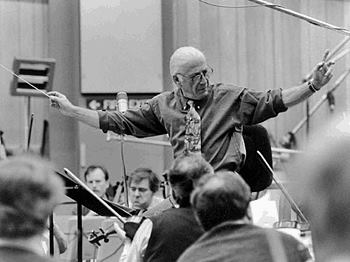
    Today is the 85th birthday of Philadelphia-born pianist Jerome Lowenthal. Now chair of the piano department at the Juilliard School, here he is in 1968 with Leopold Stokowski, rehearsing Rachmaninoff’s “Rhapsody on a Theme of Paganini.”

    And in a more recent interview:

    https://www.livingtheclassicallife.com/26-jerome-lowenthal/2015/10/16/episode-26-jerome-lowenthal#comments-56207791e4b0b077de882b14=


  • Angus Scrimm Tall Man Writer?

    Angus Scrimm Tall Man Writer?

    by 

    in
    6 responses

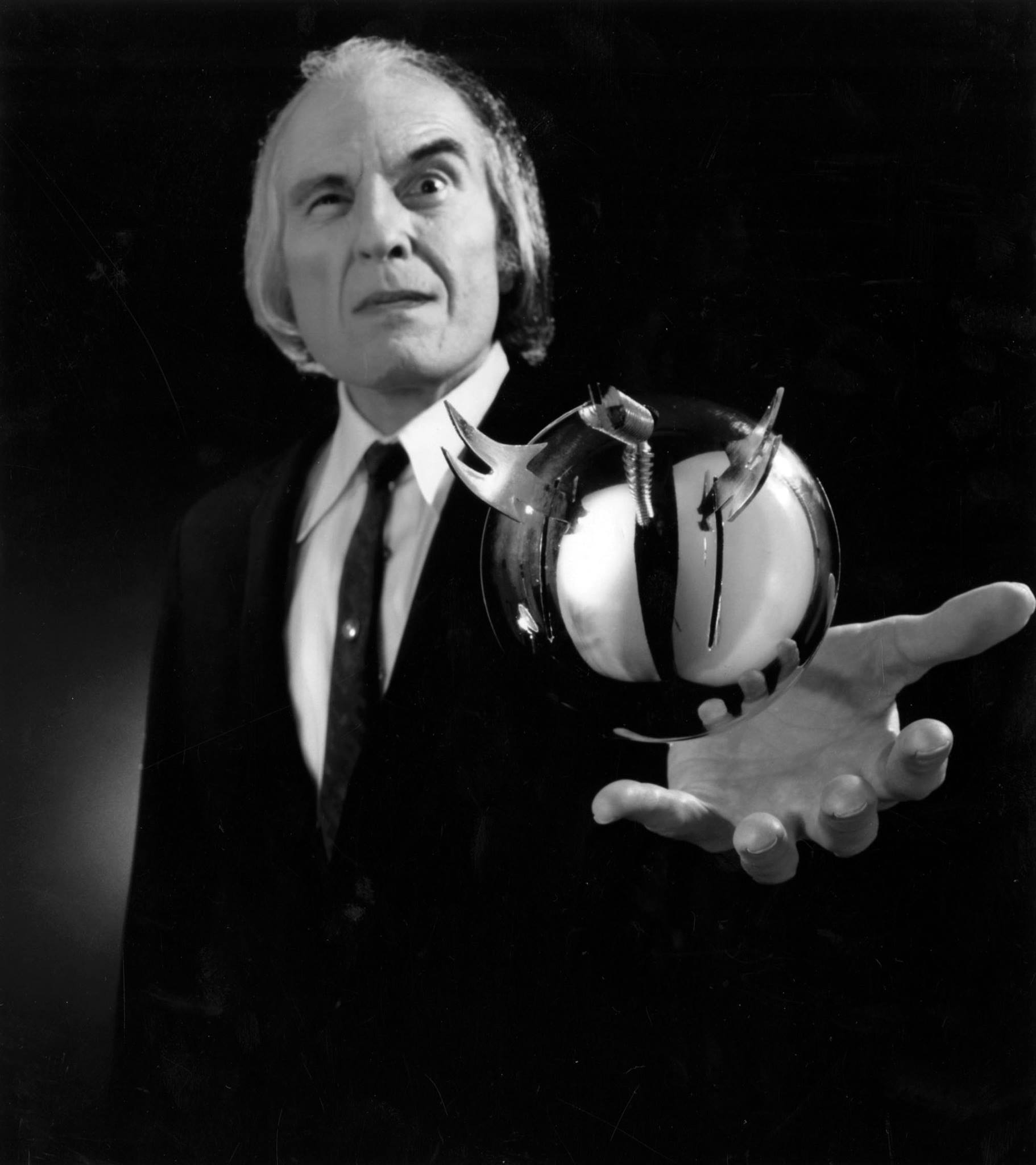
    I find it amusing that the late Angus Scrimm (left), the B-movie actor best known for playing the creepy mortician identified as The Tall Man in five “Phantasm” movies, had an earlier, probably less lucrative career as a freelance writer, providing liner notes (under the name Rory Guy) for albums like this one (right). Scrimm died last year at the age of 89, shortly after filming the last(?) of the series, “Phantasm: Ravager.”

    https://www.youtube.com/watch?v=Gy3z96Vyh_g


  • Trains in Movies Music from Hitchcock and More

    Trains in Movies Music from Hitchcock and More

    by 

    in
    One response

    Traditionally, trains have been very good for drama. They are symbols of departures and arrivals. They are conveyors of prisoners and vehicles of escape. They are objects of romance and objects to “hobo around” on. They are the harbingers of civilization, and they are transports be robbed. You can fight on top of them. You can make out with Eva Marie Saint, or you can protect Marie Windsor so that she can testify against the mob. You can shuffle off to Buffalo.

    For decades, trains have provided good escapist fun at the movies. This week on “Picture Perfect,” we’ve got an hour of music from four memorable films in which trains play an important role.

    In “Strangers on a Train” (1951), arguably Alfred Hitchcock’s most underrated film of the 1950s, Farley Granger plays a tennis pro who unwittingly becomes involved in a double-murder plot through a chance encounter on a passenger train with a psychopath named Bruno (probably Robert Walker’s finest performance). The music is by Dimitri Tiomkin, who scored four films for Hitch – including “Shadow of a Doubt,” “I Confess,” and “Dial M for Murder.”

    Burt Lancaster stars in a film titled, simply, “The Train” (1964), as a reluctant railroad inspector who is persuaded to join the French Underground’s efforts to delay the transport of masterpieces looted from the museums of Paris by the Nazis, since Allied liberation of France is imminent. Paul Scofield plays the art-loving German officer determined to move the art at all costs. Real trains were destroyed in the making of the film, real dynamite was used, and Lancaster, as was often the case, did all his own stunts. The score is by Maurice Jarre.

    “Murder on the Orient Express” (1974) is based on one of the best-known Agatha Christie vehicles conceived for her recurring character, the celebrated detective Hercule Poirot. Albert Finney plays Poirot most memorably in this, the first and best of the all-star Christie thrillers, set on a long-distance passenger train connecting Paris to Istanbul. He’s joined by Lauren Bacall, Martin Balsam, Ingrid Bergman, Sean Connery, John Gielgud, Anthony Perkins, Richard Widmark, and Michael York. The unforgettable score is by Richard Rodney Bennett.

    Finally, we turn to the lighthearted caper film “The Great Train Robbery” (1979), starring Sean Connery, Donald Sutherland, and Leslie-Anne Down. Michael Crichton wrote the screenplay, after his own novel, which in turn was based on an actual historical incident – an 1855 heist, in which an unbelievable amount of gold disappeared from a moving train. Crichton also directed the film. The music is by Jerry Goldsmith.

    We’ll be taking the train today, on “Picture Perfect,” this Friday evening at 6:00 EST, on WWFM – The Classical Network.


    Since today happens to be Jerry Goldsmith’s birthday, join me a little early, as I’ll be cueing up a medley of some of his greatest film themes, to help get you in the mood, starting around 5:30.
  • Leontyne Price 90th Birthday Celebration

    Leontyne Price 90th Birthday Celebration

    by 

    in
    2 responses

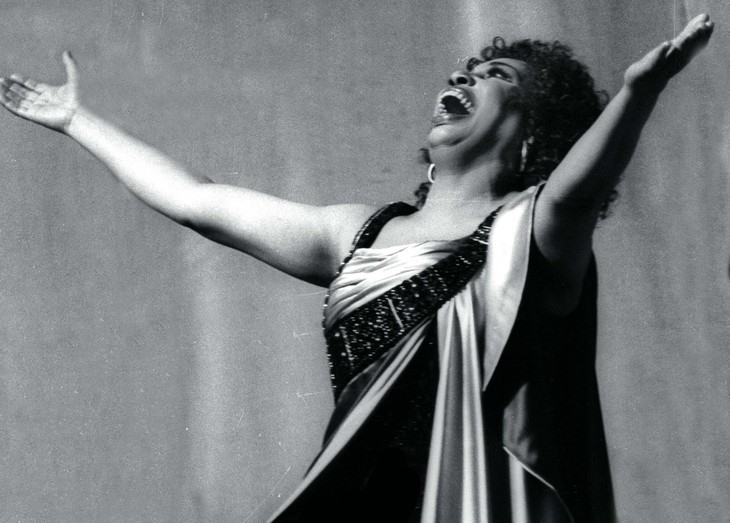
    With talent like that of Leontyne Price, the Price is always right. Join me today on The Classical Network, as we celebrate this extraordinary soprano on her 90th birthday.

    We’ll hear a recording of the Verdi Requiem, made toward the beginning of her career, in the late 1950s, opposite Jussi Björling, who was getting toward the end of his (he died three months later). Filling out the vocal quartet will be Rosalind Elias and Giorgio Tozzi. It’s a fascinating document full of great singing and an unusual, mercurial touch lent by conductor Fritz Reiner, who will lead the Vienna Philharmonic Orchestra.

    Then we’ll have a blistering account of Beethoven’s Symphony No. 9, Price lending her voice to Schiller’s celebratory text, alongside Maureen Forrester, Philadelphia’s David Poleri, and Giorgio Tozzi, as a possessed Charles Munch shovels hot coals under the players of the Boston Symphony Orchestra.

    Finally, a more intimate side of Price will be revealed in the “Hermit Songs” of Samuel Barber, with the composer at the piano.

    All this to follow our noontime concert today, which will feature the Quatuor Modigliani in music of Mozart, Schumann and Dvorak, on a program captured live at the Cathedral Church of the Nativity in Bethlehem, Pa., as presented by the Chamber Music Society of Bethlehem.

    At 6:00, it’s “Picture Perfect,” music for the movies. I’ll fill you in on a little more about that on my Facebook page later on this afternoon. Suffice it to say, if you tune in early, I will treat you to a medley of some of Jerry Goldsmith’s best-loved themes on this, the anniversary of his birth. Goldsmith died in 2004.

    It will be a long day for Classic Ross Amico, but worth every minute, from noon to 7 p.m. EST, on WWFM – The Classical Network and at wwfm.org.


  • Dryden Ensemble: Music & Medicine

    Dryden Ensemble: Music & Medicine

    by 

    in
    3 responses

    Okay, so the Philadelphia Orchestra is going to be at McCarter Theatre in Princeton on Saturday night at 8:00. Denis Kozhukhin will be the soloist for Rachmaninoff’s Piano Concerto No. 3, and Stéphane Denève, the orchestra’s principal guest conductor (whose contract has just been extended through the 2019-20 season), will conduct. I know. They don’t need my help. The concert is an automatic sell-out, or should be.

    Instead, allow me to direct your attention to The Dryden Ensemble, which will administer “Le Médicin & La Musique,” a program that’s good for what ails you, in two concerts, on Saturday at 7:30 p.m. at Trinity Episcopal Church, Solebury, PA, and Sunday at 3 p.m. at Miller Chapel on the campus of Princeton Theological Seminary.

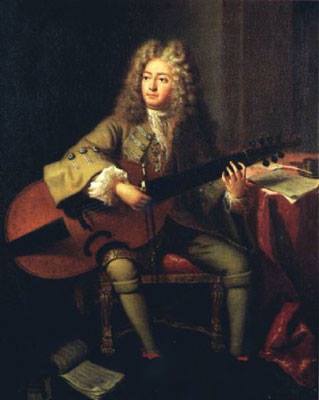
    Central to the program of medical curiosities will be a musical response by Marin Marais to his own gallbladder surgery, “Le tableau de l’opération de la taille” (“A Description of the Removal of a Stone”), rendered on bass viol and continuo.

    Marais’ surgery was successful, if painful, in an era before modern anesthesia. “They held you down,” says Dryden’s artistic director Jane McKinley. “They also didn’t use alcohol, because they were afraid that it would affect the blood. Because of the particular nature of the surgery, I’m not posting a picture in the program!”

    Not so fortunate was Jean-Baptiste Lully, the most powerful musician at the court of Louis XIV. “Lully had his own issues,” McKinley says. “He was performing his ‘Te Deum’ to celebrate the success of surgery that was performed on Louis XIV and inadvertently hit his foot with the pointed end of the staff that he was conducting with.” It was Lully’s custom to strike the floor with a heavy staff in order to keep time for larger ensembles.

    “So that got infected and turned to gangrene, and he refused to have his toe amputated. Then it spread to his leg. He refused to have his leg amputated, because he wanted to be able to be able conduct his own compositions and to dance – he was a very fine dancer – and he died a little over two months later.”

    The ensemble will perform a piece written in Lully’s memory, “Le tombeau de Monsieur Lully,” by Jean-Féry Rebel. “A tombeau is almost like a funerary tribute to a mentor or composer or writer, and this one is particularly effective,” McKinley says.

    Also on the program will be two works for solo harpsichord, “La convalescente” (“The Convalescent”) by Francois Couperin and ‘L’affligée” (“The Afflicted One”) by his cousin, Armand-Louis Couperin.

    Actor Paul Hecht will provide readings from French medical writings of the 17th and 18th century.

    I prescribe reading more about it in my article in today’s Trenton Times.

    http://www.nj.com/times-entertainment/index.ssf/2017/02/classical_music_dryden_ensembl.html


    Marin Marais’ rolling stone collects no moss in two concerts to be performed by the Dryden Ensemble this weekend


Tag Cloud

Aaron Copland (93) Beethoven (95) Composer (114) Film Music (144) Film Score (143) Film Scores (255) Halloween (94) John Williams (195) KWAX (229) Leonard Bernstein (104) Marlboro Music Festival (125) Movie Music (159) Mozart (91) Opera (213) Philadelphia Orchestra (89) Picture Perfect (174) Princeton Symphony Orchestra (109) Radio (88) Ross Amico (244) Roy's Tie-Dye Sci-Fi Corner (290) The Classical Network (101) The Lost Chord (269) Vaughan Williams (105) WPRB (397) WWFM (881)

DON’T MISS A BEAT

Receive a weekly digest every Sunday at noon by signing up here


RECENT POSTS