Finally, finally, FINALLY, the much-postponed Patrick Read Johnson was our guest last night on Roy’s Tie-Dye Sci-Fi Corner. This time, neither wild horses nor Fios-munching squirrels hindered an hour of absorbing anecdotes about Steven Spielberg, George Lucas, and the making of 5-25-77.
We covered a lot of ground, with Johnson talking about the long and winding road to the realization of his autobiographical coming-of-age tale that coalesces around the opening of “Star Wars,” on May 25, 1977. Even so, there’s plenty of material we never touched on. Perhaps at some point there will be a sequel? For now, you can enjoy what we’ve got, here:
Next Friday, Roy’s guest will be Bonnie Moss, who will share stories about her longtime friendship with actor Leonard Nimoy.
Then on Sunday, Roy and I will reconvene on a special night to talk about James Cameron’s first sequel to surpass expectations, “Aliens” (1986). Is it better than Ridley Scott’s creepy original? It certainly is a fresh take, and a thrilling one.
Cameron, of course, would go on to prove it was no accident with the successful sequels “Terminator 2: Judgment Day” and “Avatar: The Way of Water.”
We’ll do our best to Alien-ate everyone, on “Roy s Tie-Dye Sci-Fi Corner,” when we livestream on Facebook, YouTube, etc., next Friday and Sunday evenings at 7:30 EST!
This week on “Picture Perfect,” things will get pretty steamy, though not in the way you might think. We’ll have an hour of scores from films that exemplify the science fiction subgenre known as “steampunk.”
Generally speaking, steampunk employs forward-looking technologies and gadgetry – in many cases literally powered by steam – in incongruous, quasi-Victorian settings.
We’ll hear selections from Martin Scorsese’s “Hugo” (2011), with its abundant gears, steam, and free-writing automaton, with music by Howard Shore; “The Golden Compass” (2007), with its carriages, old-fashioned air ships, and vintage arctic gear, with music by Alexandre Desplat; “Wild Wild West” (1999), with its cowboys, proto-James Bond gadgetry, and Gustave Eiffel-style iron spider, with music by Elmer Bernstein; and “Time After Time” (1979), with Jack the Ripper, H.G. Wells, and a time machine of his invention, with music by Miklós Rózsa.
We’re powered by steampunk this week, on “Picture Perfect,” music for the movies, this Saturday evening at 6:00 EST, on WWFM – The Classical Network and wwfm.org.
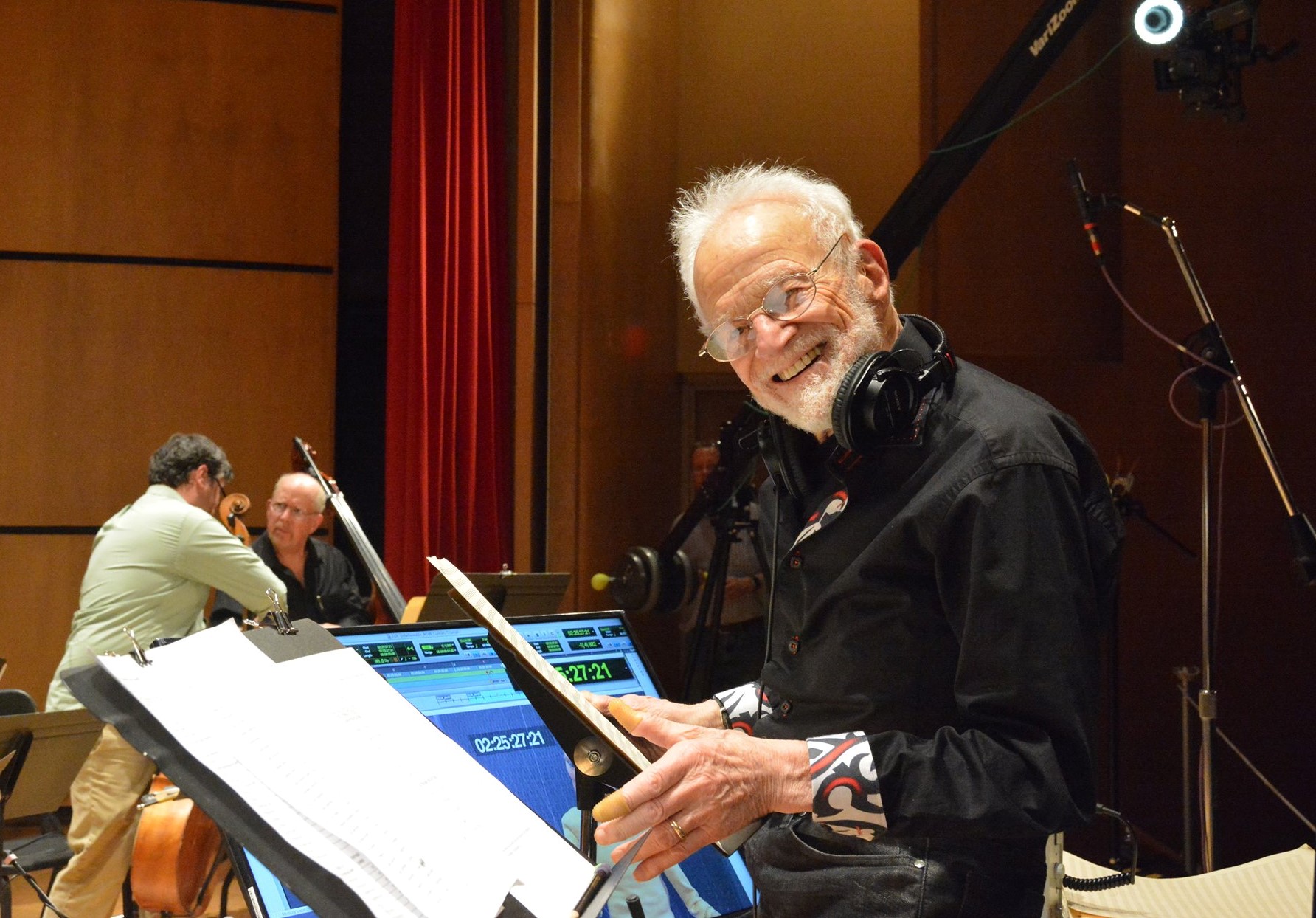
I am very sorry to learn that Gerald Fried has died.
Fried was the composer of nearly 300 film and television scores.
A schoolmate of Stanley Kubrick, he provided the music for the director’s earliest projects (up until “Spartacus”). The best known of these are “The Killing,” with Sterling Hayden, and “Paths of Glory,” with Kirk Douglas.
His fruitful collaborations with producer David L. Wolper yielded “Birds Do It, Bees Do It,” which earned Fried an Academy Award nomination, and the landmark miniseries “Roots,” which won him an Emmy.
He composed original music for five episodes of “Star Trek, in its original series incarnation, including those for fan favorites “Shore Leave” and “Amok Time” (source of the much-parodied “Star Trek fight music”). Selections from these scores were recycled in subsequent installments of the series.
He also contributed to “Riverboat,” “Shotgun Slade,” “Gilligan’s Island,” “The Man from U.N.C.L.E.,” “Mission: Impossible,” and many others.
Between 1948 to 1956, Fried was principal oboist of the Dallas Symphony Orchestra and the New York Little Orchestra.
His final film project was the science fiction parody “Unbelievable!!!!” in 2020. In his later years, he also wrote screenplays.
In 2021, we were very lucky to have him as a guest on Roy’s Tie-Dye Sci-Fi Corner. Roy characterizes his appearance as a very special interview. I concur. He impressed me as a kind and generous man.
At the time of his death, Fried was 95-years-old. R.I.P.
Fried performs music from three of his classic “Star Trek” scores – including the iconic fight music from “Amok Time”:
Finnegan
Ruth
Spock vs. Kirk
“Paths of Glory”
“Birds Do It, Bees Do It”
Fried and family perform music from “Roots”
Gerald Fried conversing with us on “Roy’s Tie-Dye Sci-Fi Corner”
“Altered States,” you may recall, stars William Hurt as a psychopathologist whose experiments with sensory deprivation tanks and hallucinatory drugs result in strobe-lit episodes of biological devolution. Mr. Hyde has nothing on these regressions that have him turning into an ape man on the prowl for goat meat at the city zoo, or at their most extreme, transforming into a kind of whirlpooling proto-consciousness.
Nudity and religious symbolism? Well, it is a Ken Russell film, and one of his best, actually, because it’s actually rooted in character and plot. (The screenplay is by Paddy Chayefsky.)
Russell later recalled, “After a tiring day at the Burbank Studios working on ‘Altered States’ I was out for an evening of relaxation with a much loved and familiar masterpiece the memory of which was blown into oblivion by the music of a name totally unfamiliar to me – John Corigliano. Reading from my program that he was a contemporary composer I braced myself for thirty minutes of plinks and plunks that pass for music these days. I was in for a shock, a surprise, a revelation.
“Not since Bartok’s ‘Miraculous Mandarin’ have I been so excited in the concert hall. Here were sounds of magic and grandeur I had long since despaired of hearing from a modern musician. . . . if only he would compose the music for ‘Altered States’ instead of some commercial hack we directors are usually saddled with, I thought wistfully. But that’s just a dream.
“I should have known better – Hollywood is the place where dreams come true.”
The music he encountered on that Los Angeles Philharmonic concert? Corigliano’s Clarinet Concerto.
Corigliano composed his concerto for legendary New York Philharmonic principal clarinetist Stanley Drucker. The first movement, “Cadenzas,” is virtuosic right out of the box. When Drucker first looked at the score, he remarked, “How am I gonna play this?” The second movement, the soul of the piece, serves as an elegy to the memory of Corigliano’s father, longtime concertmaster of the Philharmonic, who died in 1975. The third movement evocates the antiphonal style of Renaissance composer Giovanni Gabrieli.
The work was given its first performance by Drucker and the New York Philharmonic, conducted by Leonard Bernstein, on December 6, 1977. It became the first concerto for the instrument by an American composer since Aaron Copland’s Clarinet Concerto to enter the repertoire.
Russell was so impressed with the piece when he heard it in Los Angeles that he offered Corigliano his first assignment scoring a feature film. (Earlier, he had written music for a documentary, “A Williamsburg Sampler.”) His music for “Altered States” would earn him an Academy Award nomination.
In the film, Corigliano’s score brilliantly complements Russell’s psychedelic flights of fancy. It’s not hard to understand why the composer caught the Academy’s attention. Ultimately, the Oscar that year went to “Fame,” of all things, but Corigliano revisited his score for a concert suite which he titled “Three Hallucinations.”
Later, he would win an Academy Award for his work on “The Red Violin.” He would also be honored with a Pulitzer Prize, for his Symphony No. 2, five Grammys, and a Grawemeyer Award for Contemporary Composition. His first opera, “The Ghosts of Versailles,” would be commissioned by the Metropolitan Opera for its 100th anniversary.
Even so, Hollywood can be a fickle town. He may have won an Oscar, but that didn’t shield him from the indignity of having his score for the Mel Gibson film “Edge of Darkness” chucked out. The studio decided it wanted to take a more bankable approach, and because of his obligations in the concert world, Corigliano was not available for rewrites. So the assignment was given to Howard Shore. Rejection stings, yet Corigliano has stated he remains open to the prospect of scoring another film, if the right project should present itself.
But the movies need John Corigliano more than he needs them.
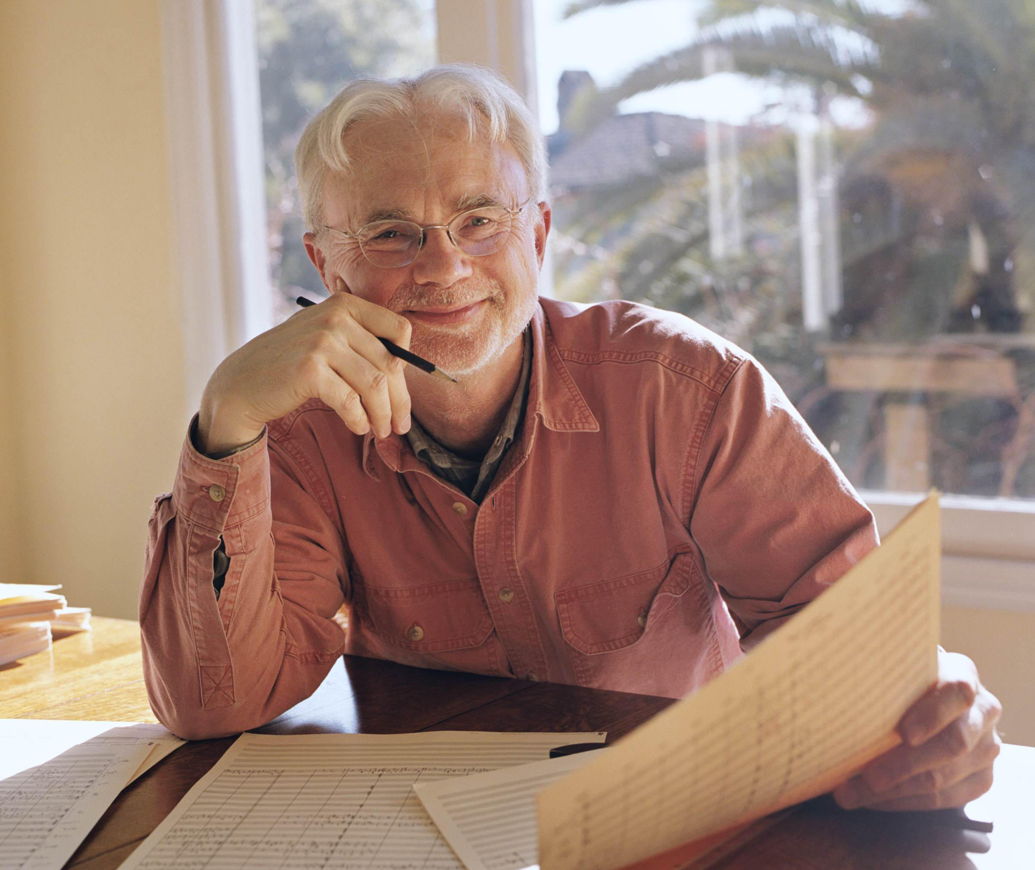
John Adams, the composer, may be no relation to John Adams, our second president, but today he is most definitely feeling the spirit of “76.” Adams was born on this date in 1947. Considered by some to be America’s preeminent living composer, he emerged from the haze of Minimalism to become the most versatile and substantial of early proponents of the style. In 2003, he was awarded the Pulitzer Prize for Music for his 9/11 memorial “On the Transmigration of Souls.”
Personally I’ve always been divided on Adams’ music. Some of it I find to be fun; some of it I find to be quite good; some of it I find to be boring, clumsy, or downright embarrassing. But what do I know? I’m just some dope posting on the internet.
My subjective evaluations do nothing to mar Adams’ influence or his standing. Happy birthday to John Adams on his 76th birthday, and congratulations on his long-term success!
FUN FACTS: Adams’ name may recall our second president, or perhaps his son, sixth president John Quincy Adams, but the composer’s middle name is actually Coolidge. Presidents John Adams and Calvin Coolidge were third cousins five times removed, through John and Priscilla (Mullins) Alden of the Mayflower fame. Admittedly, none of this has to do with the composer, beyond the fact that he was indeed named for Adams the president, who had no middle name.
A few of my Adams favorites:
“Short Ride in a Fast Machine”
“Shaker Loops”
“Nixon in China,” here introduced by Walter Cronkite


5 responses