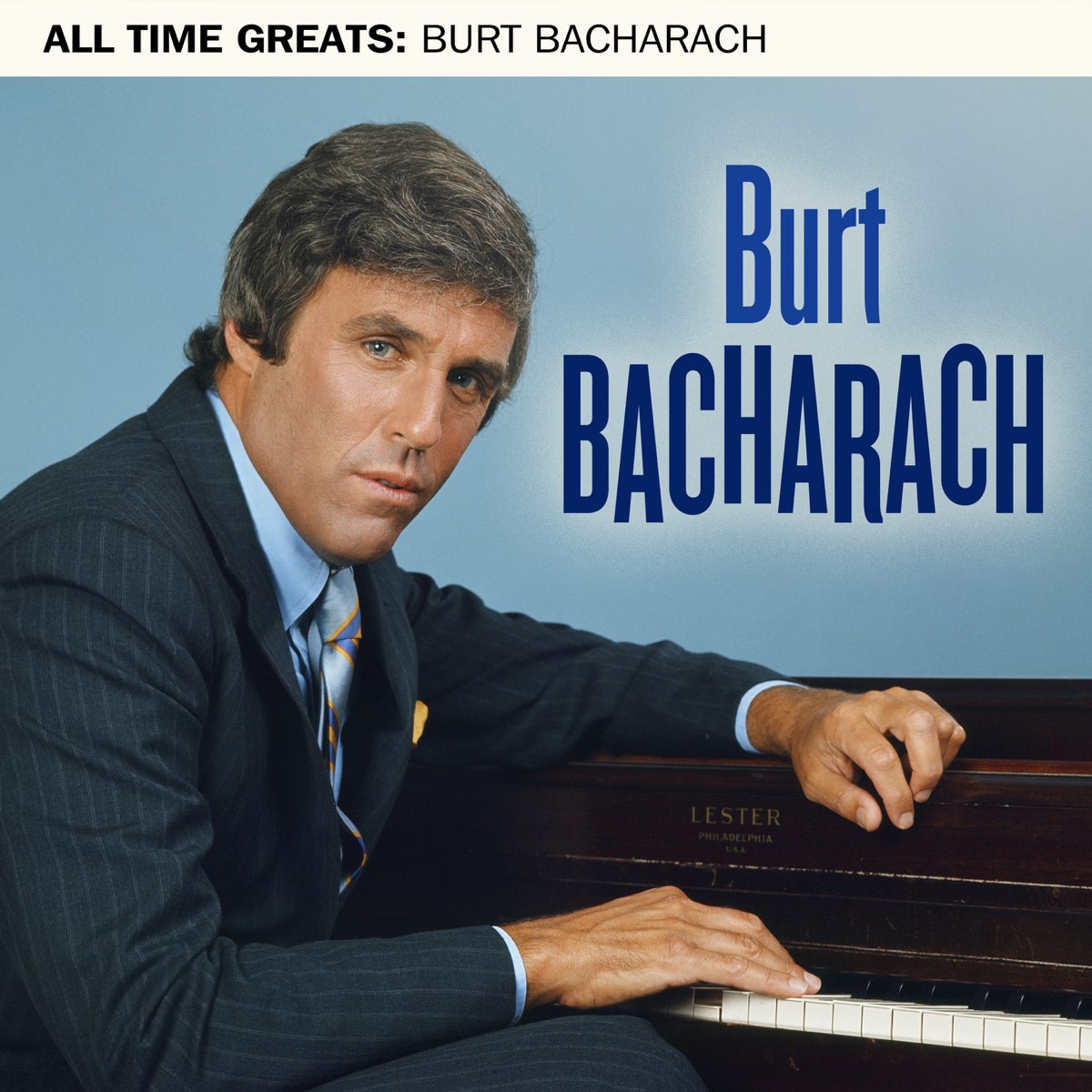
Burt Bacharach, perhaps the least likely pupil of Darius Milhaud, has died. Bacharach, the award-winning composer of such indelible hits as “(There’s) Always Something There to Remind Me,” “Don’t Go Breakin’ My Heart,” “Alfie,” “Casino Royale” (1966), “I Say a Little Prayer,” “Raindrops Keep Fallin’ on My Head,” “Arthur’s Theme (Best That You Can Do),” “Heartlight,” “That’s What Friends Are For” and, yes, the theme to “The Blob” (1958), among many others, also studied with Henry Cowell and Bohuslav Martinu. Under Milhaud’s supervision, he composed a Sonatina for Violin, Oboe and Piano. Obviously, his destiny – and his fortune – lay elsewhere. Bacharach was 94 years-old. R.I.P.
Earlier today, I posted that the late Burt Bacharach was a pupil of Darius Milhaud. He also studied with Henry Cowell and Bohuslav Martinu. For Milhaud, he wrote a Sonatina for Violin, Oboe and Piano. I don’t know that the work has ever been recorded. At any rate, I’ve never been able to locate a copy. Bacharach talks a bit more about it in this excerpt from an interview he gave with NPR back in 2014.
“Darius Milhaud taught me at the Music Academy of the West, and he’s this brilliant French composer, wonderful man. I’m taking this composition class with him where I’d written a piece, a sonatina, for violin, oboe and piano. You know, it was very extreme music that people were writing – we were all influenced by 12-tone music, Alban Berg.
“I had this one piece at the end of the semester that I got to play for Milhaud – not with violin, not with the oboe; I just had to just do it at the piano. I was very, very reluctant when it came to the second movement, because it was quite melodic instead of being harsh and dissonant [and] avant-garde. And he took me aside afterward, and maybe he sensed what I felt or maybe just his observation was: Never be ashamed of something that’s melodic, one could whistle. I said, ‘Wow.’ So that was a valuable lesson I learned from him. Never forgot that one. Never be afraid of something that you can whistle.”
It was announced yesterday that Gustavo Dudamel will be leaving the Los Angeles Philharmonic to take up the post of “music and artistic director” of the New York Philharmonic, beginning in 2026. The double-barrel title is bestowed in the same week as the announcement that Yannick Nézet-Séguin will now be “music and artistic director” of the Philadelphia Orchestra. Nézet-Séguin, who has been music director in Philly since 2012, renewed his contract through 2030.
Granted, both these gentlemen do a lot of heavy-lifting, more than justifying the compound-if-cumbersome descriptors. Dudamel, 42, has been a transformative force in L.A. He is, with the possible exception of Nézet-Séguin, our most visible and energetic young man of the podium. (Yannick, 47, is also music director of the Metropolitan Opera and his home orchestra, the Orchestre Métropolitain de Montréal.) I don’t know if the East Coast can handle the combined kinetic energy of Yannick and The Dude.
Dudamel carved out time for a whirlwind residency in Princeton in 2018. Although I got to meet him, our interview had to be conducted via email. Knowing Dudamel, he probably dashed off his responses in a limo on the way to the airport. You can learn more about The Dude and read our exchange at the link.
Happy birthday to the Master, 91 years-old today. I wish I could forget the horrible movie, because John Williams truly is the Last Jedi. Is there any doubt? Here’s a taste of what we can expect this summer.
John Williams is a living reminder of when the movies still had magic and soul. I will be forever grateful for everything this man has contributed to our entertainment and dreams of a better world.
Thanks for everything, and a very happy birthday, Maestro!
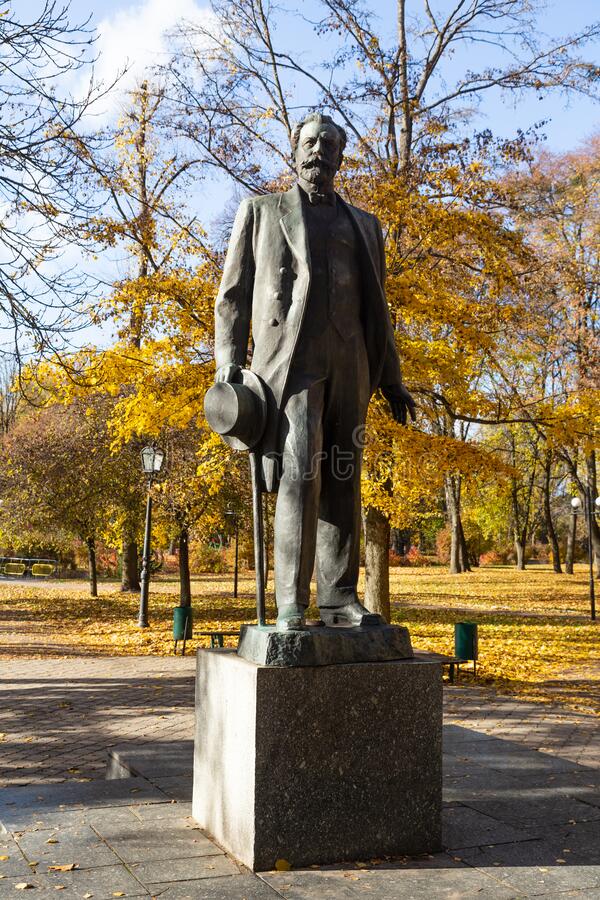
Favorite Tchaikovsky symphony? In my teens it was the “Pathétique,” easily. I was emotionally aligned with it, as I was with most Romantic music. I never much cared for the 5th, with its annoying recurring motto, except perhaps for the overheated slow movement. The 4th at the moment seems to be enjoying a bit of a vogue – as if it were ever out of style – as seemingly everyone has been programming it for the past season or two. Those are the three most popular.
But for several decades now my personal favorite must be the 2nd, the one that’s traditionally been identified as the “Little Russian.” The nickname stems from the fact that the work employs Ukrainian folksong. Certainly, the composer had a great deal of affection for Ukraine, though I’m guessing the combined implications in the subtitle of diminution and ownership might annoy present-day Ukrainians. Since the Russian invasion, I’ve seen it referred to several times as “Tchaikovsky’s Symphony No. 2, ‘Ukrainian.’” Will the new name stick? Only time will tell.
It wasn’t Tchaikovsky who subtitled the work anyway, but rather a friend, the critic Nikolay Kashkin. There was a big nationalist push in Russian music at the time, so Tchaikovsky’s folksong approach was embraced by his peers of the Mighty Handful, or the Russian Five (consisting of Balakirev and his disciples, Rimsky-Korsakov, Mussorgsky, Borodin, and Cui).
The symphony scored a resounding success when the finale was first played at the home of Rimsky-Korsakov on this date 150 years ago. Tchaikovsky wrote to his brother, Modest, that “the whole company almost tore me to pieces with rapture.”
The public loved it too. Conductors were eager to program it and critics were enthusiastic. It seems that only Cui, who later trashed Rachmaninoff’s 1st Symphony, disliked it.
Ultimately, Tchaikovsky would follow a different course and come to be viewed with suspicion by The Five, who looked upon his music as less Russo-centric and more cosmopolitan. But of course, Tchaikovsky would always be Russian to his core.
That said, the composer genuinely loved Ukraine. He wrote most of the symphony during a summer holiday with his sister’s family in Kamianka. He joked that he should dedicate the work to their elderly butler, who first sang him the folksong “The Crane” that would form the basis for the symphony’s finale.
Tchaikovsky nearly lost the manuscript on his return to Moscow, when he passed himself off as royalty in order to convince an uncooperative postmaster to hitch up his coach. It was only when he reached his next stop that he realized he had left his luggage behind. Full of nerves that the postmaster would have opened it and discovered his true identity, he sent back an intermediary to retrieve it, but the postmaster would not hand it over. He said he would only release it to the “prince” himself. So Tchaikovsky had to go back.
Much to his relief, the postmaster seemed to behave normally, so that the composer began to think he had not been caught in his lie. But as he was about to leave, he asked the postmaster’s name, and he replied, “Tchaikovsky!” It was only later that he learned that Tchaikovsky really was the postmaster’s name.
Despite its immediate success, somehow the composer was not entirely satisfied with the symphony and revised it extensively in 1879-80. Mostly, he rewrote the first movement and tightened up the last. His pupil, Sergei Taneyev, was not alone in the opinion that these changes weakened the work, rather than strengthened it. Even so, it is the revised version we usually hear today.
In whatever form, the work makes me happy, having heard memorable performances of it with Mstislav Rostropovich on the podium and at an outdoor concert from a makeshift stage in Philadelphia’s Rittenhouse Square. You might say, I have always had great affection for this “Little” symphony.
A brisk performance of the revised version (1879-80)
The rarely-heard original version (1872)
Tchaikovsky’s house, yet another casualty of the war in Ukraine


11 responses