• Mars Movies Music Conspiracy & Adventure

    Mars Movies Music Conspiracy & Adventure

    by 

    in
    5 responses

    This week on “Picture Perfect,” we’re off to Mars – or are we?

    “Capricorn One” (1978) posits, in true conspiracy theory fashion, that the first manned mission to Mars is a fabrication, filmed on a sound stage. However, when the actual capsule burns up upon re-entry into the earth’s atmosphere, the government attempts to cover it up, and the astronauts are sent scrambling for their lives. This is the film in which O.J. Simpson eats a rattlesnake. The cast also includes Elliott Gould, James Brolin, Sam Waterston, Hal Holbrook, and Karen Black. Jerry Goldsmith wrote the propulsive score.

    The Red Planet is also the destination of the crew of Mars Gravity Probe 1, in “Robinson Crusoe on Mars” (1964). In events which loosely parallel the trajectory of Daniel Defoe’s classic novel, commander Paul Mantee survives a crash on the seemingly desolate planet, along with the mission’s test monkey. Later, he develops a friendship with an escaped alien slave, whom he names Friday. The composer is Van Cleave.

    Van Cleave had much in common with Ferde Grofé. Yes, THE Ferde Grofé – he of “The Grand Canyon Suite.” You’ll recall Grofé acted as an orchestrator for the Paul Whiteman Band. His most celebrated achievement in that capacity was his arrangement of George Gershwin’s “Rhapsody in Blue.”

    Cleave had also served as an arranger for Whiteman. Later, he pioneered the use of the theremin in his television scores, for series like “The Twilight Zone.”

    It was Grofé who allegedly introduced the theremin to outer space, with his music for “Rocketship X-M” (1950). “Rocketship X-M’s” unlikely premise is that the spacecraft of the title overshoots its target, the moon, and inadvertently ends up on Mars – a difference of many, many, many millions of miles! Lloyd Bridges heads the cast.

    Sadly, “John Carter” (2012), Walt Disney’s long-overdue adaptation of Edgar Rice Burroughs’ Martian tales, was branded a colossal flop. It’s a sad state of affairs when a 300 million dollar take is considered a disappointment! Though the film failed to live up to box office expectations, and some of the tropes established by Burroughs 100 years ago seem a little overly-familiar in the decades since the release of “Star Wars,” “John Carter” was nowhere near as bad as one was led to believe. It was certainly no worse than any other film of its kind made in recent years, and in fact a good deal better than many. And I would include in that assessment any of the recent Tolkien adaptations.

    True, most of the potential magic is lost in the usual over-reliance on computer effects, and the screenplay makes some unnecessary alterations to the books. But all in all, “John Carter” is a satisfying Martian adventure. Edgar Rice Burroughs never aspired to be Joseph Conrad. The film’s epic, evocative score is by Michael Giacchino.

    Prepare to see red with music from movies about the fourth planet, when Mars is our destination – whether by design, by accident, by conspiracy, or by unexplained means – on “Picture Perfect,” music for the movies, this Saturday evening at 6:00 EST, on WWFM – The Classical Network and wwfm.org!


  • FutureDude Sci-Fi with Jeffrey Morris

    FutureDude Sci-Fi with Jeffrey Morris

    by 

    in
    7 responses

    Tonight on Roy’s Tie-Dye Sci-Fi Corner, we look forward to welcoming back Jeffrey Morris of FutureDude Entertainment. Morris will talk about his film projects “Persephone,” “The Parallel Man,” and “Oceanus,” as well as an upcoming documentary about the Eagle, the iconic ship from “Space: 1999.”

    A child of the Apollo era, Morris was instilled with an early love of science. In the wake of “Star Wars,” he also became fascinated with film and began to think about the nuts and bolts of cinema. This set him on a path, as a writer, producer, director, and production designer, which now has him telling speculative stories that might best be described as hard science fiction – fiction in which the laws of science and the plausible evolution of technology are honored, but NOT at the expense of crackerjack adventure.

    To get a taste of Morris’ inspiring vision, follow the link.

    Then join us tonight for a conversation with the extraordinary Jeffrey Morris. Fly with the Eagle, as we livestream on Facebook, YouTube, etc., this Friday evening at 7:30 EST!

    https://www.facebook.com/roystiedyescificorner


  • Mendelssohn: Underrated Genius and Musical Revolutionary

    Mendelssohn: Underrated Genius and Musical Revolutionary

    by 

    in
    5 responses

    I am starting to get just a little bit tired of hearing that if Felix Mendelssohn had never lived, music history would not have turned out any differently. He’s second-rate, he’s sentimental, he’s an academician, blah blah blah. When are these pompous idiots going to open their ears and acknowledge the fact that he was only one of the most influential composers of the 19th century? Especially in Germany, England and America, did any serious musician escape his sway?

    Mendelssohn was essentially adopted as England’s national composer. Figures from William Sterndale Bennett through Sir Arthur Sullivan gleefully played in his shadow. In fact, Mendelssohn was the hottest composer in England since Handel. Such a stranglehold did Handel and Mendelssohn have on English concertgoers’ affections that, in Germany, England was mocked as “Das Land ohne Musik” – The Land without Music. The best English composers were all German.

    But if the Germans were to be at all honest with themselves, they would have realized that all the best German composers were also followers of Mendelssohn. What about Wagner, you say, surely one of the most progressive composers who ever lived? There’s plenty of Mendelssohn in early Wagner. Ditto for Richard Strauss. As for the “second rank,” the more conservative school, just about everyone emulated Mendelssohn.

    Of himself, of course, Mendelssohn was one of the most astonishing of musical prodigies. He composed two of the most enduring masterpieces in the repertoire, the overture to a “Midsummer Night’s Dream” and the Octet for Strings, at 16 and 17 respectively. In terms of maturity and polish, these were certainly on a par with anything written by the teenaged Mozart.

    Yes, Mendelssohn was a traditionalist. He structured his music on foundations laid in the past. Even so, he cautiously ventured into the mists of Romanticism. Occasionally, he even subverted expectations, in works like his famous Violin Concerto. Furthermore, he was respectful, if not kind, to everyone, even those of whose music he disapproved.

    As a conductor, there’s no question he was one of the most influential musicians in Europe, if not the world. For twelve years, he led the Leipzig Gewandhaus Orchestra, an ensemble full of players who went on to distinction in their own right. He was admired for the precision of his performances. He was also the one who essentially drew up the blueprint for modern orchestras in developing a musical “canon.” He gave important premieres of music by his contemporaries, while also reviving works of Bach, Mozart, and Beethoven.

    In particular, he is credited with resuscitating the reputation of Johann Sebastian Bach, not only through his resurrection of the “St. Matthew Passion,” but in overseeing an edition of Bach’s organ works, along with an edition of Handel’s oratorios, both of which were published in England.

    So music history would have been quite different if not for Mendelssohn, thank you very much. He may not have been the most seismic of innovators, but there’s something to be said for being a master of one’s craft.

    Mendelssohn died in Leipzig, after a series of strokes, at the age of 38. Did he live up to his potential? Who among us is really qualified to judge? How much is one man expected to accomplish, anyway?

    No radio station in the world is going to devote a full day to Mendelssohn’s music. Since the death of Victoria, I don’t think Mendelssohn has ever really been fashionable, except perhaps at weddings. But who doesn’t love the overture to “A Midsummer Night’s Dream,” the Octet for Strings, the “Hebrides Overture,” the “Italian” Symphony, or the Violin Concerto in E minor?

    Morton Feldman once said, “The people you think are radicals might really be conservative. The people who you think are conservative might really be radical.”

    I don’t know that I would ever go so far as to label Mendelssohn a radical, but he most certainly did change the world, and those of us who love music would have been a lot poorer without him.

    Happy birthday, Felix Mendelssohn!


    IMAGE: Another view of Mendelssohn


  • Groundhog Day Six More Weeks Winter?

    Groundhog Day Six More Weeks Winter?

    by 

    in
    3 responses

    Happy Groundhog Day! Punxsutawney Phil, seers of seers, glimpsed his shadow this morning, prognosticating six more weeks of winter. So when does it start?

    Pour yourself another cup of coffee and join me in the singing of the Punxsutawney Phil song.


  • Fritz Kreisler & Jascha Heifetz: Fiddling Legends

    Fritz Kreisler & Jascha Heifetz: Fiddling Legends

    by 

    in
    2 responses

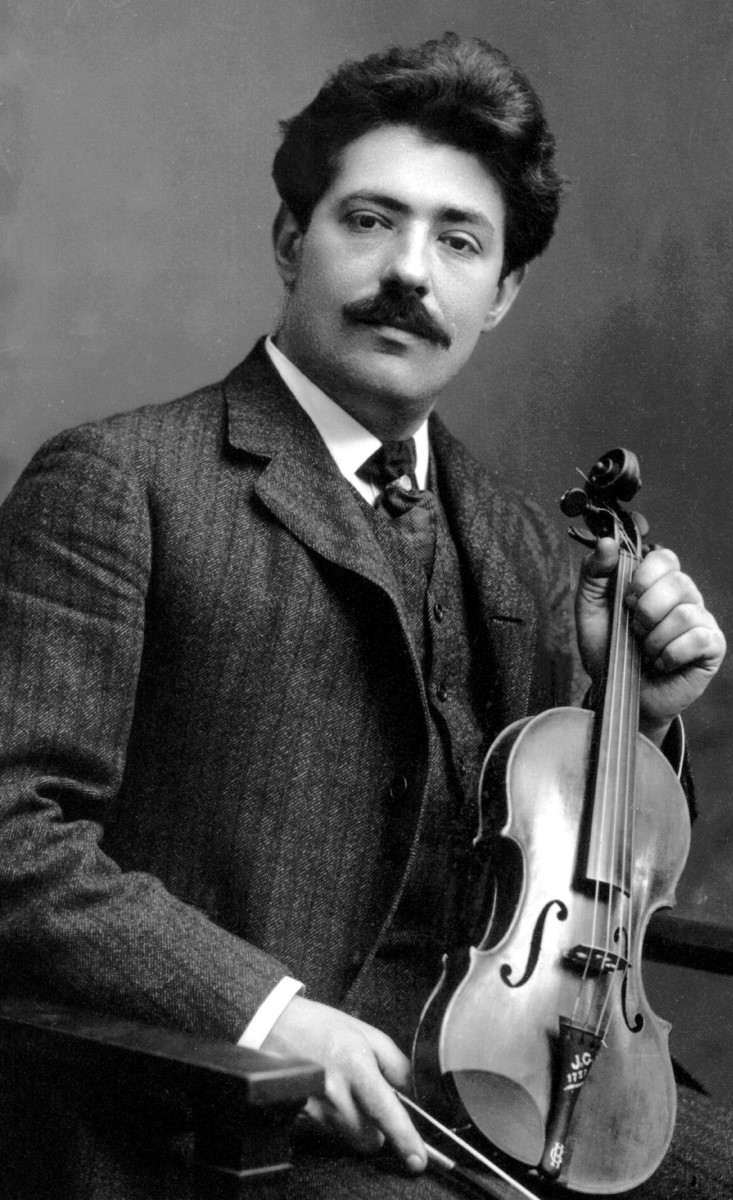
    February 2 is not just a day for groundhogs. It also marks the anniversaries of the births of two of the world’s greatest fiddlers.

    Fritz Kreisler, the sweet-toned confectioner and purveyor of violin bonbons, was born in Vienna on this date in 1875. Jascha Heifetz, the superhuman technician, who imbued perfection with tonal beauty, was born in Vilnius in 1901. Kreisler was warm, gregarious and easygoing. Heifetz acquired a reputation for a certain cool intensity.

    At a point, Kreisler ruffled feathers, not with his playing, but because he casually let slip that many of the 18th century “rediscoveries” he had used to charm audiences, critics, and musicologists were not in fact rediscoveries at all. Nor did they date from the 18th century. Rather they were composed by Kreisler himself. When the professionals complained, Kreisler shrugged.

    It would be futile to argue against his serious musical credentials. He gave the world premiere of the Elgar concerto and became a favorite recital partner of Sergei Rachmaninoff. A famous anecdote relates that Kreisler and Rachmaninoff were giving a concert in New York. In the middle of a performance, Kreisler suffered a memory lapse, and as he noodled around on his violin, trying to find his way back, he inched closer to his pianist. “Where are we?” Kreisler whispered. To which Rachmaninoff replied, “Carnegie Hall.”

    In 1941, Kreisler was crossing the street, when he was hit by a milk truck. The accident fractured his skull and put him in a coma. Like something out of an early Woody Allen comedy, when he awoke, he could communicate only in Latin and Greek. Thankfully, the effect was only temporary.

    Kreisler met Heifetz for the first time at a private press party in 1912. After listening to the boy play through the Mendelssohn concerto, he declared, “We can all just break our fiddles over our knees.” Arthur Nikisch, conductor of the Berlin Philharmonic, said he had never heard such an excellent violinist. The year before, Heifetz had played before a crowd of 25,000, and police had to be summoned to prevent the young virtuoso from being mobbed.

    A little more collected was Groucho Marx. When Heifetz met Groucho, he mentioned that he had been earning his living as a violinist since the age of seven. Groucho responded, “Before that, I suppose, you were just a bum.”

    Aside from his astounding accomplishments on the concert stage, Heifetz appeared as a mess hall jazz musician in Allied camps across Europe during the Second World War. Under a pseudonym, he wrote “When You Make Love to Me (Don’t Make Believe)” for Bing Crosby. In addition, Heifetz and Bing recorded the “Lullaby” from Benjamin Godard’s opera “Jocelyn.”

    Heifetz was an advocate for certain socio-political and environmental causes. Decades before it was a thing, he had his Renault converted into an electric vehicle, and he lobbied for the acceptance of 911 as an emergency number.

    Once, after a performance in Israel, he was attacked by a man wielding a crowbar for programming a violin sonata by Richard Strauss. Strauss had remained in Germany during World War II and maintained a fraught relationship with the Nazis. Heifetz, by the way, was Jewish.

    Composers who wrote music for him, or whose music he premiered, include Mario Castelnuovo-Tedesco, Erich Wolfgang Korngold, and Sir William Walton. Heifetz commissioned Arnold Schoenberg’s Violin Concerto, but he never played it.

    His standard of performance was stratospheric, and he subjected himself to a punishing, though strictly secret, regimen of self-discipline. He delivered until he felt he no longer could, retiring from the concert stage in 1972.

    Itzhak Perlman reflected, “The goals he set still remain, and for violinists today, it’s rather depressing that they may never really be attained again.”

    Here’s a French film about Heifetz. Interestingly, it opens with him playing one of Kreisler’s forgeries, the “Praeludium and Allegro in the Style of Pugnani”

    Kreisler plays the “Meditation” from Massenet’s “Thaïs”

    Kreisler plays the Mendelssohn concerto

    Kreisler, master of the miniature

    Two-part radio interview on the occasion of Kreisler’s 80th birthday, with spoken tributes from Elman, Menuhin, Milstein, Stern, Szigeti and others:

    Footage of Heifetz performing Grigoras Dinicu’s “Hora Staccato.” The conductor is Donald Vorhees, longtime music director of the Allentown Symphony Orchestra in Allentown, PA.

    Heifetz plays the first movement of the Tchaikovsky Violin Concerto in the 1947 film “Carnegie Hall.” That’s Fritz Reiner on the podium.

    From back in the day when classical music was still popular entertainment, Heifetz playing Schubert and Mendelssohn in a short film, with Piatigorsky and Rubinstein. The three of them actually get to act (albeit badly).

    Heifetz and Jack Benny

    Heifetz and Bing Crosby with the “Lullaby” from Godard’s “Jocelyn”

    Heifetz’s popular hit (as Jim Hoyle), sung by Bing

    Heifetz plays it – on the piano!


Tag Cloud

Aaron Copland (93) Beethoven (95) Composer (114) Film Music (145) Film Score (143) Film Scores (255) Halloween (94) John Williams (195) KWAX (229) Leonard Bernstein (104) Marlboro Music Festival (125) Movie Music (160) Mozart (91) Opera (213) Philadelphia Orchestra (89) Picture Perfect (174) Princeton Symphony Orchestra (109) Radio (88) Ross Amico (244) Roy's Tie-Dye Sci-Fi Corner (290) The Classical Network (101) The Lost Chord (269) Vaughan Williams (105) WPRB (397) WWFM (881)

DON’T MISS A BEAT

Receive a weekly digest every Sunday at noon by signing up here


RECENT POSTS