• The Long Ships: A Sly and Wry, Rip-Roaring Viking Adventure

    The Long Ships: A Sly and Wry, Rip-Roaring Viking Adventure

    by 

    Since we don’t really seem to be having winter this year – a dusting of snow this morning aside – I thought I would generate some cold comfort of my own by reading Frans G. Bengtsson’s “The Long Ships.” And let me tell you, the book is the most fun I’ve read in a long while.

    If you’ve seen the 1964 movie, with Richard Widmark, Sidney Poitier, and Russ Tamblyn, I assure you it has very little to do with Bengtsson’s book. Almost nothing, in fact, beyond bringing Vikings into contact with Moorish culture, which happens fairly early in Bengtsson’s narrative. Orm’s adventures take him all over Spain, England, Ireland, Scandinavia, and Kievian Rus. Along the way, he and his men give thanks for their ship-luck, woman-luck, money-luck, fighting-luck, etc. Orm must be the luckiest hypochondriac in the Viking world. But he’s also one of the most rational and fair-minded.

    During the course of his adventures, he encounters temperamental chieftains, kings of all dispositions, spirited princesses, intriguing courtiers, Irish acrobats, a Friar Tuck-like priest and another whose irresistibility to women proves to be his undoing. There are oaths, outrages, abductions, bold heists, blood feuds, bawdiness, and much high-spirited derring-do. I imagine Orm’s rambunctious best friend, Toke, as looking and behaving much like Ernest Borgnine in the 1958 film “The Vikings.”

    But the tale is in the telling. It would take a lot of skill to capture the flavor of the book in a movie. Though certainly crammed with incident, it is Bengtsson’s sly and wry tone that really makes it, especially as the Vikings begin to assimilate Christianity. Much of the humor derives from the characters’ pragmatic, if at times morally-problematic view of the world. To Bengtsson’s credit, the characters behave like real people, as opposed to the stereotypes often put through the motions in this kind of action-packed narrative – even more impressive as the overall tone tends to echo the laconic spirit of the sagas.

    Treachery is to be expected in Orm’s world; what’s remarkable is how much goodness he encounters. His own evolution in outlook seems to mirror larger themes in the novel, as civilization begins to take its first tentative steps from a more impulsive era, marked by greed, lust, and revenge, to glimmers of a wiser, more ethical, humanist age.

    In some respects, Bengtsson’s Vikings behave in a more enlightened manner than some of the author’s own neighbors at the time of the novel’s writing, as we see in their dealings with the Sephardic Jew Solomon, who plays an important role in the Spanish segment of the book. There’s no mistaking the Vikings for feminists, though they do respect some of the female characters for their strength, resilience, and wisdom. Others, they fear for their wrath. There aren’t a lot of women among the main characters, but Orm’s love interest, Ylma, is well-realized. Also, after a warrior, the Vikings respect no one more than a poet. Who knew?

    The foreword to the paperback edition issued by New York Review Books is by Michael Chabon, who holds the distinction of not only being a Pulitzer Prize winner, for his outstanding novel “The Amazing Adventures of Kavalier and Klay,” but also a lifelong champion of pulps and comics. I do not pretend to be fluent in Swedish, but the translation by Michael Meyer is flavorful and flows wonderfully.

    Bengtsson lived from 1894 to 1954. He himself did quite a bit of translating, producing Swedish-language editions of “Paradise Lost,” “The Song of Roland,” and “Walden.” He was also a poet, an admirer of Chaucer, with a marked fondness for antiquated forms. In addition, he wrote a two-volume biography of Charles XII of Sweden. “The Long Ships,” published in Sweden in two parts (as “Red Orm at Home and on the Western Way,” in 1941, and “Red Orm at Home and on the Eastern Way, in 1945), is his only novel.

    Scrolling through the reader reviews I found online, on sites such as Amazon and Goodreads, I find that some did not find it as gripping or peculiarly charming as I did, though the vast majority of reviewers seem to love it. So the book is not for everyone, perhaps. There’s probably a better chance you’ll enjoy it if you’re not the kind of person who reads historical fiction expecting it to reflect 21st century values.

    The reviews I really don’t understand are from readers who describe it as “boring.” This is one rip-roaring yarn. Like Alexandre Dumas, only without the courtliness, and with lots and lots of Vikings.

    “The Long Ships” receives my enthusiastic endorsement. For 500 pages of picaresque Viking adventure, amusingly rendered, it’s a tough one to beat.

  • Schubert’s Unfinished Symphonies Revealed

    Schubert’s Unfinished Symphonies Revealed

    by 

    in
    7 responses

    Franz Schubert’s “Unfinished” Symphony is not his only unfinished symphony.

    Schubert began thirteen symphonies, of which nine are generally numbered; but of these, he only completed seven. And regarding the canonical nine, there has been some discrepancy over the centuries as to the actual sequence of their composition.

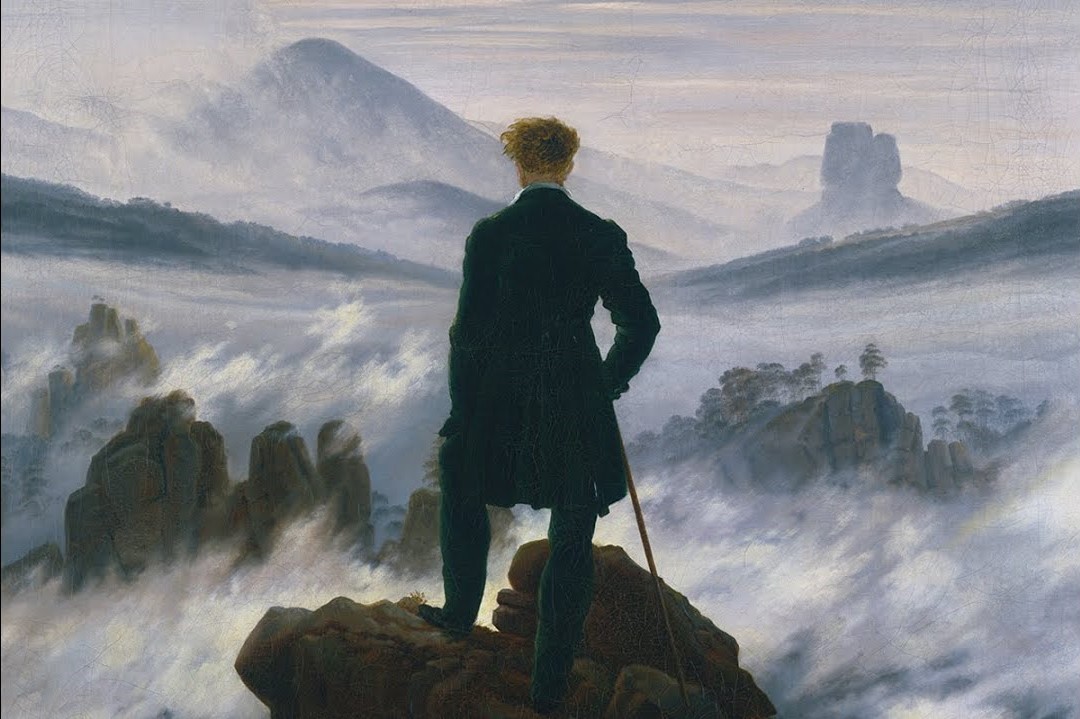
    Schubert began his famous “Unfinished” Symphony (now widely accepted as No. 8 ) in 1822. It consists of two complete movements. Despite the fact that Schubert would live another six years, for whatever reason, he never finished the other two. There’s a nearly-completed scherzo that exists in short score, with only two pages in the composer’s orchestration. (Another fragment was discovered in an attic in Vienna only in 2017.) It’s been speculated that material originally intended for the last movement may have wound up in another piece, or that Schubert was distracted by work on the “Wanderer Fantasy,” or that the symphony ultimately held bad associations for him, since it coincided with his having contracted syphilis.

    But Schubert wasn’t exactly the kind of guy to fall into crippling despondency.

    The symphony was given its first performance on December 17, 1865 – 37 years after the composer’s death. A characteristic Schubertian blend of geniality and passion, the piece was immediately recognized as one of his most beautiful orchestral works. It is sometimes referred to as the first Romantic symphony. It certainly is a moody one.

    There have been a number of attempts to complete the symphony over the years. Like Michelangelo’s abandoned “Pietà,” it continues to fascinate, despite – or perhaps because of – its orphan status. The music is some of Schubert’s most famous. It has been used in numerous movies and cartoons and as the basis for other composers’ compositions.

    Just don’t get the idea that Schubert never finished anything. He may have died at 31, but in a career that spanned less than 20 years, he managed to complete about 1500 works, including symphonies, overtures, incidental music, quartets, quintets, an octet, twenty piano sonatas, operas, masses, some fifty additional choral works, and about 600 songs.

    Then, this was before Facebook.

    Happy birthday, Franz Schubert.


  • Mr. Peabody, Schubert, & Missed Music

    Mr. Peabody, Schubert, & Missed Music

    by 

    in
    4 responses

    Anybody else remember when Mr. Peabody and Sherman used the Wayback Machine to visit Franz Schubert?

    A fun conceit, but Jay Ward and company really missed the boat by not actually using any of Schubert’s music. It would have been a lot more fun had Sherman sung “Standchen,” D. 889 (a.k.a. “Serenade”):

    Listen, listen to the lark in the ethereal blue!
    And Phoebus, newly awakened,
    Leading his horses to drink the dew
    That covers the calyces of the flowers;
    The buds of the marigolds are beginning to open
    Up their little golden eyes;
    With everything that is charming there,
    Oh sweet maid, get up!
    Get up! Get up!

    Not the more famous “Serenade,” but all the more appropriate, since Schubert remarks afterward that he’s just been at work on a NEW serenade.

    Schubert’s OTHER “Serenade” (from the song cycle “Schwanengesang,” D.957)

    Softly my songs plead
    through the night to you;
    down into the silent grove,
    beloved, come to me!

    Slender treetops whisper and rustle
    in the moonlight;
    my darling, do not fear
    that the hostile betrayer will overhear us.

    Do you not hear the nightingales call?
    Ah, they are imploring you;
    with their sweet, plaintive songs
    they are imploring for me.

    They understand the heart’s yearning,
    they know the pain of love;
    with their silvery notes
    they touch every tender heart.

    Let your heart, too, be moved,
    beloved, hear me!
    Trembling, I await you!
    Come, make me happy!

    Even “The Smurfs” used the “Unfinished” Symphony.

    At least the segment gave kids an awareness of the composer, if not his decadent milieu.

    Happy birthday, Franz Schubert.


  • Bernstein, Shapero, and the Lost American Symphony

    Bernstein, Shapero, and the Lost American Symphony

    by 

    in
    2 responses

    75 years ago today, the greatest American symphony no one knows was given its debut by the Boston Symphony, conducted by Leonard Bernstein.

    Harold Shapero was 27 at the time his “Symphony for Classical Orchestra” received its premiere in 1948. He was one of the so-called “Boston Six,” a loose collective of composers that, along with Shapero and Bernstein, included Arthur Berger, Aaron Copland, Irving Fine, and Lukas Foss.

    Shapero met Bernstein while a student at Harvard, where he studied composition with Walter Piston. He was also a student of Paul Hindemith at the Berkshire Music Center at Tanglewood, kind of a home away from home for the Six, and with Nadia Boulanger at the Longy School of Music. He even managed to secure some critiques from his idol, Igor Stravinsky.

    Copland was perplexed by Shapero’s symphony, which may have been steeped in Stravinsky’s then-prevalent Neoclassicism, but clearly tipped its hat to Beethoven, with elements modelled on Beethoven’s Symphonies Nos. 3, 5, 7 & 9. Describing the composer as “the most gifted and baffling of his generation,” Copland added, “Stylistically, Shapero seems to feel a compulsion to fashion his music after some great model. He seems to be suffering from a hero-worship complex – or perhaps it is a freakish attack of false modesty.”

    Bernstein would record Shapero’s 45-minute magnum opus with the Columbia Symphony Orchestra (in glorious mono). In the 1980s, the work was revived by André Previn and the Los Angeles Philharmonic (who also recorded it), and I know David Zinman and Leon Botstein conducted it in concert. There’s also a very fine album of some of Shapero’s other orchestral music, issued within the past few years by Boston Modern Orchestra Project (BMOP), conducted by Gil Rose. And if you’re a trumpet player, you may have encountered Shapero’s compact and appealing Trumpet Sonata.

    Still, orchestras don’t seem to be beating a path to this worthwhile music, a fate shared by works of too many of Shapero’s mid-century colleagues. It’s all about name recognition, and if you’re not Copland, Barber, or Bernstein, you’re out of luck. (Gershwin died earlier, in 1937.) Why break your back and your budget rehearsing unfamiliar music when to play the standard repertoire is pure muscle memory, that also guarantees butts in seats?

    The ascendency of serialism and a relative lack of interest in Shapero’s music caused him to gradually back off of composition. Like Sibelius, his last decades could be viewed as a great silence. Only in Sibelius’ case, he was a victim of his own success. Shapero never found himself in the enviable, albeit paralyzing position of trying to top his own, lavishly-praised masterworks. Largely neglected until the Previn revival, save for an occasional recording of a chamber or instrumental piece on New World Records, Shapero died in 2013 at the age of 93.

    It’s a shame about the symphony. The orchestration is bright and cheerful, the tone is optimistic, the graceful craftsmanship is imbued with warmth and charm, and there are glints of wit in its abundant vitality. Check it out. You’ll be glad you did.

    https://www.youtube.com/watch?v=L5mVXYLeMko


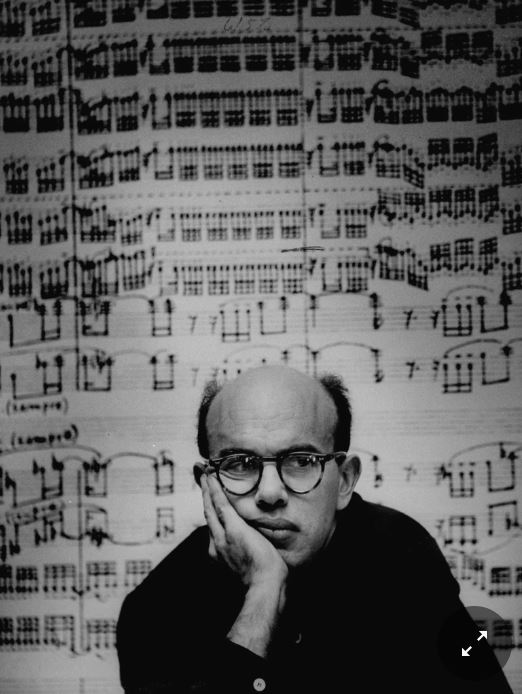
    Portrait of Harold Shapero by Gordon Parks


  • Shostakovich Plays Shostakovich

    Shostakovich Plays Shostakovich

    by 

    in
    8 responses

    As I mentioned last week, Dmitri Shostakovich was a fabulous pianist, who began serious studies at the age of 9. He continued, formally, at the Petrograd Conservatory, upon his acceptance there, at the age of 13. Once he began to receive international attention for his original compositions, for works such as his Symphony No. 1, written when he was only 19, his principal focus began to shift. He did, however, continue to perform and record his own music.

    This Sunday night on “The Lost Chord,” we’ll revisit a 5-CD set, “Shostakovich Plays Shostakovich,” issued on the Melodiya label, made up of Russian state recordings set down largely between 1946 and 1958, with the composer himself at the piano.

    The documents in this box are riveting, not only for the musicianship they document, but also because of their biographical fascination and their sense of history.

    By way of example, we’ll hear a harrowing account of the Piano Trio No. 2 in E minor. Given its premiere only months after the liberation of Leningrad, the trio predates Shostakovich’s String Quartet No. 8. Both share in common a kind of inexorable, klezmer-inflected danse macabre. Shostakovich always felt a special kinship with the Jewish people. Furthermore, the trio is dedicated to his friend, Ivan Sollertinsky, artistic director of the Leningrad Philharmonic, who was an enthusiast of the music of Gustav Mahler. Sollertinsky died of a heart attack in Siberia, following his evacuation during the Siege of Leningrad.

    In 1947, Shostakovich sat down in front of the microphones to record the work, with violinist David Oistrakh and cellist Miloš Sádlo.

    On a lighter note, “Children’s Notebook” is a collection of trifles (March, Waltz, Sad Tale, Merry Tale, The Bear, The Clockwork Doll, and Birthday). However, they certainly take on added interest when introduced by the composer, as they will be tonight.

    The hour will open with the Concertino for Two Pianos – performed by Shostakovich and his son, Maxim – and conclude with the Piano Concerto No. 2, written for Maxim’s 19th birthday. Maxim introduced the concerto at his graduation from the Moscow Conservatory. Here, Shostakovich himself performs at the conservatory’s Grand Hall, at fever pitch, with the Moscow Radio Symphony conducted by Alexander Gauk.

    In America, artists play with authority. In Soviet Russia, authorities play with you!

    Shostakovich gets all keyed up, on “Black and White and Red Redux,” four more recordings with the composer at the keyboard, this Sunday night at 10:00 EST, on WWFM – The Classical Network and wwfm.org.


    In case you missed it, here’s a link to Part One, “Black and White and Red All Over,” posted as a webcast:

    https://www.wwfm.org/webcasts/2020-01-30/the-lost-chord-february-2-black-and-white-and-red-all-over


Tag Cloud

Aaron Copland (93) Beethoven (95) Composer (114) Film Music (145) Film Score (143) Film Scores (255) Halloween (94) John Williams (195) KWAX (229) Leonard Bernstein (104) Marlboro Music Festival (125) Movie Music (160) Mozart (91) Opera (213) Philadelphia Orchestra (89) Picture Perfect (174) Princeton Symphony Orchestra (109) Radio (88) Ross Amico (244) Roy's Tie-Dye Sci-Fi Corner (290) The Classical Network (101) The Lost Chord (269) Vaughan Williams (105) WPRB (397) WWFM (881)

DON’T MISS A BEAT

Receive a weekly digest every Sunday at noon by signing up here


RECENT POSTS