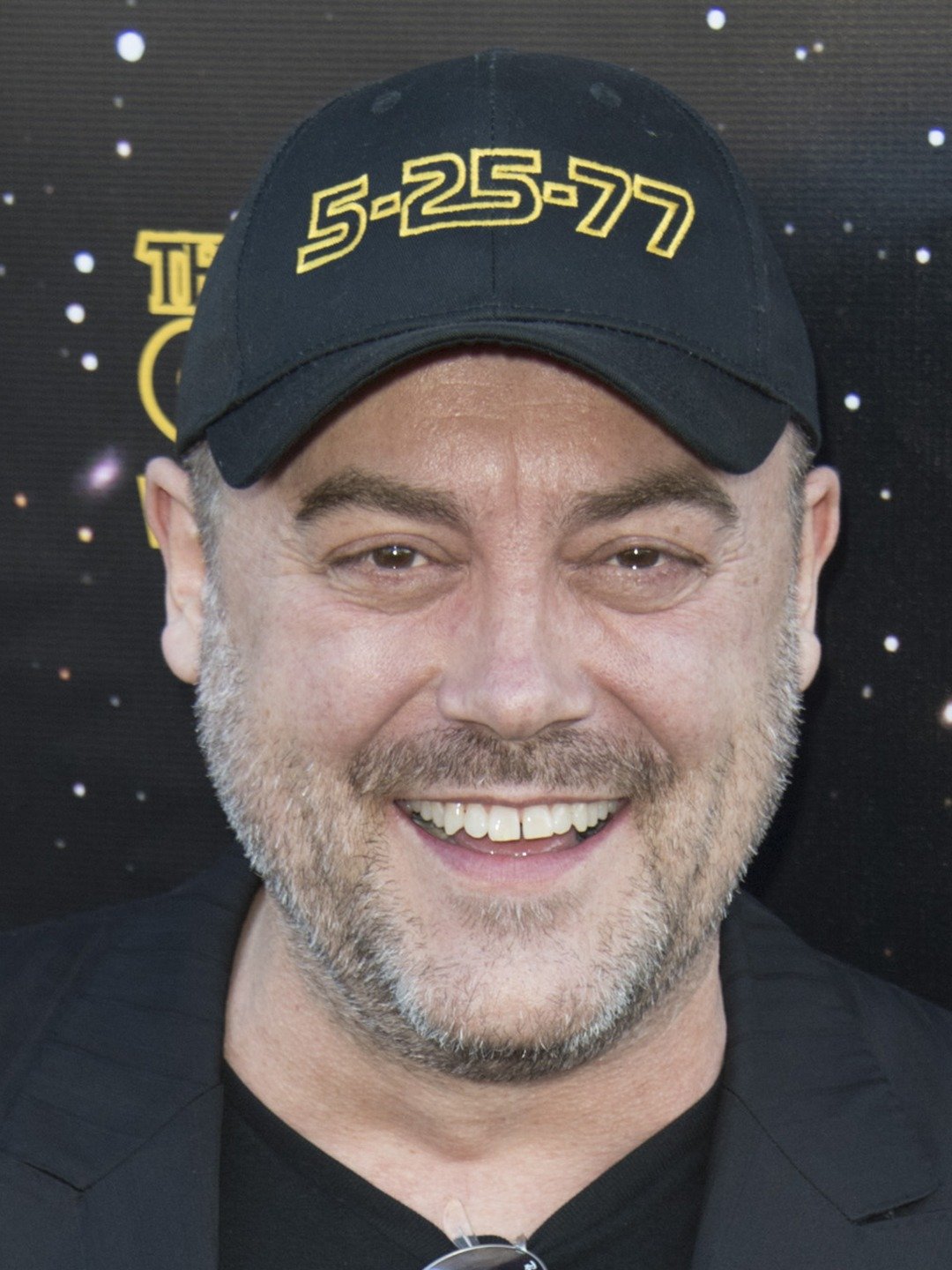
Roy and I are thrilled to be able to welcome Patrick Read Johnson as our guest on the next Roy’s Tie-Dye Sci-Fi Corner. Johnson’s own youthful obsession with science fiction propelled him to a career in Hollywood. His pet project, “5-25-77” (2022), reflects his coming-of-age as an aspiring filmmaker in a small Midwestern town around the time of the release of “Star Wars” (on May 25, 1977).
A couple of weeks ago, we used the film as a springboard to discuss our own boyhood fascinations with “2001,” “Planet of the Apes,” “Star Wars,” and “Close Encounters of the Third Kind,” and how they informed our parallel experiments in making Super-8 films. Now we’ll have a chance to hear all about Johnson’s career (including his work on the “Dragonheart” franchise) and hopefully plenty of behind-the-scenes nuggets, like the details of his real-life meetings with Douglas Trumbull, John Dykstra, and Steven Spielberg – and what it was like to be one of the first people to be shown a rough cut of “Star Wars” before it was ever distributed to theaters.
Everything was very hands-on, back in the day, when your mom could pick up the phone and get you an appointment in Hollywood, or you could revolutionize the world of special effects by working with models in a hot garage, reeking of burnt coffee.
Listen with rapt attention as Johnson talks about old times and how he strove to recreate that bygone era in his most personal film (18 years in the making!). Ask away in the comments section. We’ll share your questions when we livestream on Facebook, YouTube, etc., this Friday evening at 7:30 EST!
I’m sure we’ve all wondered what we’d do if we found ourselves living under a totalitarian regime. Would we speak out against injustice and atrocity, even if it meant arrest or execution? Would we flee, even if it meant never seeing our homes or loved ones again? Or would we keep our heads down, hoping not to be denounced, and pray for better days?
I don’t think any of us who haven’t actually lived through it can understand the fear, the courage, and the sacrifices that were experienced every day by those who remained in Hitler’s Germany. So try not to be too hard on Wilhelm Furtwängler, indisputably one of the greatest conducting talents of the 20th century.
Furtwängler, who succeeded Arthur Nikisch and Richard Strauss as director of Germany’s finest orchestras – including, most notably, the Berlin Philharmonic, from 1922 to 1945 and again from 1952 to 1954 – remained in Germany throughout the National Socialist regime.
Widely perceived as politically naïve, Furtwängler engaged in a dangerous game with the Third Reich, arguing vociferously in favor of Jewish musicians within his orchestra, those who could be considered his rivals (Bruno Walter, Otto Klemperer), and even those who were long dead (Joseph Joachim, Felix Mendelssohn). He went so far as to threaten to tender his resignation should the Nazis insist on the removal of Jews from the cultural sphere. Goebbels complained, “Can you name me a Jew on whose behalf Furtwängler has not intervened?”
Either he possessed an accurate grasp of his own worth to German culture, or he didn’t realize how close he trod to the flame. Himmler wanted to send him to a concentration camp. Goebbels and Göring were in favor of concessions. Encouraged, the conductor felt himself to be a force for positive change. But of course, he was just being played. The Nazi racial policies remained in place and the situation only grew worse.
What Furtwängler didn’t seem to realize was that he was being used as a propaganda tool, held up to the world as a paragon of Teutonic superiority. Wishing to appease one of the country’s most visible artists, the authorities allowed Jews to remain in the Berlin Philharmonic, though privately they grumbled about Furtwängler lacking “national sentiment.”
Revealingly, Furtwängler never joined the Nazi Party. He refused to conduct Nazi anthems, and while he retained a semblance of authority he would not appear in halls adorned with swastikas. He did not give the Nazi salute, even in his private dealings with Hitler. He rejected the Führer’s gifts and was able to get around shaking his hand by always having a baton at the ready. It was only after getting into a shouting match with Hitler himself that Furtwängler realized the enormity of the struggle. When Hitler finally was able to engineer a handshake, the Nazi photographers were all over it.
In 1934, he publicly declared Hitler an “enemy of the human race” and referred to the political situation in Germany as a pigsty. He conducted Hindemith’s “Mathis der Maler,” which had been banned by the Nazis on account of the composer’s allegedly “degenerate” (modernist) tendencies. The concert created a sensation and triggered a political firestorm. Furtwängler was forced to resign from his artistic posts, and the authorities seized the opportunity to Aryanize the Berlin Philharmonic. Fortunately, Furtwängler had already found positions for most of the Jewish personnel in foreign orchestras.
He was told that if he himself were to leave the country, he would never be allowed back in. Not wanting to be separated from his family, he decided to remain. What followed was a years-long game of cat-and-mouse between the conductor and the Reich. Furtwängler was publicly granted privileges, while penalized in ways never apparent to the foreign press. It was only through political sleight-of-hand that the Reich could get anything worthy of pro-German propaganda out of him.
With the rise of an opportunistic young conductor by the name of Herbert von Karajan, Furtwängler became marginalized. Karajan did everything for himself; Furtwängler had done everything for the sake of culture and humanity.
It’s so easy for biographical details to get in the way of a proper appreciation of Furtwängler’s art. For him, music was something that existed beyond the notes on the page and involved active, subjective intervention on the part of the conductor in order to be realized. More than most, a Furtwängler interpretation rises and falls on the strength of the performer.
“He once said to me that the most important thing for a performing artist was to build up a community of love for the music with the audience, to create one fellow feeling among so many people who have come from so many different places and feelings. I have lived with that ideal all my life as a performer.”
— Dietrich Fischer-Dieskau
Happy birthday, Wilhelm Furtwängler.
One of the great performances of the Schumann 4th
Brahms, Symphony No. 3
Bruckner, Symphony No. 5
Nazi 9th: fiery Beethoven for the Führer’s birthday in 1942, complete with swastika banners and Goebbels handshake
Once upon a time, the jingle composer was a genuine pop composer, with memorable tunes and lyrics like leitmotifs worming themselves into our consciousness – or, their employers hope, subconsciousness – with the aim of triggering or offering the illusion of fulfillment to our cravings. Ultimately, I don’t know how much Coca-Cola or how many Big Macs they sold, or how much they directed us to Alka-Seltzer as a palliative, but for those of us of a certain age, they did provide a kind of crazy-quilt soundtrack to the living rooms and automobile radios of our childhoods.
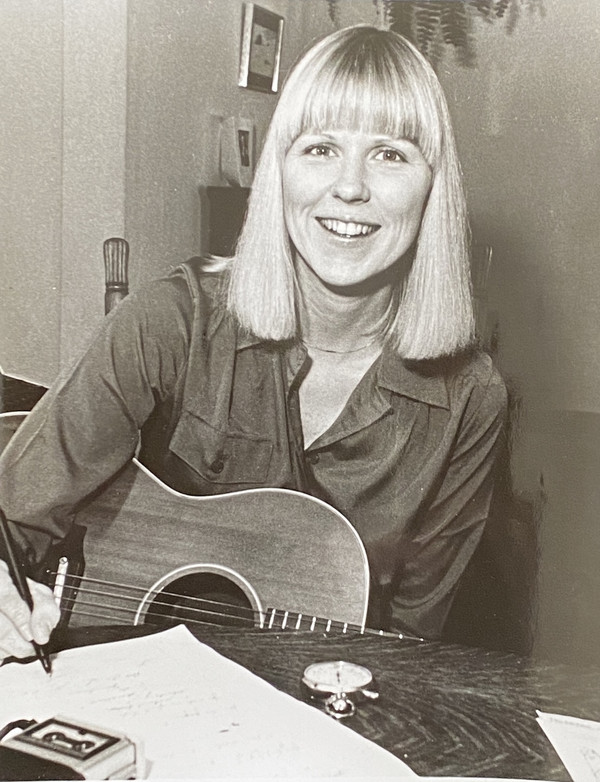
There comes a time when one assumes that most of those jingles in the 1970s were written by Barry Manilow. Then one learns otherwise. Ginny Redington died on December 31 at the age of 77. Her obituary ran yesterday in The New York Times.
Redington is new to me, but of course I recognize her work. We all did. She wrote music and lyrics for McDonald’s (“You, You’re the One”) and Coke (“Coke is It”), among others. And yes, she was married Thomas W. Dawes, the Alka-Seltzer guy. Plop, plop, fizz, fizz.
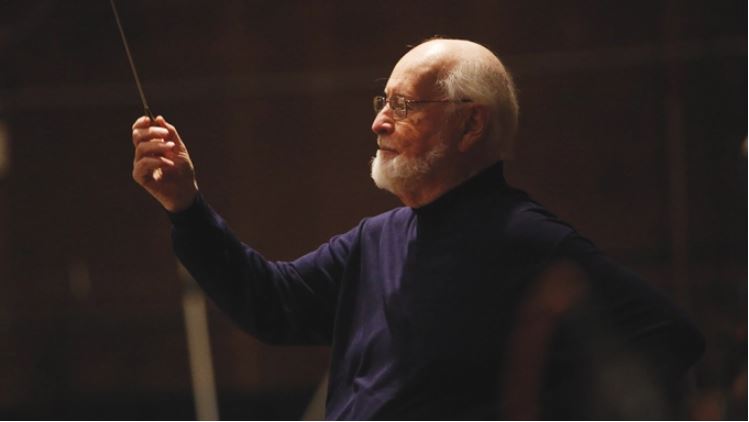
More than anyone else in history, John Williams has had the pleasure of scoring the highest-grossing motion picture of the year. Those films remain among the most-successful of all time.
Now, with his 53rd Oscar nomination, announced today, Williams sets another record, as the oldest person ever to be nominated for an Academy Award. The oldest person ever to win an Oscar is James Ivory who, at 89, was recognized in 2018 for his screenplay to “Call Me by Your Name.”
Williams is already the second most-nominated person ever – a record he breaks every time he’s nominated – behind only Walt Disney (with 59). He has earned five statuettes, for his work on “Fiddler on the Roof,” “Jaws,” “Star Wars,” “E.T. The Extra-Terrestrial,” and “Schindler’s List.” However, it has been 30 years since his last win.
What are the odds of this year bringing Williams more Oscar gold? Rather slim, I’m afraid. His work on “The Fabelmans,” while certainly effective and wholly appropriate for one of Steven Spielberg’s most intimate projects, is fairly understated and supplemented by a lot of classical music, including works by Kuhlau, Clementi, Bach, and Haydn. (Spielberg’s mom was a pianist.) The soundtrack album in only 31 minutes long, and at least one of the themes flirts with Satie’s “Gymnopédie No. 3.”
That said, somebody should campaign for an honorary Oscar for this guy already. For 60 years, the movies would have been so much poorer without him. Not that he’ll be crying himself to sleep for lack of recognition. What a charmed career he’s had!
At least since “Star Wars: The Rise of Skywalker” in 2019, Williams has teased his retirement from film scoring several times. Most recently, he stated that “Indiana Jones and the Dial of Destiny,” due this summer, would be his last score. Now, however, he intimates that that might not be entirely true.
“I’ll stick around for a while,” Williams told Entertainment Weekly. “I can’t retire from music.” Which should be fairly obvious, when seemingly not a week goes by that he’s not conducting one of the world’s great orchestras, in between work on his long-anticipated Piano Concerto and fulfilling smaller commissions for occasional works and television themes.
John Williams will be 91 on February 8.
This year’s nominees for Best Original Score: “Everything Everywhere All at Once” (Son Lux), “Babylon” (Justin Hurwitz), “Banshees of Inisherin” (Carter Burwell), “All Quiet on the Western Front” (Volker Bertelmann), and “The Fabelmans” (John Williams).
More details about William’s latest world record here:
50 years ago today, President Richard Nixon signed the ceasefire agreement that ended U.S. involvement in the Vietnam War. The ceasefire took effect at midnight on January 27, 1973. Two years later, the North Vietnamese captured Saigon on April 30, 1975. On July 2, 1976, North and South merged to become the Socialist Republic of Vietnam.
The Vietnam War has left lasting scars on the American psyche. The conflict cost the lives of 45,933 U.S. soldiers. Over 1.3 million Vietnamese troops were killed. Over two million civilians died. The last American troops left Vietnam on March 29, 1973.
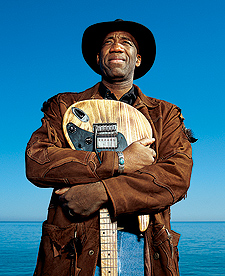
One of those who served, as a combat engineer, was James “Kimo” Williams. Williams was inspired to take up the guitar after seeing Jimi Hendrix in concert in Hawaii (where his dad, an Air Force Sergeant, was stationed). The next day, Kimo enlisted in the U.S. Army, on July 4, 1969. In Vietnam, Williams was overheard by an Army entertainment director, who suggested he perform for troops in the field. This frequently occurred under perilous conditions, with combat often imminent.
After the war, Williams used his G.I. Bill benefits to attend Berklee College of Music. In 1997, he was hired as composer for a Steppenwolf Theater production of “A Streetcar Named Desire.” This led to a partnership with actor Gary Sinise, with whom he formed the Lt. Dan Band in 2004. The group has been active in charity work, U.S.O. tours, and in general honoring and supporting military personnel and veterans.
In 2015, after 30 years of teaching, Williams retired from his associate professorship in Management and Music at Columbia College.
He composed his “Symphony for the Sons of Nam” in 1990. The work was given its premiere in Savannah, GA. For a greater appreciation of the piece, read the composer’s thoughts under the video at the link.
“Symphony for the Sons of Nam” began as a string quartet. Here’s a another work Williams composed for the medium, “Into the Liquid,” commissioned by the ETHEL Quartet. The piece was also influenced by his tour of duty and concludes with “A Veteran’s Lament.” Again, read the note under the video.

5 responses