There is something just so innately Italian about the music of Ennio Morricone. So often in his works the smiles and tears commingle. He really caught the bittersweet essence of what it is to be alive. If he had lived a hundred years earlier, he might have been one of the great opera composers. When he’s not in badass spaghetti western mode, that is.
Happy birthday, Ennio Morricone, wherever you are.
“Cinema Paradiso”
“The Mission”
“Once Upon a Time in the West”
And, just so I don’t take the gas pipe, “The Ecstasy of Gold” from “The Good, the Bad and the Ugly”
Which I would request to be played at my funeral, if not for “Navajo Joe”
I began yesterday by cracking the back of my skull on the bathroom floor, and then I had to drag my carcass to the polls, so I hope you will forgive me for taking the day off. I just react poorly to vaccines. And before anyone suggests it’s because I had tiny submarines injected into me, “Fantastic Voyage”-style, I hasten to add I know very few people who suffer anything worse than a sore arm. I’m just lucky to be blessed with an overachieving immune system, I guess. Either that, or I’m a bigger threat than I thought, a threat that can only be eliminated by tiny Donald Pleasence.
Be that as it may, I hate to miss a day posting. It’s purely egotism, I know, since in the scheme of things, it doesn’t make any damn difference, but it does make me feel out of sorts. It’s part of my morning routine, like filling the birdfeeders and drinking a cup of coffee.
This lengthy preamble has nothing to do with Burrill Phillips, who was born on this date in 1907. Phillips was a product of the Eastman School, and later taught there. His best-known music is “Selections from McGuffey’s Reader,” which takes its name from the old schoolhouse primers. Its three movements – “The One-Horse Shay,” “John Alden and Priscilla,” and “Midnight Ride of Paul Revere” – are inspired by writings of Oliver Wendell Holmes and Henry Wadsworth Longfellow, and possibly the Revere painting by Grant Wood. Can’t get much more consciously “American” than that.
Phillips confided to his diary in 1933, “I don’t think anyone had written such ‘American-sounding’ music before. On the first night, the students said it was corny. And it was. But I didn’t care, because it was a huge success.” It still is.
Later, Phillips evolved from that early, populist style to embrace more experimental techniques. I confess I don’t know any of his later work, but I try to play “Selections from McGuffey’s Reader” every year around Thanksgiving.
Fortuitously, this also gives me the opportunity to tip the top of my skull to Howard Hanson, whose birthday (October 28, 1896) I passed over in the run-up to Halloween. For some 40 years, Hanson was director of the Eastman School. In that capacity, and as conductor of the Eastman-Rochester Orchestra, he did a world of good for American music. Hanson would be awarded the Pulitzer Prize for Music in 1944 for his Symphony No. 4, “Requiem,” dedicated to the memory of his father. But his best-known piece is unquestionably his Symphony No. 2, “Romantic,” still mined by Hollywood composers.
Both Phillips and Hanson were Nebraska natives. (Phillips was from Omaha, and Hanson hailed from Wahoo). My heart is in the Heartland, even as the back of my head is on the bathroom floor.
“Selections from McGuffey’s Reader” (posted separately as a YouTube playlist, so you may have to skip ads in between movements)
Burrill Phillips’ Piano Concerto
Howard Hanson’s “Romantic” Symphony
History of McGuffey’s Reader
Go Eastman, young men: Burrill Phillips (left, with music typewriter) and Howard Hanson
Here’s a fresh take on an old chestnut, by composer John Deak, filmmaker Paul Moon, baritone William Sharp, and the @[100066833537251:2048:21st Century Consort]. Not just a filmed performance, but a collaborative documentary with dramatic elements.
Moon, who is perhaps best known from the nationwide broadcast on PBS of his documentary “Samuel Barber: Absolute Beauty,” dropped by the studios of @[100055420854366:2048:WWFM – The Classical Network] a couple of times over the years to chat about his projects. Here’s what he had to say about “The Passion of Scrooge.”
His documentary “Olivier Messiaen’s Quartet for the End of Time” will be shown at Lincoln Center’s New York Public Library for the Performing Arts’ Bruno Walter Auditorium, tomorrow at 5:30 p.m.
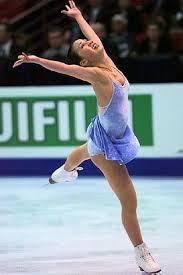
What composer helped spur Michelle Kwan to Olympic excellence? Kwan skated to William Alwyn’s harp concerto, “Lyra Angelica,” during her legendary free skate at the 1998 Winter Olympics.*
Polyglot, poet, artist and especially musician, Alwyn played flute for a time with the London Symphony Orchestra. He taught composition at the Royal Academy of Music from 1926 to 1955. He was a composer of symphonies, operas, concertos, string quartets and film scores.
My personal favorite of the symphonies is No. 4. Dig that cascading scherzo of a second movement! Then feel your heart tug at the third.
His Symphony No. 3 may be the most structurally amazing, with the first movement generated from an 8-note theme, the second from a 4-note fragment, and the last a combination of the two. By golly, that’s all twelve notes of the chromatic scale – twelve-tone music! Then why is it so damned beautiful?
Of course, there is much to be said for the simple pleasures of his music for “The Crimson Pirate.”
In all, Alwyn wrote music for dozens of films, including “Odd Man Out,” “The Fallen Idol,” “A Night to Remember,” and “Swiss Family Robinson.” Fun fact: He was also a cousin of Gary Cooper!
Stay tuned, next Tuesday I’ll be posting about the love of Alwyn’s life, composer Doreen Carwithen, on the centenary of her birth.
For the present, happy birthday, William Alwyn (1905-1985)!
*Attentive listeners will note the interpolation of Satie’s “Gymnopédie No. 1” (in Debussy’s orchestration) in the middle of Kwan’s routine.
But the inspiring music for harp and strings is all Alwyn. You can hear the complete piece at the link below. Inspired by the metaphysical poetry of Giles Fletcher, it was always a highlight of my radio playlist on an Easter morning.
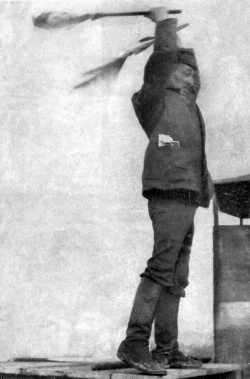
Who knew? Anticipating by roughly fifty years the city-wide performance pieces of my friend, Philadelphia composer Robert Moran, was this work by Azerbaijani composer Arseny Avraamov.
Moran gained notoriety in the late 1960s and early ‘70s through a series of events incorporating, respectively, the cities of San Francisco (“39 Minutes for 39 Autos”), Bethlehem, PA (“Hallelujah”), and Graz, Austria (“Pachelbel Promenade”). These involved tens of thousands of performers.
With “39 minutes for 39 Autos,” Moran enlisted skyscrapers, airplanes, radio stations, musicians, dancers, and yes, automobiles, to create a one-of-a-kind, purely-of-the-moment spectacular of light and sound. Sooner or later, such a thing was bound to occur to a composer living in San Francisco in 1969.
Avraamov, on the other hand, had his own motivation. He was celebrating the fifth anniversary of the October Revolution.
Thanks to Debbie Smith for bringing to my attention this article about Avraamov and the centenary of his “Symphony of Sirens.”
On a related note, and wholly by coincidence, on November 20, I’ll be observing the centenary of Azerbaijani composer Fikret Amirov on “The Lost Chord” on WWFM – The Classical Network and wwfm.org!
An atmospheric recreation of Avraamov’s “Symphony of Sirens”
Sadly, to my knowledge, no such document exists of Moran’s city pieces, so we’ll just have to settle for his roughly contemporaneous “Lunchbag Opera”


8 responses