• Hindemith Beyond Gebrauchsmusik

    Hindemith Beyond Gebrauchsmusik

    by 

    in
    5 responses

    I always suspected there was more to Paul Hindemith than meets the ear. No question, he was one of the 20th century’s most influential composers, especially in the United States, where he offered a respectable alternative for young composers to the Schoenberg school of twelve-tone composition. But he sure could blanch the color out of tonality. You can have your tonal music, but don’t let it get too voluptuous!

    Of course, it wasn’t always that way. There was an iconoclastic edge to a lot of his earlier works. At least they made one sit up and take notice – including the Nazis, who booted him out of Germany. Occasionally, he’d come up with something like “Mathis der Maler,” which manages to be both sober and spiritual. But seldom does he rollick, as he does in his popular “Symphonic Metamorphosis of Themes by Carl Maria von Weber.” I suppose letting down your hair doesn’t necessarily come naturally to one who doesn’t have any.

    Blame it on Hindemith’s philosophical adherence to “gebrauchsmusik” – in English, “utility music” – functional music written on demand, whether the Muse happens to be “in” or not. Hindemith penned reams of it. But it’s not all like being trapped in the back seat of your parents’ car on a long trip with nothing but a gray crayon.

    Clearly the man did have a sense of humor, and liked to share inside jokes with his wife, Gertrud, whom he married in 1924. There is, for example, the Concerto for Woodwinds, Harp and Orchestra, with its third-movement allusions to Mendelssohn’s “Wedding March.” The work was premiered on May 15, 1949 – the couple’s silver wedding anniversary.

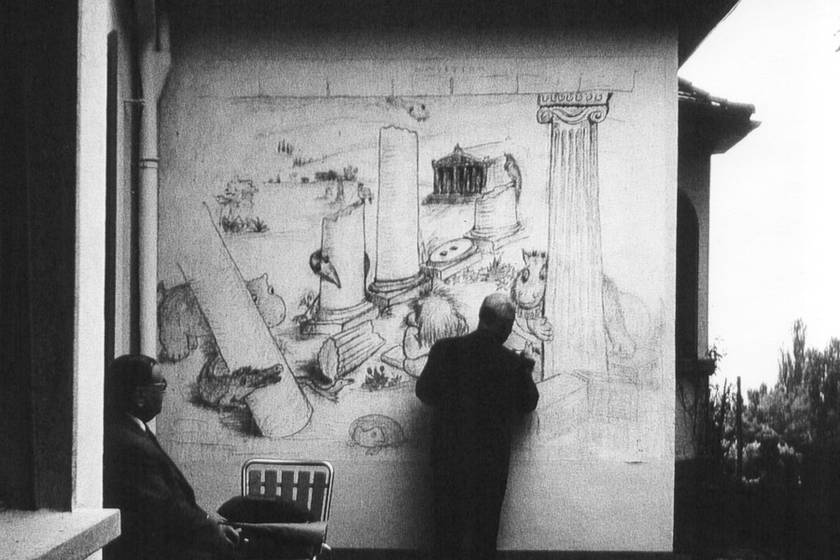
    Hindemith was also a talented draughtsman, whether doodling in his manuscripts or sketching a mural on an outside wall of their Swiss villa. He was especially fond of designing his own Christmas cards. Sometimes the drawings were Thurberesque, with perhaps just a touch of Gerard Hoffnung’s whimsy when approaching musical subjects. Sometimes they were executed with a little more care.

    He frequently included lions in his drawings. This was not a reference to St. Jerome, but rather to Hindemith’s wife, who happened to be a Leo. I find that touching, and rather human. A good deal more so than some of his music.

    Happy birthday, Paul Hindemith!


    A sample of Hindemith’s drawings

    https://www.hindemith.info/en/life-work/drawings/

    More about his relationship with Gertrud

    http://www.hindemith.info/en/life-work/biography/1918-1927/life/marriage/

    Concerto for Woodwinds, Harp and Orchestra (with Mendelssohn allusions beginning around 10:49)

    Classic recording of “Mathis der Maler” Symphony, conducted by William Steinberg

    Hindemith in a rare swashbuckling mood, from the “Symphonic Metamorphosis”

    Hindemith the iconoclast (punctuated by a siren)

    One of my most hated Hindemith works – get out the gray crayons!

    And one of the most touching, written in a mere six hours the day after the death of King George V, as a last-minute replacement for Hindemith’s viola concerto “Der Schwanendreher,” and played by the composer himself on a live radio broadcast over the BBC not long after completing it at 5 p.m.


  • Doreen Carwithen Rediscovered?

    Doreen Carwithen Rediscovered?

    by 

    in
    4 responses

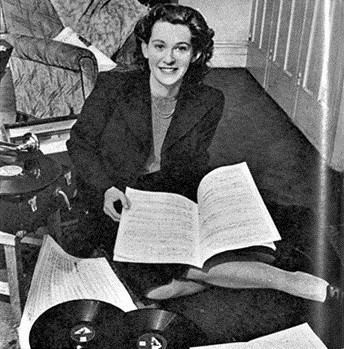
    On the centenary of her birth, is Doreen Carwithen finally ready for her close-up?

    Carwithen has been lauded as the first female film composer. She was certainly the first to study in the Royal Academy of Music’s film program, instituted by J. Arthur Rank in 1946. Could she have been the first woman in the world to have made film music a career? In all, she composed scores for some 30 films, many of them shorts and documentaries, but six of them were features.

    Alas, her concert works, while well-received, were not embraced with particular enthusiasm by either programmers or publishers.

    Carwithen entered the Royal Academy as a cellist, who could also play violin and piano, in 1941. There, she enrolled in William Alwyn’s harmony class. Before long, he was also teaching her composition. Their mutual attraction was instantaneous, sparking a 30-year romance that culminated in their marriage in 1975.

    Unfortunately, at the time of their meeting, Alwyn happened already to be married. The affair proved deleterious to everyone – Carwithen, Alwyn, and Alwyn’s wife – with stress, depression, and physical health issues all around.

    When they finally did marry (after Alwyn’s doctor gave him a talking to, pointing out that he was killing everyone by not living honestly), Carwithen preferred to be recognized by her middle name. She had always disliked Doreen. Thereafter, she went by Mary.

    In 1961, as her career never really seemed to get off the ground, Carwithen began acting as Alwyn’s secretary and amanuensis. Increasingly, she shifted her focus to supporting and promoting his music at the expense of her own. After all, he was by that time a symphonist of stature, while she wasn’t gaining any traction.

    Following Alwyn’s death in 1985, she devoted herself purely to the preservation of his legacy. When she herself died in 2003, she left sketches for a string quartet (which would have been her third), a symphony, and a cello concerto. One can only imagine that, as a creative artist, Carwithen withered on the vine.

    Now it seems her time has come. Her overture, “Bishop Rock,” was performed at this year’s BBC Proms (alongside Grace Williams’ “Sea Sketches” and Ralph Vaughan Williams’ “A Sea Symphony”). On a separate concert, her Second String Quartet was also played. Another scheduled overture, “ODTAA (One Damn Thing After Another)” was not heard, as the Last Night of the Proms was cancelled because of the Queen’s death.

    I expect, with the increased interest in music by composers marginalized because of race or gender, that we’ll be seeing more recordings and concerts featuring Carwithen’s works.

    Here’s an interesting write-up that contains a lot of information about the composer, beyond that usually drawn from her Wikipedia page:

    History

    I’ve also been looking for an excuse to post this video of her Piano Sonatina for the last few weeks.

    “ODTAA (One Damn Thing After Another),” introduced by Sir Adrian Boult and the London Philharmonic in 1947

    Concerto for Piano and Strings, first performed at the Proms in 1952

    “Bishop Rock”

    String Quartet No. 1

    “Suffolk Suite” (1964)

    Carwithen wrote the score for the documentary “Elizabeth is Queen” (1953) at white heat. The film was released in theaters three days after Elizabeth’s coronation. The music under the opening credits is arranged from Walton’s “Crown Imperial.” Keep in mind, this is only reel one!

    https://www.britishpathe.com/video/elizabeth-is-queen-reel-1-1

    Carwithen and Alwyn were the focus of my film music show, “Picture Perfect,” this past Saturday on WWFM – The Classical Network. You can listen to the webcast by following the link below.

    https://www.wwfm.org/show/picture-perfect-with-ross-amico/2022-11-10/picture-perfect-november-12-william-alwyn-doreen-carwithen

    Happy birthday, Doreen Carwithen.


  • Happy 80th Birthday Daniel Barenboim

    Happy 80th Birthday Daniel Barenboim

    by 

    in
    4 responses

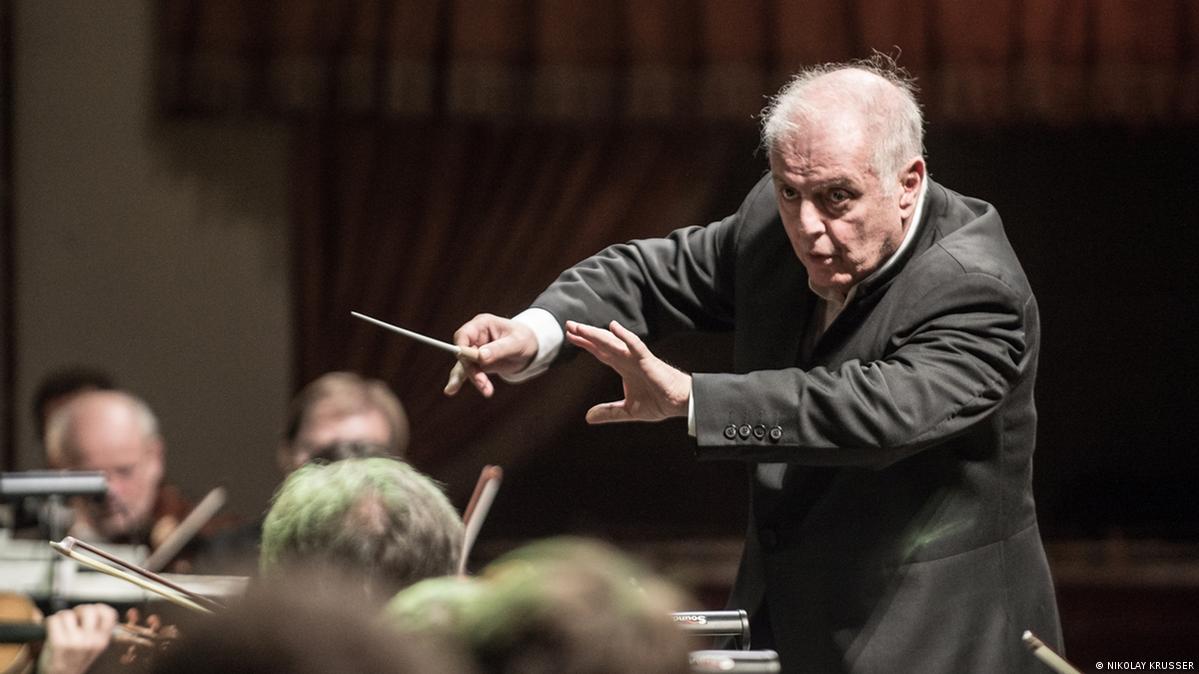
    Pianist, conductor, and humanitarian Daniel Barenboim is 80 today. Only within the past weeks did Barenboim announce that he would have to scale back on his concertizing, due to health reasons (citing a “serious neurological condition”). Let’s hope the hiatus is merely temporary.

    Happy birthday, Maestro. Get well soon, and many happy returns!


    Barenboim at 12 (playing Scarlatti, Chopin, and Kabalevsky)

    Superstar “Trout” Quintet, with Barenboim, Itzhak Perlman, Pinchas Zukerman, Jacqueline du Pré, and Zubin Mehta (on the double bass!)

    Playing Mendelssohn’s “Songs without Words,” complete

    With Jackie, off the cuff – and on the piano

    https://www.youtube.com/watch?v=ZOok22pCErM

    Barenboim plays Beethoven

    Barenboim conducts Bruckner

    “Tristan und Isolde,” complete

    https://www.youtube.com/watch?v=IdjFBW-S3z0

    Encores at Carnegie Hall, with the West-Eastern Divan Orchestra

    https://www.youtube.com/watch?v=L1uBLxEmes4


  • Copland and Pollack Share the Gift to Be Simple

    Copland and Pollack Share the Gift to Be Simple

    by 

    Aaron Copland once observed, “If a literary man puts together two words about music, one of them will be wrong.” Lord only knows what he would have made of some of my posts.

    But I would hope that I could have conjured the occasional toothy smile with a felicitous turn of phrase, or a chuckle at some weird juxtaposition or saucy irreverence.

    According to Howard Pollack, in his biography, “Aaron Copland: The Life and Work of an Uncommon Man,” Copland chuckled and even giggled quite a bit. He could also be quite wry and ironic in his observations. No doubt it helped him to maintain his even temper in the face of the absurd, his coolness under pressure, and a palpable sense of dignity.

    Copland is one of my very favorite composers, so it is difficult to believe I am only just getting around to taking Pollack’s book down off the shelf. I bought it new, from Borders in Philadelphia – at its original Rittenhouse Square location – in hardcover in 1999 (publisher Henry Holt and Company), then priced $33.75 (discounted from $37.50). Now very affordable copies can be had secondhand. I have to say, my copy still looks brand new.

    The book runs close to 700 pages, with the last 150 devoted to appendix, notes, and index. I don’t know that Pollack is a literary man, necessarily, but he is a respected and prolific author. To his credit are biographies of Walter Piston, John Alden Carpenter, George Gershwin, and Mark Blitzstein, alongside innumerable articles and the Copland entry in the “New Grove Dictionary of Music and Musicians.” He is a two-time Deems Taylor Award recipient, both for this book and for his tome (at 884 pages) on Gershwin.

    His own musical credentials are unimpeachable, with studies in piano, musicology, and composition, and decades of teaching experience at the university level. He currently serves on the faculty of the Moores School of Music at the University of Houston.

    Judging from the Copland book, his style is that of a popular biographer. His writing is accessible to the layman, he doesn’t burden the reader with a lot of unnecessary jargon, and there are no musical examples. Still, there are some things in the book, passing connections drawn and names dropped, that may glide over the heads of many, though nothing that should cause any lasting frustration to anyone.

    I’m about a quarter of the way through it, and I actually found myself pausing at a point to reflect how lucky I am in being able to fully grasp just about everything I am reading, primed by a lifetime of rabid record collecting and omnivorous listening, through an unprecedented era when so much recorded music has been available. Even in college, I recall the admiration – or envy? – of some of my teachers, since in many cases I had a broader grasp of the repertoire than they did. I would always tell them, without false modesty, that I simply had more leisure; that they were actively teaching and performing, so they didn’t have the same opportunities to actually be able to explore and listen as widely as I did.

    I hasten to emphasize that Pollack’s is not an arcane book. The writing is accessible and rolls along in a pleasant enough manner. You know my writing: all cluttered up with parenthetical phrases and superfluous commas and dashes. Pollack doesn’t do that. But I have the added advantage of knowing a lot of the music of just about everyone he mentions, and a broader grasp of the arts in general, especially of that era.

    Of course, it also helps that I happen to adore Copland. Even if you’ve read the two-volume autobiography – more of an oral history – Copland put together with Vivian Perlis, this is still worth reading, as it draws from letters, diaries, sketches, and photographs in the Copland Collection at the Library of Congress, as well as the most recent (as of 1999) Copland scholarship, and fresh interviews conducted by the author with the composer’s relatives, colleagues, friends, and love interests. Copland was a very private man, and I’m happy to report, though Pollack occasionally touches on aspects of the composer’s life about which he himself would have been particularly reticent, he does so with taste and without sensationalism. Copland emerges as a more rounded, though no less admirable individual, a decent human being, and a likeable man.

    I don’t know why, but reading the book really gives me a sense, for the first time, of just how brave, yet self-assured Copland was, in regard to his determination to earn his bread as a composer – as opposed to having to devote most of his time to teaching or performing – though he did those things for limited periods, as well as lectured and published many articles.

    What also strikes me is the realization that he spent most of his life living on very meager earnings. Even as he reached middle age, though widely-acknowledged as America’s foremost composer, he still wasn’t making any real money. But he caught enough breaks and had enough connections – most importantly, he had enough talent – that his persistence eventually started to pay off. He may not have been affluent, but he always did exactly as he pleased, and the support was always there – the commissions, shelter, and food would always turn up somehow – and it was purely in pursuit of music that he lived.

    He was not an extravagant man, though once he finally achieved eminence, and cut some canny deals with his publishers, he was able to treat himself to a fine car and a remote house with an enviable view. Even so, everything he did, whether in terms of expression or expenditure, he did so with economy and grace. Let it be said that Aaron Copland truly did have the gift to be simple.

    Born in Brooklyn in 1900, into a Jewish immigrant family that flourished in the United States, Aaron Copland was a 20th century success story. He lived 90 years, through two world wars, the Great Depression, McCarthyism, serialism, the tumultuous ‘60s, and the Reagan era. Along the way, he knew seemingly everyone. And for most of his long life, he was regarded as the Dean of American Composers.

    Pollack’s biography accomplishes the important business of making the reader want to go back and revisit the music, including a lot of the lesser known and neglected works. I’ll be doing my wildlife deliveries this morning to the austere strains of “Symphonic Ode” and other underplayed music of the 1920s. The average listener may prefer “Rodeo” and “Appalachian Spring” and “Lincoln Portrait.” But Copland is very definitely detectable as Copland in everything he did. American music’s “Dean” had the uncommon ability to reach the common man.

    Happy birthday, Aaron Copland!

  • Copland Ballets Rodeo Appalachian Spring Videos

    Copland Ballets Rodeo Appalachian Spring Videos

    by 

    in
    3 responses

    I’m not sure that this will win any new friends to Copland’s music – the definition on the 49-year-old video tape is pretty poor – but it should still be of interest to anyone familiar with the oft-performed concert suite. Here’s the first 12 minutes of the ballet “Rodeo,” with the original Agnes DeMille choreography. DeMille herself is interviewed at the end of the segment. The ballet’s premiere in 1942 was attended by Rodgers and Hammerstein, who invited DeMille to provide the choreography for “Oklahoma!” Supposedly “Rodeo” was the first ballet to employ tap dance. I have to say, it’s great storytelling. The action fits the music like a leather work glove.

    Unfortunately, the excerpt above does not contain the work’s most famous music, so here’s Copland himself to conduct the “Hoe-Down.” I guess it’s beef for dinner.

    BONUS: Martha Graham and company perform “Appalachian Spring,” complete, in pristine footage!


Tag Cloud

Aaron Copland (93) Beethoven (95) Composer (114) Film Music (145) Film Score (143) Film Scores (255) Halloween (94) John Williams (195) KWAX (229) Leonard Bernstein (104) Marlboro Music Festival (125) Movie Music (160) Mozart (91) Opera (213) Philadelphia Orchestra (89) Picture Perfect (174) Princeton Symphony Orchestra (109) Radio (88) Ross Amico (244) Roy's Tie-Dye Sci-Fi Corner (290) The Classical Network (101) The Lost Chord (269) Vaughan Williams (105) WPRB (397) WWFM (881)

DON’T MISS A BEAT

Receive a weekly digest every Sunday at noon by signing up here


RECENT POSTS