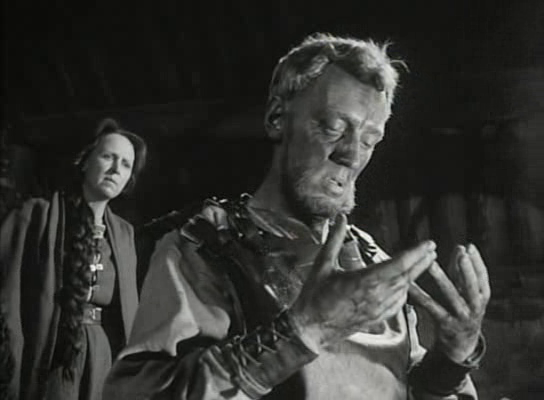
This Sunday night on “The Lost Chord,” we focus on “The Virgin Spring.” No, not the Bergman film, in which Max von Sydow exacts terrible vengeance on those who… well, nevermind. See the movie.
Anyway, the show’s not about that. The spring in the film is a body of water, a symbol of rebirth and renewal. But we’re using “spring” in the purely seasonal sense, as we enjoy an hour of vernal expressions by Swedish composers.
We’ll hear Gunnar de Frumerie’s “Pastoral Suite” and two works by Wilhelm Peterson-Berger: Book III from “Flowers of Frösö” and the “Earina Suite.” “Earina,” derived from the Greek “earinos,” meaning “spring-like,” according to the composer, conjures a world of “cult deeds and magic rites… belonging to some undefined natural religion.”
Nobody does spring quite like the Swedes. Enjoy an hour of well-seasoned music, this Sunday night at 10:00 EDT, on WWFM – The Classical Network and wwfm.org.
This week on “Picture Perfect,” special agents of the United States government flex their muscle, ideally in the service of truth, justice, and the American way.
35 years before Clint Eastwood’s “J. Edgar,” low-budget director Larry Cohen was stirring controversy with “The Private Files of J. Edgar Hoover” (1977). The film was screened at the Kennedy Center, where it was criticized by Republicans and Democrats alike for its dark depiction of American politics, and for its portrayals of Presidents Franklin Delano Roosevelt and Richard Nixon. It went on to receive a limited theatrical release, and then quietly disappeared to television, and later, video.
Broderick Crawford plays the title role, as the ruthless FBI director, who had died only a few years before, and still elicited strong feelings on the part of many Americas.
The music was by Miklós Rózsa, who returned to the hardboiled syntax of the crime dramas he had scored largely during the 1940s.
Leonardo DiCaprio played Hoover in Eastwoord’s “J. Edgar.” But he’s on the other side of the law in the Steven Spielberg film, “Catch Me If You Can” (2002), based on the real-life exploits of the chameleonic Frank Abagnale. Before his 19th birthday, Abagnale managed to successfully pull a series of cons worth millions of dollars, along the way, posing convincingly as a pilot, a doctor, and a lawyer.
Tom Hanks plays bank fraud agent Carl Hanratty, who develops an unusual relationship with the precocious con artist, as the light-hearted cat-and-mouse thriller unfolds.
John Williams wrote the intimate and jazzy score, a throw-back to caper films of the 1960s.
In one of Alfred Hitchcock’s best-loved thrillers, “North by Northwest” (1959), Cary Grant plays a Madison Avenue advertising man who, through a case of mistaken identity, gets sucked into a plot of international intrigue. He’s eventually enlisted by the F.B.I., and he and Eva Marie Saint famously find themselves scaling Mount Rushmore.
Bernard Herrmann wrote the music, propelling the action with a lively fandango.
Hoover was not a fan of Eliot Ness, and made it clear that, although he was a federal employee – as a member of the Treasury Department and the Prohibition Bureau (an offshoot of the Internal Revenue Service) – Ness was not part of the Federal Bureau of Investigation.
Nonetheless, his fame was at least as great as Hoover’s, as he was credited with busting up the Chicago crime ring and taking down its kingpin, Al Capone.
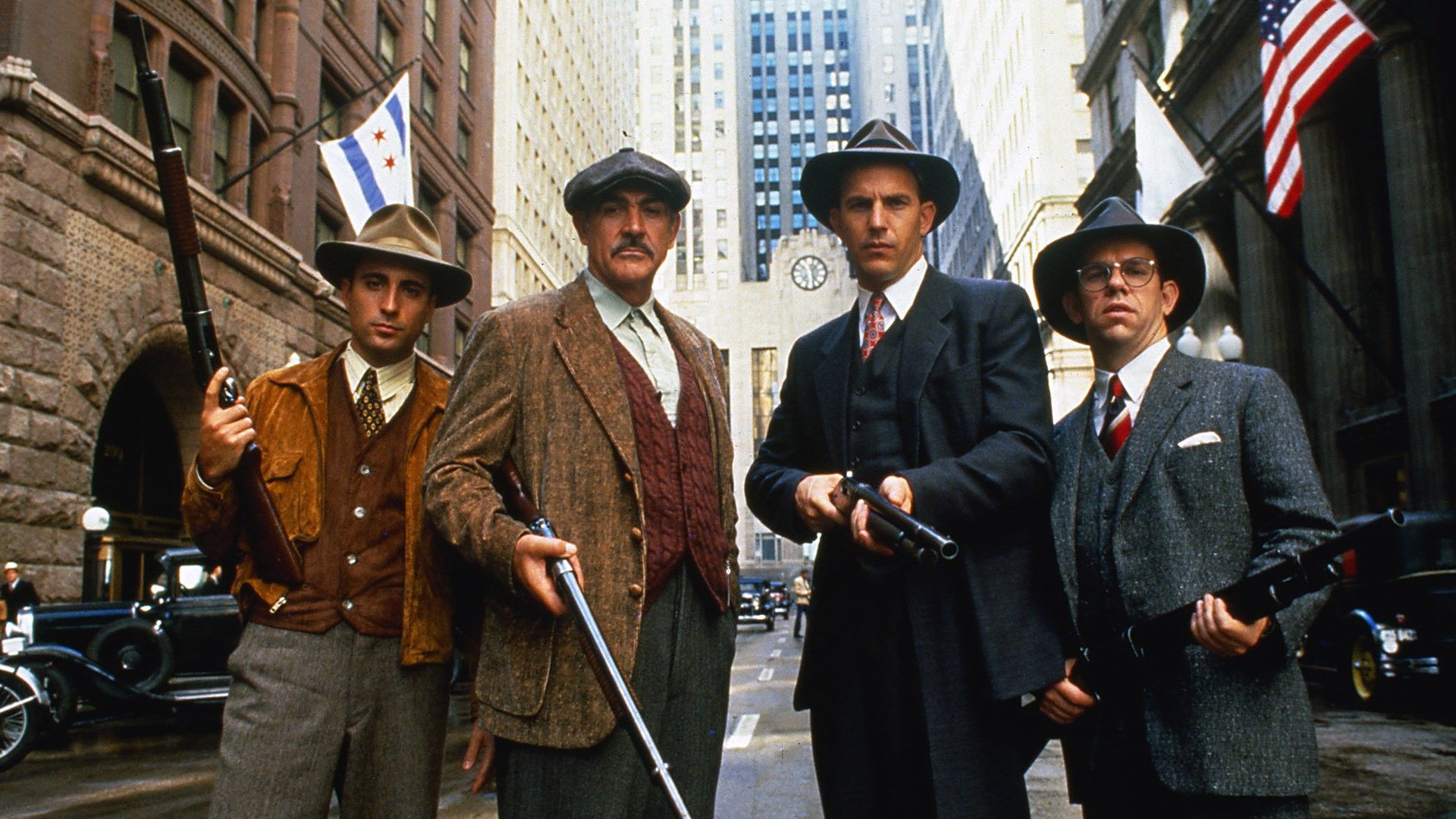
Ness’ band of enforcers are the heroes of Brian DePalma’s virtuosic crime drama, “The Untouchables” (1987). Kevin Costner stars as Ness, but it was Sean Connery as his mentor, a street-smart beat cop, who won an Academy Award.
The wistful, dangerous, and ultimately inspiring score is by Ennio Morricone.
To miss it would be a crime. It’s all G-men this week, on “Picture Perfect,” music for the movies. The entire show’s a bust, this Saturday evening at 6:00 EDT, on WWFM – The Classical Network and wwfm.org.
Composer Jean-Baptiste Lully, also an accomplished dancer, injured his toe while pounding the floor with a heavy stick to mark time; the resultant infection killed him.
Anton Webern violated curfew when he snuck out on his porch for a smoke and was shot by an American soldier.
Ernest Chausson lost control of his bicycle and fatally slammed into a brick wall.
Fire tore through Geirr Tveitt’s cabin and destroyed four-fifths of his compositional output, driving him to alcoholism.
Friedrich Kuhlau blinded himself when he fell on a bottle at the age of seven; later, he died of complications after being left out in the cold all night as his house burned to the ground.
Charles-Valentin Alkan was reaching for a copy of the Talmud, located on a high shelf, when the bookcase toppled, crushing him.
Henry Purcell developed pneumonia after his wife locked him out of the house for coming home late after one too many pub crawls.
Alexander Scriabin died of a septic carbuncle.
Tchaikovsky drank cholera-contaminated water.
Jean-Marie Leclair was found murdered in his room.
Alessandro Stradella was set upon by unidentified assassins.
None of these misfortunes occurred on Friday the 13th.
Toss some salt over your shoulder and whistle a happy tune!
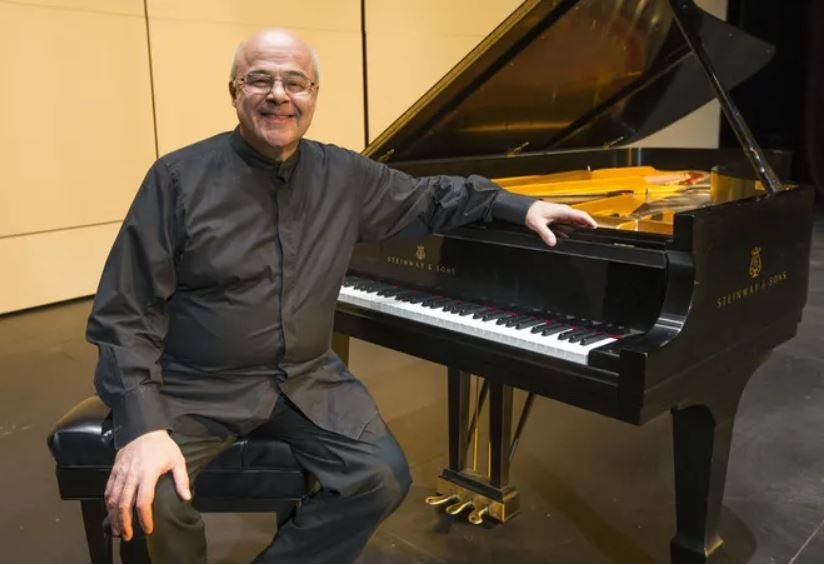
On April 23, Toradze suffered heart failure in Vancouver, Washington, in the middle of a performance of Shostakovich’s Piano Concerto No. 2. Incredibly, he finished the piece. Then he went to the hospital. It was only then that he learned what had happened.
Not long after, he posted a message from his bed, in which he was evidently in great spirits – even lauding his doctor, who was still in the room – and full of optimism for a speedy recovery.
Toradze was professor of piano at University of Indiana University South Bend from 1991 until his retirement from teaching in 2017. He made his home in the United States since 1983.
As a performer, he was a powerhouse especially in the Russian repertoire. Also on the Vancouver program was Stravinsky’s Concerto for Piano and Wind Instruments. In a comparison of 70 recordings, his performance of Prokofiev’s Piano Concerto No. 3 was selected by International Piano Quarterly as “historically the best on record.”
Toradze offered the following advice to aspiring pianists in an interview with classical radio host Bruce Duffie: “Don’t forget to pray to God before each performance, and don’t forget to give your soul enough air. Believe in the right purpose of art and believe in being human.”
Perhaps it’s not “The Great American Symphony,” self-consciously aspirational, oratorical, or grandiose in the manner the third symphonies of Roy Harris, William Schuman, or Aaron Copland; but it does go straight to the heart, which is something none of the composers of that great American triumvirate do, at least in those particular works.
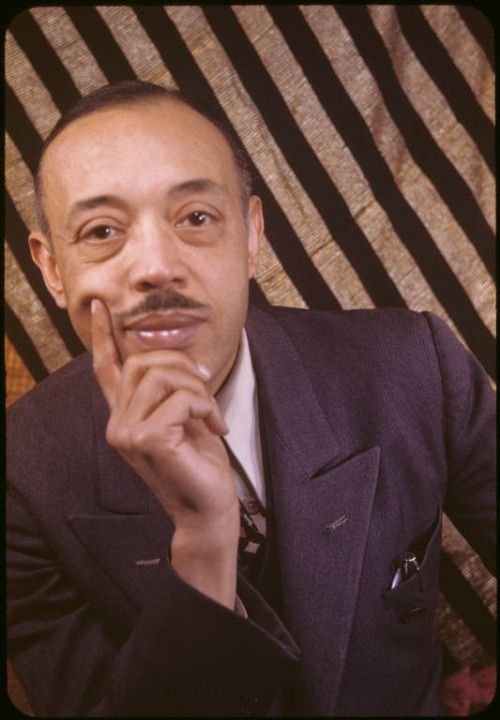
William Grant Still’s “Afro-American Symphony” is poetic, it’s genuinely reflective, it’s beautiful, and it brims with great tunes. It’s congenial, and in the end quite moving. It remains one of my favorite symphonies by an American composer.
When I want “big statements” made on a colossal scale, I will turn to those Lincoln Center composers, who would have us believe they are eating out of lunch pails in their spare time, and riveting skyscrapers, or busting sod in denim overalls. But let’s face it, they are mostly hobnobbing in suits, jostling to get their music conducted by “Lenny.”
Still is a composer in the mold, if not the manner, of Charles Ives. He’s a perpetual outsider, and always true to himself. His music grows directly out of his autobiographical experience, the blues, ballads, and spirituals of his childhood, in Woodville, Mississippi and Little Rock, Arkansas, and later his experience playing in pit bands during the Harlem Renaissance.
He also studied at the Oberlin Conservatory and privately with George Whitefield Chadwick and Edgard Varèse, of all people. There is no Varèse to be found in Still’s music.
He composes with the directness of a Virgil Thomson, but with none of Thomson’s affected naiveté. He shares with George Gershwin a refreshing lack of pretention – or at any rate his music does (he did, after all, subtitle one of his symphonies “Autochthonous”) – and a wonderful facility with melody.
Of course, any discussion of Still must come with a litany of “firsts.” His “Afro-American Symphony” was the first written by a black composer to be performed by a major orchestra (the New York Philharmonic at Carnegie Hall). He was the first to be given the opportunity to conduct a major orchestra (the Los Angeles Philharmonic, at the Hollywood Bowl). His opera, “Troubled Island,” became the first to be produced by a major company (the New York City Opera). Another of his operas, “A Bayou Legend,” was the first to be performed on national television (as late as 1981). His works were performed internationally by the Berlin Philharmonic, the London Symphony Orchestra, the BBC Symphony, and the Tokyo Philharmonic.
For years, all I could locate was the “Afro-American Symphony,” and that only in two out-of-print, albeit very fine recordings (with Karl Krueger and the Royal Philharmonic, and Paul Freeman and the London Symphony Orchestra). It wasn’t until the digital era that the other four symphonies gradually – very gradually – became available. Thankfully, all of them have now been recorded and are available for purchase.
Furthermore, in all these years, I’ve only ever come across a single modern recording of any of his nine operas, “Highway One U.S.A,” with Philip Brunelle and Vocal Essence. This especially is a shame, since, as an opera lover himself, Still so wanted to add something significant to the repertoire.
For all the love Florence Price has had lavished on her as a woman of color (the Philadelphia Orchestra was recently awarded a Grammy for its excellent recording of two of her symphonies, for the Deutsche Grammophon label), it would be great if a world-class, American ensemble would take up the cause of Still.
Let’s face it, most American orchestras are pretty terrible about recording even the white guys that were once so revered during that era. Unless you’re Copland, Gershwin, or Barber, you’re pretty much out of luck with the majors. Must so many of our American composers be documented by less-costly orchestras abroad?
Fashion would seem to favor a Still revival. At least play his music in concert, Americans!
Happy birthday, WGS (1895-1978).
“Afro-American Symphony”
“Danzas de Panama”
A little more severe, “Dismal Swamp” for piano and orchestra
“Lenox Avenue,” conducted by Still
“Troubled Island,” still awaiting a modern recording
5 responses