• Fantasy Film Scores Beyond The Lord of the Rings

    Fantasy Film Scores Beyond The Lord of the Rings

    by 

    in
    6 responses

    You know life has worn you down when all your wildest fantasies now involve the temperature staying under 70 degrees.

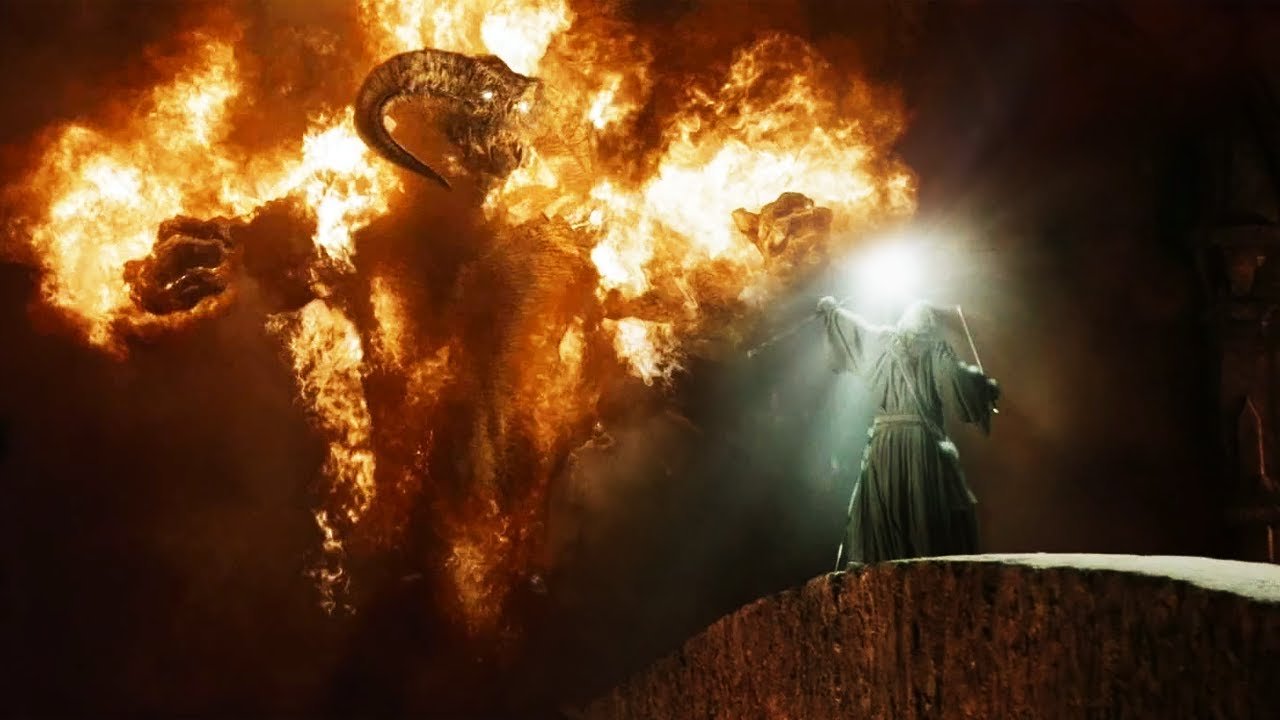
    This week on “Picture Perfect,” it will be like sweltering under a Balrog in Moria, as we listen to music from movies constructed around fantasy quests.

    For decades, “The Lord of the Rings” had been a kind of Holy Grail for genre fans, and anticipation ran high in regard to when exactly there would be a decent live action adaptation of J.R.R. Tolkien’s magnum opus. Alas, either filmmakers couldn’t acquire the rights, or they were hampered by technological limitations. Though the realization of Tolkien’s richly-imagined world of hobbits, orcs and balrogs eluded many, fantasy films of a derivative nature were thick on the ground. Some were good, some not so good. But many of them had outstanding scores.

    “The Dark Crystal” (1982), though produced by Jim Henson and company, was a long way from Big Bird and Ernie & Burt, with some pretty dark scenes. The score by Trevor Jones is first rate, given the full romantic treatment and recorded by the London Symphony Orchestra, augmented by Fairlight and Synclavier synthesizers, as well as the occasional period instrument.

    “Willow” (1988) allegedly grew out of George Lucas’ desire to film “The Hobbit.” Rather than fork over a sizeable portion of his earnings to the Tolkien estate, he opted instead to take the “Star Wars” approach of synthesizing archetypal images, from the Old Testament through Ray Harryhausen films, to create his own original story. Except the influences weren’t so cleverly assimilated this time. Composer James Horner followed suit, with a score rich in allusions to Schumann, Wagner, Grieg, Tchaikovsky, Rachmaninoff, and especially Prokofiev.

    The first feature-length adaptation of “The Lord of the Rings” (1978) was literally rendered in animation. The film manages to cover only the first book-and-a-half of the trilogy, and the last half hour or so is probably incomprehensible to anyone who hasn’t read it. It had been director Ralph Bakshi’s plan to divide the trilogy into two parts – already a concession to the studio – but the first film’s modest performance meant there was no funding for a second.

    Two-time Academy Award winner Leonard Rosenman was engaged to write the score. Rosenman composed the music for the James Dean classics “East of Eden” and “Rebel Without a Cause.” Bakshi had originally wanted to use Led Zepplin songs. He later expressed his dislike for Rosenman’s score, which he found to be too conventional – somewhat ironic in that Rosenman, a pupil of Arnold Schoenberg, Roger Sessions, and Luigi Dallapiccola, was known for writing some of the most challenging scores in film history, including the uncompromising music for “Fantastic Voyage.”

    It would be over two decades before another feature film based upon Tolkien’s source material was mounted. Peter Jackson’s “The Fellowship of the Ring” (2001) is brimful of state-of-the-art special effects, so much so that a great many important details from Tolkien’s novel are lost in the shuffle. Still, Jackson’s trilogy went on to garner 30 Academy Award nominations, of which it won 17. Howard Shore’s music was recognized with Oscars for the first and third installments. The third, “The Return of the King,” inexplicably went on to become one of the most decorated films of all time.

    Prophecies must be fulfilled, order restored, and the land made whole! We’re on a quest for fantasy music, on “Picture Perfect,” music for the movies, this Saturday evening at 6:00 EDT, on WWFM – The Classical Network and wwfm.org.


    PHOTO: “You shall not pass… 70 degrees!”

  • David Helfgott at 75 Shine Revisited

    David Helfgott at 75 Shine Revisited

    by 

    in
    4 responses

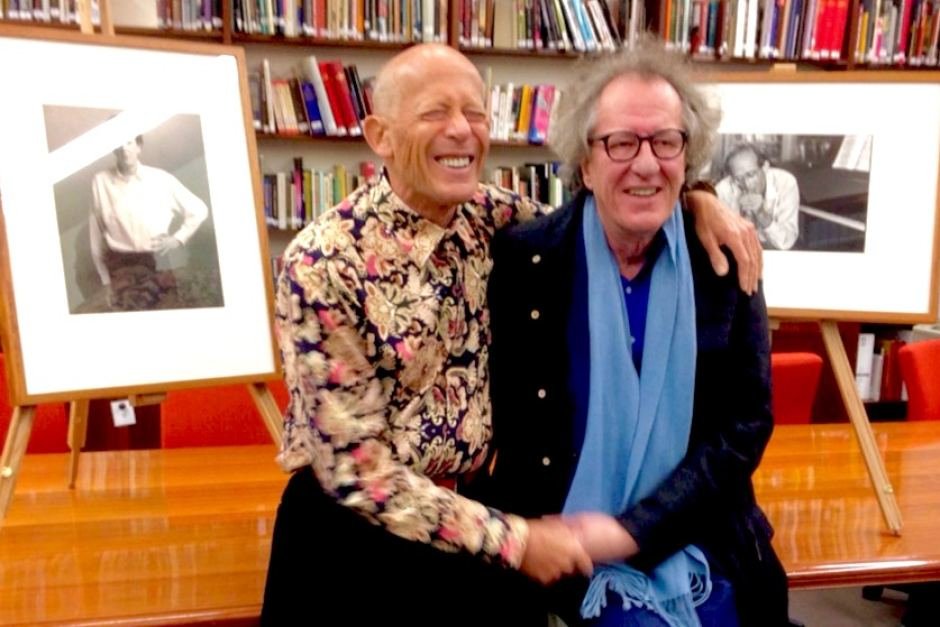
    Anybody remember David Helfgott? I note that he is 75 years-old today.

    Helfgott was the Australian child prodigy who attained international recognition as a concert pianist, only to collapse into mental illness. Then, after more than a decade of unimaginable travails, he rose Phoenix-like to fulfill, to some extent, his former promise.

    Helfgott’s inspiring story became the subject of the film “Shine” (1996), which earned Geoffrey Rush an Academy Award for Best Actor and Helfgott a few recordings released on RCA.

    While unquestionably Helfgott’s story is extraordinary and deserving of nothing but admiration and respect, I personally found the movie to be a 105-minute eyeroll. More often than not, I don’t like movies about music anyway. They almost always get it “wrong,” with some producer, screenwriter, or actor not understanding the first thing about it.

    In the case of “Shine,” the venerable Sir John Gielgud is resurrected to slice ham as Helfgott’s Yoda-like mentor, expounding on the mystical underpinnings of “Rach 3” (shorthand for Rachmaninoff’s Piano Concerto No. 3).

    Rush is a fine actor, of course, and the first, thanks to his work in “Shine,” to be honored for the same performance at the Academy Awards, the BAFTA Awards, the Critics’ Choice Awards, the Golden Globe Awards, and the Screen Actors Guild Awards. Admirably, in preparation for the role, he resumed his piano studies, which he had broken off at the age of 14. This allowed him to act as his own “hand double.”

    But if you ask me, it was Noah Taylor, who played the teenaged Helfgott, who did most of the heavy-lifting. Rush appears only for about four minutes at the start of the film, and then he drops out until the second hour. It is Taylor with whom the audience bonds and who cements our belief in the character.

    Undoubtedly, the motivation for getting Helfgott’s story on the screen was sincere. The film was something of a passion project for director Scott Hicks, who had seen the pianist perform in 1986, and was so moved by his story that he was determined to have it produced. Equally, he claims, he took care not to draw any “pop-psychology conclusions.”

    But really, could “Shine” be any more pop? Granted, a dramatic film intended for mass consumption has to be entertaining, and to the average Joe or Jane, I’m sure “Shine” pushes all the right buttons, as it follows the classic arc of a sudser screenplay. But for anyone who actually knows music, it’s kind of like those movies that have actors pantomime a performance, when it’s evident no one on the set has any idea how a particular instrument should be held. I’m not saying Rush is unbelievable at the piano, just drawing a comparison in regard to the film’s execution.

    It’s said that Hicks and screenwriter Jan Sardi tried to imbue “Shine” with a distinctive musical structure, so that the film might emulate a concerto. The screenplay is divided into “movements,” alternating fast-slow-fast, and employing the standard elements of exposition, development, and recapitulation. Reading this makes me curious to watch it again.

    Hicks went on to direct two other music-themed feature documentaries: “Glass,” in 2007, and “Highly Strung,” in 2015.

    “Shine” was nominated for seven Academy Awards, including one for Best Picture. Granted, it is a film I have not seen in a quarter-century. So perhaps I should give it another chance – even if I have no real desire to do so.

    Again, this is not to belittle Helfgott’s very real struggles, courage, and determination, or the barbarity of the therapy to which he was subjected. After all, that’s really the motivation for the movie – the fact he was able to overcome so much and return to concertizing.

    It’s just too bad the film also had to be about music.

    But I suppose I should just be grateful at this point for anything that brings a wider awareness of the art. Happy birthday, David Helfgott, and congratulations on your magnificent comeback.


    Helfgott plays “Flight of the Bumblebee” at the Academy Awards

    Rush in “Shine” (Helfgott on the soundtrack)

    Gielgud, as corny as I remember

    Fly on the wall perspective of Helfgott performing the first movement of “Rach 3.”

    A complete live recording

    Trailer for Hicks’ “Highly Strung”

    Trailer for “Glass,” a portrait of Philip Glass

    Helfgott documentary “Hello, I Am David”

    Helfgott and Rush on the 20th anniversary of “Shine”

    https://www.youtube.com/watch?v=IOf_0v4uKNw


  • Sibelius’s Finlandia: Ukraine Solidarity at Russian Embassy

    Sibelius’s Finlandia: Ukraine Solidarity at Russian Embassy

    by 

    in
    4 responses

    Sibelius at the Russian embassy! Finnish protesters sing the “Finlandia Hymn,” substituting “Ukraina” for “Suomi” (Finland).

    Historically, Finland is all too familiar with life under Russian occupation. “Finlandia,” composed in 1899 (rev. 1900), was banned from performance by the Russian authorities for stirring nationalistic fervor. (Finland was part of the Russian Empire from 1809.) In its early days, Sibelius’ most flagrant expression of Finnish patriotism was presented under many names, in order to circumvent the censors. The work was first performed in Helsinki on July 2, 1900. Finland formally declared its independence from Russia on December 6, 1917.

    The ”Finlandia Hymn” is a reworking by the composer of the serene, hymn-like interlude of his popular symphonic poem. It has been embraced by the Finnish people as the country’s unofficial anthem.

    Hundreds of Finns gather to sing the “Finlandia Hymn” in 2015 for Sibelius’ 150th birthday:

    Sung during the pandemic by the Sibelius High School Chamber Choir:

    The symphonic poem “Finlandia” given the full treatment, in a stirring presentation, complemented by Northern Lights, imposing forests, and stunning wildlife footage. Nine minutes well-spent.


    PHOTO: A further display of solidarity in Helsinki’s Senaatintori (Senate Square) on April 18


  • Erik Satie: Eccentric Genius

    Erik Satie: Eccentric Genius

    by 

    in
    5 responses

    He was expelled from the Paris Conservatory for being “the laziest student in the world.”

    He maintained a filing cabinet filled with drawings of imaginary medieval buildings, the properties of which he would periodically put up for sale in local journals by way of anonymous ads.

    He claimed to eat only foods that were white: eggs, sugar, shredded bones, the fat of dead animals, veal, salt, coconuts, chicken cooked in white water, moldy fruit, rice, turnips, sausages in camphor, pastry, cheese (only white varieties), cotton salad (whatever that is), and certain kinds of fish.

    He founded his own church – Église Métropolitaine d’Art de Jésus Conducteur (Metropolitan Art Church of Jesus the Conductor) – of which he was the only member, and for which he promptly composed a mass.

    He carried a hammer for protection.

    When he died, his friends produced umbrella after umbrella after umbrella from his room.

    Erik Satie was an artist whose life was full of enigmas and ambiguities. Often misclassified as an Impressionist, he was viewed by some (including Maurice Ravel) as a precursor to Debussy, even as he felt a greater affinity with the younger generation of composers who made up Les Six.

    In practice, he elevated salon and cabaret music, of which he spoke slightingly. After he went back to school at mid-life in order to bone up on classical counterpoint, he stopped using bar lines in his manuscripts. He blazed trails later rediscovered by Morton Feldman and John Cage. He was a minimalist more than half a century before Minimalism.

    Satie rejected the concept of musical development, believing it to be an unconscionable imposition on the public’s time. Yet he requested that his piano piece, “Vexations,” be put through 840 repetitions. A typical performance spans 18 to 24 hours. Of course, its single thematic cell is probably only about 50 seconds long. For him, brevity was the soul of wit.

    He could be profoundly ironic. Many of his piano works bear titles like “Trois Morceaux en forme de poire” (“Three Pieces in the Shape of a Pear”), “Embryons desséchés” (“Desiccated Embryos”), and “Véritables préludes flasques pour un chien” (“Veritable Flabby Preludes for a Dog”).

    A friend of Jean Cocteau, the two collaborated on the surrealist curio “Parade,” written for the Ballets Russes, with choreography by Léonide Massine and costumes and set design by Picasso. The scenario involves three circus acts trying to attract an audience to an indoor performance.

    It was one of a number of works that were introduced in the ‘Teens that attempted to whip up a scandal by incorporating low-brow elements into what was perceived as a high-brow art form. Hoping for a strong reaction, Cocteau pushed for the inclusion of such provocative “instruments” as a typewriter, a foghorn, a siren, milk bottles, gunshots, and boots sloshing around in a wash tub. The work bore the subtitle “A Realist Ballet.” The opening night audience responded, as hoped, by rioting energetically.

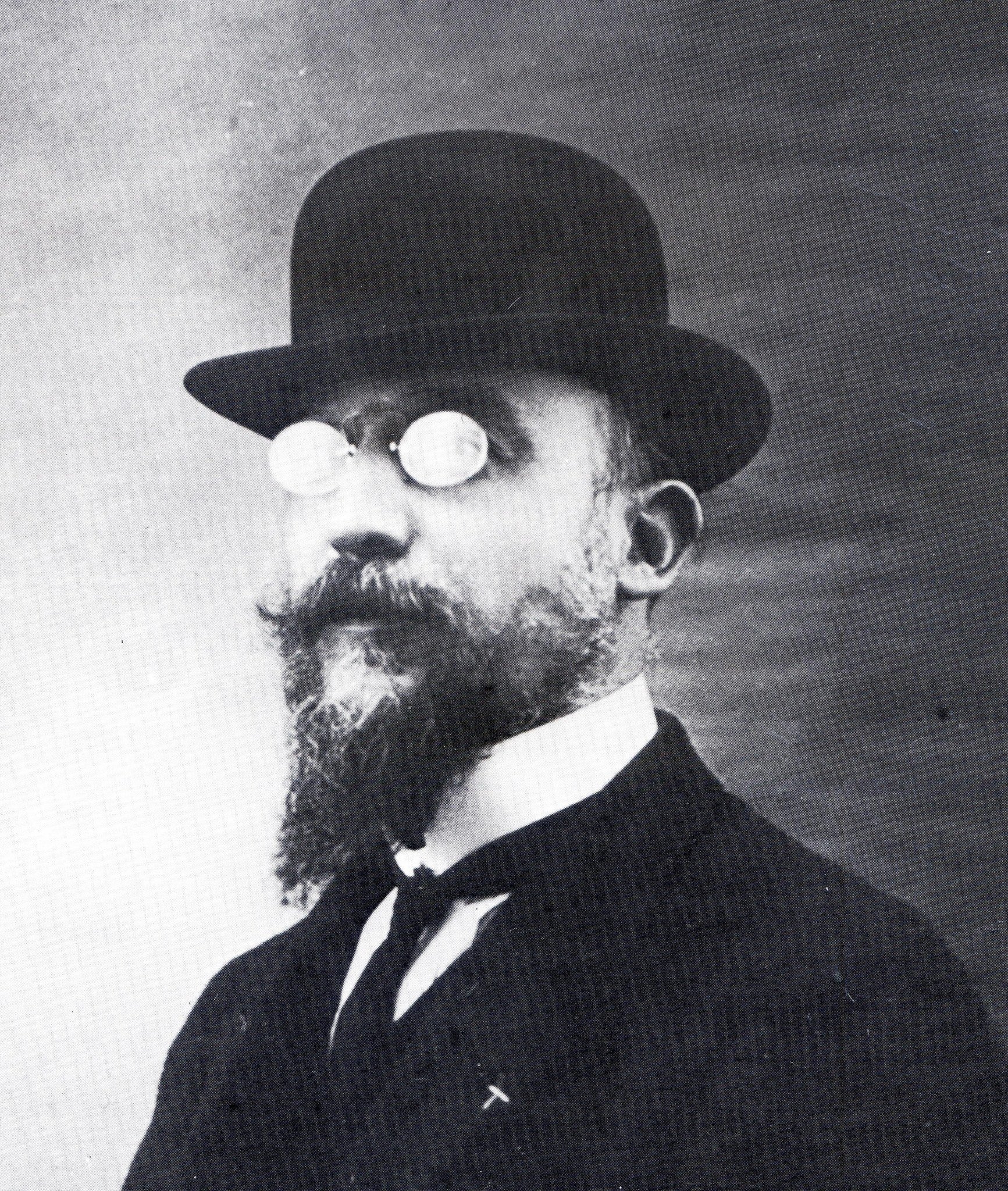
    Politically, Satie was a radical socialist, who eventually teetered over into Communism. For a time, his wardrobe consisted of seven identical grey suits. During his quasi-religious phase, he went about in a priest-like habit. Then he became a “velvet gentleman.” Finally, during his communist period, he assumed the appearance of a bourgeois functionary, never to be seen without a bowler and an umbrella.

    No one would have guessed that such an impeccable dresser would have lived out his life in clutter and squalor. When Satie died, his friends, who had never been invited back to his place in 27 years, were aghast at the piles of newspapers, the unending collection of umbrellas (100 in all), and most prominently, the stacked grand pianos, the uppermost of which had been used by the composer as a repository for papers and parcels. Among these, and in the pockets of Satie’s wardrobe, were discovered a number of manuscripts that the composer had believed long lost.

    For anyone who ever wanted to see Satie fire a cannon, here’s the Velvet Gentleman himself, in trademark bowler and carrying an umbrella, with Francis Picabia. Picabia provided the scenario and designs for Satie’s ballet, “Relâche.” The film, titled “Entr’acte,” was made in 1924, the year before the composer’s death. As the title suggests, it was shown between the two acts of Satie’s ballet, with the cannon sequence used as prologue. The music, appropriately enough, is titled “Cinéma.”

    Satie appears only in the first 90 seconds or so of the film, so it’s up to you how much beyond that you’ll want to watch. Marcel Duchamp and Man Ray play chess around 4-5 minutes in; there’s a bearded ballerina around the 7-minute mark; and you may chuckle at a falling SCTV-style dummy around 9:30. Somewhere along the way you may also spot composers Georges Auric and Darius Milhaud.

    It certainly is a Dadaist romp. “Relâche,” by the way, is a word used on posters to indicate that a show is canceled or that the theater is closed.

    “Je te veux” (“I want you”)

    Selections from “Parade,” with the Picasso designs. Love the horse!

    Satie in “My Dinner with André”

    Bon anniversaire, Erik Satie (1866-1925)!


  • Remembering Berganza and Preston

    Remembering Berganza and Preston

    by 

    in
    8 responses

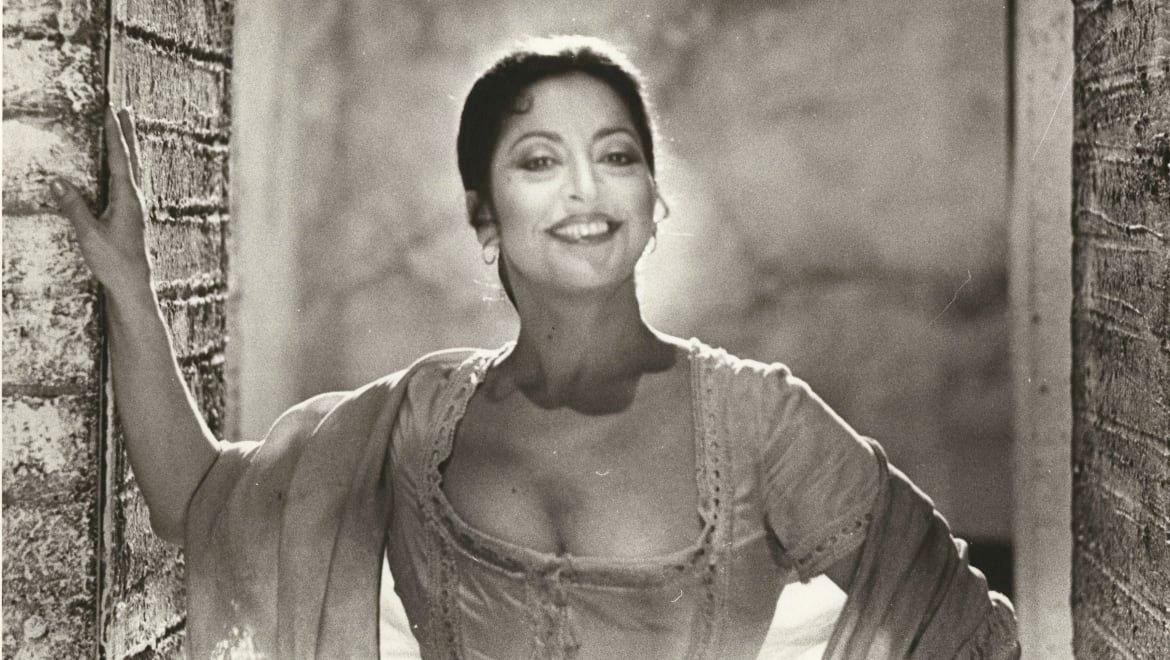
    I was so overtaxed this weekend trying to wrestle an article into submission that I never did get around to acknowledging the passing of the great mezzo-soprano Teresa Berganza, who died on Friday at the age of 87.

    Now I turn on my computer this morning to learn that she has been joined by the organist Simon Preston. He too died on Friday at the age of 83.

    Both were prominent artists, well documented on major record labels at a time when the industry was still going strong.

    Distressing reminders of change and the passage of time. Thanks to them both, and may they rest in peace.


    Berganza as Carmen

    In recital with her husband, Felix Lavilla

    Lavilla’s “Lullaby”

    https://www.youtube.com/watch?v=2JUnx2QD6Vk

    Preston plays Bach’s “Fugue a la gigue”

    Poulenc

    Widor’s Toccata


Tag Cloud

Aaron Copland (93) Beethoven (95) Composer (114) Film Music (145) Film Score (143) Film Scores (255) Halloween (94) John Williams (195) KWAX (229) Leonard Bernstein (104) Marlboro Music Festival (125) Movie Music (160) Mozart (91) Opera (213) Philadelphia Orchestra (89) Picture Perfect (174) Princeton Symphony Orchestra (109) Radio (88) Ross Amico (244) Roy's Tie-Dye Sci-Fi Corner (290) The Classical Network (101) The Lost Chord (269) Vaughan Williams (105) WPRB (397) WWFM (881)

DON’T MISS A BEAT

Receive a weekly digest every Sunday at noon by signing up here


RECENT POSTS