• Iannis Xenakis Revolutionary Music Visionary

    Iannis Xenakis Revolutionary Music Visionary

    by 

    in
    5 responses

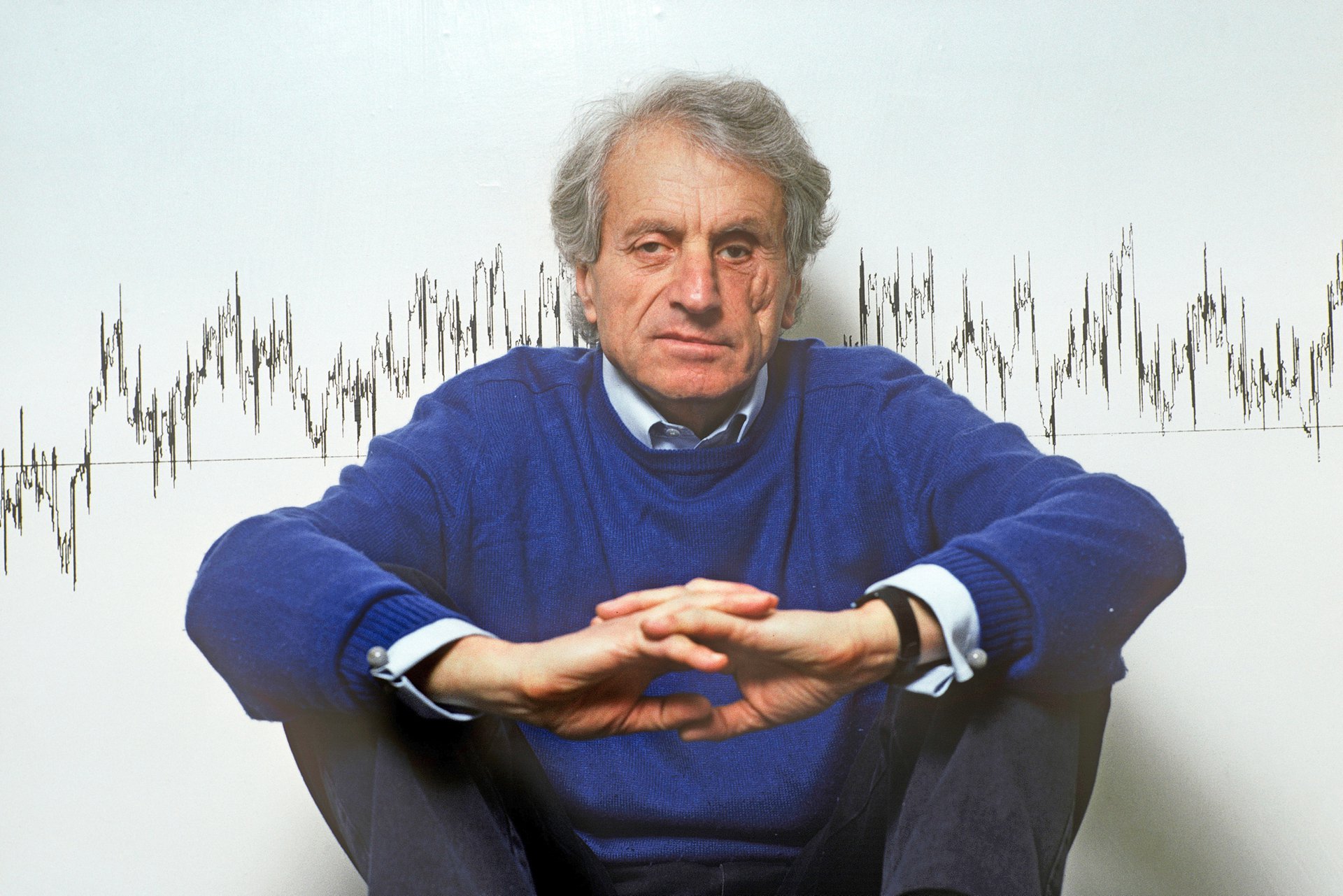
    He was a literal revolutionary who altered our perception of music.

    Iannis Xenakis was a Communist who came from wealth, an intellectual who was half-blinded, disfigured, and broken-jawed by shrapnel from a tank blast while rioting in the streets of Athens. He helped to drive the Axis out of Greece, opposed the restoration of the monarchy by the British, and was sentenced to death in absentia by a conservative regime. He fled the country using forged papers. He settled in Paris, illegally, where was hired by the architect Le Corbusier.

    There, he applied himself seriously to composition. He was refused as a student by Nadia Boulanger and Arthur Honegger. His lessons with Darius Milhaud went nowhere. It was Olivier Messiaen who at last recognized and acknowledged his unique genius. But understanding his special gifts, even Messiaen refused to spoil him with the humdrummery of drills in harmony and counterpoint. Instead, he gave him his benediction.

    “I understood straight away that he was not someone like the others…. He is of superior intelligence…. [T]his was a man so much out of the ordinary that I said… ‘No, you are almost 30, you have the good fortune of being Greek, of being an architect and having studied special mathematics. Take advantage of these things. Do them in your music.’”

    Xenakis took that freedom and ran with it. He explored music from the perspective of architecture, mathematics, and physics, yet his creations could be searingly visceral. He experimented with spatial effects, pushed the boundaries of electroacoustics, and devised computer systems that could translate graphical images into sound.

    Xenakis may have been a towering intellectual, but he was also a force of nature. His death sentence, which had been commuted to a ten-year prison term, was finally lifted in 1974. Finally, he was able to return home, where he was received as the avant-garde Odysseus and intellectual Colossus he was.

    His music has been described as wild, terrifying, raw, primal, primordial, and elemental. He made the serialists of mid-century seem hidebound, which in a sense they were, and positively tame by comparison.

    Is Xenakis a man for all seasons? It depends on how you like your Sunday mornings. Any Xenakis worth playing is worth playing loudly.

    Happy birthday, Iannis Xenakis, on what would have been your 100th birthday.


    “Pléiades” (1979)

    “Metastasis” (1953-54), with graphical score

    “Pithoprakta” (1955-56), with graphical score

    “Serment-Orkos” (1981)

  • Korngold’s Much Ado Premiere on The Lost Chord

    Korngold’s Much Ado Premiere on The Lost Chord

    by 

    in
    2 responses

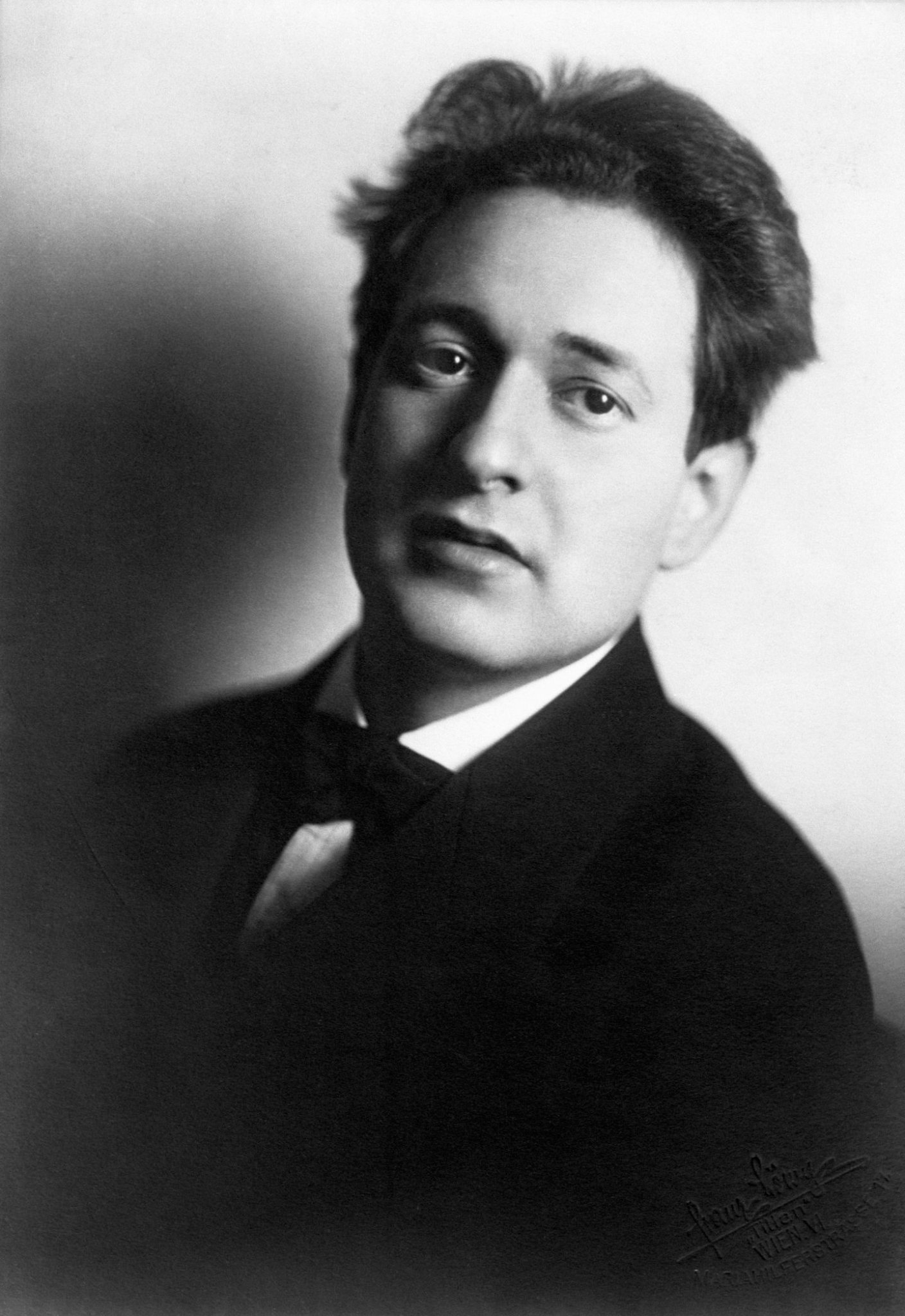
    This Sunday night on “The Lost Chord,” on Erich Wolfgang Korngold’s birthday, enjoy highlights from the world premiere recording of his complete incidental music for the 1920 Max Reinhardt production of Shakespeare’s “Much Ado About Nothing.”

    Formerly one of Vienna’s most astounding prodigies, Korngold went on to achieve international celebrity as a composer for Warner Bros. in the 1930s and ’40s. His introduction to Hollywood was by way of Reinhardt’s 1935 film of “A Midsummer Night’s Dream.”

    For this recording, a 2013 Toccata Classics release, the music for “Much Ado” was performed for the first time in its entirety since 1933. Musicians of the University of North Carolina School of the Arts are conducted John Mauceri.

    To quote the Bard, “Is it not strange that sheep’s guts could hail souls out of men’s bodies?” Strike up, pipers! It’s “Much Ado About Korngold,” this Sunday night at 10:00 EDT, on WWFM – The Classical Network and wwfm.org.


  • Obi-Wan Kenobi Theme John Williams Returns

    Obi-Wan Kenobi Theme John Williams Returns

    by 

    in
    5 responses

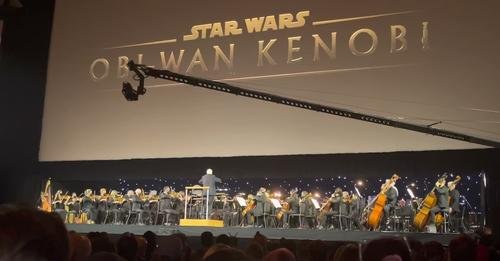
    John Williams finds yet one more opportunity to place his indelible stamp on the “Star Wars” universe. His new “Obi-Wan Kenobi” theme has at last been unveiled. Disney has kept just about everything about the new series under wraps as inviolable as those of a Tusken Raider. Natalie Holt, the first woman to be hired to write music for a live-action “Star Wars” project, will incorporate Williams’ theme into her scores. Williams himself introduced the theme in concert yesterday in a surprise appearance at “Star Wars Celebration” in Anaheim. Of course, the show is being streamed on Disney+, so I am unlikely to see it anytime soon. But the music sure does sound as if it’s from the pen of the composer of “The Rise of Skywalker.”

    Williams conducts his theme from “Obi-Wan Kenobi”

    The official studio recording, released as a single:

    The complete Anaheim mini-concert, with an appearance by Harrison Ford:

    Williams, 90, has been engaged to write the music for Ford’s latest Indiana Jones adventure, expected in theaters next summer.


  • Memorial Day Movie Soundtracks Salute Valor

    Memorial Day Movie Soundtracks Salute Valor

    by 

    in
    5 responses

    It’s all about valor and sacrifice this week on “Picture Perfect,” as we anticipate Memorial Day.

    Memorial Day has its roots in Decoration Day, established in 1868 to honor the Civil War dead. We’ll hear music from “Glory” (1989), inspired by the extraordinary courage of Colonel Robert Gould Shaw’s 54th Massachusetts Voluntary Regiment, an all African American outfit that distinguished itself in an impossible assault on Fort Wagner, near Charleston, South Carolina. The outstanding cast features Morgan Freeman, Matthew Broderick, and Cary Elwes, with an Oscar-winning performance by Denzel Washington. The poignant score is by James Horner.

    Gary Cooper had one of his best roles as “Sergeant York” (1941), based on the true story of Alvin C. York, who went from backwoods hell-raiser to devout pacifist. After a period of soul-searching, York was able to reconcile his strong moral convictions with the unfortunate reality that sometimes it really is necessary to fight. He went on to distinguish himself on the battlefield and become one of the most-decorated soldiers of the First World War. The folksy score, evocative of York’s Tennessee roots, is by Max Steiner.

    In director Michael Cimino’s “The Deer Hunter” (1978), three men from a small Pennsylvania steel town serve in Vietnam, then struggle to cope with the war’s psychological impact. The harrowing film, especially memorable for its scenes of Russian roulette in a P.O.W. camp, won five Academy Awards, including Best Picture and Best Director. Christopher Walken was honored with the award for Best Supporting Actor. Stanley Myers wrote the music. We’ll hear his famous “Cavatina,” performed by guitarist John Williams, not to be confused with…

    … composer John Williams, who provided one of his sparser scores for “Saving Private Ryan” (1998). Steven Spielberg’s war-is-hell narrative yet manages to honor the sacrifice of the fighting men of World War II. The opening – a sustained “you-are-there” battle sequence on Omaha Beach – is unforgettable. Remarkably, it is presented wholly without music, Williams preferring to allow the tension of the mise-en-scène to speak for itself. Spielberg picked up his second Academy Award for Best Director. The film, however, inexplicably, lost to “Shakespeare in Love.”

    I hope you’ll join me for music from these cinematic meditations on the costs and consequences of war, as we honor the sacrifice of soldiers who died while serving in America’s armed forces, this Saturday evening at 6:00 EDT, on WWFM – The Classical Network and wwfm.org.


  • Christopher Lee Centennial Salute

    Christopher Lee Centennial Salute

    by 

    in
    2 responses

    “Gabriel before me… Raphael behind me… Michael to my right… Uriel on my left side.”

    Because when you’re Christopher Lee, St. Patrick’s Breastplate just isn’t enough!

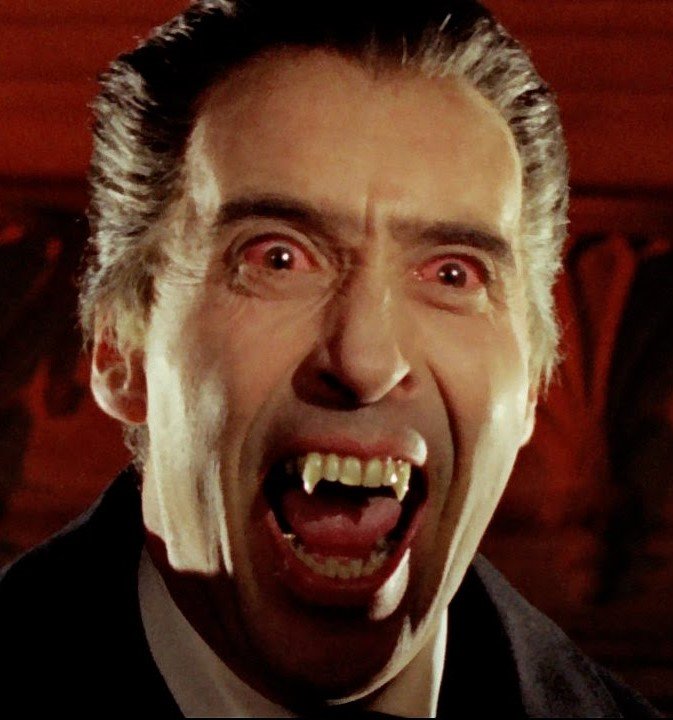
    Today marks the 100th anniversary of the birth of the 6-foot-5 “Lord of Misrule.” Self-described as “Tall, Dark and Gruesome” (the title of his autobiography), over a career that spanned nearly seven decades, with roles ranging from Count Dracula to Count Dooku, Lee was a presence of stentorian authority, if not menace.

    For a variety of reasons, May has been an erratic month for “Roy’s Tie-Dye Sci-Fi Corner.” But, fear not, Lee acolytes! We will reconvene for a salute to Hammer’s heavy-hitter on June 24th – Midsummer! So prepare your offerings to the Wicker Man. Our high school hobby horse, Paul Miller, will join us to form a triumvirate of terror. I trust Lord Summerisle would approve.

    In the meantime, while we’re on the subject of classic villains, to mark the 40th anniversary of the release of “Star Trek II” (which opened on June 4, 1982), Roy and I will have a stimulating Khan-versation about Ricardo Montalban, both in “The Wrath of Khan” and the “Star Trek” original series episode “Space Seed.” So leave your Ceti eels in the comments section, on the next Roy’s Tie-Dye Sci-Fi Corner, NEXT THURSDAY EVENING, JUNE 2, AT 7:00 EDT!

    https://www.facebook.com/roystiedyescificorner

    Then join us for Christopher Lee on JUNE 24!

    From hell’s heart we’ll stab at thee!


    PHOTOS (clockwise from left): Lee doing his thing, as Count Dracula, the Duke de Richleau in “The Devil Rides Out,” Saruman the White in “The Lord of the Rings,” and Lord Summerisle in “The Wicker Man”


Tag Cloud

Aaron Copland (93) Beethoven (95) Composer (114) Film Music (145) Film Score (143) Film Scores (255) Halloween (94) John Williams (195) KWAX (229) Leonard Bernstein (104) Marlboro Music Festival (125) Movie Music (160) Mozart (91) Opera (213) Philadelphia Orchestra (89) Picture Perfect (174) Princeton Symphony Orchestra (109) Radio (88) Ross Amico (244) Roy's Tie-Dye Sci-Fi Corner (290) The Classical Network (101) The Lost Chord (269) Vaughan Williams (105) WPRB (397) WWFM (881)

DON’T MISS A BEAT

Receive a weekly digest every Sunday at noon by signing up here


RECENT POSTS