• Lost Worlds Fantasy Film Scores on WWFM

    Lost Worlds Fantasy Film Scores on WWFM

    by 

    This week on “Picture Perfect,” prepare to get “lost.” We’ll have an hour of music from fantasy films set in lost worlds.

    In “King Kong” (1933), filmmaker and entrepreneur Carl Denham hires a ship to an uncharted island, known only from a secret map in his possession. There the crew discovers the titular gorilla and other outsized and should-be-extinct creatures. Kong is abducted from his natural habitat – and you know the rest. The composer, Max Steiner, pulls out all the stops. “Kong” was one of the first films to demonstrate how truly powerful an orchestral soundtrack could be.

    Then we travel to the earth’s core, courtesy of Jules Verne, and “Journey to the Center of the Earth” (1959). James Mason is the professor who leads the expedition. The film sports one of Bernard Herrmann’s most outlandish soundscapes, the orchestra consisting of winds, brass and percussion, but also cathedral organ, four electric organs, and an obsolete Renaissance instrument called the serpent. Watch out for that giant chameleon!

    “One Million Years B.C.” (1966) is a guilty pleasure if ever there was one. Produced by Hammer, the studio that gave us all those repugnant yet somehow delicious Peter Cushing-Christopher Lee horror team-ups, the film features special effects by the legendary Ray Harryhausen and an equally legendary fur bikini, worn by Raquel Welch. The music is by Mario Nascimbene, who wrote one of my favorite scores for Kirk Douglas, for “The Vikings.” We’ll be listening to the film’s climactic volcano sequence.

    As he did with the Indiana Jones films, director Steven Spielberg turned to B-movie source material for his visual inspiration for “Jurassic Park” (1993), based on the novel by Michael Crichton. The herky-jerky dinosaur effects of yore are replaced by state of the art computer-generated effects, in the story of a safari park on a remote island gone wrong.

    Sure, we’ve come a long way from Raquel Welch getting carried off by a pteranodon, but admit it, we all still want to see people fight dinosaurs. Instead of fudging history, now we can feel superior by fudging science. “Jurassic Park” plays on the most recent scientific thinking, with DNA extracted from mosquitoes trapped in amber, cloning, and the theory that dinosaurs were not lizards, after all, but rather birds. The music is by long-time Spielberg-collaborator, John Williams.

    I hope you’ll join me for music for these “Lands That Time Forgot,” this Saturday evening at 6:00 EDT, on WWFM – The Classical Network and wwm.org.

  • Ukraine Benefit Concert Trenton NJ

    Ukraine Benefit Concert Trenton NJ

    by 

    The LOTUS Project will team with the New Jersey Capital Philharmonic Orchestra to present a benefit concert for Ukraine, next Saturday, June 11, at 6 pm, at St. Mary’s Byzantine Catholic Church Trenton NJ, on the corner of Grand and Malone.

    The program will feature Ukrainian music and a new work, “Requiem for the Homeless,” by Frank La Rocca. La Rocca is the grandson of Ukrainian immigrants who settled locally.

    For tickets and information, follow the link.

    https://www.thelotusprojectnj.org/ukraine

    Learn more about The LOTUS Project here:

    https://www.thelotusprojectnj.org/


  • Queen Elizabeth’s Platinum Jubilee A Musical Celebration

    Queen Elizabeth’s Platinum Jubilee A Musical Celebration

    by 

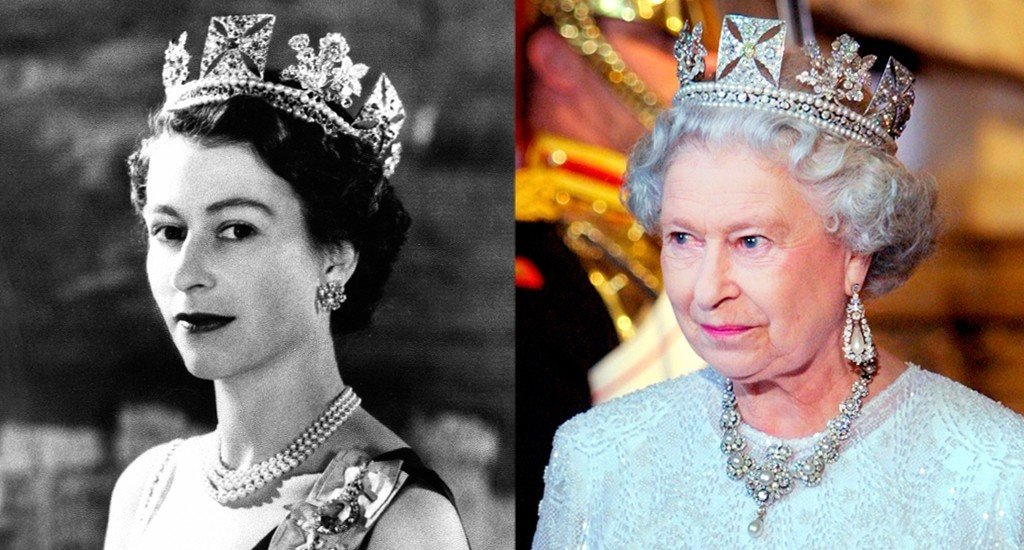
    The Queen’s gone platinum! Elizabeth was crowned Queen of England on this date in 1953. In 2015, she became England’s longest-reigning monarch. Celebrations of her 70th year on the throne are underway.

    Regardless of what one personally thinks of monarchy, the royals have been responsible for commissioning a rich diadem of music, from some of England’s most respected composers.

    Here’s an Elizabeth miscellany. In the coronation marches, especially, you will hear a lot of John Williams. Vivat Regina Elizabetha!


    Sir Edward Elgar, “Nursery Suite” (1930), dedicated to Princesses Margaret (newly born) and Elizabeth, and also to their mother, the Duchess of York. (Incidentally, today is also Elgar’s birthday!)

    Eric Coates, “The Three Elizabeths” (1944): “Halcyon Days” (Elizabeth I), “Springtime in Angus” (The Queen Mother), and “Youth of Britain – The Princess Elizabeth”

    Sir Arnold Bax, “Morning Song: Maytime in Sussex” (1946), for Princess Elizabeth’s 21st birthday

    Sir Arthur Bliss, “Processional” (1953), performed before the Coronation Service

    Sir William Walton, “Orb and Sceptre” (1953), also before the Coronation Service

    Ralph Vaughan Williams, “O Taste and See” (1953), for the Coronation Service

    Herbert Howells, “Behold O God Our Defender” (composed on Christmas Day, 1952), for the Coronation Service

    Sir William Walton, “Coronation Anthem” (1953)

    Sir Arnold Bax, “Coronation March” (1953), after the Coronation Service

    Cedric Thorpe Davie, “Royal Mile, Coronation March” (1952)

    Benjamin Britten, Courtly Dances from “Gloriana” (1953), opera first performed at the Royal Opera House during celebrations of the coronation

    Sir Arthur Bliss, “Welcome the Queen” (1953), from a short film about the first year of Elizabeth’s reign

    Malcolm Williamson, “Mass of the Feast of Christ the King” (1975-78), notoriously completed late for the 1977 Silver Jubilee

    John Rutter, “Psalm 150” (2002), for the Golden Jubilee

    Sir Peter Maxwell Davies, “Naxos” Quartet No. 8 (2005), based on John Dowland’s “Queen Elizabeth’s Galliard,” for the Queen’s 80th birthday

    Dame Judith Weir, first female Master of the Queen’s music, “I Love All Beauteous Things” (2016), for the Queen’s 90th birthday

    Thomas Hewitt Jones, ”In Our Service” (2022), for the Platinum Jubilee


  • Wrath of Khan 40th Anniversary A Sci-Fi Celebration

    Wrath of Khan 40th Anniversary A Sci-Fi Celebration

    by 

    In the summer of ’82, it seems it was just a matter of course that when you bought a movie ticket, you were in for an enjoyable two hours of escapism. “E.T. The Extra-Terrestrial.” “The Road Warrior.” “Poltergeist.” “Blade Runner.” “The Thing.” “Tron.” “Conan the Barbarian.”

    I’m not sure that I had particularly high hopes for “Star Trek II: The Wrath of Khan.” I remember I was concerned that, by making it not only a follow-up to the elephantine “Star Trek: The Motion Picture,” but also a sequel to one of the original series’ television episodes, it would be too esoteric for wider acceptance and too “villain-of-the-week” for a suitably resonant theatrical experience, in a franchise that was in danger of tanking when it had scarcely left drydock.

    But “Star Trek II” exceeded all expectations, with uncluttered storytelling, good character development, moments of genuine reflection and poignancy between the swashbuckling space battles, state-of-the-art special effects, a nautical tone that was a throwback to the monumental sea pictures of 20 and 30 years earlier, a career-defining score by James Horner, and Ricardo Montalban as (with apologies to Christopher Plummer) the most enjoyable of the “Star Trek” movie antagonists.

    Montalban fought Zorro and Gilbert Roland, danced with Esther Williams and Cyd Charisse, and wore white with sophistication on TV’s “Fantasy Island,” but he will always be remembered for his silver mullet, glistening pecs, and theatrical relish with which he delivered his Melvillian soliloquies in “The Wrath of Khan.”

    On the next Roy’s Tie-Dye Sci-Fi Corner, we’ll slingshot back in time to the 20th century to celebrate the 40th anniversary of the release of “Star Trek II: The Wrath of Khan.” Join us for a banquet of cold revenge and Ceti eels in the comments section, when we livestream on Facebook, this week at a special time, THURSDAY EVENING AT 7:00 EDT!

    https://www.facebook.com/roystiedyescificorner


  • Still’s “In Memoriam” & Black Soldiers’ Sacrifice

    Still’s “In Memoriam” & Black Soldiers’ Sacrifice

    by 

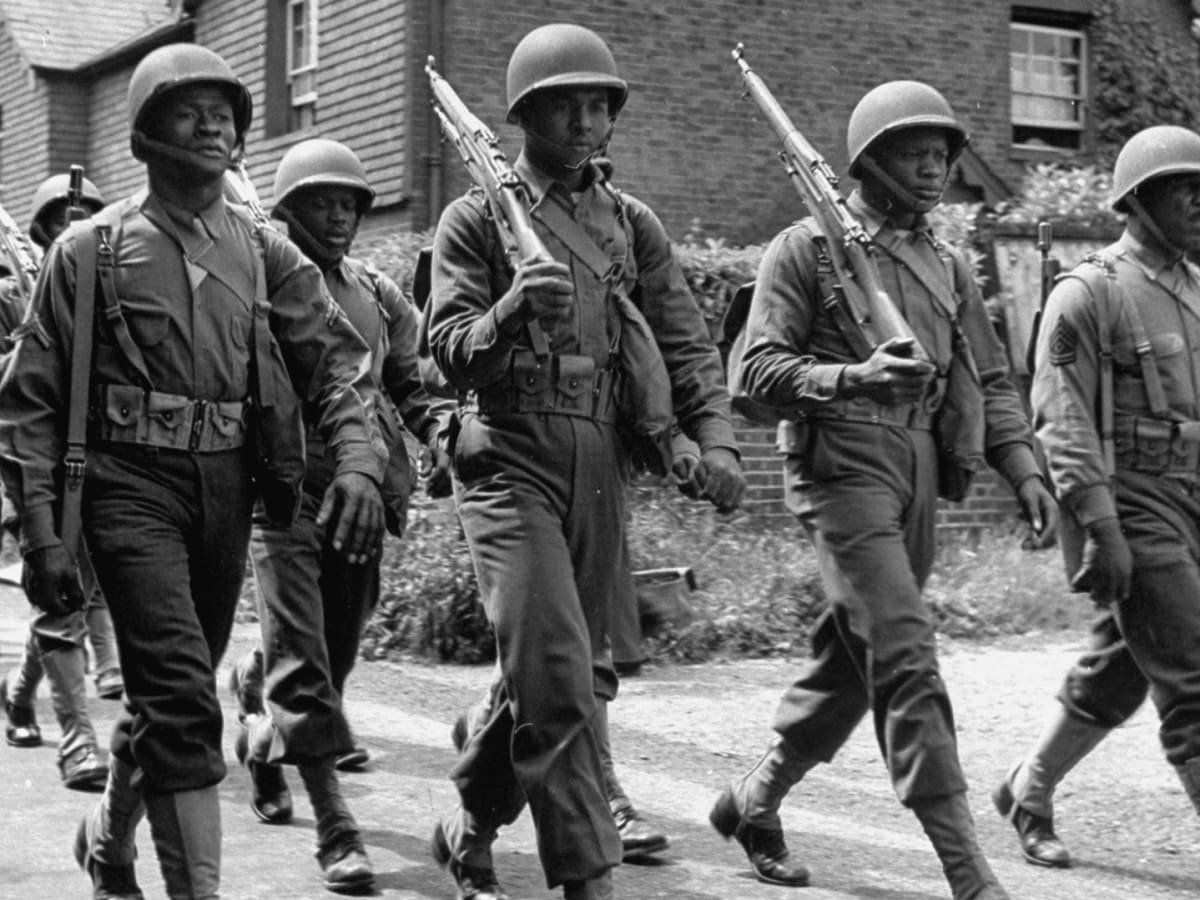
    In common with many American composers, William Grant Still turned to patriotic themes during World War II. Only in his case, there is an added poignancy in his choice of subject matter, “In Memoriam, The Colored Soldiers Who Died for Democracy” (1943), since the black soldiers to whom the work is dedicated not only fought in segregated units, but also experienced inequality at home.

    By nature, Still was not a political person, but because of the simple fact of his skin color, the association of race – of what it meant to live in and serve a country that wasn’t always fair to its minorities – is inescapable. The piece is about democracy and war, but the subtext, whether or not the composer intended it as such, is one of racial inequality, even for those who served with honor and gave everything for this country.

    Still himself served in the U.S. Navy during World War I.

    George Szell and the Cleveland Orchestra perform “In Memoriam, The Colored Soldiers Who Died for Democracy” in Kyiv in 1965:

    Charles Ives was inspired by the Memorial to Colonel Robert Gould Shaw and the 54th Massachusetts Infantry Regiment, one of the earliest African American units in the American Civil War, when he composed “Saint-Gaudens on Boston Common,” the first movement of his “Three Places in New England” (1915). The 54th was also the subject of the film “Glory.”


Tag Cloud

Aaron Copland (93) Beethoven (95) Composer (114) Film Music (145) Film Score (143) Film Scores (255) Halloween (94) John Williams (195) KWAX (229) Leonard Bernstein (104) Marlboro Music Festival (125) Movie Music (160) Mozart (91) Opera (213) Philadelphia Orchestra (89) Picture Perfect (174) Princeton Symphony Orchestra (109) Radio (88) Ross Amico (244) Roy's Tie-Dye Sci-Fi Corner (290) The Classical Network (101) The Lost Chord (269) Vaughan Williams (105) WPRB (397) WWFM (881)

DON’T MISS A BEAT

Receive a weekly digest every Sunday at noon by signing up here


RECENT POSTS