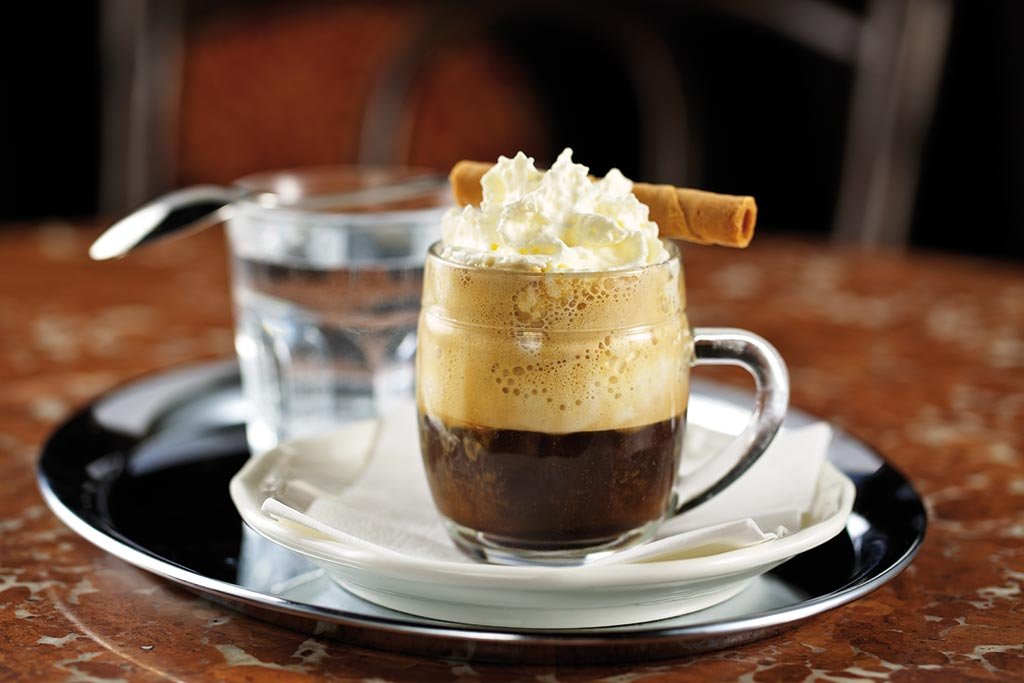
On Richard Strauss’ birthday, enjoy a coffee break with his frothy ballet “Schlagobers” (“Whipped Cream”).
Blog reflections on “Schlagobers”
Caffeine-induced teaser for an American Ballet Theatre production
Not to be confused with…
by
On Richard Strauss’ birthday, enjoy a coffee break with his frothy ballet “Schlagobers” (“Whipped Cream”).
Blog reflections on “Schlagobers”
Caffeine-induced teaser for an American Ballet Theatre production
Not to be confused with…
by
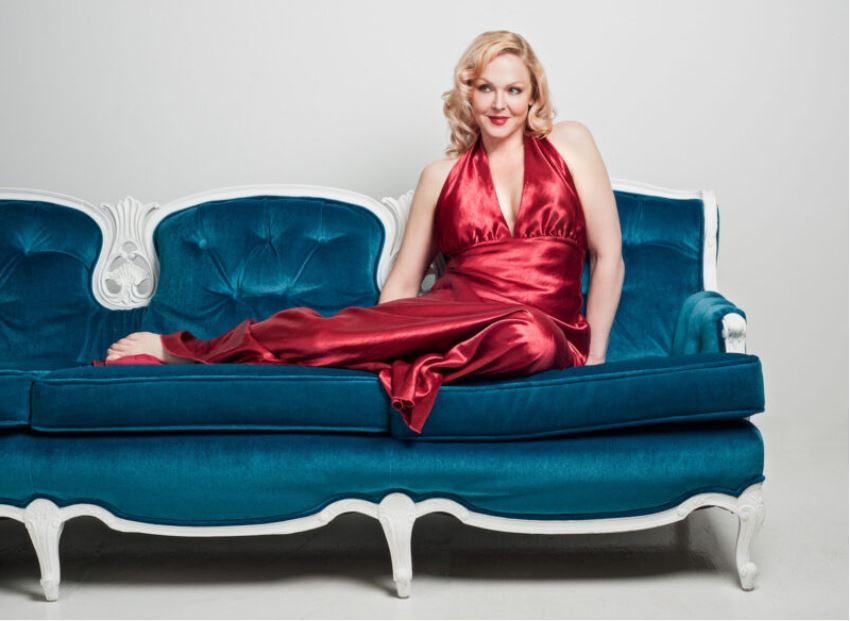
The all-new The Princeton Festival (the first overseen by the Princeton Symphony Orchestra) begins this evening at 7:30, with Storm Large in Kurt Weill’s “The Seven Deadly Sins.” On the second half of the program: Rodion Shchedrin’s colorful arrangement for strings and percussion of Bizet’s most famous music as the “Carmen Suite.”
Rossen Milanov will conduct, in a specially-constructed outdoor 10,000 square foot state-of-the-art performance tent on the grounds of Morven Museum & Garden on Route 206 (55 Stockton Street), not far from the Princeton Battle Monument.
The Princeton Festival runs through June 25, with a variety of musical events filling every evening: opera, jazz, cabaret, musical theater, chamber music, classical and Broadway pops, and Baroque music across the street at Trinity Episcopal Church.
Partake of free pre-concert talks, a poetry workshop, an on-site bar, and abundant lawn space at Morven for picnicking prior to the concerts. For a complete schedule, visit princetonsymphony.org/festival.
In case you missed it, here’s my preview in last week’s U.S. 1
The raising of the tent!
Storm Large sings “The Seven Deadly Sins” with the Detroit Symphony Orchestra
Rodion Shchedrin’s “Carmen Suite”
https://www.youtube.com/watch?v=QysD8zCfGTs
Direct link to tickets for tonight’s concert
https://princetonsymphony.org/performances/seven-deadly-sins/2022-06-10

by
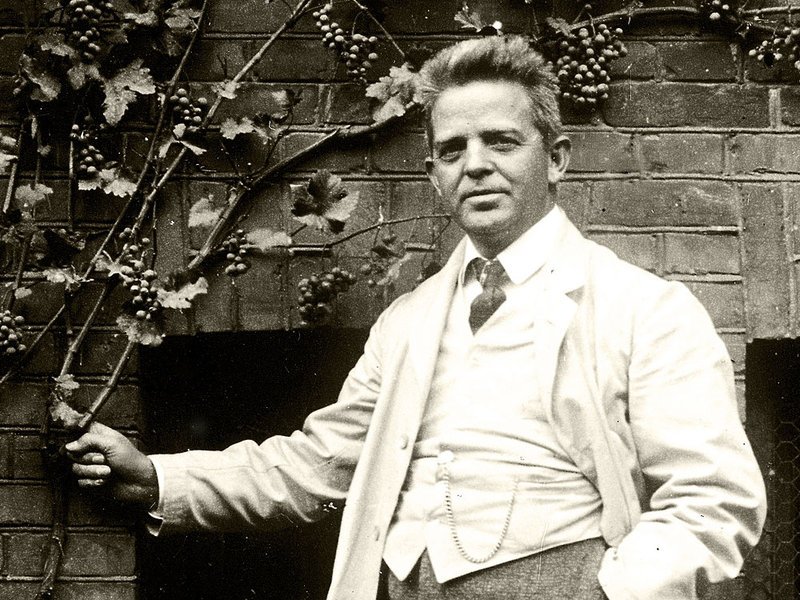
I am sorry to say, the conductor David Lloyd-Jones has died. A founder of and driving force behind Opera North (originally English National Opera North) and its orchestra (once identified as the English Northern Philharmonia), he made many fine recordings for the Naxos, Marco Polo, Dutton, Chandos, and Hyperion labels. His cycle of Arnold Bax symphonies received particular acclaim and his series of English string music recordings revealed many delights.
His discography also includes works by William Alwyn, Lord Berners, Arthur Bliss, Frederick Delius, George Dyson, Edward Elgar, John Gardner, Gustav Holst, Constant Lambert, Alan Rawsthorne, Charles Villiers Stanford, Arthur Sullivan, Ralph Vaughan Williams, and William Walton. In the opera house, he also earned respect for his outstanding performances of the Russian repertoire.
Sadly, solid, high-profile interpreters of English music are thin on the ground these days. Happily, Lloyd-Jones lived to a ripe age. He was 87 years-old.
Thank you, and R.I.P.
by
When I first heard Carl Nielsen’s Symphony No. 3, I was sweating it out in a one-room efficiency in West Philadelphia that I shared with two of my classmates, while making up a math course I had flubbed at Temple University.
It was the summer of ’85, there was no air conditioning, and I studied and slept in a netted hammock suspended from two bicycle hooks I had screwed into the door frames to prevent being surprised by mice. There was always movement in the lone trash bag that sat exposed on the linoleum in the corner of the kitchenette, and to prove a point once I lobbed a sneaker into it, from the safety of my resting place, so that the rodents poured out of it and scurried around the apartment, sending one of my roommates, the one whose name was on the lease, shrieking into his bunk. He had a job canvasing for a political organization, so he was gone all day and would stagger back every night after last-call to sketch with intensity under a bright, exposed lightbulb that shone down in my face. Somewhere along the way, he brought home a turtle, which he kept in the bathtub and fed raw hamburger, until I couldn’t take its imprisonment any longer and finally released it into Fairmount Park.
The other roommate had the good sense to get a girlfriend, so he was never there. His contribution was a makeshift bunk bed hastily assembled from planks he had plucked from the garbage. The top bunk was usually vacant, due to his absence, and the bottom bunk was where my politically-motivated, alcohol-fueled, musky, mulchy-footed friend slept between me and the sole window fan.
Occasionally, I’d glimpse a cockroach making its way down one of the ropes of my hammock, and I’d start rocking about, trying to dislodge it. More than once, one of the bike hooks let go. The roaches were everywhere. There were even roaches in the freezer.
It was under these circumstances, one boxed-in, sweltering afternoon, that I first experienced Carl Nielsen’s Symphony No. 3, subtitled “Sinfonia espansiva.” It was broadcast on WFLN, Philadelphia’s classical music station for nearly 50 years (sadly, now defunct). Nielsen’s aspirational music opened up horizons for me and offered glimpses of larger things.
The recording was conducted by Leonard Bernstein. For those of you who aren’t familiar with him, Carl Nielsen is Denmark’s most celebrated composer. Yet, internationally, his music has struggled to take root in the shadow of that other great bard of the North, Jean Sibelius. This is a shame, since, far from being a Sibelius knock-off, Nielsen forged his own, immediately-recognizable style. Bernstein believed Nielsen’s rightful place was as Sibelius’ equal.
“I think many people are in for pleasant surprises as they get to know Nielsen,” he said at a centennial celebration of the composer’s birth, “his rough charm, his swing, his drive, his rhythmic surprises, his strange power of harmonic and tonal relationships – and especially his constant unpredictability – all these are irresistible. I feel confident that Nielsen’s time has come.”
Hey, he was right about Mahler. But that was in 1965, and Lenny’s prophetic lightning failed to strike twice. Fifty-seven years on, with many more recordings and performances to choose from, Nielsen’s music remains, stubbornly, an acquired taste, if a rewarding one. There really is nothing else quite like it – the puckish wit, the ambiguities, the quirky juxtaposition of seemingly disparate melodies, harmonies, and key signatures, all very often shot through with a sense of hope and optimism that rises above the chaos.
I only lived in that hell hole for about a month, one summer session, thankfully, just long enough to make-up my credits, and then it was off to the greenery of my hometown to detox. But I was in the process of selling my soul for a piece of parchment, a degree, so in the fall it was back to Philadelphia.
After the purchase of my first CD-player, in order to feed my habit, I took a part-time job as a clerk at Sam Goody, a record shop then located at 11th and Chestnut Streets, which at the time had the most extensive classical music section in the city. (This was before the arrival of Tower Records.) It was there that I acquired Neeme Järvi’s Prokofiev cycle, Bernard Haitink’s Shostakovich cycle, Adrian Boult’s Vaughan Williams cycle, and my first recording of Nielsen’s Symphony No. 3. Essentially, I signed my paycheck back over to the company in exchange for CDs. I remember my frustration that so much of the good stuff was still only on LP.
The Nielsen recording was not the classic Leonard Bernstein performance I had heard on the radio – which had yet to be transferred to compact disc – but a newer, digital recording with Myung-Whun Chung and the Gothenburg Symphony Orchestra, on the BIS label. And I have to say, giving all credit to Bernstein for his advocacy of Nielsen’s music, I believe Chung’s recording outshines his in every way. To this day, I find it to be one of the most satisfying Nielsen recordings. It must have been within my first ten CD purchases. I remember when I had so few, I could keep them all in a shoebox. Now I’ve got a library of a good 10,000. You might say it has gone “espansiva.”
What exactly did Nielsen mean by that choice of subtitle? Robert Simpson wrote that the use of “espansiva” suggests an “outward growth of the mind’s scope.” There is certainly a sensation of expanding horizons about the piece, which includes a pastoral slow movement complete with wordless solos for soprano and baritone. According to Nielsen, the symphony concludes with “a hymn to work and the healthy activity of living.” All I know is that it fills me with optimism and happiness.
A tip of the blond brush cut to Carl Nielsen on his birthday. Perhaps his time will come. For me, it arrived in a very different climate from that of Copenhagen, in tropical West Philadelphia, in the summer 1985.
Leonard Bernstein conducts the Royal Danish Orchestra on its own turf
Myung-Whun Chung and the Gothenburg Symphony
“Espansiva: A Portrait of Carl Nielsen”
by
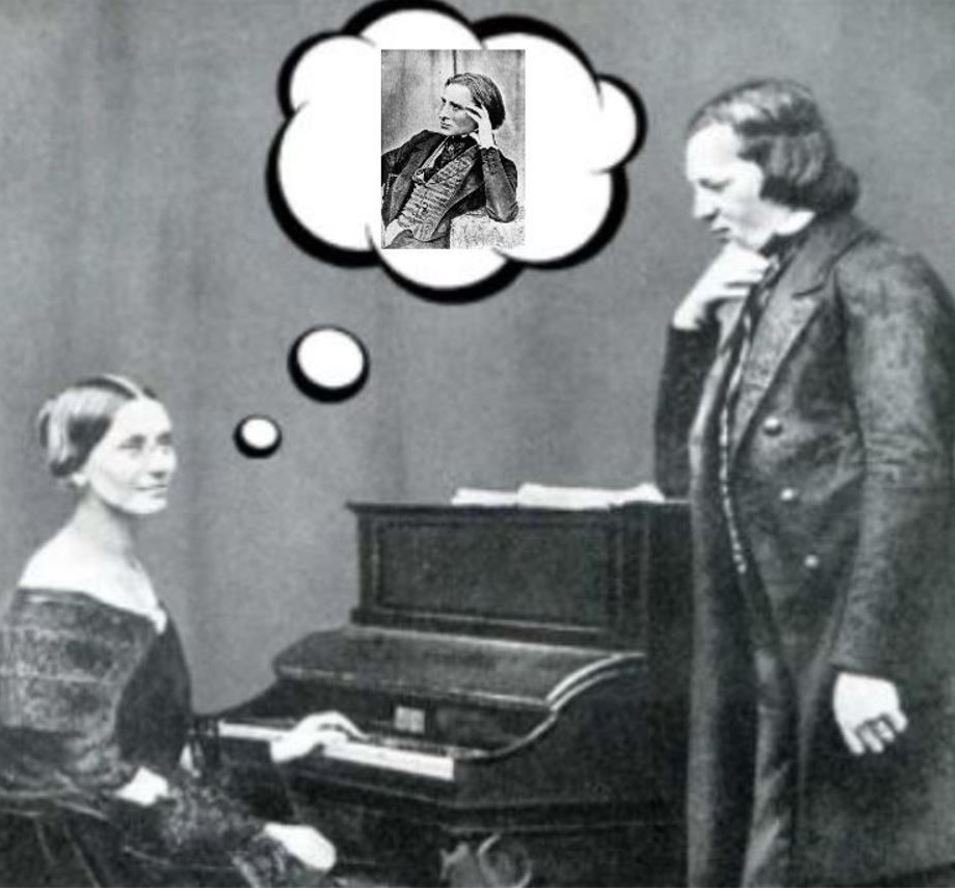
For whatever reason, Franz Liszt really rubbed Clara Schumann the wrong way. Essentially, everything about him ran counter to what she and her husband thought music should be. But it wasn’t always the case.
Clara first met Liszt in 1838, prior to her marriage. Clara Wieck was 19 years-old. Like everyone else, she was in awe of his superhuman technique, but it also made her feel inadequate, especially when they played piano four-hands.
For his part, Liszt was very complimentary. In a letter to his mistress, Marie d’Agoult, he wrote, “Her compositions are truly remarkable, especially for a woman. They contain a hundred times more inventiveness and real feelings than all former and present fantasias by Thalberg.” Sigismond Thalberg was one of Liszt’s chief rivals. But this wasn’t simply “trash talk.” Liszt was consistently impressed by both Schumanns.
In 1840, he dedicated his “Transcendental Etudes” to Clara. She continued to include his music on her concert programs until 1847. Sadly, familiarity bred contempt, and increasingly she came to find everything about him repugnant. She didn’t like that he was a showboat. She recoiled when he took liberties with the scores he played. And she was totally put off by the indelicacy with which Liszt described her husband’s Piano Quintet as “typically Leipzig.”
Liszt, clueless, continued to make friendly overtures, championing Robert’s music. Robert, for his part, responded cordially. Liszt published a long essay in praise of the artistry of both Schumanns in 1855, but Clara remained implacable.
As the War of the Romantics began to heat up in 1860, with heightened antagonism between the Brahmsians (including the Schumanns) and the New German School (followers of Liszt and Wagner), contact became rare.
In 1884, Clara wrote to Liszt with the aim of copying the correspondence he maintained with her husband, who had died in 1856. Liszt responded that he hadn’t saved any of the letters. That essentially ended all interaction between them.
45 years earlier, in 1839, Schumann completed his “Fantasie in C major,” during an imposed separation from his future wife. Clara’s father, Schumann’s piano teacher, flew into a rage when he discovered their relationship and forbade any further contact between them. (Clara had not yet reached her majority and had no say in the matter.) Following a protracted and acrimonious legal battle, the court found in favor of the young lovers, and the two married the day before Clara turned 21 – at which age she could have done as she pleased!
Schumann wrote to Clara about the “Fantasie,” “The first movement is the most passionate I have ever composed; it is a profound lament on your account.”
Ironically, it was Liszt who received the dedication. Liszt returned the favor by dedicating his own Piano Sonata in B minor to Schumann in 1854.
Clara confided to her diary, “Today, Liszt sent me a Sonata dedicated to Robert and some more pieces, together with a polite note. But those pieces are so creepy! Brahms played them to me and I felt really miserable… This is only blind noise – no more healthy thoughts, everything is confused, one cannot see any clear harmonies! And, what is more, I still have to thank him now – this is really awful.”
Of course, Robert, at 44, had already lost his grip on sanity and was by then confined to an asylum.
With that in mind, on Robert Schumann’s birthday, enjoy his Fantasy in C major.
Schumann vs. Wieck
https://interlude.hk/composers-in-the-court-room-robert-schumann-versus-friedrich-wieck/
Henry Daniell, one of Hollywood’s stock villains, hilariously cast as Liszt in “Song of Love” (1947), with Katharine Hepburn as Clara Schumann and Paul Henreid as Robert. As if this weren’t ridiculous enough, Robert Walker plays Brahms!
Hepburn pantomimes selections from Schumann’s “Carnaval.”
Van Cliburn in concert, playing Liszt’s transcription of Schumann’s “Widmung,” written as a wedding present for Clara.
Aaron Copland (93) Beethoven (95) Composer (114) Film Music (145) Film Score (143) Film Scores (255) Halloween (94) John Williams (195) KWAX (229) Leonard Bernstein (104) Marlboro Music Festival (125) Movie Music (160) Mozart (91) Opera (213) Philadelphia Orchestra (89) Picture Perfect (174) Princeton Symphony Orchestra (109) Radio (88) Ross Amico (244) Roy's Tie-Dye Sci-Fi Corner (290) The Classical Network (101) The Lost Chord (269) Vaughan Williams (105) WPRB (397) WWFM (881)
4 responses