A couple of years ago, I was generating Classic Ross Amico crosswords to post on Sundays. This one celebrates film composers Max Steiner and Dimitri Tiomkin, both of whom happened to be born on this date (Steiner in 1888 and Tiomkin in 1894).
The clues not only allude to specifics of their respective lives and careers, but they should also be of ample interest, I hope, to classic movie buffs. So even if you’re convinced you don’t know a lot about music, do check it out if, like me, you happen to watch a lot of movies from the ‘30s, ‘40s, and ‘50s.
To fill out the puzzle, follow the link and select “solve online” at the bottom of the page. You’ll then be able to type directly into the squares. Once you feel you’ve exhausted the puzzle, you’ll find the solutions by clicking on “Answer Key PDF.”
There’s enough distance now that even I was able to fill it out and enjoy the challenge. I probably should have indicated in the clues that some of the answers require full names or, in the case of titles, multiple words.
Open up a box of Sno-Caps, and try not to get buttered popcorn all over your keyboard. Happy birthday, Max Steiner and Dimitri Tiomkin!
I knew yesterday held some musical significance, but then, even after consulting all my usual sources, I just couldn’t figure out what it was. Wouldn’t you know it, yesterday was the announcement of this year’s Pulitzer Prizes, something I had made a mental note of weeks ago. But apparently my mental note pad isn’t what it used to be.
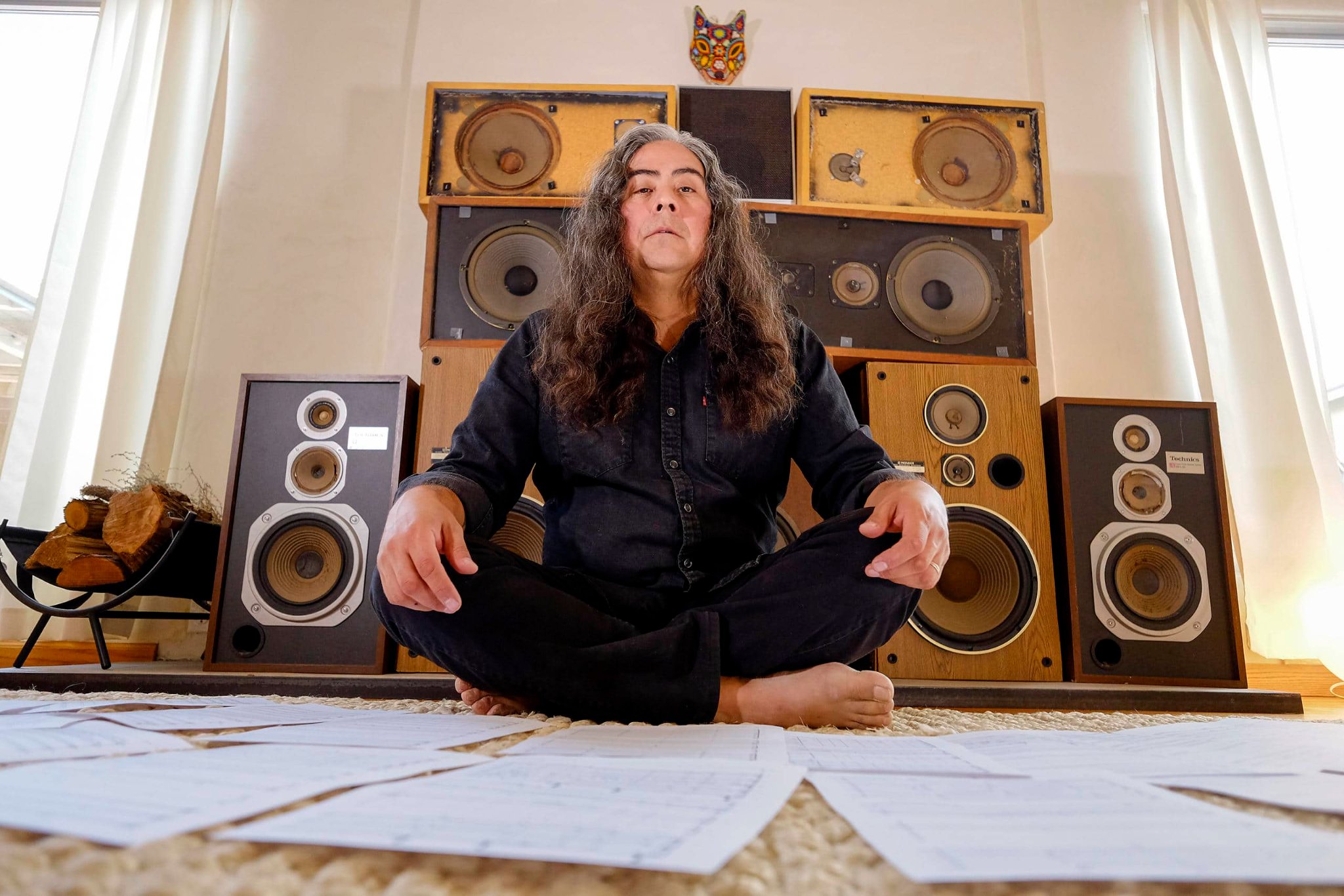
This year’s Pulitzer Prize for Music was awarded to Raven Chacon for “Voiceless Mass.” As the title suggests, there are no voices in the work, which is scored organ and large ensemble (percussion, wind instruments, strings, and electronics). The work was given its premiere last November at Milwaukee’s Cathedral of St. John the Evangelist.
“This was a response to buildings like the church (and other institutions like it), that suppresses voices,” Chacon said in an interview with the Albuquerque Journal.
Chacon, 44, is a composer, performer, and installation artist from the Navajo Nation. He is the first Native American to be honored in the Pulitzer’s music category.
I can’t say that I’ll be whistling a lot of this, but there’s something to be said for ritual, spatial music, and installation art. Even so, I think I’m intrigued by “Tremble Staves” for all the wrong reasons. It puts me in mind of the Falcon and the Silver Surfer, from back in my Marvel Comics days.
Perhaps it’s a good thing I am not a parent; otherwise I’d scare the bejesus out of my kids with stories from Karel Jaromir Erben’s “Kytice,” or “Bouquet.”
Like the Brothers Grimm in Germany, Erben synthesized native folk tales into often gruesome fairy stories. In doing so, he became an important figure in the establishment of a Czech national identity. His stories are recited by Czech schoolchildren and recalled proudly by the Czech people. Despite its influence, “Kytice” did not appear in a complete English translation until 2013.
Antonin Dvořák was particularly fond of Erben’s tales. In 1896, he composed a series of symphonic poems after Erben ballads, including “The Water Goblin,” “The Noon Witch” and “The Wood Dove.” Erben’s influence also hangs over Dvořák’s most famous opera, “Rusalka.”
This Sunday night on “The Lost Chord,” we salute Erben with two Dvořák works: the symphonic poem “The Golden Spinning Wheel,” and the final scene from the dramatic cantata “The Spectre’s Bride.”
“The Golden Spinning Wheel” is a Cinderella story gone very, very wrong, as a wicked stepmother and stepsister not only murder but dismember an unfortunate maiden favored by the king. Not to give too much away, but the titular appliance proves to be their undoing.
“The Spectre’s Bride” is another in the seemingly infinite variations on the tale of a young woman being swept off by the ghost of her lover. The climax of Dvořák’s cantata places the heroine in a cottage besieged by howling spirits, as a corpse on the table, prepared for burial, stirs to do their bidding.
It’s not exactly “Songs My Mother Taught Me.” Join me, if you dare, for “Erben Legends,” as we celebrate Karel Jaromir Erben on Mother’s Day, this Sunday night at 10:00 EDT on WWFM The Classical Network and wwfm.org.
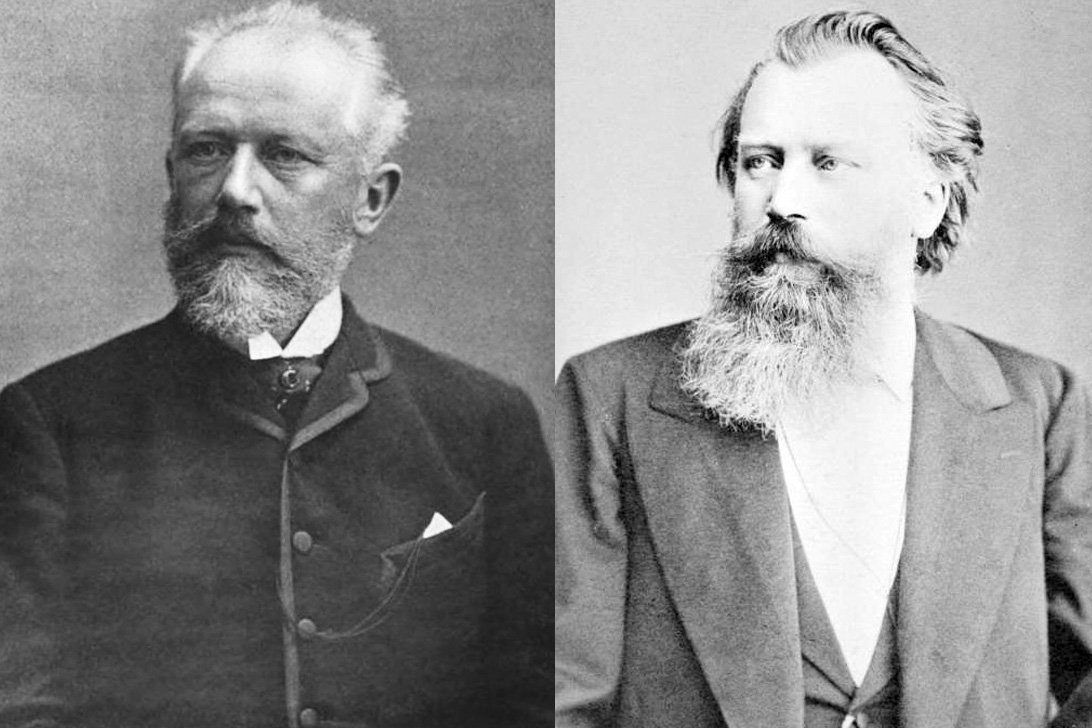
They were like the Felix and Oscar of Romantic music – the high-strung, fastidious Tchaikovsky (1840-1893), and the acerbic, unkempt Brahms (1833-1897). May 7th marks the anniversary of the births of these twin titans of hirsute Romanticism.
I always find it oddly endearing that Brahms and Tchaikovsky were able to look past their personal aversions to one another’s music to actually grow to appreciate their individual qualities as people. There’s a lesson to be learned from that, I think.
Initially, Tchaikovsky might have been right at home posting in a YouTube comments section, confiding to his diary, “I have played over the music of that scoundrel Brahms. What a giftless bastard!”
For his part, Brahms indelicately drifted off to sleep during a rehearsal of Tchaikovsky’s Fifth Symphony – unfortunately, in the presence of the composer.
According to the pianist Zygmunt Stojowski, “Tchaikovsky’s comment to me was that he would have been deeply hurt had he not, himself, frankly hated the Brahms symphonies.”
The two composers met unexpectedly in Leipzig in 1888. They must have been as surprised as anyone to find themselves actually delighting in one another’s company.
“I’ve been on the booze with Brahms,” Tchaikovsky wrote. “He is tremendously nice – not at all proud as I’d expected but remarkably straightforward and entirely without arrogance. He has a very cheerful disposition, and I must say that the hours I spent in his company have left me with nothing but pleasant memories.”
The following year, the two met again in Hamburg. That’s when Brahms slept through the Fifth Symphony. Tchaikovsky bore it lightly and was convivial throughout the meal they shared afterward. Although Brahms was harsh in his assessment of the last movement of the symphony and Tchaikovsky confessed an overall aversion to Brahms’ style, the evening was full of good cheer and ended with Tchaikovsky inviting Brahms to visit him in Russia.
How large a role alcohol may have played in the two men’s warmth for one another we can only guess. It was not just anyone who could be Brahms’ drinking buddy.
Regardless of their mutual affection, the two never could reconcile themselves to one another’s music. When asked what he thought of a piano trio Brahms had been rehearsing (the Trio in C minor), Tchaikovsky was polite but frank: “Don’t be angry with me, my dear friend, but I did not like it.”
Happy birthday, boys.
Brahms, Piano Trio No. 3 in C minor, Op. 101 (disliked by Tchaikovsky)
Tchaikovsky, Symphony No. 5 in E minor (disliked by Brahms)
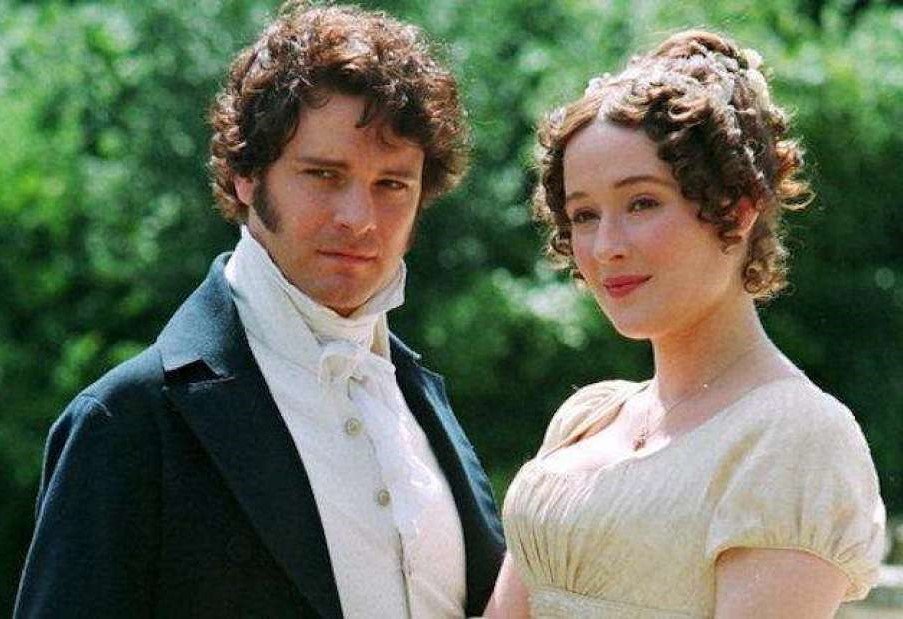
It is a truth universally acknowledged that a radio host in possession of a weekly film music show must be in want of a good theme. This week on “Picture Perfect,” we eschew the usual fare of Vikings, pirates, and dinosaurs, to enter the world of Jane Austen.
We’ll hear Rachel Portman’s Academy Award winning score for “Emma” (1996), Patrick Doyle’s music for “Sense and Sensibility” (1995), and selections from two versions of “Pride and Prejudice,” with music by Carl Davis (1995) and Dario Marianelli (2005).
Not only do Austen adaptations sport amazing casts, the scores attract some of classical music’s star performers. Listen in for contributions by soprano Jane Eaglen, pianist Jean-Yves Thibaudet, and fortepianist Melvyn Tan.
A large income is the best recipe for happiness I ever heard of – at least according to “Mansfield Park.” The next best is a playlist assembled from Jane Austen movies. Join me this Saturday evening at 6:00 EDT, on WWFM – The Classical Network and wwfm.org.


2 responses