• Raritan River Music Fest Returns to NJ & PA

    Raritan River Music Fest Returns to NJ & PA

    by 

    in
    7 responses

    Attention, music-loving Jerseyites and Eastern Pennsylvanians!

    The robins and catbirds are scarcely settled-in, and already the first of the warm-weather music festivals is upon us!

    For the 33rd consecutive year, Raritan River Music will beat the summer crush, in presenting a winning combination of spring, music, and historic venues in Raritan and Warren Counties. Internationally-renowned soloists and ensembles will venture in to scenic West-Central Jersey to present a wide range of musical programs in a variety of genres.

    The first of the concerts will take place this Friday at 7:30 pm at Stanton Reformed Church in Stanton. The Bergamot Quartet will perform works by living composers, with a special emphasis on women (including Pulitzer Prize-winner Tania Leon), in dialogue with music by Fanny Mendelssohn Hensel. The program will also include selections by Paul Wiancko, Suzanne Farrin, and Ledah Finck, from their album “In the Brink.”

    On Saturday, May 14, at 4 pm, outdoors under cover at Blue Army Shrine in Asbury (NOT to be confused with Asbury Park), fiddler Eileen Ivers will return with her all-star band, The unIVERSal Roots (on Irish fiddle, guitar, Irish accordion, whistles, trumpet, bass, and percussion, with vocals) to share music from her new album, “Scatter the Light.”

    On Saturday, May 21, at 7:30 pm, at Greenwich Presbyterian Church in Stewartsville, Raritan River Music founders (and Warren County residents) Michael Newman and Laura Oltman, a.k.a. the Newman and Oltman Guitar Duo – for 35 years ensemble in residence at the Mannes School of Music – will be joined by leading Mannes faculty. They’ll perform a new Raritan River Music commission from esteemed Cuban master Leo Brouwer, entitled “Through the Looking Glass.”

    Also on the program will be Brazilian composer Clarice Assad’s “Dusty Grooves” and Yenne Lee’s arrangement of her YouTube sensation (with 19 million views) “Autumn Leaves.” In addition, Hannah Murphy and Phil Goldenberg will play selections from their groundbreaking project “Changing the Canon,” featuring nine eminent Black American composers, here represented by Mason Byrnes and Thomas Flippin.

    The festival will conclude on Saturday, May 28, at 7:30 pm at Prallsville Mills in Stockton, with the improvisatory ensemble 9 Horses, a group that blurs the line between “folk art” and “fine art,” playing selections from their critically-acclaimed albums, on mandolins (acoustic and electric), violins, Hardanger d’amore, and bass.

    This year’s festival may also be accessed via online streaming. If you attend in-person, please bring proof of vaccination status. Also, exercise common sense in terms of maintaining appropriate face coverings at the venues, so you don’t get or spread the bug!

    For more information and directions, visit raritanrivermusic.org.


    COUNTER-CLOCKWISE FROM TOP: The Bergamot Quartet, Eileen Ivers & the unIVERSal Roots, the Newman & Oltman Guitar Duo, and 9 Horses


  • Ethel Smyth’s Memoirs and Musical Legacy

    Ethel Smyth’s Memoirs and Musical Legacy

    by 

    in
    7 responses

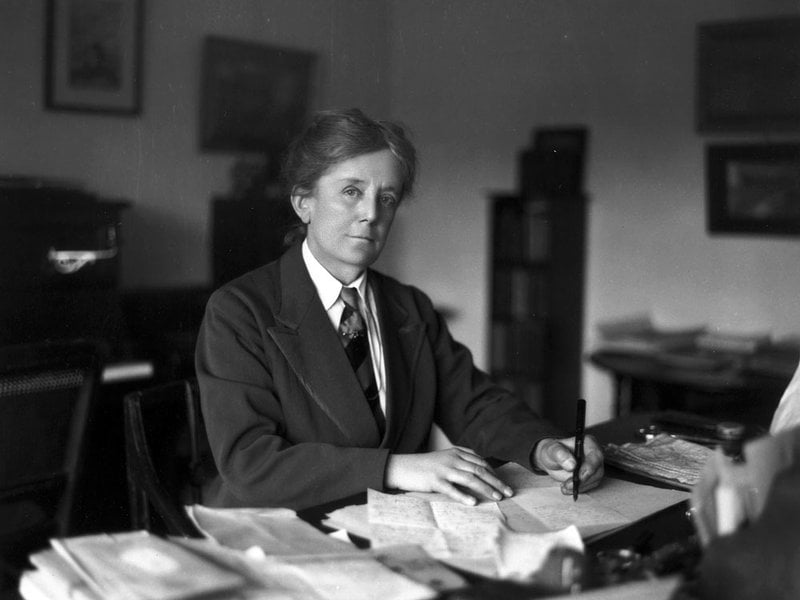
    Well, I finally finished reading Dame Ethel Smyth’s memoirs a few days ago. In fact, I wrote this the following morning, but am only just getting around to smoothing it out.

    While I wouldn’t modify my assessment that, for a published work, Smyth takes up an awful lot of space bringing in way too many names of people we never get to know, so that it becomes a chore for the reader to try to keep most of them straight – as I indicated, the memoirs have been distilled from multiple volumes, so the effect might have been exacerbated in part by the book’s editors (who try to make up for it with the inclusion of a glossary of “biographical notes”) – I did indeed find the concluding sections especially poignant.

    Smyth struggled her entire life to get her music heard, and in my opinion, she did an amazing job for the era, and with so much stacked against her. Her foremost impediment, of course, was that she was a woman, which automatically restricted her acceptance in a male-dominated profession. I mean, women didn’t even have the right to vote. (At a point, she would become passionately involved with the women’s suffrage movement.)

    She also enjoyed actually having a life. So while by no means unproductive, she made time whenever she could to engage in sport and walk with her dogs and plant her garden and bicycle and visit with friends. For these reasons, among others, she preferred to live outside the musical center of London, which she found both physically and psychologically restrictive. She couldn’t bear the thought of prolonged city life. She adored her pets, and her account of her relationship with her last sheepdog, Pan the Fourth, will move anyone who has ever loved an animal.

    Of course, she also had other distractions. She virtually walked away from composition for two years to devote herself to the cause of women’s suffrage in England (for which she served time in prison for knocking out windows with stones). And personality-wise, she was always very forthright and wouldn’t take no for an answer. I would argue, for the era, it helped her more than it hurt her, but she felt it alienated some who might have helped her. Certainly it did not put off Thomas Beecham or Henry Wood or Bruno Walter or any number of other important musical figures who championed her music along the way.

    Unquestionably, she was a celebrity. If her contemporaries heard comparatively little of her music, they knew of her character and exploits. Furthermore, she wrote prolifically, issuing ten autobiographical volumes (from which the one-volume “Memoirs” was extracted). She received a laudatory entry in the 1908 edition of “Grove’s Dictionary of Music and Musicians,” for her 50th year. In 1922, she became the first female composer to be honored with a damehood. And in 1934, at 75, a festival was organized of her music, which again was conducted by Beecham. Unfortunately, by then, she was stone deaf.

    She pursued opera in a country without a strong operatic tradition, and therefore spent too much time in foreign lands, especially Germany, chasing down and creating opportunities. Her opera “Der Wald” was heard at New York’s Metropolitan Opera before it was ever heard in England. She had two of her operas all set to go in reputable opera houses in Germany, when Archduke Ferdinand was assassinated in Sarajevo, precipitating World War I. This was very bad luck indeed. But as Smyth observes, “Life has taught me one thing: when people fail to get over (or round) obstacles, it is never wholly the fault of other people.”

    In fact, she is as clear-eyed about any personal shortcomings as she is the external factors that weighed against her. She is reflective and articulate, as any memoirist must be. There is an eerily prescient passage in which she speculates as to whether or not her music will ever be revived in future years.

    “… [I]t amuses me to think that someday after my death, when all traces of my sex have been reduced to ashes at the Woking Crematorium (so handy!) someone will very likely take me up as a stunt – no extravagant assumption, seeing what subjects attain Stunt Rank these days! Then, together with the assembling of my musical remains, this Annex will be available, and the Stunt Raiser, lifting his eyebrows, can either burst out laughing (“O, come! You can’t put that across in England!”) or he can have those pages made into a fan and therewith fan the flame of the Stunt. And thus, someday, I may make friends, musically, with those I cannot get at in my lifetime.”

    Keep in mind, this was an era when neglected scores were not digitized or maintained, but left to molder, if not in archives or libraries, then at home in drawers or on high shelves. She also muses wistfully that reviews that appeared in the foreign press were all but inaccessible to those of influence in her native land.

    But she remained philosophical, and always grateful. The chapter “A Life Summed Up” conveys it best. “Blessed with friends, with health, spared the most wearing, the most disheartening form of the inevitable struggle for existence, what has or has not been achieved the days have been gloriously spent in the open. And if, digging from morn till eve, one has not unearthed exactly what one expected, all the while the treasure was being found.”

    Smyth died on May 8, 1944, at the age of 86. What would she think now that so much of her music has been recorded, I wonder? All these years later, I am moved to think that she would never know. I am not one to promote music merely for political reasons, or to suit current trends in fashion. Smyth was a composer of merit, who felt acutely that she had something genuine to say. Her assessment was backed up by enough notable musicians of her time. Certainly, she was impeded by professional politics and social norms and current events and severe illness and just plain bad luck.

    But even with all that stacked against her, she managed to make her mark. Ethel Smyth was a force to be reckoned with. And now, in the present day, the stage is set for a fairer assessment of her worth.

  • May Day Madrigals on the Lost Chord

    May Day Madrigals on the Lost Chord

    by 

    in
    7 responses

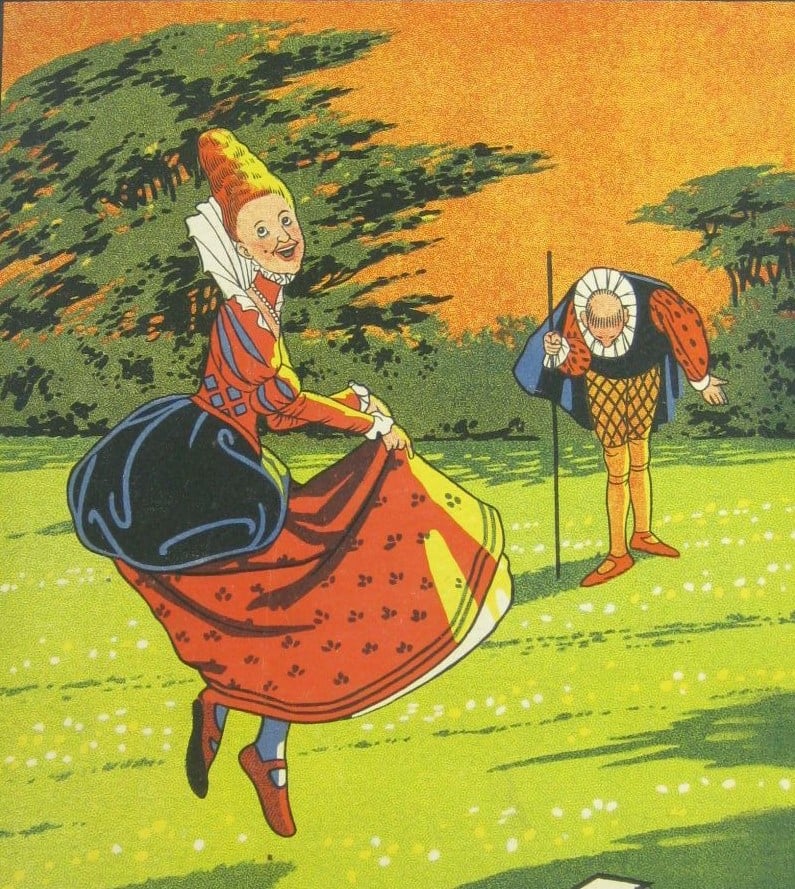
    Now is the month of maying!

    This Sunday night on “The Lost Chord,” at the end of a lusty day of reveling around the maypole and “playing barley-break,” unwind with three 20th century instrumental and orchestral works inspired by Renaissance madrigals.

    Tune in for Igor Stravinsky’s “Monumentum pro Gesualdo di Venosa,” Bohuslav Martinu’s “Three Madrigals” for violin and viola, and Joaquin Rodrigo’s “Concierto Madrigal,” a piece for two guitars and orchestra.

    Fie then! why sit we musing, youth’s sweet delight refusing? Celebrate May Day with “Unsung Madrigals,” this Sunday night at 10:00 EDT, on WWFM – The Classical Network and wwfm.org.


    Throwback to Merrie England

    Maypole dance from “La Fille mal gardée”

    Suite from Howard Hanson’s “Merry Mount” (after Hawthorne’s “The Maypole of Merry Mount”)

    A toast to Merrymount’s Thomas Morton

    https://almostchosenpeople.wordpress.com/tag/thomas-morton/

    Shakespeare, the May Pole and the Hobby Horse

    https://silibrary1.wordpress.com/tag/maypole/

    Welcoming the sun with a good old-fashioned morris dance

    May Day is for capering around the May Pole. Beltane is for embarrassing your parents.

    The May Day Fish-Slapping Dance and the Gavotte of the Long John Silvers

    “Now is the month of maying” on crumhorns

    Deer Man

    Fa la la la la la la la la, fa la la la la la la!


  • Sci-Fi Talk Star Trek Salt Vampire and More

    Sci-Fi Talk Star Trek Salt Vampire and More

    by 

    in
    4 responses

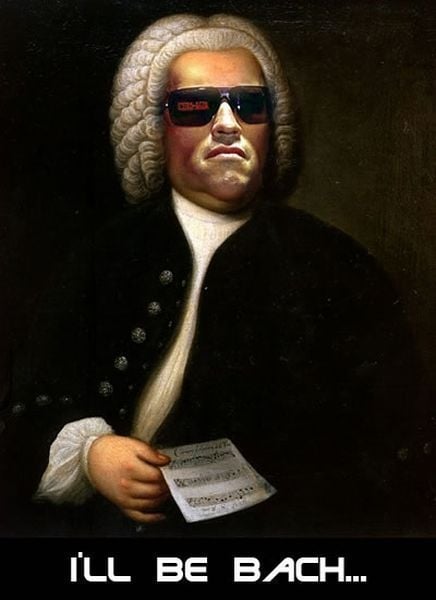
    In the world of classical music cosplay, as in all things, the T-800 brooks no nonsense.

    I terminate last night’s discussion about “The Terminator” (1984) with an honest assessment of the most recent “Star Wars” trilogy. But the show’s not really about that (even if it happens to be a recurring theme). The Skynet apocalypse is inevitable. Watching the show will toughen you up, with some good viewer comments and questions, some of which we really don’t seem to get around to answering, even if they do stimulate conversation. You can watch it here:

    “Star Trek” fans take note: Roy will be back tomorrow evening to team-up with Jaime “Fez” Sanchez, host of the podcast “Fez Talks,” to discuss the original series’ third-season episode “The Enterprise Incident,” Sunday at 7 pm EDT.

    Then on Friday, May 6, his guest will be actor, stuntperson, and dancer Sandra Gimpel, who played the Salt Vampire in the “Star Trek” original series’ episode “Man Trap.” She also appeared in the series’ pilot “The Cage,” as a Talosian. Furthermore, she found regular work on “Lost in Space” as Bill Mumy’s stunt double. And she danced with Elvis 15 times! Suffice it to say that her list of credits is long, and she’s still working. The May 6 show will begin one half hour later than usual, at 7:30 pm EDT.

    Make the trek! And bring your thoughts and questions to the next Facebook livestreams of Roy’s Tie-Dye Sci-Fi Corner!

    https://www.facebook.com/roystiedyescificorner


  • Western Heroes Music From Shane to Outland

    Western Heroes Music From Shane to Outland

    by 

    in
    4 responses

    The western must be the most adaptable of cinematic genres – which seems funny, in a way, since the figures at its core are so resolute. This week on “Picture Perfect,” we reflect on the evolution of the western hero with music from four contrasting films.

    “Shane” (1953) depicts a classic western archetype, the reluctant gunfighter, a drifter with a past, who pauses on his way to nowhere to defend a family of homesteaders against injustice at the hands of a greedy cattle baron. Mysterious, laconic, but with an unshakeable moral compass, Shane can be counted on always to do the right thing, resorting to violence only when he’s out of options. Alan Ladd’s mythic turn is supported by one of Victor Young’s best-loved scores.

    Dimitri Tiomkin was once asked how a composer of Ukrainian origin could write such convincing western music. He responded, in accented English, “A steppe is a steppe is a steppe.”

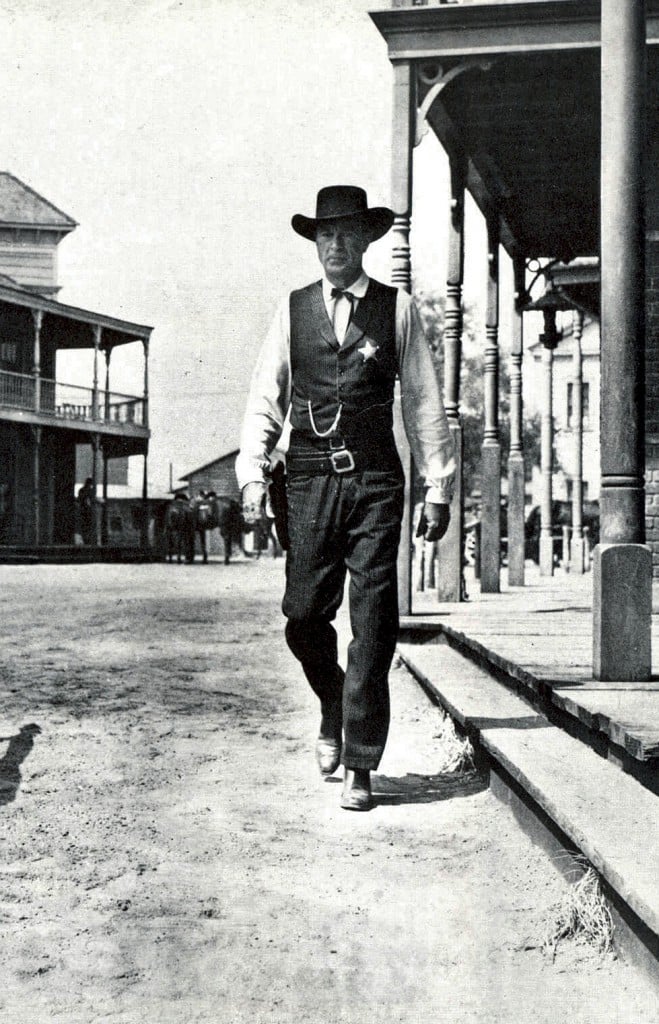
    Tiomkin would become the composer of choice for the American western throughout the 1950s, due to his distinctive handling of “High Noon” (1952). The success of its title song, “The Ballad of High Noon” (“Do Not Forsake Me, Oh My Darlin’”), with its melody integrated into the orchestral score, provided a western blueprint for well over a decade. Tiomkin was honored with two Academy Awards, for Best Song and Best Scoring of a Dramatic Motion Picture.

    In “High Noon,” we are presented with a very different hero from that of the “Shane” archetype, a hero allowed to show uncertainty. Gary Cooper’s Marshal Will Kane seeks help for the final showdown, but winds up having to stand alone. As Mark Twain observed, “Courage is not the absence of fear. It’s acting in spite of that fear.”

    Clint Eastwood’s The Man With No Name, the anti-hero of Sergio Leone’s “Dollars Trilogy” of spaghetti westerns, is very much a product of the 1960s – cynical and self-serving, with his own moral code, lots of grays clouding up the black and white. The character was introduced in 1964’s “A Fistful of Dollars” (1964), a western remake of Akira Kurosawa’s “Yojimbo,” with a wandering gun-for-hire standing in for Kurosawa’s ronin, or masterless samurai.

    The Man With No Name strikes a mercenary pose, his allegiance shifting with the most profitable wind. However, he is revealed to have his own sense of justice, unorthodox as it may be.

    Ennio Morricone brought a fresh sound to this new kind of hero and earned international attention, which would intensify a few years later with his iconic score for “The Good, the Bad and the Ugly.”

    By the late ‘70s, the western as a genre appeared to be in its death-throes. But never underestimate the durability of a good myth. Even as galloping horses and dusty plains grew increasingly scarce on movie screens, the tropes and iconography of the western endured, transferred to the final frontier of space.

    Following the success of “Star Wars,” in 1977, with its cantinas and space cowboys, shoot-’em-ups and showdowns were, increasingly, set in distant galaxies, though, regrettably, often without much of the former “western” moral gravitas.

    “Outland” (1981) is a gritty update of “High Noon,” transferred to a mining colony on one of the moons of Jupiter. This time Sean Connery plays the marshal, like Gary Cooper’s Will Kane, determined to do the right thing, even as he is left to stand alone against hired gunmen. The score is by Jerry Goldsmith, who, earlier in his career, had written music for a fair number of true westerns, on both big screen and small.

    I hope you’ll join me for four faces of the western hero, on “Picture Perfect,” music for the movies, this Saturday evening at 6:00 EDT, on WWFM – The Classical Network and at wwfm.org.


Tag Cloud

Aaron Copland (93) Beethoven (95) Composer (114) Film Music (145) Film Score (143) Film Scores (255) Halloween (94) John Williams (195) KWAX (229) Leonard Bernstein (104) Marlboro Music Festival (125) Movie Music (160) Mozart (91) Opera (213) Philadelphia Orchestra (89) Picture Perfect (174) Princeton Symphony Orchestra (109) Radio (88) Ross Amico (244) Roy's Tie-Dye Sci-Fi Corner (290) The Classical Network (101) The Lost Chord (269) Vaughan Williams (105) WPRB (397) WWFM (881)

DON’T MISS A BEAT

Receive a weekly digest every Sunday at noon by signing up here


RECENT POSTS