A “prepared piano” is a piano that has foreign objects laid on or inserted between its strings. These serve to alter the sound, character, timbre, and tuning of the instrument, and in the process create some rather fascinating percussive effects. It’s kind of like having your own gamelan orchestra at your fingertips. For a composer, it’s both effective and economical – if a little time consuming to get it set up.
John Cage was a pioneer of the practice. He composed “A Valentine Out of Season” for prepared piano in 1944, shortly before his separation from his wife, Xenia – which could very well account for the title. In this instance, he employed weather stripping, rubber, wood, bolts, pennies, and bamboo.
Cage’s first foray into the prepared piano came about as a solution for the writing of a dance piece, “Bacchanale,” for performance in a venue too small to accommodate a percussion ensemble, in 1938. To give an idea of how radical this was, that was the same year Aaron Copland’s “Billy the Kid” was introduced!
“A Valentine Out of Season” was choreographed by Merce Cunningham, as “Effusion avant l’heure,” for presentation in Paris in 1946. For New York, the title was changed to “Games,” and later “Trio.”
Thanks to a little ingenuity, Cage’s out-of-season Valentine turned out to be music for all seasons.
This Sunday night on “The Lost Chord,” polish up on your Polish music with works by Mieczyslaw Karlowicz and Emil Mlynarski.
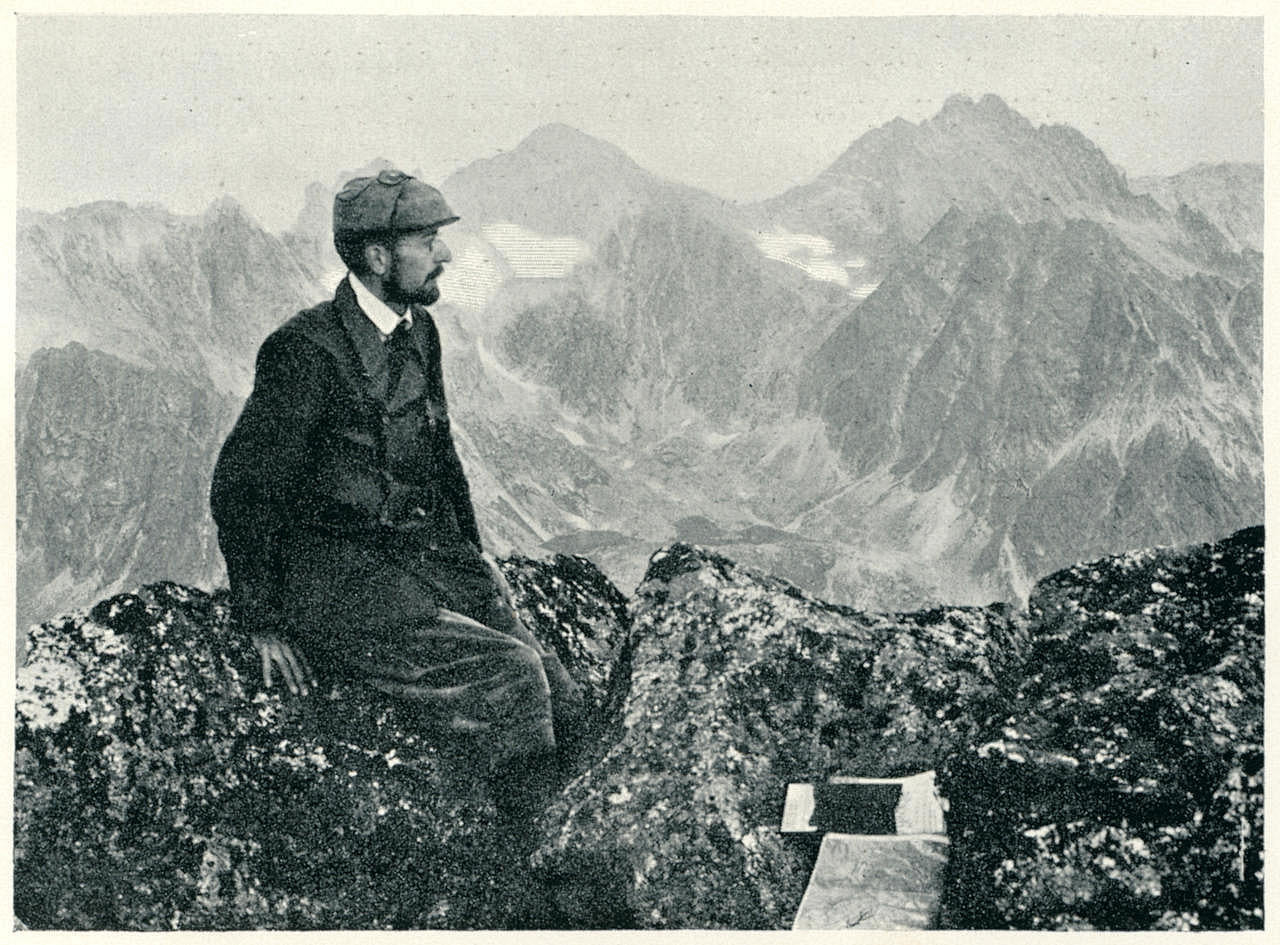
Karlowicz, by all accounts one of the gloomiest of composers, embraced an outlook and philosophy that might well be described as pessimism leavened with pantheism. In this melancholy world, all love is unfulfilled or doomed, all existence leads to tragedy and destruction. The only place the composer seemed to find solace was in his beloved Tatras. He once noted, “Atop a high mountain, I become one with the surrounding space. I cease to feel individual. I can feel the mighty, everlasting breath of eternal being.”
It is perhaps a kind of poetic justice that a life spent cultivating suicidal despair, and raising it to a level of high art, would be cut short, when Karlowicz was killed in an avalanche in 1909, aged only 32 years – a most fitting end for an orophile with fatalistic tendencies.
On the eve of Valentine’s Day’s, we’ll hear one of the six symphonic poems upon which Karlowicz’s reputation, in large part, is based. “Stanislaw and Anna Oswiecim,” inspired by a painting of Stanislaw Bergmann, evokes a tale of forbidden love between brother and sister, ending in inevitable tragedy.
Then it’s romance of different sort, with a violin concerto by Mlynarski.
Mlynarski was recognized both at home and abroad as a staunch champion of Polish musical causes. He directed the Warsaw Opera and spearheaded the drive to build Warsaw Philharmonic Hall. He conducted festivals of Polish music in Paris, commissioned Sir Edward Elgar to write “Polonia” for a wartime Polish Relief Concert, and conducted the world premiere of Karol Szymanowski’s opera “King Roger.” He was, in fact, voted Poland’s most popular conductor. (Parenthetically, he also became the father-in-law of Artur Rubinstein.)
Among his other achievements, he toured with the London Symphony Orchestra, became permanent conductor of the Scottish National Orchestra, shared concerts with Sir Thomas Beecham, and for a time was dean of the Curtis Institute of Music in Philadelphia.
He was also an outstanding violinist. He studied with Leopold Auer, toured widely, and won a major composition award with his First Violin Concerto.
Violinist Nigel Kennedy first encountered his music when he was handed a tape of Mlynarski’s Violin Concerto No. 2 by an anonymous Polish fan following a concert. Kennedy went on to make his own recording of the work. I think you’ll agree, it’s a very beautiful discovery.
I hope you’ll join me in dipping into the archive for an hour of Polish music, on “Pole Vault,” this Sunday night at 10:00 EST, on WWFM – The Classical Network and wwfm.org
The term “Gothic romance” doesn’t necessarily connote a love story. In 19th century literary tradition, “romance” was often suggestive of the mysterious, the adventurous, the sensational – a kind of pleasing terror, often touched by elements of horror.
This week on “Picture Perfect, I strike my annual blow against Valentine’s Day with music from movies featuring creepy old houses, ghosts, malevolent housekeepers, and madwomen in the attic.
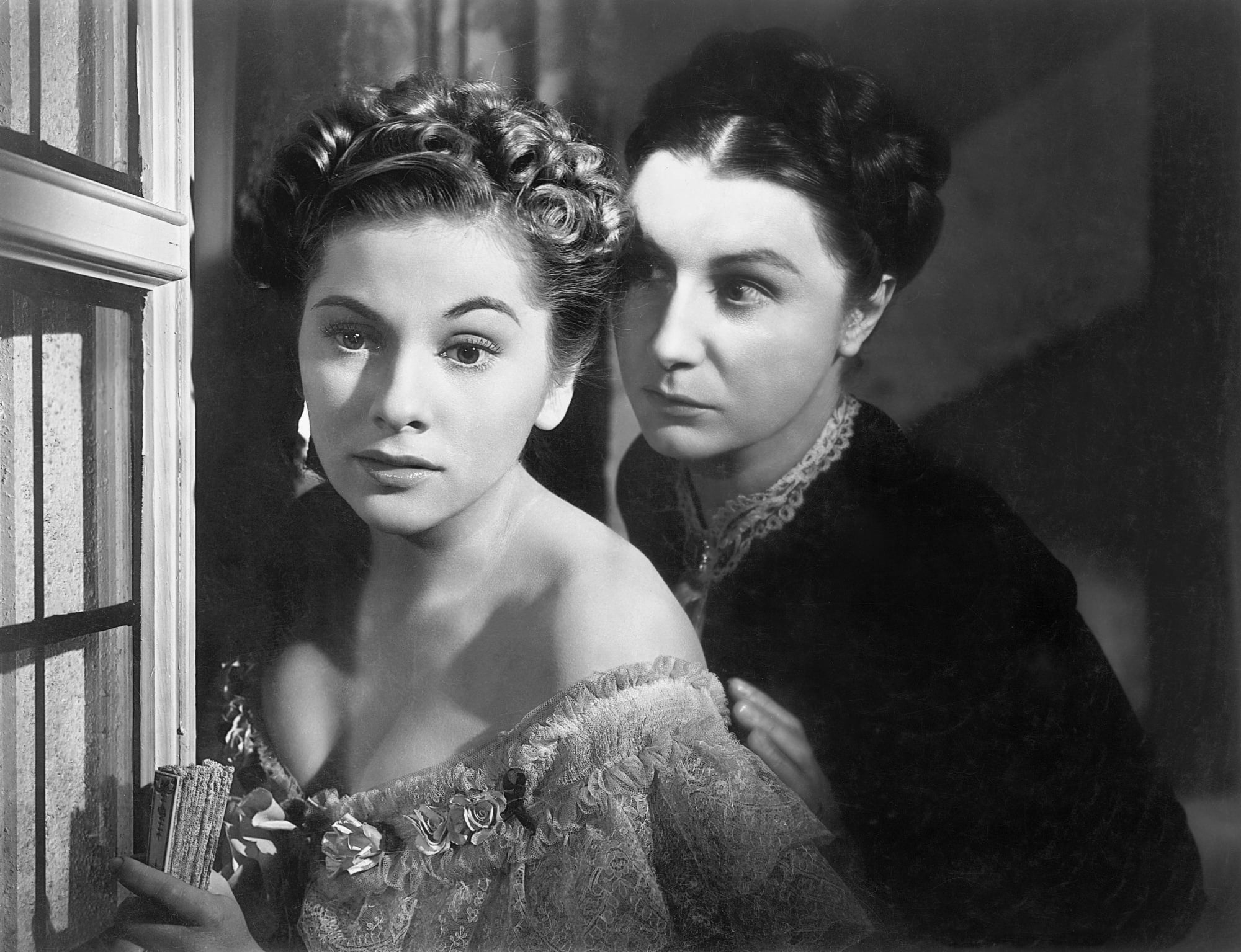
Alfred Hitchcock’s “Rebecca” (1940), based on the Gothic novel of Daphne du Maurier, is a clear throwback to the works of the Brontë sisters. Laurence Olivier and Joan Fontaine star, but Judith Anderson steals the show as the ice-cold Mrs. Danvers. The film was the recipient of an Academy Award for Best Picture, the only Hitchcock film to be so honored. Franz Waxman’s opulent and atmospheric score flares at its operatic climax.
Collectively, the Brontë sisters were responsible for some of the most tortured romances in English literature. Charlotte Brontë’s “Jane Eyre,” a work which clearly anticipates “Rebecca,” was adapted most famously in 1940, again with Joan Fontaine, and featuring Orson Welles as Rochester. Three decades later, a television version of “Jane Eyre” (1971) appeared, with Susannah York and George C. Scott. The music for the latter was by an up-and-coming composer, only a few years away from superstardom: John Williams.
“Uncle Silas” (1947) is a Gothic romance that sidesteps the love story altogether. Forced to live under the guardianship of a sinister uncle and a malevolent French governess, its heroine is thrust into an atmosphere of insinuating menace. Sheridan Le Fanu’s “old dark house” thriller was made into a film by Gainsborough Studios, and released in the United States as “The Inheritance.” A young Jean Simmons plays the imperiled heiress. The music was by Alan Rawsthorne, a distinguished concert composer, who nonetheless managed to compose 27 film scores. Bernard Herrmann considered the score for “Uncle Silas” to be one of the finest ever written.
Finally, we’ll hear music from a beloved adaptation of Emily Brontë’s tale of star-crossed love, “Wuthering Heights” (1939). Merle Oberon is Cathy and Laurence Olivier is Heathcliff. Alfred Newman’s music yearns and sobs right along with us.
It’s an hour of gloom and doom for Valentine’s Day. Join me for Gothic romances on “Picture Perfect,” music for the movies, this Saturday evening at 6:00 EST, on WWFM – The Classical Network and wwfm.org.
NOTE: In honor of John Williams’ 90th birthday on February 8, this is the first of several episodes that will incorporate at least one of his film scores. Next week, for Presidents Day Weekend, it’s hail to the chief, as John Williams does the presidents!
Before “Lincoln in the Bardo,”* there was “Abraham Lincoln Walks at Midnight.”
Vachel Lindsay’s poem, written in 1914, depicts Lincoln stirring from his eternal rest to roam the streets of Springfield, Illinois, still burdened by the nation’s troubles. I’d hate to think what Lincoln’s spirit must be going through today.
On Lincoln’s birthday, here’s Florence Price’s setting of Lindsay’s meditation. It is one of three Price settings of the poem rediscovered in 2009. From the information available, it would seem that all three would fit on one album. Somebody record these, please!
By coincidence, today also happens to be the anniversary of the birth of Roy Harris. Born on Lincoln’s birthday in 1898 – in a log cabin in Lincoln County, Oklahoma – Harris had to have been imbued with a sense of destiny. Harris also set Lindsay’s poem, for mezzo-soprano, violin, cello and piano.
Harris was regarded as one of America’s greatest composers. He was particularly renowned for his symphonies. His Symphony No. 3 is his most famous work. The Symphony No. 6, formulated over a reading of Sandburg, is subtitled “Gettysburg.”
Each of the four movements bears a superscription from Lincoln’s Gettysburg Address:
I. Awakening (“Fourscore and seven years ago…”);
II. Conflict (“Now we are engaged in a great civil war…”);
III. Dedication (“We are met on a great battlefield of that war…”);
IV. Affirmation (“…that we here highly resolve that these dead shall not have died in vain…).
I call that putting a Price on linkin’ Harris and Lincoln.
“Abraham Lincoln Walks at Midnight”
(In Springfield, Illinois)
It is portentous, and a thing of state
That here at midnight, in our little town
A mourning figure walks, and will not rest,
Near the old court-house pacing up and down,
Or by his homestead, or in shadowed yards
He lingers where his children used to play,
Or through the market, on the well-worn stones
He stalks until the dawn-stars burn away.
A bronzed, lank man! His suit of ancient black,
A famous high top-hat and plain worn shawl
Make him the quaint great figure that men love,
The prairie-lawyer, master of us all.
He cannot sleep upon his hillside now.
He is among us:—as in times before!
And we who toss and lie awake for long,
Breathe deep, and start, to see him pass the door.
His head is bowed. He thinks of men and kings.
Yea, when the sick world cries, how can he sleep?
Too many peasants fight, they know not why;
Too many homesteads in black terror weep.
The sins of all the war-lords burn his heart.
He sees the dreadnaughts scouring every main.
He carries on his shawl-wrapped shoulders now
The bitterness, the folly and the pain.
He cannot rest until a spirit-dawn
Shall come;—the shining hope of Europe free:
A league of sober folk, the Workers’ Earth,
Bringing long peace to Cornland, Alp and Sea.
It breaks his heart that things must murder still,
That all his hours of travail here for men
Seem yet in vain. And who will bring white peace
That he may sleep upon his hill again?
Mizzy Mazzoli’s adaptation of George Saunders’ experimental novel, “Lincoln in the Bardo,” is scheduled for a 2025 Metropolitan Opera debut
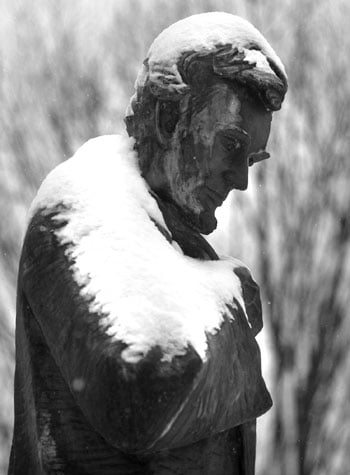
PHOTOS: (Clockwise from upper right) Florence Price, Roy Harris, and Abraham Lincoln walking at midnight
Though he composed his share of “serious” music, Joseph Horovitz was not afraid to go popular, light, or even ridiculous. In fact, my first exposure to his work was through the “Horrortorio,” composed for one of the Hoffnung Music Festival concerts. Gerard Hoffnung’s whimsical series enlisted top-flight English musicians to let down their hair and embrace their lunatic side, in skewering staid classical music conventions. The “Horrortorio,” a response to Hammer Films’ lurid resurrections of classic monsters, relates the wedding of Dracula’s daughter to Frankenstein’s son, in the context of a faux oratorio. Horovitz spoofs Baroque standards by Bach and Handel, William Walton’s “Belshazzar’s Feast,” and the Gilbert & Sullivan operettas.
To a broader audience, he was perhaps best known for his theme music to “Rumpole of the Bailey,” the British television series starring Leo McKern.
The composer’s family, Jewish, fled Vienna following the Anschluss and settled in England in 1938. Horovitz’s musical studies began at New College, Oxford, where he also pursued modern languages. Later, he attended the Royal College of Music, where among his teachers was Gordon Jacob. Then he was off to Paris for further studies with Nadia Boulanger.
Horovitz was appointed music director at the Bristol Old Vic in 1950. He was also a conductor of opera and ballet, who toured widely.
His alma mater, New College, Oxford, recently celebrated his 95th birthday with streamed performances of his 4th and 5th String Quartets.
Among Horovitz’s other works were 16 ballets, including “Alice in Wonderland,” and several operas, including one based on the classic Garbo film “Ninotchka.” As an Edgar Rice Burroughs fan, I was also interested to discover that he composed the score for “Tarzan’s Three Challenges” (1963), with Jock Mahoney – at 44 the oldest Tarzan on film!
In addition, he wrote nine concertos, including one for euphonium and a “Jazz Concerto” for piano, strings, and percussion.
His children’s pop cantata, so-called, “Captain Noah and His Floating Zoo,” was widely embraced by amateur performers.
Horovitz died on Wednesday. He was 95 years-old.
“Rumpole of the Bailey”
The first three videos in this playlist comprise his Sonatina for Clarinet and Piano
The Euphonium Concerto
“Alice in Wonderland”: Lobster Quadrille and Grand Waltz
“Tarzan’s Three Challenges”
The String Quartet No. 5
The “Horrortorio”
The notorious and uproarious Hoffnung Music Festival


2 responses