• Liszt’s Operatic Keyboard Magic

    Liszt’s Operatic Keyboard Magic

    by 

    in
    7 responses

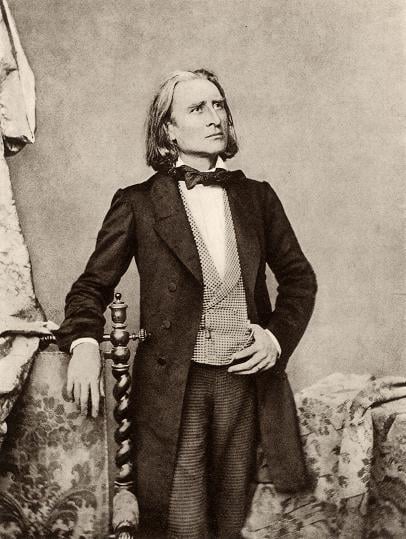
    In the days before the phonograph, it was common practice to arrange works from stage and concert hall for the piano, so that the music could be disseminated and enjoyed in the home. A figure like Franz Liszt went above and beyond, frequently elevating the original material to a whole other level of artistry.

    These “paraphrases,” as he often called them, could hardly have been considered reductions. Most would have been too difficult for amateur pianists. Nevertheless, some of them have become very well known – the “Reminiscences of Don Juan,” “Reminiscences of Norma” and “Rigoletto Paraphrase” spring to mind. This Sunday night on “The Lost Chord,” we’ll sample a few which are perhaps not so frequently heard.

    For his famous showdown against rival pianist Sigismond Thalberg, at the Paris salon of Princess Belgiojosa-Trevulzia in 1837, Liszt selected his “Niobe Fantasy,” a prime example of his ability to spin gold from the flax of a now-forgotten opera, in this case by Giovanni Pacini. When the dust settled, Belgiojosa-Trevulzia rose to declare Thalberg the greatest pianist, and Liszt the ONLY pianist – a very diplomatic assessment.

    Liszt’s paraphrases were not only means to capitalize on popular operas of the time, they were also a medium through which to champion particular scores. As kappelmeister at the Weimar Court Theatre for many years, Liszt mounted operas by controversial composers of the time, like Wagner and Berlioz. It’s hard to conceive these days just how incendiary a figure Wagner was.

    But Liszt thought nothing of breaking a lance for those he believed in. In fact, his reckless idealism and blind generosity would contribute to his being pushed out of the theater directorship. To honor his special relationship with Wagner – who would become his son-in-law – we’ll hear “Valhalla,” based on motives from Wagner’s “Das Rheingold.”

    Then, to demonstrate the astonishing breadth of his arrangements, we’ll turn to a paraphrase on Handel’s “Almira.” This dates from Liszt’s later period – his only arrangement from that time based on a Baroque source. It was written in 1879 for his English piano student Walter Bache for performance at the Handel Festival in London. It should be noted that Handel’s operas were virtually forgotten at the time. Again, Liszt’s treatment is by no means a straight transcription, but a skillful reimagining of the Baroque, in almost Busonian terms, and an impressive piece of music in itself.

    Handel’s operas may have been regarded as obscurities in those days, but very much the opposite was the case with the grand operas of Giacomo Meyerbeer. In contrast to Handel’s operatic reputation, which has increased enormously in recent decades, Meyerbeer’s once wildly-popular works for the stage have virtually disappeared. There are several reasons for this, not least of which is that these grandest of grand operas cost a fortune to mount.

    Liszt made ambitious arrangements of all of Meyerbeer’s greatest works and put some of these through quite extensive revisions. Tonight, we’ll hear a “Grand Fantasy on Meyerbeer’s ‘The Huguenots,” the third of three versions, from 1842.

    Liszt’s transcriptions and paraphrases were numerous, and no mere sidebar. On the contrary, they were central to his creative output. He was an astoundingly prolific arranger, especially when considering his other activities as composer, conductor, and teacher.

    I hope you’ll join me for “Grand Opera to Hand Opera” – Franz Liszt’s operatic paraphrases for the keyboard – this Sunday night at 10:00 EST, on WWFM – The Classical Network and wwfm.org.


  • The Shining Layered Horror or Gilded Lily?

    The Shining Layered Horror or Gilded Lily?

    by 

    in
    6 responses

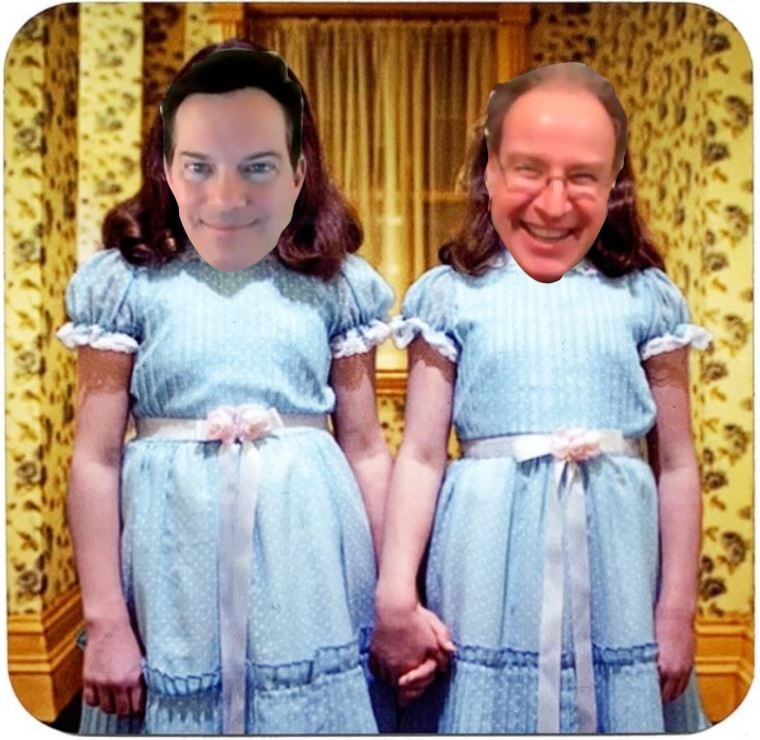
    Is “The Shining” (1980) the most layered horror movie ever made? Or is it one of cinema’s most flagrant examples of gilding-the-lily? Are the two necessarily exclusive?

    Roy and I grope our way through some the film’s dichotomies, as we talk “forever and ever and ever” about Kubrick, cast, and music. You might say we take a shine to “The Shining” during last night’s discussion, on Roy’s Tie-Dye Sci-Fi Corner, archived here:

    Tomorrow, Roy will fly solo as he welcomes guests David Hirsch and Tim Mallett, who will talk about their work on “Super Space Theater,” a collection of high-definition restorations of four “Space: 1999” movies. Learn more about it, when they livestream on Facebook at a special time, this Sunday afternoon at 3:00 EST!

    https://www.facebook.com/roystiedyescificorner


  • Great Detective Movie Music

    Great Detective Movie Music

    by 

    in
    One response

    This week on “Picture Perfect,” what do Sherlock Holmes, Hercule Poirot, Sam Spade, Dick Tracy, and Inspector Clouseau have in common? Get clued in, with music from movies about the great detectives.

    Billy Wilder’s “The Private Life of Sherlock Holmes” (1970) is an unusually melancholy meditation from a director often celebrated for his hard-edged comedies. That’s not to say Wilder didn’t make more serious films, or that his Sherlock Holmes lacks humor or irreverence, but the lasting impression is somewhat elegiac.

    A good part of the reason was his request of composer Miklós Rózsa (who had written music for the director’s much earlier classics, “Double Indemnity” and “The Lost Weekend”) to adapt his own Violin Concerto, a recording of which Wilder had played incessantly during pre-production. The heart-rending slow movement, especially, appears prominently, and mirrors Holmes’ sense of isolation, to say nothing of his retreats into music and drug addiction.

    The great Albert Finney memorably portrayed Agatha Christie’s fastidious detective, Hercule Poirot, in “Murder on the Orient Express” (1974). The first and best of the all-star Christie thrillers, this one featured, among others, Lauren Bacall, Martin Balsam, Ingrid Bergman, Sean Connery, John Gielgud, Anthony Perkins, Richard Widmark, and Michael York. Bergman’s performance was recognized with an Academy Award for Best Supporting Actress.

    The catchy score, by Richard Rodney Bennett, was also nominated, but the Oscar that year went to Nino Rota and Carmine Coppola, for their music for “The Godfather, Part II.”

    Warren Beatty’s amusing homage to comic strip hero “Dick Tracy” (1990) is worthwhile for its starry cameos, sharp production design, and retro score by Danny Elfman. Elfman’s love theme sounds as if it could have been written by any number of composers from Hollywood’s golden age, all under the influence of George Gershwin.

    Lending a touch of noir, Humphrey Bogart plays private dick Sam Spade, in John Huston’s adaptation of Dashiell Hammett’s “The Maltese Falcon” (1941). Bogart, at his hardboiled best, is bolstered by a game supporting cast, including Mary Astor, Peter Lorre, Sidney Greenstreet, and Elisha Cook, Jr.

    The music is by Adolph Deutsch, one of the less remembered names of Hollywood’s heyday, although he scored such enduring films as “Father of the Bride,” “Little Women” (1949), and “Some Like It Hot.” He also provided background music for the big screen adaptation of “Oklahoma,” and conducted the orchestra in musicals like “Seven Brides for Seven Brothers” and “Annie Get Your Gun.”

    Finally, to wrap things up on a lighter note, we’ll enjoy a potpourri assembled from the “Pink Panther” comedies of Blake Edwards. Peter Sellers plays the bumbling Inspector (later Chief Inspector) Clouseau. The insinuating, breezy, and “cool” scores are by Henry Mancini.

    I hope you’ll join me for this hour with the great detectives, on “Picture Perfect,” music for the movies. To miss it would be a crime, this Saturday evening at 6:00 EST, on WWFM – The Classical Network and wwfm.org


  • Olympic Music Annoyances Jim McKay and More

    Olympic Music Annoyances Jim McKay and More

    by 

    in
    2 responses

    In my memory, Jim McKay will always be the voice of the Olympics, but I wish he and Peter Jennings would shut the hell up during this performance of John Williams’ now-iconic “Olympic Fanfare and Theme,” presented for the first time at the 1984 Los Angeles Summer Games.

    What is wrong with television commentators? They do this kind of thing all the time. As if the network is terrified that anyone watching might be bored or understimulated if they aren’t subjected to constant chatter.

    I’ve been trying to find information on who might have contributed music to the 2022 Winter Games in Beijing, but all I’m coming up with is a lot of brouhaha about a new Olympic song featuring actor-singer Zeng Shunxi, journalist Lu Binqi, and Chinese rap group CD Rev. If you find this inspiring, more power to you. I doubt very much it’s what they’ll be listening to on Mount Olympus.


  • Kenneth Wannberg, Star Wars Music Editor, Dies at 91

    Kenneth Wannberg, Star Wars Music Editor, Dies at 91

    by 

    in
    5 responses

    Kenneth Wannberg, a major influence on the shaping of John Williams’ classic film scores, has died at the age of 91.

    In the capacity of Williams’ music editor, Wannberg was responsible for, among other things, selecting the best takes from the recording sessions of a particular cue and assembling them into a coherent whole. The main title to “Star Wars” was recorded five times for the original movie. Wannberg used the best three takes to produce the final version as heard in the film.

    He was also responsible for the placement of streamers and punches on the work print of a film for the conductor (in this case, Williams), and for the assembly of the soundtrack album.

    In the special editions of the original “Star Wars” trilogy and in the subsequent prequel trilogy, George Lucas had a tendency to ramp up Ben Burtt’s sound effects at the expense of Williams’ music. At a time when seemingly everyone had become a Lucas yes-man, Wannberg stepped up during the mixing of “Revenge of the Sith” to point out that the effects were too noisy. When Wannberg explained that the music was the “thread through the montage of cutting back and forth” in the climactic duel scene, and that it needs to “live a little,” Lucas considered his words and ultimately conceded. There weren’t very many people who would have stood up to Lucas at that point in his career.

    Wannberg worked with Williams at least as far back as 1967, when Williams provided music for “Valley of the Dolls.” He also assisted him on the Reader’s Digest-produced screen musical “Tom Sawyer” (with songs by the Sherman Brothers). Most significantly, he was at the composer’s side all throughout his heroic hot streak of “Star Wars,” “Close Encounters of the Third Kind,” “Raiders of the Lost Ark,” and “E.T. The Extra-Terrestrial.” He remained with Williams until his retirement, following work on “Revenge of the Sith,” “Memoirs of a Geisha,” and “Munich,” in 2005.

    Williams, who dedicated to Wannberg a concert version of “Star of Bethlehem” (originally from Williams’ score to “Home Alone”), will turn 90 on February 8.

    Wannberg was a composer himself, providing scores for “The Late Show,” with Art Carney and Lily Tomlin, “Losin’ It,” with Tom Cruise, and “The Philadelphia Experiment.”

    R.I.P.

    https://variety.com/2022/music/obituaries-people-news/kenneth-wannberg-composer-and-music-editor-who-worked-with-john-williams-on-star-wars-series-and-50-other-films-dies-at-91-1235171606/


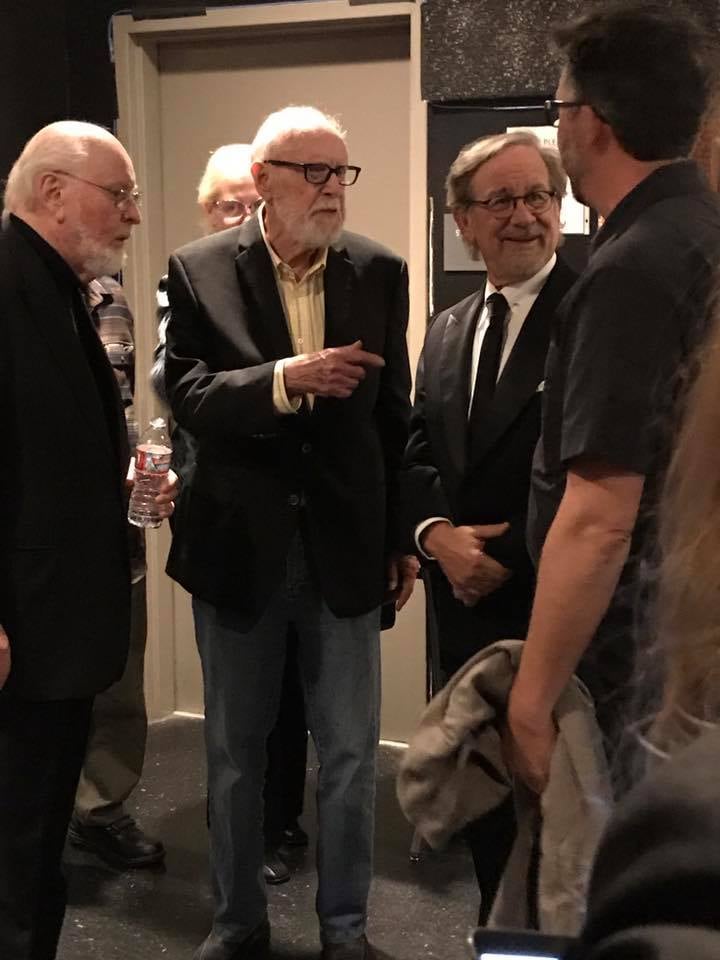
    PHOTO: Wannberg (center), with John Williams and Steven Spielberg, backstage at a concert in Seattle in 2017


Tag Cloud

Aaron Copland (93) Beethoven (95) Composer (114) Film Music (145) Film Score (143) Film Scores (255) Halloween (94) John Williams (195) KWAX (229) Leonard Bernstein (104) Marlboro Music Festival (125) Movie Music (160) Mozart (91) Opera (213) Philadelphia Orchestra (89) Picture Perfect (174) Princeton Symphony Orchestra (109) Radio (88) Ross Amico (244) Roy's Tie-Dye Sci-Fi Corner (290) The Classical Network (101) The Lost Chord (269) Vaughan Williams (105) WPRB (397) WWFM (881)

DON’T MISS A BEAT

Receive a weekly digest every Sunday at noon by signing up here


RECENT POSTS