• Jerry Goldsmith The Unsung Genius

    Jerry Goldsmith The Unsung Genius

    by 

    in
    5 responses

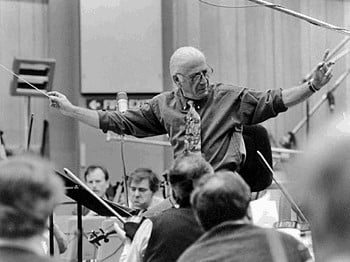
    After “Jaws” and “Star Wars,” John Williams became everyone’s first choice. Too often, Jerry Goldsmith was left with the dregs.

    But the man was a professional, a true work horse, who also had a rare talent for speed. He wrote the replacement score for “Chinatown” in ten days. When Randy Newman was dropped from “Air Force One,” again he saved the day, writing and recording the music in less than two weeks.

    Unfortunately, not every film was “Chinatown.” For every “Planet of the Apes,” “Patton,” and “Papillon,” there was “The Mummy” (with Brendan Fraser), “The Haunting” (remake), and “Looney Tunes: Back in Action.”

    Williams got “Superman.” Goldsmith got “Supergirl.” Williams got “Raiders of the Lost Ark.” Goldsmith got “King Solomon’s Mines” (with Richard Chamberlain). Williams got “E.T. The Extra-Terrestrial.” Goldsmith got “Baby: The Secret of the Lost Legend.”

    But even when the movies were terrible, Goldsmith’s music was like a consolation prize. And nothing can take away the classics. He was one of the last of the greats, and he lived through a great era, so we certainly have enough to cherish. He just had the bad fortune to have more stamina than the movies themselves, which got weaker and weaker and weaker.

    The composer himself expressed frustration at his music being drowned out by ever more-elaborate sound effects, which is why his scores tended to become more streamlined – and less memorable – in the ‘90s. He would have lost his mind in these days of laptop editing, when movies can be trimmed and shuffled within an inch of their lives, right up until the day of distribution.

    For television, he wrote music for “Dr. Kildare,” “The Twilight Zone,” “Gunsmoke,” “The Man from U.N.C.L.E.,” “The Waltons,” and “Barnaby Jones.” He was the recipient of five Emmy Awards.

    Incredibly, despite EIGHTEEN nominations, he was honored with but a single Oscar, for his influential score to “The Omen” (1976). Goldsmith died in 2004, at the age of 75. If he were to come back today, he would mop the joint with all the Hans Zimmer knockoffs.

    To honor Goldsmith, and as kind of a belated tribute to special effects artist Douglas Trumbull, who died earlier this week, let’s take a look at the show-stopping drydock sequence from “Star Trek: The Motion Picture” (1979).

    In a tight spot in post-production when the effects work was proving to be lackluster, director Robert Wise reached out to and implored Trumbull to work his magic. Trumbull was already a legend in the field, having worked on “2001: A Space Odyssey,” “Silent Running,” and “Close Encounters of the Third Kind.”

    “Star Trek” would require more composites than “Star Wars” and “Close Encounters” combined. Paramount Pictures was over a barrel, with an impending deadline that would result in a mega-lawsuit from exhibitors if it didn’t deliver.

    Trumbull accepted the challenge, but he drove a hard bargain. In exchange for his services, he leveraged a considerable fee, release from his Paramount contract, and ownership of the technology he developed for “Brainstorm,” his dream project, long languishing in development hell, so that he could shop it around to other studios. Without flinching, Paramount blurted “Yes!” Trumbull assembled his crew, divided them into three teams, and they worked seven days a week, 24 hours a day, for the next seven months, to bring the picture in on time.

    Say what you want about the movie, but the effects and the music are unimpeachable – especially this sequence, which Trumbull directed himself – a perfect marriage of music and visuals of a kind you will not find in movies today. This is how it’s done, kids.

    https://youtu.be/tpEv8pRGkME?t=25

    As a post-script, we’ll be celebrating the legacy of Douglas Trumbull on the next Roy’s Tie-Dye Sci-Fi Corner. Because Roy will be participating in a live theater event with Country Gate Players this Saturday (“Radio Noir Murders” at 6 pm at Belvidere Manor in Belvidere, NJ), we’ll be taking the week off from our movie-fueled digressions. But we’ll be back at the base of Devil’s Tower, watching for your Kodály hand signals in the comments section, when we livestream on Facebook, NEXT Friday evening, February 18, at 7:30 EDT!

    https://www.facebook.com/roystiedyescificorner

    For now, happy birthday, Jerry Goldsmith!


    The Man from U.N.C.L.E.:

    The Blue Max

    Planet of the Apes:

    Patton:

    Chinatown:

    The Wind and the Lion:

    The Omen:

    The Great Train Robbery

    Star Trek: The Motion Picture:

  • Alban Berg’s Shocking “Lulu” Opera

    Alban Berg’s Shocking “Lulu” Opera

    by 

    in
    2 responses

    If one were to bake a birthday cake for Alban Berg, one would be forgiven for rendering a handgun in icing and hollowing out the layers to make room for prostitutes and madmen.

    When Berg came to write his sordid, darkly humorous, ultimately bloodcurdling masterpiece “Lulu,” he based it on the plays of Frank Wedekind. However, significantly, the influence of film also permeates the work.

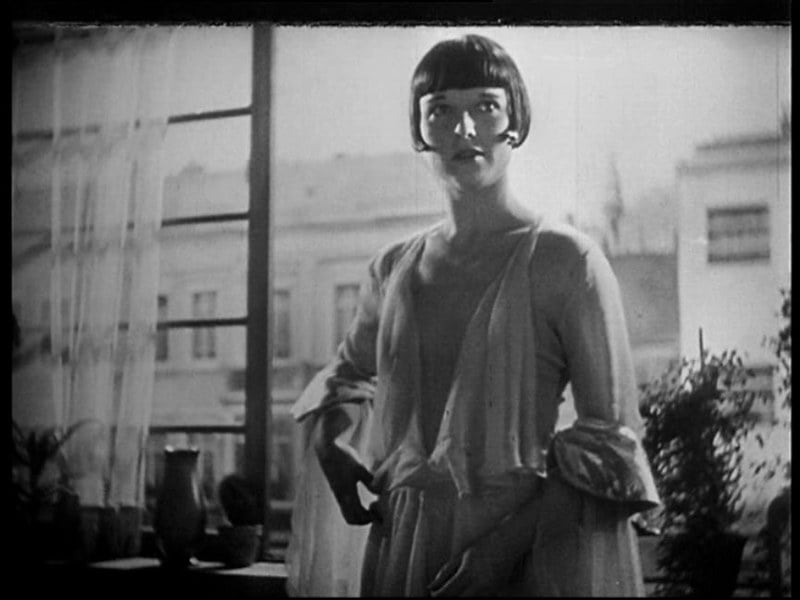
    I don’t know that it’s ever been proved, but the composer had to have seen Louise Brooks’ sensational performance in G.W. Pabst’s “Pandora’s Box” (1929). The scandalous silent film classic, based on the same material, was an international triumph, and to this day, stage Lulus frequently emulate Brooks’ iconic style.

    Also, at the very center of the opera is a filmed interlude. The composer was obsessed with symmetry and palindromes. They pervade the opera, so much so that in the cinematic centerpiece, a silent film that dramatizes the events surrounding Lulu’s incarceration and escape, the music reads the same backwards and forwards.

    In a piece that’s so aggressively contemporary in its decadence and cynicism, it’s unsurprising that Berg would embrace modern technology. One wonders what he would have made of the digital age.

    Love, eroticism, and death were nothing new to opera, but there is something about “Lulu” that’s especially disturbing and transgressive. It’s subversive, sleazy, squalid, and calculated to shock. It’s not for nothing that Lulu, the protagonist, is introduced by a lion tamer!

    But Lulu is just being Lulu. The title of the first of Wedekind’s plays is “Erdgeist” – “Earth Spirit.” Lulu is plucked from the streets, and her raw sexuality has devastating effects on both the men and women in her life. Moral confusion abounds. Sure, she makes some monstrous choices. But we’re left to wonder, as with Jessica Rabbit, is she bad, or did society just draw her that way?

    Lulu in her amorality is the product of in an inauthentic world. After three acts of unfettered destruction, she dies at the hands of Jack the Ripper. Serialism’s greatest heroine falls prey to history’s most notorious serial killer.

    Berg composed his opera between 1929 and 1935. The ‘30s were a fraught time in Europe. It goes without saying, the Nazis did not like “Lulu.” Berg himself may not have been Jewish, but his teacher, Arnold Schoenberg, high priest of dodecaphony, was. Berg’s twelve-tone idiom alone would have been enough to get his opera banned. And his reputation had already been made with the equally disturbing “Wozzeck,” given its first performance in Berlin in 1925. He was added to the Nazi catalogue of “entartete” composers in 1933.

    The composer did not live to see the Führer’s furor over “Lulu.” He died of blood poisoning, the result of an insect sting, on Christmas Eve 1935. He was 50 years-old.

    At the time of his death, the opera was not yet quite complete. He was well along on the piece when two things occurred:

    First, he learned from Wilhelm Furtwängler that the climate in Berlin was unfavorable to a performance there. So he broke off on orchestrating the opera to develop some of the music into a “Lulu Suite,” which he hoped to have played in concert. Erich Kleiber, who had introduced “Wozzeck” in 1925, programmed the suite at the Berlin State Opera. After the performance, he was forced to resign and basically run out of the country.

    Berg paused a second time to compose his Violin Concerto for Louis Krasner. This he dedicated to the memory of 18 year-old Manon Gropius, one of Berg’s muses, whom he and his wife had come to view as their own daughter. Manon’s birth parents were Alma Mahler, Gustav’s widow, and Walter Gropius. The concerto would go on to become Berg’s best-loved work.

    At some point, the composer wrote to Anton Webern to let him know that “Lulu” was essentially complete. He anticipated he would need only two or three weeks to overhaul it before he started in on its orchestration.

    After his death, it was found he had managed to complete most of it. The parts he did not were left in short score, with detailed indications as to his plans for filling out the orchestration. Nevertheless, Schoenberg, Webern, and Zemlinsky, all friends of Berg, declined to take up its completion. Berg’s widow was left with the impression that the task must have been impractical, if not impossible. It was only after her own death in 1976 that Friedrich Cerha moved ahead with plans to finish it.

    “Lulu” received its premiere, incomplete, in Switzerland, in 1937. Cerha’s edition was first staged soon after its publication in 1979. This was rapturously received, and it is now the preferred version.

    Berg was always considered the Romantic among serialists. One critic dubbed him “the Puccini of twelve-tone music.” “Lulu” is freely-composed, but makes use of the twelve-tone technique promulgated by Schoenberg. Fascinatingly, each character in the opera gets his or her own tone row, so that each of the rows serves the purpose of a leitmotif – a fragmentary slip of music, bearing extramusical associations – as in the works of Richard Wagner. But if there is an opera further from Wagner’s Valhalla than “Lulu,” I don’t know it!

    Interestingly, there was nothing at all sordid about Berg the man. There was no violence or scandal in his life. He was intellectual and well-spoken, and he didn’t consort with criminals and prostitutes. He just knew a good succès de scandale when he saw one.

    “Lulu” has long since taken its place in the standard repertoire, alongside Berg’s “Wozzeck.” I can’t say it’s the most pleasant night at the theater, but it is an absorbing one, and it still retains its modern edge.

    Happy birthday, Alban Berg!


    Berg’s “Lulu Suite”

    The Violin Concerto

    Louise Brooks as Lulu

    “Lulu”… by Lou Reed and Metallica?


  • John Williams at 90 A Musical Genius

    John Williams at 90 A Musical Genius

    by 

    in
    7 responses

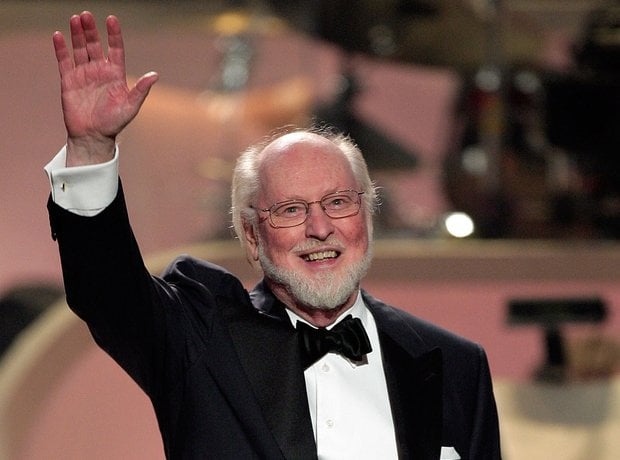
    His music introduced me to the glories of the symphony orchestra and changed my life forever. The world’s greatest living film composer is 90. Happy birthday, John Williams!

    One need only listen to this fan compilation of Williams’ contrapuntal writing, including some unexpected choices, to understand that there really is no one else in the field today who can touch him. You certainly won’t hear anything like it from the Zimmer school.

    This one still gives me chills 43+ years later!

    Williams and Steven Spielberg discuss music from the piano bench:

    Good exchange with Tavis Smiley (especially toward the end):

    Perhaps Williams’ best interview, an unusually candid conversation with André Previn:

    Williams is the recipient of five Academy Awards, 25 Grammy Awards, and four Golden Globe Awards. He’s been nominated for an Oscar 52 times, more than any other living person, and second only to Walt Disney.

    So what’s he up to now? Although he suggested he would be retiring with “Star Wars: The Rise of Skywalker,” he’s been conducting concerts all over place, with Anne-Sophie Mutter the soloist in his new Violin Concerto. He’s also scoring Spielberg’s “The Fabelmans” – their 29th collaboration – and prepping for the fifth Indiana Jones adventure, out next year.

    https://variety.com/2022/artisans/news/john-williams-turns-90-celebrating-1235172996/?fbclid=IwAR3Hon1e-u542wT8M2TouuAaHq-1CrZqG5CxzL7iYUA–BtcvBjsdn-r_t0

    Over the coming month or so, I’ll be including some Williams selections in my “Picture Perfect” programming. Tune in this week to enjoy a suite from “Jane Eyre” (1970), as part of hour of Gothic romances for Valentine’s Day, and next week for music from “JFK” (1991), “Nixon” (1995), “Amistad” (1997), and “Lincoln” (2012) for Presidents Day Weekend. More to come. “Picture Perfect” can be heard Saturday evenings at 6:00 EST on WWFM – The Classical Network and wwfm.org.


  • Remembering George Crumb American Original

    Remembering George Crumb American Original

    by 

    in
    5 responses

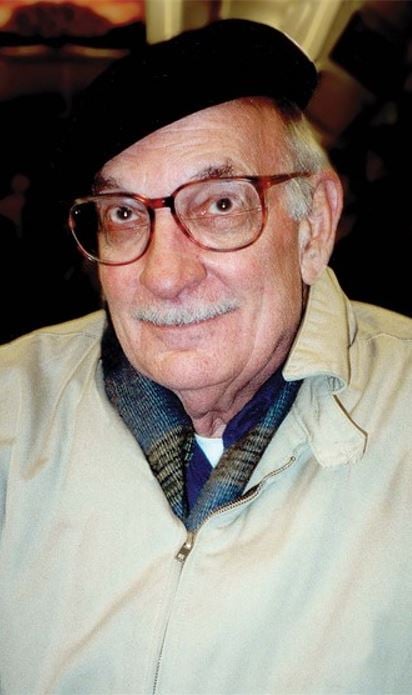
    I am very sorry to learn of the passing of George Crumb, a composer I have revered for nearly 40 years, since I first encountered his work for electric string quartet, “Black Angels,” on Philadelphia’s now-defunct classical music station, WFLN. The music scared the hell out of me and completely enthralled me.

    The context was a Friday night radio show, “Music Through the Centuries,” hosted by George Diehl. Diehl was at one time WFLN’s program director. He also provided program notes for the Philadelphia Orchestra. “Music Through the Centuries” was a big influence on my own Sunday night program (on WWFM The Classical Network), “The Lost Chord.”

    What made this particular episode so indelible is that Diehl introduced a recording of Crumb’s otherworldly, often hair-raising quartet – a reaction to the Vietnam War – by deftly placing it in context, illuminating its structure, and supplementing it with recordings of other works referenced within the piece.

    Having cut my teeth on the station’s usual, more traditional fare, my mind was officially blown. It’s not for nothing that William Friedkin incorporated “Black Angels” into “The Exorcist.” I immediately determined to pick up everything I could find on LP, and my enthusiasm continued into the CD era.

    The first time I met Crumb was at a recital at the Curtis Institute of Music in Philadelphia. He was there attending a student recital in the company of Richard Wernick. It just so happened that I lived about a block away, so I was able to dash home and retrieve a CD on Bridge Records that contained works by both composers. Both were on the faculty of the University of Pennsylvania. Both were Pulitzer Prize winners.

    I caught them as they were leaving the building, and Crumb, likely nonplussed by this 20 year-old autograph hound, was kind enough to sign. Wernick, who of course was with him, couldn’t very well say no. I was a little sheepish about it, and probably didn’t say much of worth. At best, I may have provided a source of amusement on their walk back to the car.

    It was another 20 years, then, I think, before I saw him again (although he may have been present when I heard his orchestral work, “A Haunted Landscape,” played by Philadelphia Orchestra in 1989, part of a knockout program also featuring Ravel’s “Le tombeau de Couperin” and Vaughan Williams’ “A London Symphony”). By that time, he had entered his “Grand Old Man of American Music” phase. Furthermore, he was closely affiliated with Orchestra 2001, a contemporary music ensemble founded at Swarthmore College, practically in Crumb’s back yard. Orchestra 2001 gave first performances of many of his later pieces.

    Among these were the seven cycles for voice and percussion that comprise his “American Songbook.” These are highly individual recastings of folk songs and hymns he recollected from his boyhood in West Virginia – especially effective, and affecting, when heard in concert, where the breadth and subtlety of the instrumentation can be fully appreciated.

    His daughter, Broadway actress Ann Crumb, was a frequent soloist. During this time, I got to meet them both and to speak with them under more relaxed circumstances, at cocktail hours and receptions. They were lovely people. George was unfailingly approachable, good-humored, soft-spoken, and surprisingly modest. Ann, who died much too young at 69, was warm and genuine and a real animal lover. She was always bringing home strays, so that the Crumb household was full of dogs (the most notorious being “bad dog” Yoda).

    It is perhaps an overused description, but George Crumb truly was an American original. He produced works with an economy and elegance that seemed to contradict – and yet, somehow, paradoxically, to reinforce – an Ivesian tendency to suggest greater vistas beyond their seemingly modest means. In the process, he anticipated the widespread proliferation of the percussion ensemble, which is now practically analogous to what the string quartet was to the 18th and 19th centuries.

    No matter how “respectable” he’s become, my own reactions will always be colored by that flush of youth, when I first fell under the spell of his eerie and at times horrifying invention.

    George Crumb was the recipient of the Pulitzer Prize for Music in 1968, for “Echoes of Time and the River,” and a Grammy Award for Best Contemporary Composition in 2001, rather appropriately, for “Star-Child.” All or most of his music is available in the “Complete Crumb Edition,” an ongoing project on Bridge Records, Inc.

    The composer died at his home earlier today at the age of 92.

    Thank you, sir, and R.I.P.


    “Black Angels” in concert

    “Black Angels” with score

    “Ancient Voices of Children” in concert

    “Star-Child”

    Crumb talks about “Mundus Canis;” performs “Fritzi” with guitarist David Starobin

    “Yoda” (from “Mundus Canis”)

    From “American Songbook,” sung by Ann Crumb:

    “Shall We Gather at the River”

    “All the Pretty Horses”

    “Poor Wayfaring Stranger”

    “One More River to Cross”

    “Give Me That Old Time Religion”

    Crumb interviewed by Gilbert Kalish

    Crumb at his home in 2020 (with yet more pooches)


  • Jonathan the Tortoise Oldest Animal on Earth

    Jonathan the Tortoise Oldest Animal on Earth

    by 

    in
    5 responses

    It wasn’t that great for Napoleon, maybe, but Jonathan the tortoise loves it. Exile on St. Helena is all sun and fresh vegetables for this old codger, who has lived on the island for the past 140 years. From his size, he is thought to have been 50 (the age of a tortoise’s maturity) at the time of his arrival, which would mean he was born around 1832 – THE YEAR BEFORE BRAHMS.

    Not only is Jonathan the oldest tortoise in the world, he is also the world’s oldest animal.

    Napoleon died on St. Helena in 1831. Missed him by that much.

    https://www.washingtonpost.com/lifestyle/2022/01/31/oldest-animal-tortoise-jonathan-/


Tag Cloud

Aaron Copland (93) Beethoven (95) Composer (114) Film Music (145) Film Score (143) Film Scores (255) Halloween (94) John Williams (195) KWAX (229) Leonard Bernstein (104) Marlboro Music Festival (125) Movie Music (160) Mozart (91) Opera (213) Philadelphia Orchestra (89) Picture Perfect (174) Princeton Symphony Orchestra (109) Radio (88) Ross Amico (244) Roy's Tie-Dye Sci-Fi Corner (290) The Classical Network (101) The Lost Chord (269) Vaughan Williams (105) WPRB (397) WWFM (881)

DON’T MISS A BEAT

Receive a weekly digest every Sunday at noon by signing up here


RECENT POSTS