• Carl Nielsen’s Symphony No. 5: A Century of Optimism

    Carl Nielsen’s Symphony No. 5: A Century of Optimism

    by 

    in
    3 responses

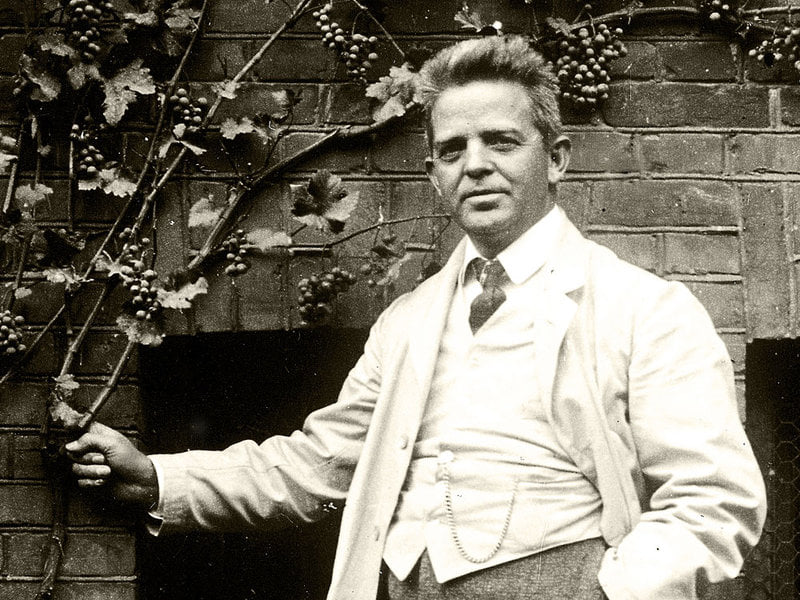
    I can’t claim to know how to solve the world’s problems, but more Carl Nielsen would be a good start.

    Nielsen was, of course, Denmark’s most celebrated composer. He experienced a lot of change in his lifetime (1865-1931), in a world of accelerating anxiety. There is plenty of struggle in his symphonies, to be sure. But to my ears, for the most part, they reflect a spirit of optimism and nobility, and they retain the power to inspire.

    Nielsen’s Symphony No. 5 was first performed in Copenhagen on this day 100 years ago. The work is built on an unusual structure, organized into two movements, as opposed to the customary four. We don’t know what inspired the composer to write his Fifth Symphony, but it’s a good guess that it is a reaction to the War to End All Wars.

    Already by four minutes in, an implacable snare drum appears, and the movement becomes a struggle of contrasts between martial and transcendent impulses. At the climax of the first movement, the composer instructs the drummer to improvise “as if at all cost he wants to stop the progress of the orchestra.” In this sense, the symphony acts almost as a second “Inextinguishable” (the subtitle of Nielsen’s Symphony No. 4, with its dueling timpani), with open wounds, but yearning for the attainment of nobler things.

    Nielsen claimed he was not conscious of the influence of recent world events in the writing of his symphony, but he conceded that “not one of us is the same as we were before the war.”

    A performance in Sweden in 1924 caused a commotion, when the audience rebelled against the cacophonous “modernism” of the first movement. There was a mass exodus from the concert hall, as about a quarter of those in attendance left. Those who remained attempted to hiss the orchestra to silence. It’s too bad they were insensible to the overarching grandeur and hard-won optimism of the piece.

    The symphony received its premiere the same week as the first performance of a very different work influenced by the war, Ralph Vaughan Williams’ “A Pastoral Symphony.” I’ll write more about that on Wednesday.

    In the meantime, here’s a classic performance of Nielsen’s Symphony No. 5, with Leonard Bernstein and the New York Philharmonic:

    Funny how the passage of the years modifies one’s perspective. At the time this recording was made, the symphony was only 40 years-old!
  • Viktor Ullmann Music From Terezin

    Viktor Ullmann Music From Terezin

    by 

    in
    7 responses

    Even under the most unspeakable circumstances, he continued to be Viktor.

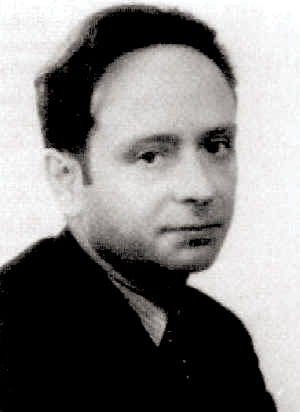
    Viktor Ullmann was one of the best-known composers to be interned in Terezin, or Theresienstadt, the “model camp” set up by the Nazis to deceive the foreign press and the International Red Cross.

    There, concert orchestras, chamber groups and jazz ensembles were formed, operas were staged, and the Verdi Requiem was mounted no less than fourteen times. At Terezin, composers continued to create, until deportation to Auschwitz.

    Ullmann wrote in 1944, “…that musically I have been challenged not hindered by Theriesenstadt, that we did not just sit by Babylon’s rivers bewailing our fate, and that our will to create culture was as strong as our will to live.”

    We’ll be listening to a cross-section of Ullmann’s music written in the camp, including a piano sonata (performed by Terezin survivor Edith Kraus, who died in 2013 at the age of 100), a concert overture, and a song cycle; also, a piano concerto written shortly before his arrest, a period of hardship for the composer, as he began to be stripped of his rights and his options to make a living. He never heard the concerto performed in his lifetime. Ullmann died at Auschwitz in 1944.

    Ironically, most of his unpublished works dating from before his internment are now lost. It is his music written at Terezin, for the most part, which survives. The music written during his confinement, then, becomes a metaphor for the indomitable spirit of the artist.

    The composer lives on through his creations, on “Ullmann Victorious,” this Sunday night at 10:00 EST, on WWFM – The Classical Network and wwfm.org.


    To enhance your appreciation of Ullmann’s “Der Mensch und sein Tag” (“Man and His Day”), I am posting English translations of the aphoristic texts below, so that they may be read while listening to the music.

    “DER MENSCH UND SEIN TAG” (MAN AND HIS DAY), Op. 47

    12 Portraits by Hans-Günter Adler

    1. WALK INTO MORNING
      Sight. Hands in front of eyebrows
      and maternal light. Meadowland.
      A blade of grass. A step. Dew on the flowers.

    2. SONG
      So much. So much and still more.
      A great ocean, surging and pounding –
      flutes lightly, horns heavily.

    3. HOME
      In the ground, the cool ground. So colourful.
      Billowing fields and meadows around.
      In the ground – hidden heart and mouth.

    4. TO THE BELOVED
      With you, in smiles and tears.
      Nearness of hand and mouth. Longing
      fades. With you no blind fancy.

    5. FLOWERS
      Inward, buried deep and warm.
      Breath – singing to life.
      Bright goblets, lips, tongues.

    6. IN THE PARLOUR
      Tightly pressed to one another.
      Planted with care and trouble.
      Animate and inanimate. Mute and loud.

    7. THE NEIGHBOUR
      Help is good. Hand in hand.
      Door to door and wall to wall:
      quite united. Bond and band.

    8. PRAYERS
      Scattered in the chalice of piety
      ripe corn offered
      to the gladdened protector and creator.

    9. IN THE FOREST
      Dappled, close and far and scent.
      The sun dreams, the air slumbers.
      Crepitation. Calcification. Trees. Scent.

    10. FADE
      Down, down. The bell tolls.
      Clouds glow. Evening glimmers.
      Down, down. The moon-breath shimmers.

    11. NIGHT
      Come, gentle sleep! Come, sweet night!
      The ground relaxes in muted glory.
      Lone thoughts sink to earth.

    12. SILENCE
      Stillness. Silence. Looking and watching.
      Tranquil in blessed reflection.
      Sleep before the divine.


  • Pavarotti Meat Loaf Unexpected Duet

    Pavarotti Meat Loaf Unexpected Duet

    by 

    in
    5 responses

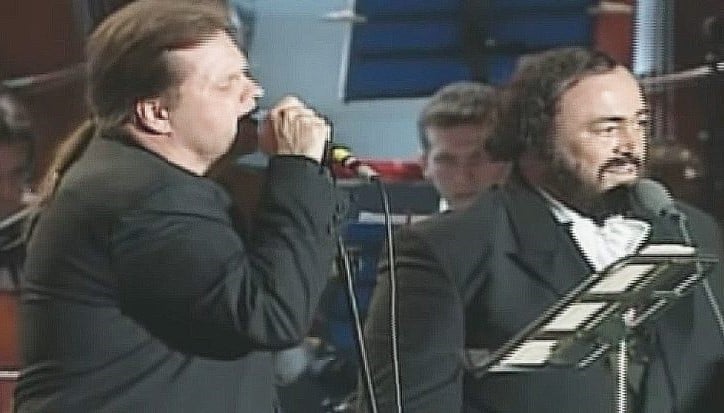
    When you’re Luciano Pavarotti, and you can’t get Domingo or Carreras, who you gonna call? Why, Meat Loaf, of course!


  • Abominable Snowman Roy’s Tie-Dye Sci-Fi Corner

    Abominable Snowman Roy’s Tie-Dye Sci-Fi Corner

    by 

    in
    2 responses

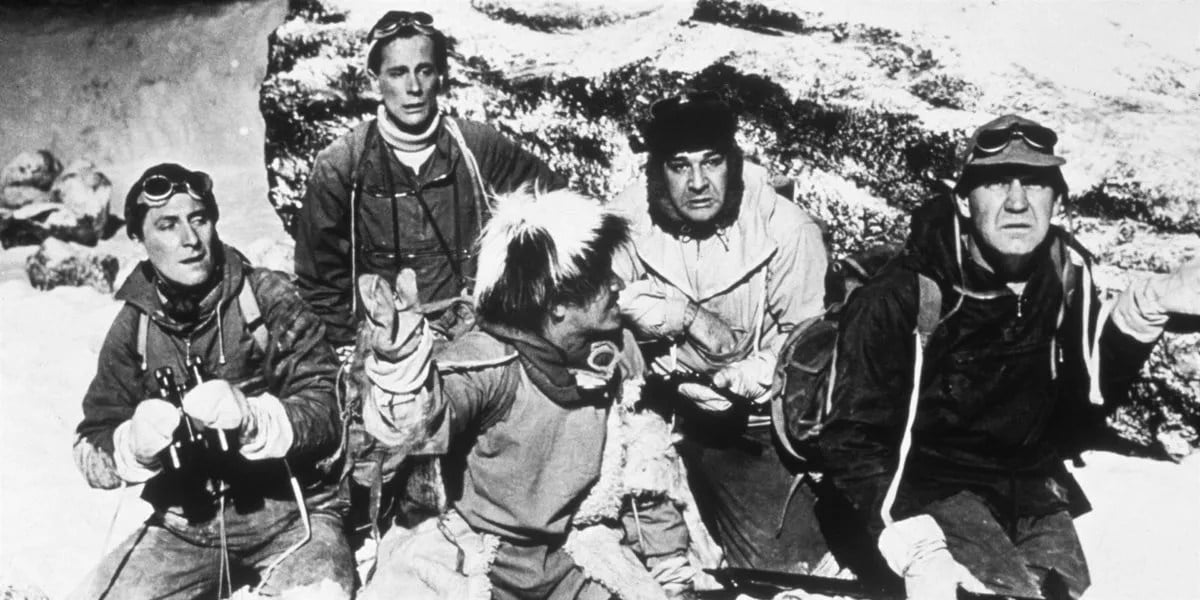
    “The Abominable Snowman” (1957) was warmly received on last night’s “Roy’s Tie-Dye Sci-Fi Corner.” Forrest Tucker and Peter Cushing may be like chalk and cheese, but they each bring their particular strengths to bear on this atmospheric thriller, even as they defy common sense by sharing a smoke in the Himalayas. As a side note, I’m happy to report I was able to figure out where I can purchase some more skunk ape t-shirts. You can watch the archived show here:

    For next time, we’ll be throwing it back to you, as it will be another viewer’s choice episode. Leave your suggestions under the post over on Roy’s page as soon as you can, as we’ll have to decide on the topic early in the week. If your movie is chosen, we’re also extending the option for you to join us as our guest, if you’d like to talk with us about your selection.

    Three’s our lucky number, on the next Roy’s Tie-Dye Sci-Fi Corner. The choice is yours, when we livestream on Facebook, next Friday evening at 7:00 EST!

    https://www.facebook.com/roystiedyescificorner


  • Russian Literature Movie Music for Winter Nights

    Russian Literature Movie Music for Winter Nights

    by 

    in
    4 responses

    Long winter’s nights are made for reading.

    This week on “Picture Perfect,” you’ll find plenty of inspiration in music from movies adapted from Russian literature.

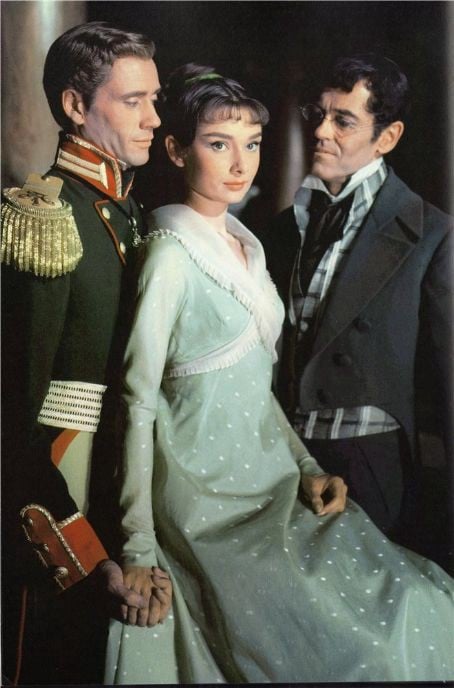
    Tolstoy’s “War and Peace,” one of the most revered novels of the 19th century, has been filmed at least twice. A seven-hour Soviet adaptation, begun in 1965, is generally regarded as the superior of the two. The other, released in 1956, was a big-budget Italian-American venture, supervised by Dino di Laurentiis, with an all-star, international cast, including Henry Fonda, Audrey Hepburn, Mel Ferrer, Vittorio Gassman, Herbert Lom, and Anita Ekberg. It was directed by King Vidor, the cinematography was by Jack Cardiff, and the music was by Nino Rota.

    Tolstoy’s “Anna Karenina” has also been adapted several times. A 1948 British production stars Vivian Leigh, Ralph Richardson, and Kieron Moore. The score is by Constant Lambert, also well-respected for his concert music, though perhaps even better recognized as conductor of the Vic-Wells (later the Sadler-Wells) Ballet.

    Even more highly-regarded was Arthur Honegger, who wrote five symphonies, nine ballets, and a number of large-scale choral and theatrical works. His best-known piece is probably the symphonic movement “Pacific 231,” which famously emulates the sound of a steam locomotive.

    Perhaps the most “serious” of the composers that made up the group known as Les Six, Honegger nonetheless enjoyed a sideline working in film over a period of three decades. His scores include those for Abel Gance’s “Napoléon” and a 1934 French version of “Les Misérables.” He was also a mentor to Miklós Rózsa, the Hungarian émigré he met in Paris, who went on to great success writing film music, first for the Korda brothers in England, then in Hollywood.

    Honegger’s score for a 1935 version of Dostoyevsky’s “Crime and Punishment” includes a part for the ondes martenot, an electronic keyboard instrument with an uncanny, otherworldly timbre.

    Finally, we’ll turn to what some regard as the greatest Russian novel of the past century, “The Master and Margarita.” Mikhail Bulgakov began his book in 1928, but destroyed it in despair over the state of things as he saw them in the Soviet Union. He restarted it in 1931, and the manuscript went through multiple drafts until his death in 1940. It’s only since the late ‘60s that uncensored editions of the novel found their way into print. The first complete version was published in 1973, with an even more authoritative edition following in 1989.

    In one particularly meta episode in this multi-layered tale, the author burns his own manuscript! Faustian imagery abounds: Satan figures prominently, the Master’s love is named Margarita, and there are elements of intellectual curiosity and redemption.

    A film version, released in 1994, attracted one of the biggest names in, by then, post-Soviet music, Alfred Schnittke, a composer noted for his “polystylism.” In one particularly grotesque passage, he alludes to Ravel’s “Bolero.”

    Pull a chair up to the fire and say “Da” to Russian literary classics on “Picture Perfect,” music for the movies, this Saturday evening at 6:00 EST, on WWFM – The Classical Network and wwfm.org.


Tag Cloud

Aaron Copland (93) Beethoven (95) Composer (114) Film Music (145) Film Score (143) Film Scores (255) Halloween (94) John Williams (195) KWAX (229) Leonard Bernstein (104) Marlboro Music Festival (125) Movie Music (160) Mozart (91) Opera (213) Philadelphia Orchestra (89) Picture Perfect (174) Princeton Symphony Orchestra (109) Radio (88) Ross Amico (244) Roy's Tie-Dye Sci-Fi Corner (290) The Classical Network (101) The Lost Chord (269) Vaughan Williams (105) WPRB (397) WWFM (881)

DON’T MISS A BEAT

Receive a weekly digest every Sunday at noon by signing up here


RECENT POSTS